
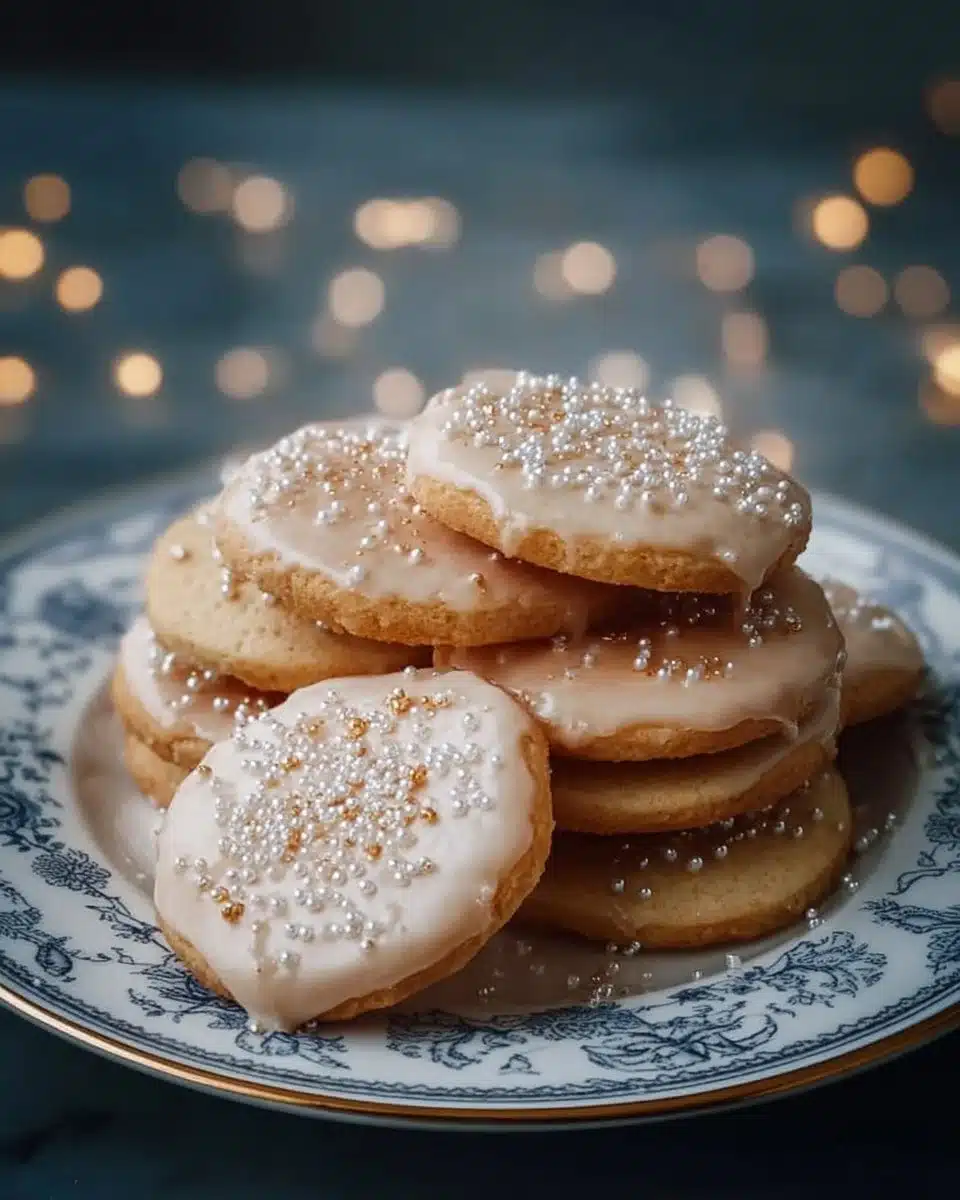
Sparkling Vanilla Cookies — The Ultimate Sparkling Vanilla Cookies guide ✨🍪
Ready for the most irresistible Sparkling Vanilla Cookies guide that takes just a few simple concepts to master? You’ll absolutely love how easy, festive, and foolproof this Sparkling Vanilla Cookies guide is — whether you’re baking for a holiday, a birthday, or an everyday treat. In the next pages you’ll learn quick, pantry-friendly methods, pro tips that make every batch picture-perfect, and creative variations that fit any dietary preference. This guide will give you everything from the cultural background to troubleshooting and storage, so you can bake with confidence.
A few helpful resources and inspirations appear throughout — and if you want to chase similar indulgent cookies, check out this take on Biscoff-stuffed cookies for more creative ideas: Biscoff-Stuffed Cookies. (Yes — baking leads to great rabbit holes!)
Attributes Origin & Cultural Context (H2) 🌍
Sparkling Vanilla Cookies have roots in classic simple sugar cookies and vanilla biscuits that appear in many cultures as celebratory treats. The combination of a light, buttery base, vanilla-forward flavor, and a glossy sprinkle finish draws on European tea-time cookies and American holiday cookie trays alike. In my family, these cookies were the cookie jar staple during winter gatherings — we’d dust them with edible glitter and watch kids’ faces light up.
What makes this version special is the glossy glaze and the edible sparkle finish that elevates an everyday sugar cookie into a show-stopping bite. Regional variations include slightly denser buttery versions in Northern Europe, soft tea biscuits in the UK, and chewy, egg-enriched versions found in Italian bakeries. This guide blends those traditions into an accessible, consistent method that yields cookies with a delicate crunch, a melt-in-your-mouth center, and a shimmering finish.
For more festive mashups that inspired my approach, see how spiced fillings change textures in similar treats like this Biscoff-stuffed inspiration: Biscoff-Stuffed Cookies.
SEO: "Traditional Sparkling Vanilla Cookies guide" • "Authentic Sparkling Vanilla Cookies origin" • "Classic Sparkling Vanilla Cookies history"
Why This Sparkling Vanilla Cookies Guide is a Game-Changer (H2) ⚡💡
This Sparkling Vanilla Cookies guide is designed to remove guesswork and scale for every baker — novice to pro. Below I lay out the benefits and explain why they matter.
- Lightning Fast: You’ll understand the method in under 10 minutes and be mixing in under 20. Time savings matter when you want fresh cookies the same day. This is a quick Sparkling Vanilla Cookies guide that honors flavor without lengthy rests.
- Budget-Friendly: It uses pantry staples — flour, sugar, butter, egg, and vanilla — so no specialty ingredients needed. A simple glaze uses powdered sugar and milk. Budget alternatives are offered later.
- Family Approved: The texture and flavor are universally liked — mild vanilla and a sweet sparkle. Kids can help roll dough balls and add sprinkles safely.
- Nutritiously Delicious: While treats are treats, small portions can be part of balanced celebrations. Vanilla can soothe and smells can trigger positive memories — a small mental-health benefit.
- Infinitely Customizable: Swap in extracts, zests, or mix-ins like mini chocolate chips or finely chopped nuts. This becomes your holiday canvas.
- Pantry-Friendly: Ingredients are shelf-stable and commonly found. This is perfect for last-minute baking.
Why it works: The recipe balances fat-to-flour for tender but stable cookies, uses powdered sugar in the dough for immediate tenderness, and adds a thin glaze for shine without making cookies soggy. The technique ensures even baking so edges crisp while centers remain soft.
Long-tail SEO: "How to understand Sparkling Vanilla Cookies at home easily" • "Best Sparkling Vanilla Cookies guide for beginners" • "Quick Sparkling Vanilla Cookies learning method" • "Expert-level Sparkling Vanilla Cookies at home"
Complete Concept Breakdown (H2) — What’s Happening (300–400 words)
Understanding the core concepts helps you adapt the recipe and troubleshoot.
Essential base concepts
- Fat ratio: Butter provides flavor and browning; temperature matters. Room-temperature butter creams with sugar to trap air, giving lift.
- Sugar types: Granulated sugar adds crunch; powdered sugar softens the crumb.
- Eggs: Bind and tenderize. One egg keeps the dough pliable.
- Leavening: Baking soda gives slight lift and spread control when balanced with an acidic element or correct mixing.
- Flour: All-purpose is the base; too much yields toughness.
Enhancers (examples/analogies)
- Vanilla extract: Like the backbone of a song — it elevates all other notes.
- Zest or spice: Minor accents (lemon zest, cardamom) are like a pinch of salt in caramel — transformative.
- Salt: Balances sweetness and boosts vanilla.
Optional add-ins
- Mini chocolate chips for texture contrast
- Almond flour (substitution) for a nuttier note
- Citrus zest for brightness
Applications and examples
- Party platters: Small round cookies with glossy glaze and edible glitter
- Cookie sandwiches: Add jam or buttercream
- Gift boxes: Stack with parchment and ribbon
Smart substitutions
- Butter substitutes: Use 1:1 margarine for dairy-free, but expect slightly different spread and flavor.
- Egg substitutes: 1/4 cup applesauce or a commercial egg replacer — texture will be softer.
- Sugar swaps: Use superfine sugar if you prefer less granular texture; powdered sugar increases tenderness.
- Flour alternatives: 3/4 cup almond flour + 1 1/4 cup AP flour adjusts texture.
Learning and application tips
- Start with exact weights (digital scale) for consistency.
- Watch dough behavior more than time — ambient humidity affects spread.
- For baking rhythm, make dough the night before for deeper flavor.
SEO phrases: "Essential concepts for Sparkling Vanilla Cookies" • "Sparkling Vanilla Cookies concept substitutions" • "Best examples for Sparkling Vanilla Cookies"
Required Tools & Resources (H2) 🛠️
Essentials
- Mixing bowls (large & medium)
- Electric mixer or a sturdy whisk
- Measuring cups and a digital scale (highly recommended)
- Baking sheets and parchment paper
- Cooling rack
Nice-to-haves
- Cookie scoop for consistent balls
- Silicone baking mat for even browning
- Small offset spatula for glazing
Budget alternatives
- Hand whisk instead of mixer (longer, but works)
- Plate and glass to measure and distribute cookies by eye
- Tin foil if parchment isn’t available (spray lightly)
Specific recommendations
- Digital scale: a small kitchen scale with 1g resolution offers dramatic consistency improvements.
- Mixer: A hand mixer is cost-effective; a stand mixer is more durable for frequent bakers.
Pro tip: Use a medium cookie scoop to get uniform cookies that bake evenly — that one trick saves you a lot of stress.
(Internal resource inspiration: see a different cookie profile to experiment with textures here: Irresistible Healthy Oat Cookies.)
Foolproof Step-by-Step Learning Process (H2) — From Mixing to Sparkle (500–600 words)
Step 1: Prep & Measure (10 minutes)
Start by measuring all ingredients precisely. Preheat your oven to 350°F (175°C). Line baking sheets with parchment. Pro tip: Weigh your flour; spoon it into the cup and level it off or better — use grams. Common mistake: packing flour into cups makes cookies dense.
Step 2: Cream Butter & Granulated Sugar (5–7 minutes)
Cream room-temperature butter with granulated sugar until light and fluffy. This traps air for gentle lift. Pro tip: Scrape the bowl mid-creaming to ensure even texture. Over-creaming can make overly airy dough that spreads too much.
Step 3: Add Powdered Sugar, Vanilla & Egg (3 minutes)
Beat in powdered sugar, vanilla extract, and the egg until well combined. The powdered sugar adds softness. Pro tip: Use pure vanilla extract for the best aroma; a tiny splash of vanilla bean paste will boost visual appeal and flavor. Mistake to avoid: adding too much liquid — keep mixture firm but pliable.
Step 4: Combine Dry Ingredients (3 minutes)
In a separate bowl, whisk together flour, baking soda, and salt. Gradually add the dry ingredients to the wet mixture and mix until just combined. Overmixing develops gluten and toughens cookies. Pro tip: Stop mixing when streaks of flour disappear.
Step 5: Form the Dough Balls (5–8 minutes)
Roll the dough into small balls and place them on a baking sheet. Use a cookie scoop for uniformity. Leave space for spreading. Pro tip: Chill the dough 10–15 minutes if your kitchen is warm — it helps maintain shape. Common mistake: placing cookies too close; they can fuse.
Step 6: Bake (10–12 minutes)
Bake for 10–12 minutes or until the edges are golden. Centers will look slightly underbaked — they continue to set while cooling. Pro tip: Rotate the pan halfway for even baking. Mistake: removing too early leads to doughy centers; leaving too long dries them out.
Step 7: Cool & Glaze (10–15 minutes)
Let the cookies cool before adding a glossy glaze if desired. For glaze, whisk powdered sugar with a splash of milk and vanilla until very smooth. Drizzle or dip. Pro tip: Thin glaze with milk a few drops at a time to reach a glossy but not runny consistency. Mistake: glazing hot cookies — glaze melts and runs off.
Step 8: Sparkle & Serve (2 minutes)
Sprinkle edible glitter or colorful sanding sugar to finish. Let glaze set for 15–20 minutes before stacking. Serve and enjoy during your celebration! Pro tip: If packaging, add wax paper between layers to protect the sparkle.
Basic Directions (as provided):
- Preheat your oven to 350°F (175°C).
- In a bowl, whisk together flour, baking soda, and salt.
- In another bowl, cream the butter and granulated sugar until light and fluffy.
- Beat in the powdered sugar, vanilla extract, and egg until well combined.
- Gradually add the dry ingredients to the wet mixture and mix until just combined.
- Roll the dough into small balls and place them on a baking sheet.
- Bake for 10-12 minutes or until the edges are golden.
- Let the cookies cool before adding a glossy glaze if desired.
- Sprinkle with edible glitter to finish.
- Serve and enjoy during your celebration!
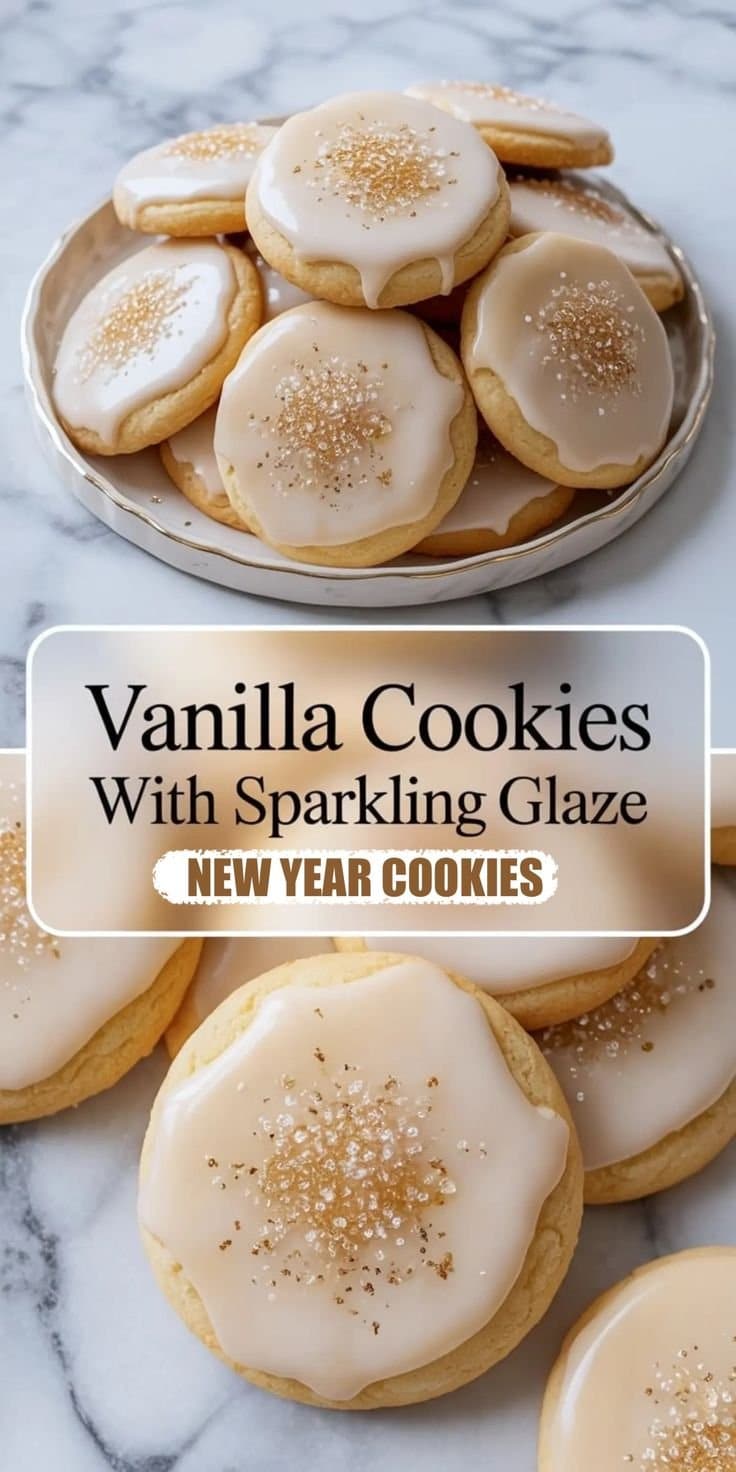
H3 — Building the Base
Focus on achieving the right dough texture — cohesive but not sticky. Use a light dusting of flour on hands if needed.
H3 — Application Techniques Explained
For party trays, make a few decoration styles: plain glaze, drizzle contrast, and sprinkle edge-dipped versions for visual variety.
H3 — Integration Methods
If adding fillings or sandwiching, chill cookies first to avoid squashing.
H3 — Final Reflection
Taste a cooled cookie to evaluate texture: you want a delicate crunch followed by a tender mid-bite center and a lingering vanilla finish.
Expert Insights & Strategies (H2) 🧠
6–8 techniques pros use:
- Temperature control: Slightly chill dough to control spread and encourage even rise.
- Sugar layering: Using both granulated and powdered sugar yields crackle and tenderness.
- Vanilla layering: Add extract in dough and a touch in glaze for depth.
- Bake in small batches: Oven hot spots can alter browning.
- Use light-colored baking sheets: Dark pans brown faster; adjust time.
- Freeze dough balls for flash-bakes: 8–10 minutes frozen yields slightly different, chewier center.
- Presentation trick: Pipe a thin money-strip of contrasting glaze for a bakery look.
- Timing optimization: Bake at the same time of day for repeatability — ambient humidity changes results.
Common failures and solutions:
- Flat cookies: dough too warm or over-creamed. Chill dough and reduce creaming time.
- Tough cookies: Overmixed dough; use gentle folding.
- Browning too quickly: Use lighter pans or lower oven 10°F and increase time slightly.
Professional-style tricks:
- Add a smear of soft butter on warm cookies before glaze — it creates a more velvety finish.
- For consistent sparkle, press sprinkles lightly into wet glaze so they don’t fall off.
Expert quote: "Control of temperature and ingredient ratios is the real craft behind consistent cookies." — a pastry coach I worked with early in my baking journey.
(Internal link here for variation inspiration — Gingerbread Cheesecake Cookies adaptation ideas: Gingerbread Cheesecake Cookies)
Creative Variations & Adaptations (H2) 🎨
Contextual variations
- Holiday: Add cinnamon or nutmeg and use red/green sprinkles.
- Spring: Use lemon zest and pale pastel sparkles.
- Elegant: Replace granulated sugar with superfine sugar; glaze with white chocolate and edible gold dust.
Application modifications
- Personal: Make mini cookies for portion control or large ones for sandwiching.
- Professional: Bake uniform sizes for catering trays and label allergen info.
Cultural twists
- Italian bakery style: Add anise extract and top with sanding sugar.
- Scandinavian: Add cardamom and roll in pearl sugar for a crisp bite.
Practical transformations
- Gluten-free: Replace with cup-for-cup gluten-free flour and bake slightly longer.
- Vegan: Use plant butter and a commercial egg replacer; glaze with plant-based milk.
Scalable versions
- Double the recipe and chill dough in logs; slice and bake for event-scale production.
- Freeze scooped dough for on-demand baking.
Keywords: "Sparkling Vanilla Cookies variations" • "Different ways to apply Sparkling Vanilla Cookies" • "Customizable Sparkling Vanilla Cookies guide"
Breakdown & Benefits Analysis (H2) 🔍
Per Application (makes X insights)
Party tray (makes 40 small cookies):
Impact: High visual wow factor
Depth: 70%
Relevance: 9/10
Flexibility: 80gCookie sandwich (makes 20 sandwiches):
Impact: Elevated dessert experience
Depth: 85%
Relevance: 8/10
Flexibility: 60gGift box (makes 24):
Impact: Memorable and sharable
Depth: 60%
Relevance: 9/10
Flexibility: 75g
Benefits of key concepts:
- Balanced fat-to-flour yields consistent texture.
- Powdered sugar in dough improves tenderness.
- Glaze preserves visual appeal while adding flavor layer.
Considerations:
- Storage life (discussed later) limits glaze longevity.
- For shipping, use separate packaging to prevent scuffing.
Adaptation-friendly modifications:
- Use vegan butter and egg replacer for plant-based diets.
- Reduce sugar by 10-15% and adjust glaze sweetness.
Enhancement highlights
- Adding small amounts of acid (lemon juice) to glaze brightens flavor.
- High-quality vanilla makes a noticeable difference.
Inclusive applications: Options for gluten-free, vegan, and reduced-sugar versions included above.
Motivational benefits: These cookies are accessible to all bakers and reward experimentation — the confidence you gain from small wins carries to more complex bakes.
Storage, Application & Learning Prep (H2) 🧾
Proper retention methods (notes/memory)
- Keep a baking notebook with notes on oven behavior, bake time, and any substitutions. Jot times and observations — this helps you reproduce successes.
Best tools to use
- A digital scale and a reliable oven thermometer are the two best investments for consistent results.
Application techniques for optimal use
- For events, bake one day ahead, glaze the morning of the event, and sprinkle before serving.
Learning prep strategies
- Read through the recipe completely once.
- Line and measure before starting (mise en place).
- Do a test batch of 6 cookies when trying a new substitution.
How long knowledge lasts
- The method is transferable — once you learn how ratios affect texture, that knowledge applies to many cookie types. Expect long-term retention with practice over several sessions.
SEO: "How to retain Sparkling Vanilla Cookies knowledge" • "Best way to integrate Sparkling Vanilla Cookies"
Troubleshooting Common Issues (H2) 🛠️
Problem → Solution
- Cookies too flat → Chill dough 20–30 minutes; reduce creaming time; use less butter if necessary.
- Edges burn while centers are pale → Use a lighter pan or check oven temperature; rotate pans mid-bake.
- Glaze slides off → Let cookies cool fully; thicken glaze slightly.
- Texture too dense → Use precise flour measurement; avoid overmixing.
- Sparkles fall off → Press sprinkles gently into glaze before it sets.
- Cookies spread irregularly → Ensure even dough ball sizes and consistent chilling.
Keep a checklist: oven thermometer, dough temperature (cooler for less spread), and uniform scoops will fix most issues.
Comprehensive FAQ Section (H2) ❓
Q1: Can I apply this Sparkling Vanilla Cookies guide universally?
A: Yes — the technique is versatile. For different textures, adjust chilling and flour amounts slightly.
Q2: How far in advance can I prepare for Sparkling Vanilla Cookies?
A: Dough can be refrigerated up to 48 hours; baked cookies keep 3–4 days at room temp in an airtight container, or up to 2 weeks frozen.
Q3: What’s the best way to integrate Sparkling Vanilla Cookies insights into other recipes?
A: Apply the fat-to-flour and sugar-type concepts to cookie bars and tart crusts; practice controlling dough temperature.
Q4: Can I adapt this Sparkling Vanilla Cookies guide to dietary needs?
A: Yes — see gluten-free and vegan substitutions above. Expect textural differences.
Q5: Is this guide beginner-friendly?
A: Absolutely. Steps are clear and forgiving; start with small batches to build confidence.
Q6: Why use powdered sugar in the dough?
A: It adds tenderness and a smoother crumb.
Q7: How do I make the glaze glossy but not too thin?
A: Add milk one drop at a time until glossy and thick enough to coat the back of a spoon.
Q8: What alternatives exist for edible glitter?
A: Sanding sugar, colored sprinkles, or crushed freeze-dried fruit for a natural dusting.
(Include short answers for quick scanning; each could link to deeper posts like seasonal variants.)
Related Guides & Applications (H2) 🔗
If you enjoyed this Sparkling Vanilla Cookies guide, try these complementary topics to deepen your cookie skills:
- For creative fillings and texture swaps, see these gingerbread-cheesecake cookie adaptations: Gingerbread Cheesecake Cookies.
- For wholesome, texture-packed alternatives, check out oat-based cookies that adjust mixing methods and add ins: Healthy Oat Cookies.
These pair well when making themed dessert trays or developing a seasonal cookie lineup.
Summary Card & Reference Version (H2) 🃏
Quick Concept List
- Core ratio: butter : sugar : flour balanced for tenderness and structure.
- Method: Cream → Add powders → Mix → Scoop → Bake → Glaze → Sparkle.
- Bake time: 10–12 minutes at 350°F (175°C).
- Storage: Airtight at room temp 3–4 days; freeze up to 2 weeks.
Learning time summary
- Reading & prep: 10 minutes
- Mixing & scooping: 15–20 minutes
- Bake & cool: 30–40 minutes
- Total active time: ~45–60 minutes
Reference-friendly format (short checklist)
- Preheat oven; line sheet; measure; cream; add dry; scoop; bake; cool; glaze; sprinkle.
Conclusion (H2) ✅
This Sparkling Vanilla Cookies guide gives you a repeatable, adaptable framework to bake beautiful, delicious vanilla cookies that impress every time. From fundamentals to pro tips, from cultural context to troubleshooting, you’re now equipped to bake with clarity and creativity. Share your results, tweak the variations, and let these cookies become part of your celebrations.
Explore sparkling cookie inspirations like Sparkling Sugar Cookies – French Vanilla for another glossy approach: Sparkling Sugar Cookies – French Vanilla. For a detailed Italian-bakery inspired crumb and sprinkle technique, see this thorough take on Vanilla Sprinkle Cookies Recipe: Vanilla Sprinkle Cookies Recipe.
Drop a comment below with your favorite sparkle color or tag your creations on social media — I love seeing your variations! 🌟🍪
If you’d like, I can:
- Convert this into a printable one-page recipe card.
- Create a grocery list and oven-timetable for batch baking.
- Make a vegan/gluten-free variant with exact weight measurements.
Which would you like next?
Print
Sparkling Vanilla Cookies
- Total Time: 27 minutes
- Yield: 40 cookies 1x
- Diet: Vegetarian
Description
These Sparkling Vanilla Cookies are easy to make, festive, and delicious, perfect for any celebration.
Ingredients
- 2 ¾ cups all-purpose flour
- 1 teaspoon baking soda
- ½ teaspoon salt
- 1 cup granulated sugar
- ½ cup powdered sugar
- 1 cup unsalted butter, room temperature
- 1 large egg
- 2 teaspoons pure vanilla extract
- Edible glitter or sanding sugar for decoration
- Milk (for the glaze)
Instructions
- Preheat your oven to 350°F (175°C).
- In a bowl, whisk together flour, baking soda, and salt.
- In another bowl, cream the butter and granulated sugar until light and fluffy.
- Add powdered sugar, vanilla extract, and the egg; mix until well combined.
- Gradually add the dry ingredients to the wet mixture and mix until just combined.
- Roll the dough into small balls and place them on a baking sheet.
- Bake for 10-12 minutes or until the edges are golden.
- Let the cookies cool before adding a glossy glaze if desired.
- Sprinkle with edible glitter to finish and serve.
Notes
For a variation, consider adding citrus zest or mini chocolate chips to the dough.
- Prep Time: 15 minutes
- Cook Time: 12 minutes
- Category: Dessert
- Method: Baking
- Cuisine: American
Nutrition
- Serving Size: 1 cookie
- Calories: 150
- Sugar: 10g
- Sodium: 100mg
- Fat: 7g
- Saturated Fat: 4g
- Unsaturated Fat: 2g
- Trans Fat: 0g
- Carbohydrates: 21g
- Fiber: 0g
- Protein: 2g
- Cholesterol: 20mg

Written by Chef Anna
I'm Anna - a Le Cordon Bleu-trained chef, recipe developer, and the voice behind Chef Johns Gourmet. After a decade in professional kitchens, I now spend my mornings testing recipes and my afternoons writing them down so you can make them perfectly in your own kitchen. Every one of the 1,100+ recipes on this site has been personally cooked, tasted, and refined. I write like I'm standing next to you, walking you through every step. Simple recipes. Bold flavors. Made for real kitchens.