

Traditional Delightful Bananas Foster Cobbler guide
First sentence hook: Few desserts combine theater, comfort, and quick satisfaction like a warm bananas foster cobbler—caramelized bananas, a buttery, boozy sauce, and a golden cobbler topping that soaks up every drop.
Value proposition: This guide teaches you, step by step, how to make an excellent bananas foster cobbler from first principles—why ingredients and techniques matter, how to avoid common problems, and how to adapt the recipe to your skill level and pantry.
What you’ll gain: By the end you’ll understand the origins and purpose of each component, be able to execute reliably, troubleshoot like a pro, and confidently create variations (gluten-free, vegan, crowd-sized, or showstopping). If you want practical inspiration beyond this dish, see a short pairing suggestion such as wahoo fish recipes for savory menus that balance richness.
Background & Context
Bananas Foster began as a New Orleans-born dessert, famously combining bananas, butter, brown sugar, cinnamon, dark rum, and banana liqueur—flambéed tableside in many restaurants. Translating that caramel-forward, boozy profile into a cobbler makes the dish more home-friendly while keeping the original’s spirit.
Cultural relevance: The original bananas foster is part of Creole culinary showmanship. Making a cobbler version keeps the warm sauce and banana texture but pairs it with a biscuit-like topping that’s practical and familiar to home cooks.
Practical note: A cobbler is sturdier for transport, easier to scale, and reheats elegantly—qualities that make this adaptation practical for potlucks and weeknight desserts. If you’re exploring dessert complements or chocolate finishes, a focused resource like delightful chocolate can help you pair or finish dishes gracefully.
Personal insight: When I began developing this recipe, I treated the caramelized bananas and sauce as the “heart” and the cobbler topping as the “textile” that soaks, holds, and contrasts. That viewpoint will guide the choices below.
Why This Approach Works
- Focused components: Separating the sauce, fruit, and topping lets you control texture and doneness precisely.
- Scalability: You can multiply the sauce and banana ratio without damaging the topping, so the dessert scales naturally.
- Accessibility: The method uses simple equipment and ingredients while allowing classic techniques like caramelization and optional flambé for experienced cooks.
- Flexibility: Techniques allow for gluten-free or vegan swaps and options for low-alcohol or alcohol-free finishes.
Addressing doubts:
- “Is flambé necessary?” No—flambé adds flavor depth and theater, but reduced rum or heating the alcohol off yields excellent taste without open flames.
- “Will the topping get soggy?” Not if you balance liquid and bake at the right temperature. The topping should be slightly underbaked when removed so it absorbs without collapsing.
For savory or contrasting menu ideas, consider pairing with a bright salad or an easy fruit-based side like delightful cranberry chicken salad when serving as part of a larger meal.
Core Concepts Explained
Break the dish into logical components:
- The fruit and sauce (banana caramel): source of flavor and moisture.
- The topping (biscuit or cake-like): source of texture and structure.
- The bake and timing: balance between saucy base and baked topping.
- The finish (optional flambé, ice cream, or garnish): lifts aroma and presentation.
Fruit & Sauce
- Why it works: Bananas cook quickly and soften into a silky texture that pairs well with caramelized sugars. Brown sugar and butter form the Maillard-rich base.
- Example: Use just-ripe (yellow with a few brown specks) bananas. Overripe ones become too mushy; underripe are starchy.
Topping
- Why it works: A slightly dense biscuit-like topping holds up to moisture and soaks up sauce without dissolving.
- Simplification: Premade biscuit dough works if you’re short on time; however, hands-on mixing yields better texture.
Baking & Timing
- Why it works: Baking sets the topping and allows flavors to meld. Too long and you lose fruit texture; too short and the topping stays raw.
- Rule of thumb: 25–35 minutes at 375°F (190°C) for a 9-inch pan; adjust time for deeper dishes.
Substitutions
- Butter: Use vegan butter at a 1:1 ratio for dairy-free.
- Flour: Substitute a 1:1 gluten-free flour blend for gluten-free needs.
- Alcohol: Skip or use an alcohol-free rum flavor for children.
If you want a light, fruit-focused dessert or a chocolate-accented finish, explore ideas at delightful lemon raspberry cookies for complementary textures.
Tools, Resources, or Foundations
Essentials:
- 9-inch (23 cm) baking dish (or similar capacity).
- Heavy skillet (cast iron or stainless steel) for caramelization.
- Mixing bowls, spatula, whisk.
- Oven thermometer (helps accuracy).
Optional enhancements:
- Blowtorch (browning or finishing).
- Small siphon or fine strainer for silky sauces.
- Measuring scale for bakers who prefer weight over volume.
Budget-friendly alternatives:
- Use a 2-quart baking dish if you don’t have a 9-inch pan.
- Replace a blowtorch with the oven’s broiler for quick browning.
- Use spoon-measured cups if you don’t own a scale.
Commentary on usefulness: Good tools reduce variability, but the technique matters most. A heavy skillet helps make a clean caramel; a reliable oven gives consistent topping bake.
Helpful resource note: If you need inspiration for other desserts to rotate through your repertoire, a guide to indulgent chocolate can be helpful—see delightful chocolate.
Step-by-Step Process
Overview: This is a practical, dependable method for a 9-inch dish serving 6–8.
Time estimate:
- Prep: 20–30 minutes
- Cook (stovetop + bake): 30–40 minutes
- Total: 50–70 minutes
Ingredients (base proportions you can scale):
- 4–5 medium ripe bananas
- 6 tbsp unsalted butter
- 3/4 to 1 cup brown sugar (light or dark)
- 1 tsp cinnamon
- 1/4 tsp salt
- 1–2 tbsp dark rum (optional)
- 1 tbsp banana liqueur (optional)
- Topping: 1 1/2 cups all-purpose flour, 2 tbsp sugar, 2 tsp baking powder, 1/2 tsp salt, 6 tbsp cold butter, 2/3 cup milk or buttermilk
Step 1 — Prep and mise en place
- Preheat oven to 375°F (190°C).
- Slice bananas on a bias into 1/2-inch pieces.
- Measure sugar, spices, and prepare butter.
- Why this matters: Caramel forms quickly; having everything ready avoids burning.
Step 2 — Make the banana caramel
H3: Caramelization technique (skillet method)
- Melt butter over medium heat, then add brown sugar and cinnamon. Stir until sugar dissolves and the mixture becomes glossy.
- Add bananas and gently stir to coat. Cook 2–3 minutes until bananas release aroma but not broken down completely.
- Optional: Remove pan from heat, add rum, and carefully ignite with a long match to flambé (or return to heat briefly to evaporate alcohol).
- Why this matters: Controlled caramelization builds flavor without collapsing the bananas.
Common mistake: Cooking on too-high heat burns sugar quickly. Solution: Keep medium heat and stir constantly once sugar melts.
Step 3 — Transfer to baking dish
- Pour banana-sauce mixture into the prepared dish, spreading evenly.
- Leave some sauce in the skillet if you want a more syrupy base.
Step 4 — Make the topping
H3: Topping assembly (quick biscuit)
- Whisk dry ingredients. Cut cold butter into flour until pea-sized crumbs form.
- Stir in milk to just combine—don’t overmix.
- Spoon or drop the dough onto the banana layer, spacing to allow steam to escape between pieces.
- Why: Dropped biscuits create peaks and valleys that soak sauce selectively.
Pro tip: Chill the topping slightly for flakier texture.
Step 5 — Bake and finish
- Bake 25–35 minutes until topping is golden and set.
- Let rest 10 minutes—this helps the sauce thicken and topping set.
- Serve warm with ice cream or whipped cream.
H3: Reheating and serving
- Reheat single portions in a microwave for 30–45 seconds or in a 350°F (175°C) oven for 10–12 minutes.
- For crisp topping restoration, broil for 1–2 minutes watching carefully.
Common mistakes + how to avoid them:
- Soggy topping: Use slightly less sauce or bake longer; let rest before serving.
- Burnt caramel: Use medium heat and remove from heat before adding alcohol.
- Mushy bananas: Use just-ripe bananas and avoid overcooking both on stovetop and in oven.
Expert Techniques & Insights
- Layer control: For a glossier base, reduce sauce for 2–3 minutes after cooking to thicken before baking.
- Flambé techniques: For safety, heat alcohol slightly (do not boil), remove pan from burner, ignite with a long match, and keep a lid handy to smother flames. The flavor difference of flambé versus heating off alcohol is subtle but desirable.
- Texture contrast: Add a streusel stripe or toasted nuts on half the pan before baking for crunch variety.
- Temperature control: Use an oven thermometer; many home ovens run 15–25°F off, which changes topping set time.
Lessons learned:
- Resting matters: A 10-minute rest after baking improves sliceability and sauce polish.
- Balance is sensory: The dessert should be sweet and warmly spiced, with acidity (a squeeze of lime on top of finished dish can brighten).
Variations & Adaptations
Contexts and use cases:
- Dinner party: Add flambé for table-side drama; pair with vanilla bean ice cream.
- Family weeknight: Skip flambé; reduce rum and serve with whipped cream.
- Picnics/handoffs: Bake, cool, and transport in foil; reheat before serving.
Skill-level adaptations:
- Beginner: Use pre-made biscuit dough and skip the flambé.
- Intermediate: Make a streusel topping and toast walnuts.
- Advanced: Create a browned-butter pastry topping with laminated layers for flakier texture.
Dietary adaptations:
- Gluten-free: Use 1:1 gluten-free flour blend and add 1/4 tsp xanthan if the blend lacks binder.
- Vegan: Replace butter with vegan butter and milk with almond or oat milk; reduce sugar slightly if using almond milk which adds sweetness.
- Low-sugar: Use coconut sugar or a sugar substitute designed for baking; expect color and texture shifts.
Cultural twists:
- Tropical: Add toasted coconut and a splash of coconut rum.
- Spiced: Add nutmeg, allspice, or cardamom for deeper spice profile.
- Citrus: Fold orange zest into topping for a citrus lift.
Analysis & Benefits Breakdown
Compare three approaches: classic flambé cobbler (theater), non-flambé (safety), and quick shortcake-style (speed).
| Approach | Strengths | Limitations | Best use |
|—|—:|—|—|
| Classic flambé cobbler | Maximum flavor depth and visual drama | Needs skill and caution | Dinner party, showstopper |
| Non-flambé (heat off alcohol) | Safer, similar flavor, easier | Slightly less aroma intensity | Family meals, beginners |
| Shortcake-style topping | Fast, textured, portable | Less biscuit-rich texture | Weeknight dessert, portability |
Practical considerations:
- Alcohol presence: Flambé or add spirit for deeper flavor; remember alcohol can be omitted.
- Time vs. texture: Faster methods sacrifice some textural complexity but still deliver enjoyable results.
- Equipment: A heavy skillet and accurate oven give the most consistent results.
Preparation, Retention & Long-Term Use
How to prepare effectively:
- Prep bananas last to avoid browning.
- Make sauce and cool slightly if you need to store before baking.
- Prepare topping just before assembling to keep butter cold.
Retention or reuse strategies:
- Store leftovers in an airtight container in the refrigerator up to 3 days.
- Freeze portions: Flash-freeze single servings, wrap tightly, and freeze up to 3 months. Reheat from frozen at 350°F (175°C) for 20–25 minutes covered, then 5–7 minutes uncovered.
Longevity of skills:
- Once you learn caramelization, topping assembly, and timing, these skills transfer to crisps, fruit cobblers, and skillet desserts.
- Practice encourages better instinctive decisions about sugar, heat, and texture.
Troubleshooting & Common Problems
Problem → Cause → Solution
- Topping soggy → Too much sauce / underbaked topping → Bake 5–10 more minutes; next time reduce sauce by 10–20% or increase topping thickness.
- Burnt caramel → Heat too high / sugar unattended → Scrape salvageable parts into a fresh pan and add butter; cook on medium and stir continuously next time.
- Bananas too mushy → Overcooked on stove or too-ripe fruit → Use just-ripe bananas and limit stovetop cooking to 2–3 minutes.
- Sauce too thin → Not reduced enough / pan crowding → Simmer gently to reduce; next time cook sauce longer before baking.
- Alcohol flames too high → Excess alcohol or warmed bottle too close → Use measured amounts and light carefully; keep a lid or baking sheet nearby.
- Bland flavor → Not enough salt or spices → Add a pinch of salt to the sauce and increase cinnamon slightly.
Reassurance: Most issues are fixable; focus on small adjustments—temperature, time, and ingredient ratios.
FAQ
Q: Can I make this without alcohol?
A: Yes. Omit rum and liqueur and simmer the sauce a bit longer to concentrate flavors. Use vanilla extract or rum extract for aroma without alcohol.
Q: What bananas are best?
A: Just-ripe bananas with some brown spots offer the best balance of sweetness and structure.
Q: Can I prepare ahead?
A: Yes—assemble the banana base and refrigerate for up to 24 hours, then add topping and bake when ready. Alternatively, freeze unbaked assembly for later baking (add extra 10–15 minutes to bake time).
Q: How do I get a crisp topping?
A: Use slightly less liquid in the topping, higher oven heat for the first 10 minutes, or broil for 1–2 minutes at the end, watching carefully.
Q: Is flambé safe at home?
A: With precautions—measure alcohol, remove pan from heat before adding spirits when possible, use a long match, and keep a lid nearby—flambé can be done safely.
Q: Can I scale this for a crowd?
A: Yes. Double or triple the ingredients and bake in larger pans; monitor bake time and use multiple pans for even baking.
Q: How should I serve it?
A: Warm with vanilla ice cream or lightly sweetened whipped cream. A small sprinkle of flaky sea salt adds balance.
Q: Leftovers—reheat or serve cold?
A: Reheat gently in oven or microwave. Some people enjoy it cold, but warming restores sauce and aroma.
Related Topics & Next Steps
Expand your repertoire with:
- Fruit crisps and other cobbler fruits (peach, apple, cherry).
- Tableside dessert techniques (crepes suzette, flaming desserts).
- Sauces and reductions (caramel, salted butter sauces).
Suggested follow-ups:
- Practice a basic caramel sauce technique and keep it in your sauce repertoire.
- Experiment with a gluten-free topping to compare textures.
- Try pairing with complementary desserts such as a small chocolate element for contrast.
For savory-sweet pairing inspiration, browse related recipes like wahoo fish recipes or rotate in seasonal salads.
Quick Reference Summary
- Base concept: caramelized bananas + boozy sauce + biscuit-like topping.
- Key temps: medium stovetop for caramel; 375°F (190°C) oven for 25–35 minutes.
- Banana ripeness: just-ripe (some brown spots).
- Topping: slightly under-mixed, cold butter, drop-dough method.
- Flambé: optional for flavor and theater; take safety precautions.
- Storage: refrigerate 3 days; freeze up to 3 months.
Bookmark this short checklist for quick prep and troubleshooting.
Conclusion & Further Reading
You now have a complete, practical framework for making a confident, flavorful Traditional Delightful Bananas Foster Cobbler guide—understanding the underlying techniques, variations, and how to troubleshoot. If you want to try a tested recipe for comparison or adaptation, see this detailed walkthrough: Bananas Foster Cobbler Recipe – Pizzazzerie.com. For a simpler, easy-to-follow home version with clear step photos, this is a helpful alternative: Easy Bananas Foster Cobbler Recipe – Dinner, then Dessert.
Final encouragement: Start simple, focus on caramel control and topping texture, and iterate. Share your results and variations—small experiments lead to signature versions that friends and family will request again.
Print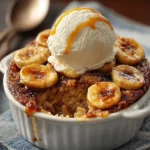
Traditional Delightful Bananas Foster Cobbler
- Total Time: 65 minutes
- Yield: 6-8 servings 1x
- Diet: Vegetarian
Description
A warm and cozy dessert combining caramelized bananas, a buttery sauce, and a golden biscuit-like topping, perfect for any occasion.
Ingredients
- 4–5 medium ripe bananas
- 6 tbsp unsalted butter
- 3/4 to 1 cup brown sugar (light or dark)
- 1 tsp cinnamon
- 1/4 tsp salt
- 1–2 tbsp dark rum (optional)
- 1 tbsp banana liqueur (optional)
- 1 1/2 cups all-purpose flour
- 2 tbsp sugar
- 2 tsp baking powder
- 1/2 tsp salt
- 6 tbsp cold butter
- 2/3 cup milk or buttermilk
Instructions
- Preheat oven to 375°F (190°C).
- Slice bananas on a bias into 1/2-inch pieces.
- Melt butter over medium heat, then add brown sugar and cinnamon. Stir until sugar dissolves and mixture is glossy.
- Add bananas, gently stir to coat, and cook for 2–3 minutes. Flambé if desired.
- Pour banana mixture into the prepared dish.
- Whisk together dry topping ingredients. Cut in cold butter until crumbly. Stir in milk until just combined.
- Spoon topping onto the banana layer.
- Bake for 25–35 minutes until golden and set. Let rest for 10 minutes before serving.
Notes
Serve warm with ice cream or whipped cream. For better texture, avoid overmixing the topping and let it rest after baking.
- Prep Time: 30 minutes
- Cook Time: 35 minutes
- Category: Dessert
- Method: Baking
- Cuisine: American
Nutrition
- Serving Size: 1 serving
- Calories: 400
- Sugar: 30g
- Sodium: 300mg
- Fat: 16g
- Saturated Fat: 8g
- Unsaturated Fat: 6g
- Trans Fat: 0g
- Carbohydrates: 55g
- Fiber: 2g
- Protein: 3g
- Cholesterol: 35mg

Written by Chef Anna
I'm Anna - a Le Cordon Bleu-trained chef, recipe developer, and the voice behind Chef Johns Gourmet. After a decade in professional kitchens, I now spend my mornings testing recipes and my afternoons writing them down so you can make them perfectly in your own kitchen. Every one of the 1,100+ recipes on this site has been personally cooked, tasted, and refined. I write like I'm standing next to you, walking you through every step. Simple recipes. Bold flavors. Made for real kitchens.