
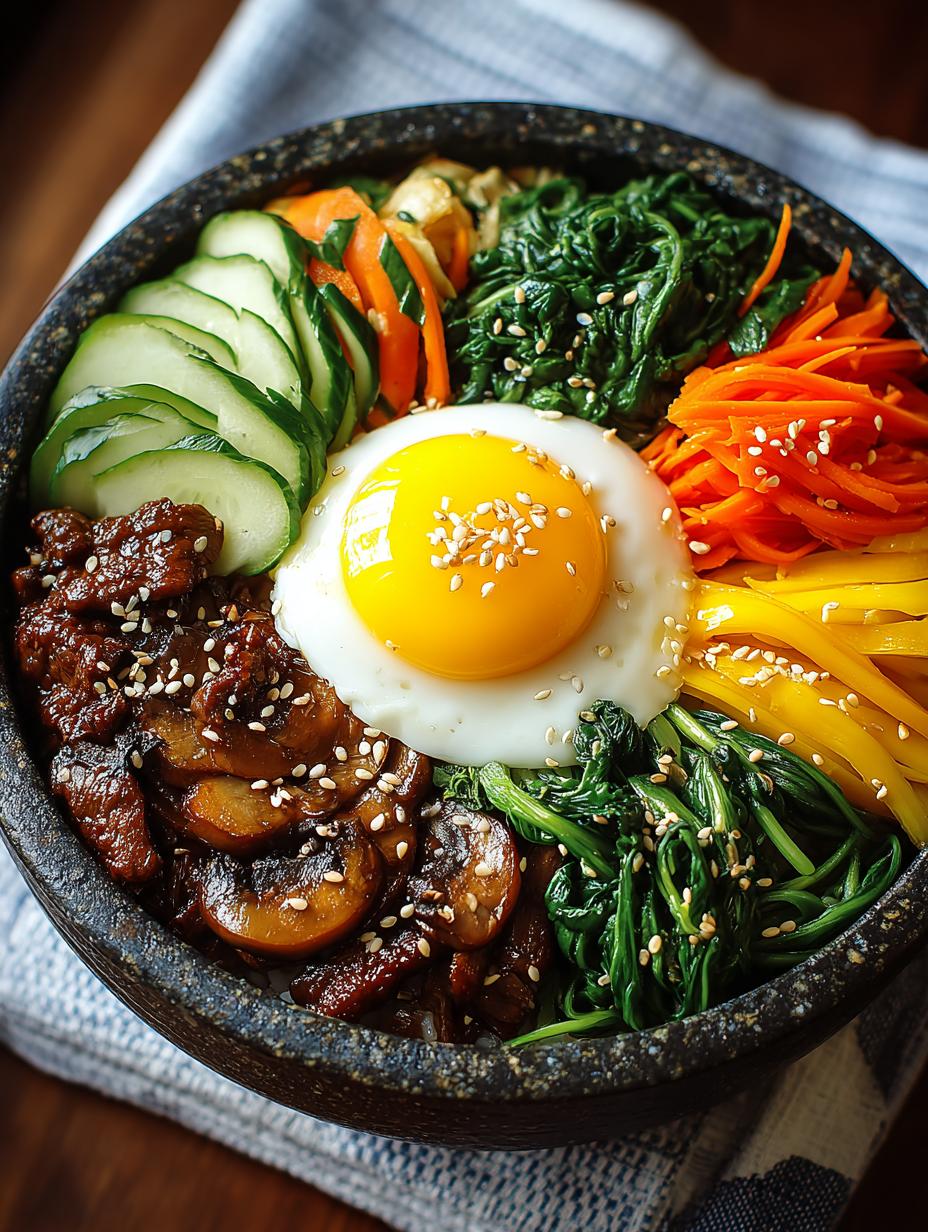
Korean Bibimbap Bowl is a colorful and nutritious dish that combines rice, vegetables, protein, and a spicy sauce. This delightful Korean rice bowl not only tantalizes your taste buds but also offers a healthy meal option that can be easily customized. Whether you’re a fan of traditional recipes or looking for an easy bibimbap recipe for lunch, this dish is perfect for you. Let’s dive into the vibrant world of Korean cuisine!
Why You’ll Love This Korean Bibimbap Bowl
This Korean Bibimbap Bowl is not just a meal; it’s an experience. Here are a few reasons why you’ll adore it:
- It’s packed with mixed rice with vegetables that offer a burst of flavors.
- This bibimbap recipe is versatile, allowing you to choose your favorite ingredients.
- It caters to various diets, including a vegetarian bibimbap recipe.
- The bibimbap ingredients list is easy to find in most grocery stores.
- Perfect for meal prep, making weeknight dinners a breeze!
- It’s a fun dish to serve, encouraging everyone to mix their own bowls.
Ingredients for Korean Bibimbap Bowl
Gather these items:
- 2 cups cooked rice (white or brown)
- 1 cup spinach (blanched)
- 1 cup carrots (julienned)
- 1 cup zucchini (julienned)
- 1 cup mushrooms (shiitake or button, sliced)
- 1 cup bean sprouts (blanched)
- 1 cup sliced beef (or tofu for a vegetarian option)
- 4 eggs
- 2 tablespoons vegetable oil (for cooking)
- Sesame oil (for drizzling)
- Sesame seeds (for garnish)
- Salt and pepper (to taste)
- 3 tablespoons gochujang (Korean chili paste)
- 1 tablespoon sesame oil
- 1 tablespoon sugar
- 1 tablespoon rice vinegar
- 1 teaspoon minced garlic
- 1 teaspoon soy sauce
How to Make Korean Bibimbap Bowl Step-by-Step
- Step 1: In a small bowl, whisk together the gochujang, sesame oil, sugar, rice vinegar, minced garlic, and soy sauce until smooth. Set aside.
- Step 2: In a skillet, heat 1 tablespoon of vegetable oil over medium heat. Sauté the carrots and zucchini for about 3–4 minutes until tender. Season with salt and pepper. Remove from the skillet and set aside.
- Step 3: In the same skillet, add another tablespoon of oil and sauté the mushrooms until golden brown, about 3–4 minutes. Season with salt and pepper.
- Step 4: If using beef, cook the sliced beef in the skillet until browned and cooked through, about 4–5 minutes. For tofu, sauté until golden on all sides.
- Step 5: In a separate pan, fry the eggs sunny-side up or to your desired doneness.
- Step 6: In a large bowl or individual serving bowls, place a generous scoop of cooked rice at the bottom.
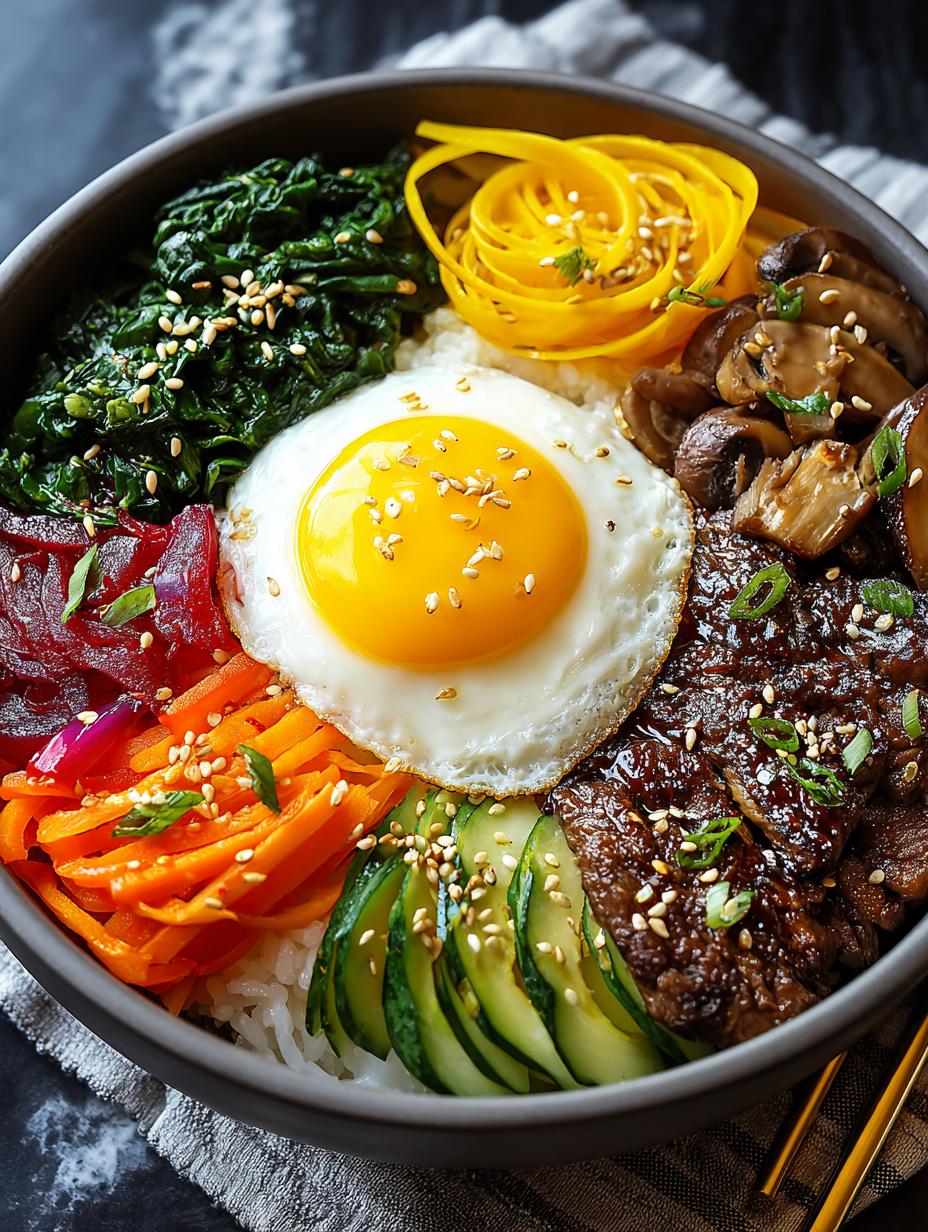
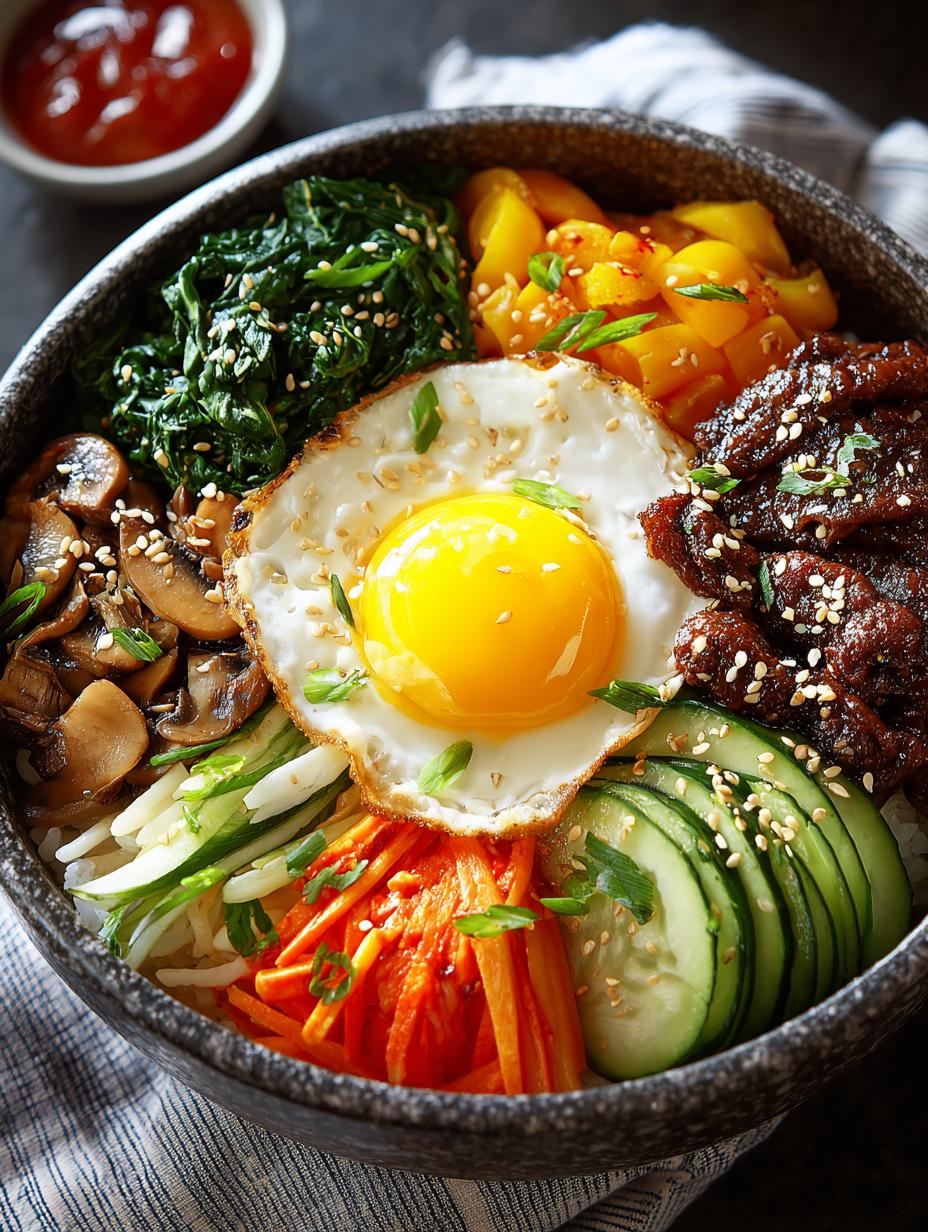
- Step 7: Arrange the sautéed vegetables (spinach, carrots, zucchini, mushrooms, and bean sprouts) and cooked beef or tofu on top of the rice.
- Step 8: Place a fried egg on top of the vegetables.
- Step 9: Drizzle the gochujang sauce over the top and add a sprinkle of sesame seeds and a drizzle of sesame oil.
- Step 10: Serve immediately, allowing everyone to mix their bibimbap together before eating.
Pro Tips for the Best Korean Bibimbap Bowl
Keep these in mind:
- This dish is versatile; feel free to add other vegetables as desired.
- Adjust the spiciness by varying the amount of gochujang.
- For a healthier option, use brown rice and load up on vegetables.
- Experiment with different proteins, like chicken or shrimp, for variety.
Best Ways to Serve Korean Bibimbap Bowl
Here are some ideas to elevate your serving experience:
- Offer a variety of toppings, like kimchi and pickled vegetables.
- Pair with a side of Korean pancakes (jeon) for a complete meal.
- Serve with a refreshing cucumber salad to balance the spice.
How to Store and Reheat Korean Bibimbap Bowl
To store leftovers, place them in an airtight container in the fridge for up to 3 days. To reheat, simply microwave until warmed through, or enjoy it cold for a refreshing twist. This makes it perfect for bibimbap bowl meal prep. The flavors meld beautifully overnight!
Frequently Asked Questions About Korean Bibimbap Bowl
What’s the secret to perfect Korean Bibimbap Bowl?
The secret lies in using fresh ingredients and balancing the flavors. A mix of textures from mixed rice with vegetables and a spicy sauce creates an unforgettable experience.
Can I make Korean Bibimbap Bowl ahead of time?
Yes! You can prepare all the components in advance and assemble them just before serving. This is great for easy bibimbap recipes for lunch.
How do I avoid common mistakes with Korean Bibimbap Bowl?
Ensure your rice is cooked perfectly and do not overcook the vegetables. Mixing them at the end helps maintain their vibrant colors and crunch.
Variations of Korean Bibimbap Bowl You Can Try
Explore these delicious variations:
- Swap out beef for grilled chicken or shrimp for a different protein.
- Make it vegan by using tofu and omitting the egg.
- Add different vegetables like radishes, broccoli, or bell peppers for more flavor and nutrients.
These adaptations ensure that you enjoy the authentic flavors of this Korean mixed rice dish in multiple ways!
For more delicious recipes, check out Irresistible Korean Mexican Shrimp or Creamy Sausage Potato Chowder. You can also explore Best Zucchini Bread Recipe for a tasty side dish!
Print
Korean Bibimbap Bowl: 10 Easy Steps to Perfection
- Total Time: 35 minutes
- Yield: 4 servings 1x
- Diet: Vegetarian
Description
Korean Bibimbap Bowl is a colorful and nutritious dish that combines rice, vegetables, protein, and a spicy sauce.
Ingredients
- 2 cups cooked rice (white or brown)
- 1 cup spinach (blanched)
- 1 cup carrots (julienned)
- 1 cup zucchini (julienned)
- 1 cup mushrooms (shiitake or button, sliced)
- 1 cup bean sprouts (blanched)
- 1 cup sliced beef (or tofu for a vegetarian option)
- 4 eggs
- 2 tablespoons vegetable oil (for cooking)
- Sesame oil (for drizzling)
- Sesame seeds (for garnish)
- Salt and pepper (to taste)
- 3 tablespoons gochujang (Korean chili paste)
- 1 tablespoon sesame oil
- 1 tablespoon sugar
- 1 tablespoon rice vinegar
- 1 teaspoon minced garlic
- 1 teaspoon soy sauce
Instructions
- In a small bowl, whisk together the gochujang, sesame oil, sugar, rice vinegar, minced garlic, and soy sauce until smooth. Set aside.
- In a skillet, heat 1 tablespoon of vegetable oil over medium heat. Sauté the carrots and zucchini for about 3–4 minutes until tender. Season with salt and pepper. Remove from the skillet and set aside.
- In the same skillet, add another tablespoon of oil and sauté the mushrooms until golden brown, about 3–4 minutes. Season with salt and pepper.
- If using beef, cook the sliced beef in the skillet until browned and cooked through, about 4–5 minutes. For tofu, sauté until golden on all sides.
- In a separate pan, fry the eggs sunny-side up or to your desired doneness.
- In a large bowl or individual serving bowls, place a generous scoop of cooked rice at the bottom.
- Arrange the sautéed vegetables (spinach, carrots, zucchini, mushrooms, and bean sprouts) and cooked beef or tofu on top of the rice.
- Place a fried egg on top of the vegetables.
- Drizzle the gochujang sauce over the top and add a sprinkle of sesame seeds and a drizzle of sesame oil.
- Serve immediately, allowing everyone to mix their bibimbap together before eating.
Notes
- This dish is versatile; feel free to add other vegetables as desired.
- Adjust the spiciness by varying the amount of gochujang.
- Prep Time: 20 minutes
- Cook Time: 15 minutes
- Category: Main Dish
- Method: Stir-fry
- Cuisine: Korean
Nutrition
- Serving Size: 1 bowl
- Calories: 550
- Sugar: 5g
- Sodium: 800mg
- Fat: 20g
- Saturated Fat: 4g
- Unsaturated Fat: 14g
- Trans Fat: 0g
- Carbohydrates: 80g
- Fiber: 5g
- Protein: 20g
- Cholesterol: 200mg

Written by Chef Anna
I'm Anna - a Le Cordon Bleu-trained chef, recipe developer, and the voice behind Chef Johns Gourmet. After a decade in professional kitchens, I now spend my mornings testing recipes and my afternoons writing them down so you can make them perfectly in your own kitchen. Every one of the 1,100+ recipes on this site has been personally cooked, tasted, and refined. I write like I'm standing next to you, walking you through every step. Simple recipes. Bold flavors. Made for real kitchens.