Key Takeaways
- 400°F for 12–15 Minutes: The only oven temp you need for perfectly cooked salmon — flaky, moist, never dry.
- Internal Temp 125°F: Pull the salmon at 125°F and let carryover cooking bring it to 130–135°F for medium. Perfect every time.
- Avocado Salsa on Top: Diced avocado, red onion, cilantro, and lime juice — made while the salmon bakes.
- 42g Protein per Serving: One fillet delivers nearly half your daily protein with healthy omega-3 fats.
- Skin-On for Crispiness: Bake skin-side down on parchment — the skin turns crispy while protecting the flesh from drying out.
- 30 Minutes Total: 5 min prep, 12–15 min bake, 5 min avocado salsa. Weeknight dinner solved.
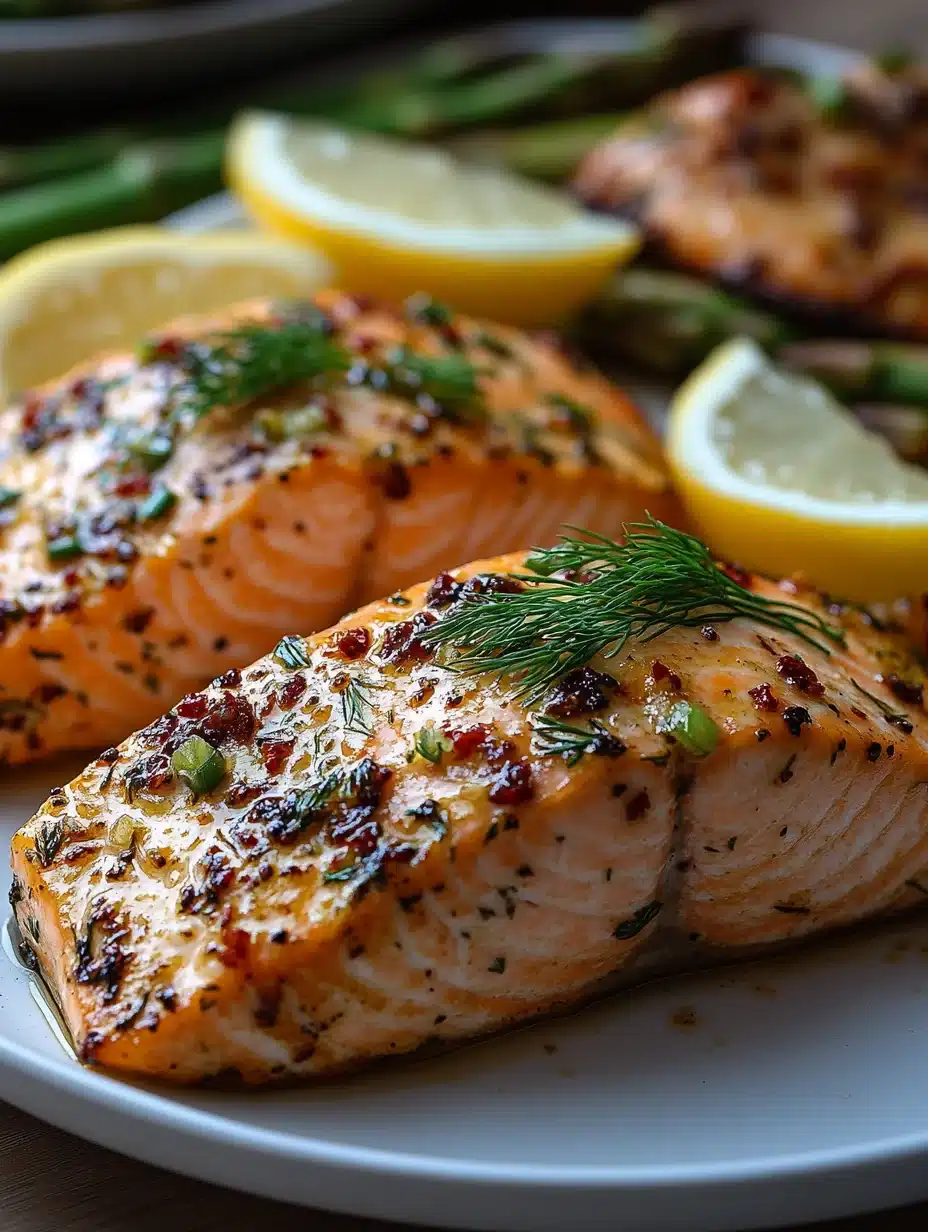
Baked salmon with avocado is one of the simplest and most satisfying dinners you can make on a weeknight. Salmon fillets seasoned with salt, pepper, garlic, and a squeeze of lemon, baked at 400°F for 12–15 minutes, then topped with a bright, creamy avocado salsa. The combination of flaky, omega-3-rich salmon and cool, buttery avocado is a perfect contrast of warm and cold, rich and fresh.
This recipe is designed for people who want a high-protein, nutrient-dense dinner with zero fuss. There is no marinating, no complicated sauce, and no technique to master. If you can set an oven to 400°F and dice an avocado, you can make this dinner. It is the recipe that proves healthy eating doesn’t have to be bland or time-consuming.
Baked Salmon With Avocado Nutrition Facts
| Nutrient | Per Serving (1 fillet + salsa) | % Daily Value |
|---|---|---|
| Calories | 420 kcal | 21% |
| Protein | 42 g | 84% |
| Total Fat | 26 g | 33% |
| Saturated Fat | 4 g | 20% |
| Omega-3 (EPA+DHA) | 2.2 g | — |
| Carbohydrates | 6 g | 2% |
| Fiber | 4 g | 14% |
| Sodium | 350 mg | 15% |
| Vitamin D | 14 mcg | 70% |
| Potassium | 820 mg | 17% |
Why Salmon and Avocado Is a Perfect Pairing
Salmon and avocado work together on every level: nutritional, textural, and flavor. Nutritionally, salmon provides complete protein and omega-3 fatty acids, while avocado delivers heart-healthy monounsaturated fats, potassium, and fiber. Texturally, the warm, flaky salmon contrasts beautifully with the cool, creamy avocado. Flavor-wise, the rich, savory fish is perfectly balanced by the mild, buttery fruit with a hit of lime and cilantro.
Salmon Cooking Methods Compared
| Method | Time | Texture | Skill Level | Flavor | Best For |
|---|---|---|---|---|---|
| Oven-Baked (This Recipe) | 12–15 min | Flaky, tender | Beginner | Clean, pure | ★ Weeknight dinners |
| Pan-Seared | 8–10 min | Crispy skin, silky center | Intermediate | Rich, buttery | Date night |
| Broiled | 6–8 min | Charred top, tender inside | Intermediate | Slightly smoky | Quick meal, no flip |
| Air Fryer | 8–10 min | Crispy outside, moist inside | Beginner | Similar to baked | Quick single serving |
| Poached | 10–12 min | Silky, delicate | Intermediate | Mild, clean | Salads, bowls |
| Grilled | 6–8 min | Charred, smoky | Advanced | Smoky, bold | Summer BBQ |
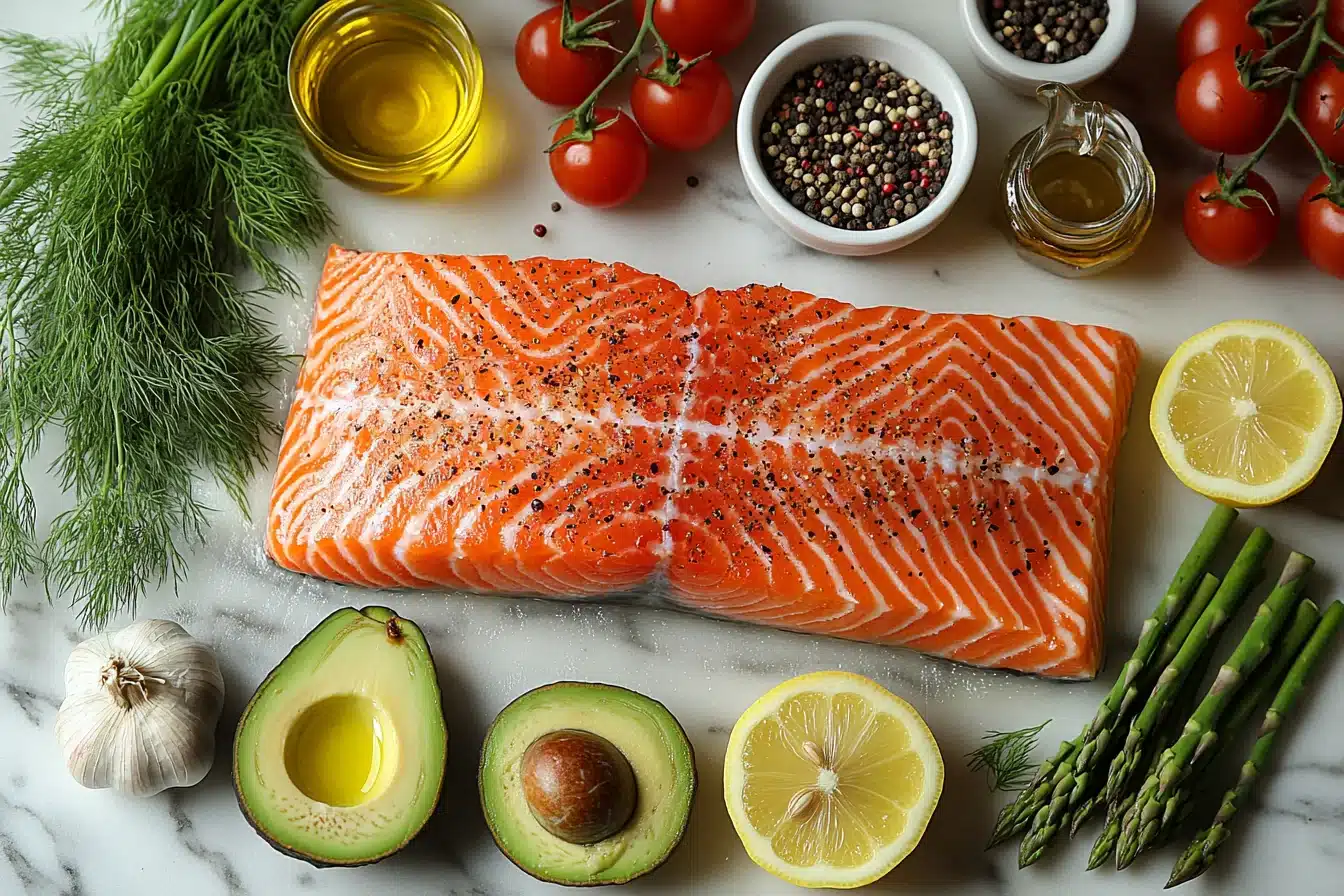
Essential Ingredients
| Component | Ingredient | Amount | Purpose & Notes |
|---|---|---|---|
| Salmon | Salmon fillets (skin-on) | 4 fillets (6 oz each) | Wild-caught or Atlantic — skin-on prevents drying and turns crispy |
| Olive oil | 1 tbsp | Light coat for browning and keeps fish moist | |
| Garlic powder | 1 tsp | Even garlic flavor without burning | |
| Smoked paprika | ½ tsp | Subtle smokiness and golden color | |
| Salt & pepper | To taste | Season generously — salmon can handle bold seasoning | |
| Avocado Salsa | Ripe avocados | 2 large | Should yield slightly to pressure — too firm = flavorless, too soft = mushy |
| Red onion | ¼ cup, finely diced | Sharp bite that balances the creamy avocado | |
| Fresh cilantro | ¼ cup, chopped | Bright herbal freshness — sub parsley if you are cilantro-averse | |
| Lime juice | 2 tbsp (1 lime) | Prevents browning and adds crucial acidity | |
| Jalapeño (optional) | 1, seeded & diced | Gentle heat — remove seeds for mild, keep for spicy |
Step-by-Step: How to Make Baked Salmon With Avocado
Step 1: Preheat Oven to 400°F and Season the Salmon
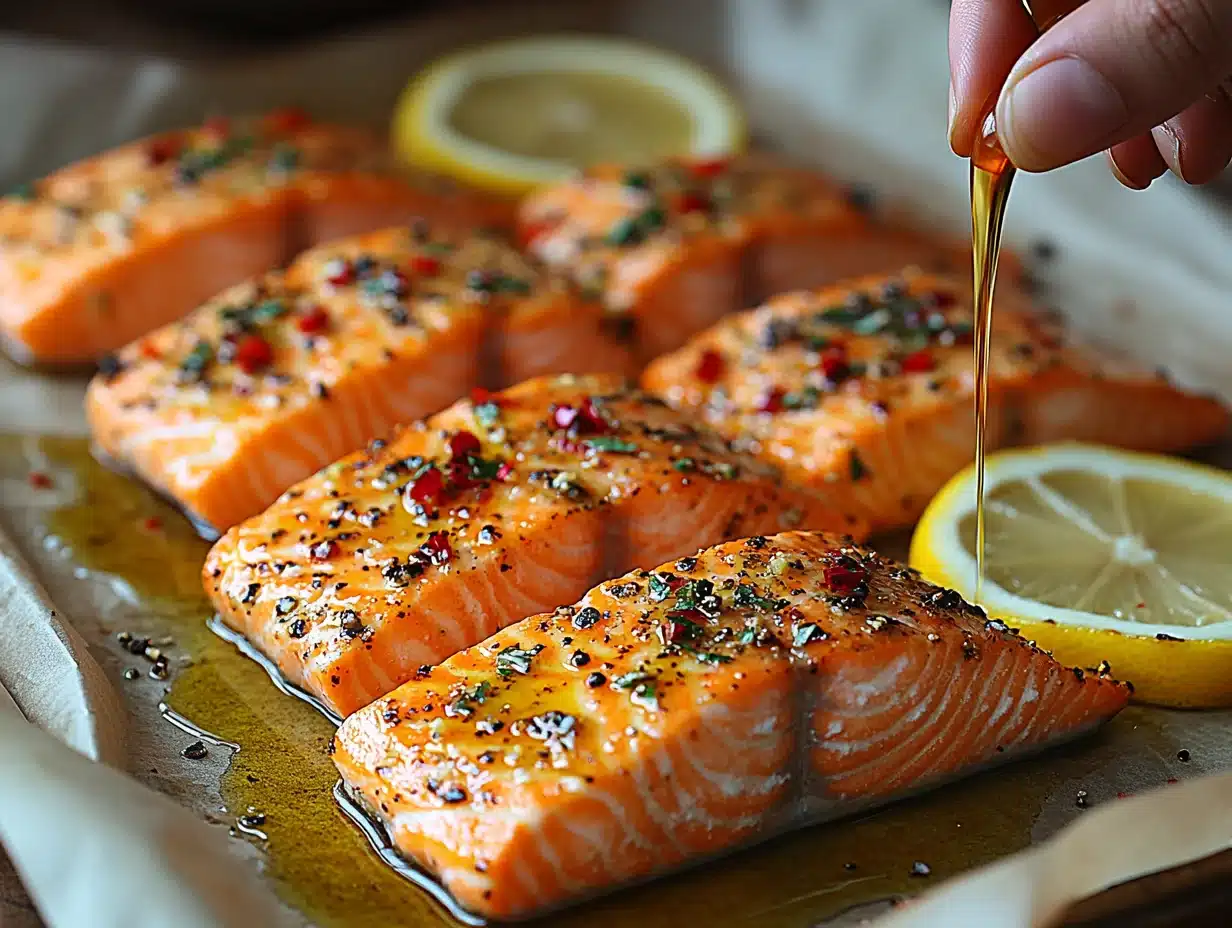
Preheat oven to 400°F (200°C). Line a baking sheet with parchment paper. Pat salmon fillets dry with paper towels — removing surface moisture is critical for browning instead of steaming. Drizzle with olive oil and season generously with garlic powder, smoked paprika, salt, and pepper. Rub the seasoning into the flesh with your fingers.
Step 2: Bake Skin-Side Down for 12–15 Minutes
Place salmon fillets skin-side down on the parchment. The skin acts as a natural barrier that prevents the flesh from drying out and becomes crispy during baking. Bake for 12 minutes for medium (125°F internal — it will rise to 130–135°F from carryover cooking) or 15 minutes for well-done (140°F). Do not flip. The top should be opaque and light pink, with the thickest part still slightly translucent in the center.
Step 3: While Salmon Bakes, Make the Avocado Salsa
Dice 2 ripe avocados into ½-inch cubes. Combine in a bowl with ¼ cup finely diced red onion, ¼ cup chopped cilantro, 2 tablespoons lime juice, diced jalapeño (if using), and a pinch of salt. Toss gently — you want chunky salsa, not guacamole. The lime juice prevents the avocado from browning and adds a bright, acidic contrast to the rich salmon.
Step 4: Top Salmon With Avocado Salsa and Serve
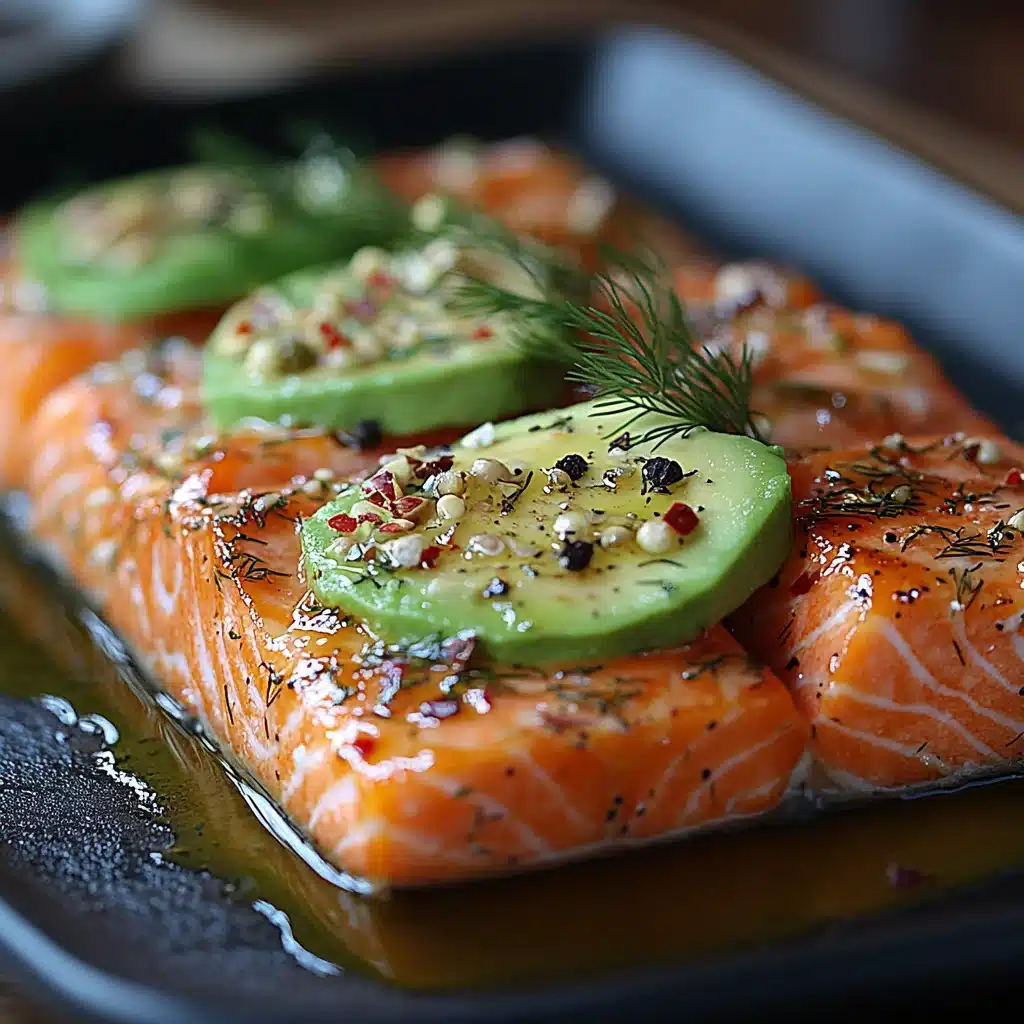
Transfer baked salmon to plates. Spoon a generous mound of avocado salsa on top of each fillet. Add a squeeze of extra lime juice, a drizzle of olive oil, and a sprinkle of flaky sea salt. Serve with your choice of side — rice, quinoa, roasted vegetables, or a simple green salad. The contrast of hot, flaky salmon and cool, creamy avocado salsa is what makes this dish extraordinary.
Wild-Caught vs. Farm-Raised Salmon
| Factor | Wild-Caught (Sockeye / King) | Farm-Raised (Atlantic) |
|---|---|---|
| Color | Deep red-orange (natural astaxanthin) | Pale pink (color added via feed) |
| Flavor | Bold, clean, slightly mineral | Mild, buttery, fattier |
| Omega-3 Content | Higher per calorie | Higher total (more fat overall) |
| Fat Content | Lower (leaner fish) | Higher (fattier texture) |
| Price | $15–25 / lb | $8–12 / lb |
| Environmental Impact | Better (sustainable fisheries) | Mixed (depends on farm practices) |
| Best For This Recipe | ★ Bold flavor stands alone | ★ Fattier = more forgiving for beginners |
How to Tell When Salmon Is Done
The Fork Test
Press the thickest part of the fillet with a fork and gently twist. If the salmon flakes easily into large, moist chunks, it is done. If it resists and feels firm, it needs another minute or two. If the flakes are very small and dry, it is overcooked.
Internal Temperature Guide
Insert an instant-read thermometer into the thickest part of the fillet. 120°F = rare (sushi-like center). 125°F = medium-rare (ideal for this recipe — pull from oven here and let carryover bring it to 130–135°F). 140°F = well-done. The FDA recommends 145°F, but most chefs pull salmon at 125–130°F for the best texture.
The Color Test
Look at the side of the fillet. The outside should be opaque and light pink. A thin layer at the center should still look slightly darker and translucent. This indicates medium — the carryover heat will finish cooking the center perfectly while the salmon rests for 2 minutes.
Common Baked Salmon Mistakes and How to Fix Them
Mistake 1: Oven Temperature Too Low
At 350°F, salmon takes too long to cook and often turns dry before browning. 400°F is the sweet spot — it cooks the fish quickly enough to keep it moist while creating light browning on top. For even faster cooking, try 425°F for 10–12 minutes.
Mistake 2: Not Drying the Surface
Wet salmon steams instead of bakes. The result is a grey, flabby surface with no color or texture. Always pat the fillets dry with paper towels before seasoning and oiling. This is the most commonly skipped step and the easiest fix for better salmon.
Mistake 3: Overcooking
Salmon continues to cook for 5–10°F after leaving the oven (carryover cooking). If you bake to 140°F, by the time it hits the plate it is 145–150°F — dry and chalky. Pull at 125°F and trust the carryover. It will be perfect.
Mistake 4: Removing the Skin
Baking skin-on protects the bottom of the fillet from direct heat, preventing drying. The skin also turns delightfully crispy when baked on parchment. After serving, diners who do not want the skin can simply slide it off with a fork — but most will eat it.
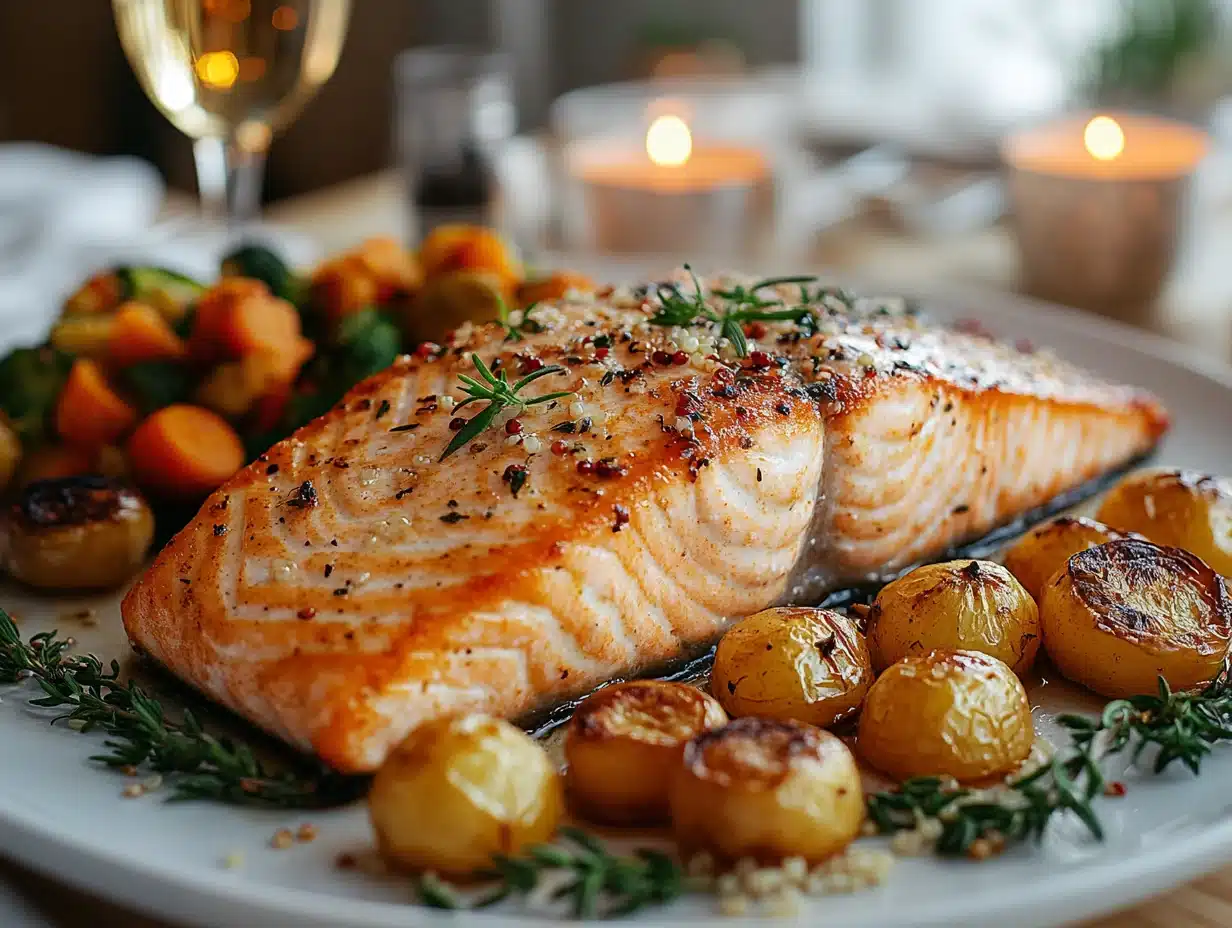
Salmon Internal Temperature Guide
| Doneness Level | Internal Temp | Texture | Color | Best For |
|---|---|---|---|---|
| Rare (sushi-grade only) | 110°F / 43°C | Very soft, translucent | Deep orange-red | Sashimi, crudo |
| Medium-rare | 120°F / 49°C | Silky, moist, slight resistance | Pink-orange center | Pan-seared fillets |
| Medium (recommended) | 125–130°F / 52–54°C | Flaky yet moist | Light pink throughout | Baked, grilled |
| Medium-well | 135°F / 57°C | Firm, starting to dry | Pale pink to opaque | Salmon cakes, salads |
| Well done (USDA) | 145°F / 63°C | Dry, firm, flakes easily | Fully opaque | Not recommended |
What to Serve With Baked Salmon
- Cucumber Caesar salad — the perfect light, crunchy side for this rich fish
- Big Mac pasta salad — hearty potluck pairing when serving a crowd
- Sheet pan smoked sausage — surf and turf sheet pan dinner
- Wonton wrappers — serve salmon alongside steamed dumplings for fusion dinner
- Pigs in a blanket — start with pigs as an appetizer, salmon as the main
- Cheesy onion rings — indulgent side to balance the healthy salmon
- Sardine goat cheese crostini — seafood-themed dinner party
- Parmesan cloud chicken bombs — serve both proteins for a protein feast
- Roasted asparagus — 400°F, 12 min, same oven — timing matches perfectly
- Steamed jasmine rice — absorbs the avocado salsa and salmon juices beautifully
Baked Salmon With Avocado
Baked Salmon with Avocado
Total Time: 33 minutes
Yield: 4 servings 1x
Diet: Gluten-Free, Low-Carb
Description
A delicious and healthy baked salmon dish served with a creamy avocado sauce.
Ingredients
Scale
- 4 salmon fillets
- 2 ripe avocados
- 1 lime, juiced
- 2 tablespoons olive oil
- Salt and pepper, to taste
- Fresh cilantro, for garnish
Instructions
- Preheat the oven to 400°F (200°C).
- Season salmon fillets with salt and pepper, and place on a baking sheet.
- Mix olive oil and lime juice in a bowl and drizzle over the salmon.
- Bake for 15–18 minutes until salmon is cooked through.
- Meanwhile, blend avocados until smooth to create the sauce.
- Serve the salmon with avocado sauce on top, garnished with cilantro.
Notes
This recipe is perfect for a quick weeknight dinner or a healthy meal prep option.
- Prep Time: 15 minutes
- Cook Time: 18 minutes
- Category: Main Course
- Method: Baking
- Cuisine: American
Nutrition
- Serving Size: 1 fillet
- Calories: 350
- Sugar: 1g
- Sodium: 300mg
- Fat: 22g
- Saturated Fat: 3g
- Unsaturated Fat: 19g
- Trans Fat: 0g
- Carbohydrates: 10g
- Fiber: 7g
- Protein: 30g
- Cholesterol: 80mg
Health Benefits of the Salmon-Avocado Combination
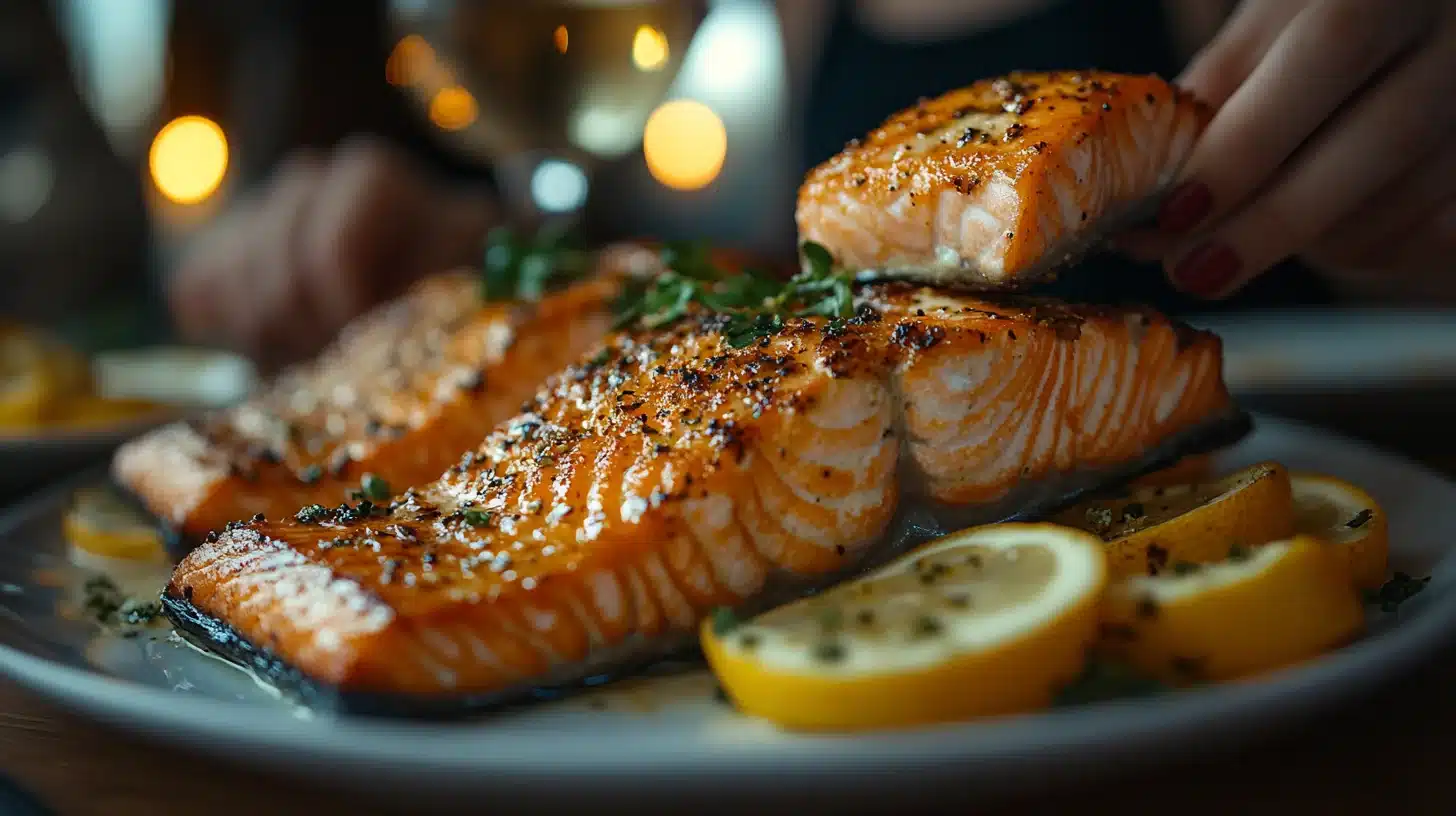
Pairing salmon with avocado is not just a flavor match—it is a nutritional powerhouse supported by extensive research. Salmon provides one of the richest natural sources of omega-3 fatty acids (EPA and DHA), delivering roughly 2,260 mg per 3.5-ounce serving of wild Atlantic salmon. These omega-3s are linked to reduced inflammation, improved cardiovascular health, and better cognitive function according to studies published in the Journal of the American Heart Association.
Avocado contributes heart-healthy monounsaturated fats (oleic acid), which research from Harvard School of Public Health has shown to help lower LDL cholesterol. Additionally, the fat in avocado significantly improves absorption of fat-soluble vitamins (A, D, E, K) and carotenoids from other foods eaten in the same meal. A 2014 study in the Journal of Nutrition found that adding avocado to a meal increased absorption of carotenoids by 2.6 to 15.3 times.
Together, one serving of baked salmon with avocado delivers approximately 35 grams of protein, 5 grams of fiber, over 50% of daily vitamin D needs, and a complete amino acid profile. This combination supports muscle recovery, satiety, and sustained energy—making it a top-tier meal for anyone following a Mediterranean, keto, paleo, or general whole-foods diet.
How to Select the Best Salmon at the Market
Choosing the right salmon fillet at the grocery store or fish market is the single most important step in making exceptional baked salmon, and experienced home cooks know exactly what to look for. Fresh salmon should have bright, vibrant color, whether it is the deep red-orange of wild sockeye or the lighter pink of farm-raised Atlantic salmon. The flesh should look moist and glistening, never dry or dull, and there should be no brown spots or discoloration along the edges. Press the fillet gently with your finger: fresh salmon springs back immediately, while older fish retains the indent.
The smell test is equally important. Fresh salmon should smell clean and briny, like the ocean or a fresh cucumber. Any strong fishy, ammonia-like, or sour smell indicates the fish is past its prime and will taste unpleasant no matter how well you season and cook it. When buying from a fishmonger, do not hesitate to ask when the fish was delivered and whether it was previously frozen, because “previously frozen” salmon that was flash-frozen at sea can actually be fresher than fish labeled “fresh” that has spent several days in transit.
Wild-Caught vs Farm-Raised Salmon: What the Science Says
The debate between wild-caught and farm-raised salmon is nuanced, and the best choice depends on your priorities regarding flavor, nutrition, price, and environmental impact. Wild-caught salmon from Alaska, particularly sockeye and king varieties, tends to have deeper color, firmer texture, and more intense flavor due to the fish’s natural diet of krill and algae. Wild salmon also typically contains fewer calories and more omega-3 fatty acids per serving, with some studies showing up to 32 percent higher omega-3 concentrations in wild fish compared to farmed equivalents.
Farm-raised Atlantic salmon, which accounts for roughly 70 percent of all salmon sold in the United States, offers its own advantages: consistent availability year-round, lower price points, milder flavor that appeals to those who find wild salmon too intense, and a higher fat content that makes it more forgiving during cooking since the extra intramuscular fat keeps the fillet moist even if slightly overcooked. Modern aquaculture practices have improved significantly, with many farms earning sustainability certifications that address concerns about environmental impact and fish welfare.
Essential Tools for Perfectly Baked Salmon Every Time
Having the right tools in your kitchen dramatically improves your baked salmon results, and the single most important investment you can make is an instant-read digital thermometer. Unlike analog meat thermometers that take 30 seconds to register, a quality instant-read thermometer like the ThermoWorks Thermapen gives you an accurate reading in under two seconds, allowing you to check your salmon without holding the oven door open long enough to drop the temperature. Insert the probe into the thickest part of the fillet horizontally rather than from the top, which gives a more accurate reading of the center temperature where the fish cooks slowest.
Beyond a thermometer, a rimmed half-sheet pan lined with parchment paper is essential for even cooking and easy cleanup. The parchment prevents the salmon skin from welding itself to the pan during baking, making it effortless to transfer the fillet to a serving plate in one clean piece. If you frequently bake salmon, consider investing in a wire cooling rack that fits inside your sheet pan, which elevates the fish and allows hot air to circulate underneath for more even cooking and slightly crispier skin on the bottom. A fish spatula with its thin, flexible blade and angled edge slides perfectly underneath delicate salmon fillets without breaking them apart, making it the ideal serving tool that no serious home cook should be without in their kitchen drawer.
Frequently Asked Questions About Baked Salmon With Avocado
What temperature do you bake salmon?
400°F (200°C) for 12–15 minutes. This is hot enough to cook the fish quickly while keeping it moist. For a crispy top, try 425°F for 10–12 minutes.
How long do you bake salmon at 400?
12–15 minutes for 6 oz fillets. Check at 12 minutes for medium (125°F internal). Thicker fillets (1.5 inches) may need 15–18 minutes. Thinner fillets (under 1 inch) may be done in 10 minutes.
Should you bake salmon skin-side up or down?
Skin-side down. The skin acts as a barrier between the flesh and the pan, preventing drying. It also turns crispy during baking — a bonus texture.
How do you know when salmon is done?
Three ways: fork test (flakes easily into large moist chunks), temperature (125°F for medium, 140°F for well-done), or color (opaque on outside, slightly translucent in center).
Can you make baked salmon with avocado ahead of time?
Bake the salmon ahead but make the avocado salsa no more than 2 hours before serving to prevent browning. Store separately. The salmon reheats well at 300°F for 5–7 minutes.
Is baked salmon with avocado keto?
Yes. Only 6g total carbs per serving with 42g protein and 26g healthy fats. It fits perfectly into keto, low-carb, paleo, and Whole30 eating plans.
What can I substitute for avocado?
Mango salsa (sweet tropical twist), cucumber-dill yogurt sauce (cool and tangy), or roasted cherry tomatoes (warm and acidic). Each provides the fresh topping contrast that makes this dish work.
Wild-caught or farm-raised salmon for baking?
Both work. Wild-caught has bolder flavor and is leaner. Farm-raised is fattier and more forgiving — harder to overcook. For this recipe, either is excellent.
Can you air fry salmon with avocado?
Yes. Air fry at 400°F for 8–10 minutes (no flip needed). The result is slightly crispier on top than oven-baked. Add the avocado salsa after air frying — never put avocado in the air fryer.
How do you prevent avocado salsa from turning brown?
Lime juice is the key — the citric acid slows oxidation. Toss the diced avocado with lime juice immediately after cutting. The salsa stays green for about 2 hours at room temperature or 4–6 hours refrigerated.
Written by Chef Anna
I'm Anna - a Le Cordon Bleu-trained chef, recipe developer, and the voice behind Chef Johns Gourmet. After a decade in professional kitchens, I now spend my mornings testing recipes and my afternoons writing them down so you can make them perfectly in your own kitchen. Every one of the 1,100+ recipes on this site has been personally cooked, tasted, and refined. I write like I'm standing next to you, walking you through every step. Simple recipes. Bold flavors. Made for real kitchens.