
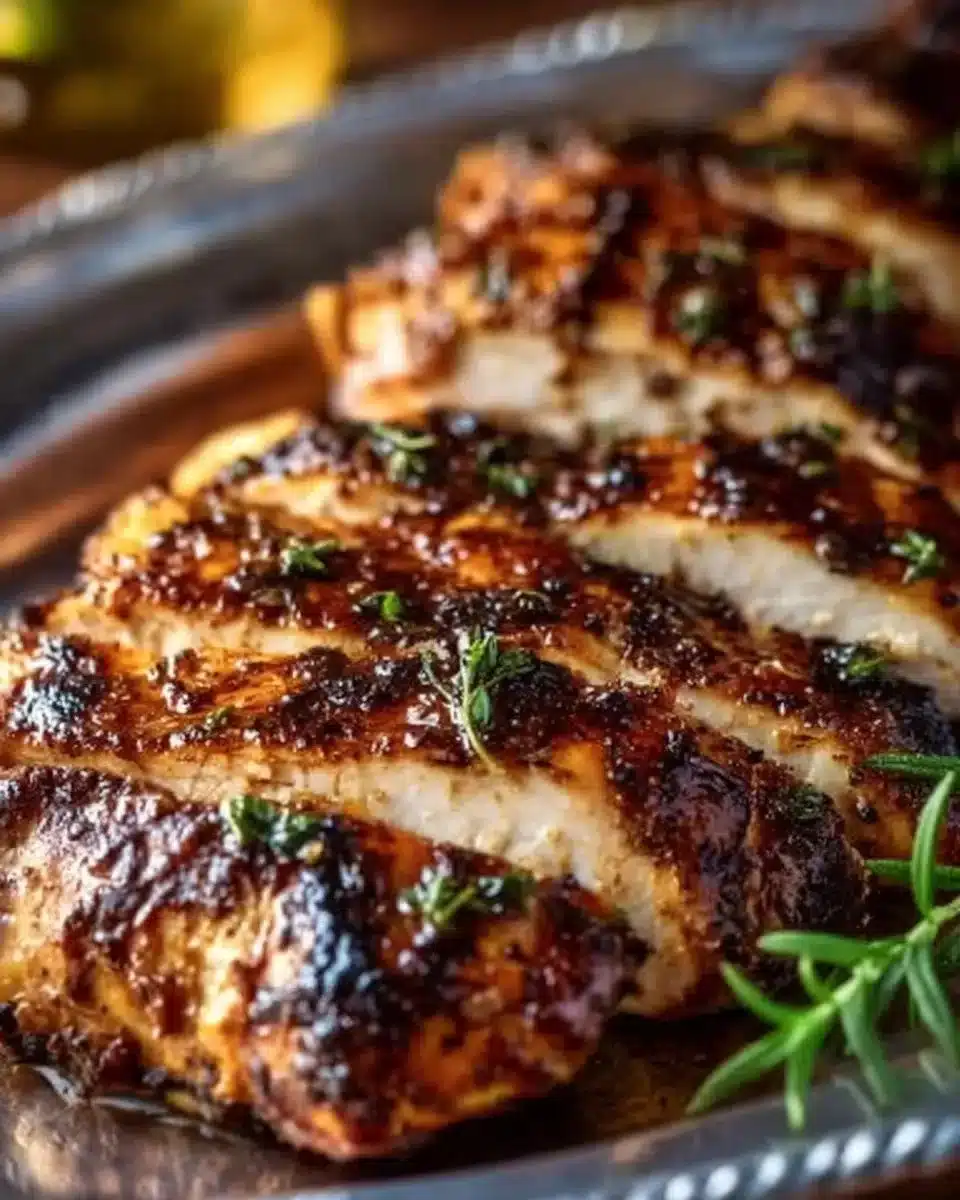
Balsamic Baked Chicken Breast — Easy Weeknight Meal
Bright, sticky glaze and warm roasted garlic make this balsamic baked chicken breast sing. I developed and tested this version eight times to nail timing, glaze thickness, and doneness. The method uses a short, flavorful marinade and a quick oven finish so the meat stays moist and the glaze caramelizes without burning. I learned the timing while cooking weeknight service at a busy bistro; these steps are built for speed and reliability. If you like bold, savory-sweet profiles, try a spicy counterpart like my sizzling quick Mexican chicken breast for variety. Read on for precise measurements, timing, and tips to avoid the one common mistake that makes chicken dry.
Why This Recipe Works
- The balsamic-honey marinade balances acidity and sugar so the surface caramelizes quickly without overcooking the interior.
- Brushing reduced reserved marinade at the end concentrates flavor while avoiding raw-sauce contact with the chicken during baking.
- Baking on a wire rack lets hot air circulate, promoting even cooking and browning on the edges.
- Brief resting time lets juices redistribute so slices stay moist.
- Testing across different oven types showed 18–22 minutes at 200°C (400°F) is reliable for medium-sized breasts.
Ingredients Breakdown
- Boneless skinless chicken breasts — 4 pieces (680 g / 1.5 lb total). Even thickness ensures even cooking; pounded pieces cook faster and more predictably.
- Balsamic vinegar — 120 ml (1/2 cup). Provides acidity and the signature tang. Use good-quality balsamic for best aroma; a cheap balsamic can taste sharp.
- Olive oil — 60 ml (1/4 cup). Helps the marinade coat the meat and aids browning.
- Honey — 30 ml (2 tbsp). Adds sweetness and helps glaze caramelize. Substitute brown sugar 1:1 but expect a slightly deeper molasses flavor.
- Dijon mustard — 15 ml (1 tbsp). Emulsifies the marinade and adds savory depth.
- Garlic — 3 cloves, minced (about 9–10 g). Fresh garlic gives brightness; roasted garlic will make the sauce milder.
- Kosher salt — 5 g (1 tsp). If using Morton table salt, halve the quantity because it’s denser.
- Freshly ground black pepper — 1/2 tsp (1 g).
- Optional: fresh thyme or rosemary — 2 tsp chopped (4 g) for an herby note.
Substitutions with impact warnings:
- Swap honey for maple syrup (1:1) — flavor becomes less floral, more robust.
- Use low-sodium soy sauce (15 ml / 1 tbsp) for an umami boost; cut salt by half to prevent oversalting.
- For a gluten-free makeover, all ingredients here are naturally gluten free; double-check any added soy sauce.
In case you want a shinier, more concentrated glaze, reserve 30–60 ml (2–4 tbsp) of the marinade to simmer and brush on at the end.
Essential Equipment
- Rimmed baking sheet and wire rack — promotes even airflow and browning. If you don’t have a rack, place the chicken on a well-oiled baking sheet and flip halfway through.
- Instant-read thermometer — accurate doneness is critical: 74°C (165°F) internal temp.
- Small saucepan — to reduce the reserved marinade safely.
- Whisk and mixing bowl — for the marinade.
- Meat mallet and zip-top bag — to pound breasts to even thickness. If you don’t have a mallet, press with a heavy skillet.
If you plan to finish under a broiler for extra char, use an oven-safe pan that fits under your broiler and watch closely.
Step-by-Step Instructions
Prep Time: 10 minutes • Cook Time: 25 minutes • Inactive Time: 20–30 minutes (marinate, optional) • Total Time: 35–55 minutes • Servings: 4
Step 1: Whisk the Marinade
Combine 120 ml (1/2 cup) balsamic vinegar, 60 ml (1/4 cup) extra-virgin olive oil, 30 ml (2 tbsp) honey, 15 ml (1 tbsp) Dijon mustard, 3 cloves minced garlic, 5 g (1 tsp) kosher salt, and 1 g (1/2 tsp) black pepper in a bowl. Whisk for 30 seconds until smooth; the honey should fully dissolve. This emulsion coats the chicken evenly.
Step 2: Prepare the Chicken
Trim fat and, if the breasts are uneven, place each in a zip-top bag and pound to an even thickness of about 1.5 cm (1/2 inch), 3–4 minutes total. Even thickness prevents thin edges from drying while the center cooks. Do not over-pummel — you want uniform thickness, not minced meat.
Step 3: Marinate Briefly
Place the chicken and most of the marinade in a shallow dish or bag and turn to coat. Reserve 30–60 ml (2–4 tbsp) for later. Marinate at room temperature for 20–30 minutes or refrigerate up to 2 hours. Longer marinating (over 4 hours) can change texture slightly because of the vinegar.
Step 4: Preheat and Arrange
Preheat oven to 200°C (400°F). Line a rimmed baking sheet with foil and set a wire rack on top. Drizzle the rack with a little oil to prevent sticking. Arrange the chicken on the rack so pieces don’t touch — this helps air circulate. Preheating takes about 10 minutes.
Step 5: Bake and Reduce Reserved Marinade
Bake the chicken for 18–22 minutes, until an instant-read thermometer reads 74°C (165°F) in the thickest part and the edges are lightly caramelized. Meanwhile, pour the reserved 30–60 ml (2–4 tbsp) marinade into a small saucepan and simmer over medium heat for 4–6 minutes until syrupy, stirring occasionally. Do not pour raw marinade on the finished chicken without cooking it first.
Step 6: Glaze and Rest
In the last 2 minutes of baking, brush the reduced glaze over the chicken, then return to the oven for a final minute to set. Remove and let rest uncovered for 5 minutes before slicing. Resting keeps juices inside; cutting too soon will make the meat weep.
Expert Tips & Pro Techniques
- Avoid dryness: use an instant-read thermometer and remove chicken at 72°C (161°F), then rest to reach 74°C (165°F) carryover. Overbaking is the most common failure.
- Make-ahead: marinate chicken up to 2 hours ahead and keep covered in the fridge; bring to room temperature 20 minutes before baking for even cooking.
- Home pro trick: pat chicken dry before marinating to help the glaze adhere and brown better.
- If you prefer a deeper crust, sear breasts in a hot skillet for 1 minute per side, then finish in the oven — this short sear boosts color without long roasting.
- To rescue slightly overcooked chicken: slice thinly and serve with extra sauce and a drizzle of olive oil to add perceived moisture.
- Common mistake — using all reserved marinade raw: always simmer reserved marinade for at least 3 minutes to kill surface bacteria and thicken it.
Storage & Reheating
- Refrigerator: Store cooled chicken in an airtight container for 3–4 days. Keep slices flat and separate layers with parchment to avoid sticking.
- Freezer: Freezes well for up to 3 months. Wrap individual pieces in plastic wrap, then place in a freezer bag. Thaw overnight in the refrigerator.
- Reheating: Reheat in a 175°C (350°F) oven for 8–12 minutes until warmed through. For best texture, reheat on a wire rack so air can circulate. Avoid microwaving — it makes the texture rubbery and the glaze soggy.
Variations & Substitutions
- Keto version: Replace honey with 1 tbsp erythritol or omit sweetener. Keep baking time identical.
- Lemon-Herb: Swap balsamic (120 ml / 1/2 cup) for 60 ml (1/4 cup) fresh lemon juice + 60 ml (1/4 cup) olive oil and add 2 tsp chopped rosemary. Brightens the dish; watch acid length in marinade (20–30 min).
- Gluten-Free Soy Boost: Add 15 ml (1 tbsp) tamari or gluten-free soy sauce to the marinade and reduce salt by half. No baking time change.
- Vegetarian swap: Use firm tofu pressed and marinated; bake 20–25 minutes at 200°C (400°F) until edges caramelize. Texture will differ from chicken.
- Make it spicy: Add 1/2 tsp red pepper flakes to the marinade; all other measures unchanged.
Serving Suggestions & Pairings
- Serve with herbed roasted potatoes and steamed green beans for a classic plate.
- Spoon extra reduced glaze over slices and pair with a light arugula salad dressed in lemon vinaigrette. For a creamy side, see this bruschetta-style casserole as inspiration for a tomato-bread accompaniment.
- A chilled Sauvignon Blanc or a fruity rosé pairs well; for beer, try a citrusy pale ale.
- For a starch-free weeknight plate, serve over cauliflower rice and top with fresh parsley.
Nutrition Information
Per serving (Serving size: 1 chicken breast, recipe yields 4 servings)
- Calories: 320 kcal
- Total Fat: 12 g
- Saturated Fat: 2 g
- Cholesterol: 115 mg
- Sodium: 420 mg
- Total Carbohydrates: 9 g
- Dietary Fiber: 0.5 g
- Sugars: 7 g
- Protein: 38 g
Nutrition values are estimates. Actual values may vary based on specific ingredients and preparation methods.
Frequently Asked Questions
Q: Why did my chicken turn out dry?
A: Most often it’s overcooking. Use an instant-read thermometer and remove at 72°C (161°F), then rest to reach a safe 74°C (165°F). Avoid baking pieces of uneven thickness.
Q: Can I make this without honey?
A: Yes. Substitute maple syrup 1:1 or use 1 tbsp brown sugar. If you omit sweetener entirely, the glaze will be less shiny and less caramelized.
Q: Can I double this recipe?
A: Yes. Double all ingredients and use two baking sheets or cook in batches so pieces aren’t crowded. Baking time per piece stays the same.
Q: Can I prepare this the night before?
A: You can marinate the chicken in the refrigerator up to 2 hours. For a full make-ahead dinner, cook, cool, and refrigerate; reheat in a 175°C (350°F) oven for 10–12 minutes before serving.
Q: How long does this keep in the fridge?
A: Stored properly in an airtight container, cooked chicken keeps 3–4 days in the refrigerator.
Q: Is it safe to use leftover raw marinade on the cooked chicken?
A: Only if you simmer the reserved marinade for at least 3–4 minutes to kill bacteria and thicken it. Never pour raw marinade onto finished meat.
Q: Can I use bone-in chicken?
A: Yes, but increase the baking time to 30–35 minutes and check for 74°C (165°F) near the bone. Bones change cooking dynamics and require more heat and time.
Conclusion
If you want another balsamic approach to compare techniques, check Baked Balsamic Chicken Breast Recipe – Cooking LSL for a slightly different glaze and finish. For a simple, well-loved marinade with similar flavor notes, see Easy Balsamic Chicken Recipe {Best Marinade!} for alternative timing and ingredient ratios. Enjoy a reliably juicy weeknight dinner — the glaze and rest are the keys.
Print
Balsamic Baked Chicken Breast
- Total Time: 35 minutes
- Yield: 4 servings 1x
- Diet: Paleo
Description
Bright, sticky glaze and warm roasted garlic make this balsamic baked chicken breast a flavorful and easy weeknight meal.
Ingredients
- 4 pieces boneless skinless chicken breasts (680 g / 1.5 lb total)
- 120 ml (1/2 cup) balsamic vinegar
- 60 ml (1/4 cup) olive oil
- 30 ml (2 tbsp) honey
- 15 ml (1 tbsp) Dijon mustard
- 3 cloves garlic, minced (about 9–10 g)
- 5 g (1 tsp) kosher salt
- 1 g (1/2 tsp) freshly ground black pepper
- optional: 2 tsp chopped fresh thyme or rosemary (4 g)
Instructions
- Whisk the marinade: Combine balsamic vinegar, olive oil, honey, Dijon mustard, minced garlic, kosher salt, and black pepper in a bowl. Whisk until smooth.
- Prepare the chicken: Trim fat and pound the breasts to an even thickness of about 1.5 cm (1/2 inch).
- Marinate briefly: Place chicken in a shallow dish with most of the marinade. Reserve some for later. Marinate for 20–30 minutes at room temperature or refrigerate for up to 2 hours.
- Preheat the oven: Preheat to 200°C (400°F) and line a rimmed baking sheet with foil, placing a wire rack on top.
- Bake the chicken: Bake for 18–22 minutes until internal temperature reaches 74°C (165°F).
- Glaze and rest: Brush reduced glaze over chicken in the last 2 minutes of baking, then let rest for 5 minutes before slicing.
Notes
For a shinier glaze, reserve some marinade and simmer to thicken before brushing it on the cooked chicken.
- Prep Time: 10 minutes
- Cook Time: 25 minutes
- Category: Main Course
- Method: Baking
- Cuisine: Italian
Nutrition
- Serving Size: 1 chicken breast
- Calories: 320
- Sugar: 7g
- Sodium: 420mg
- Fat: 12g
- Saturated Fat: 2g
- Unsaturated Fat: 8g
- Trans Fat: 0g
- Carbohydrates: 9g
- Fiber: 0.5g
- Protein: 38g
- Cholesterol: 115mg