
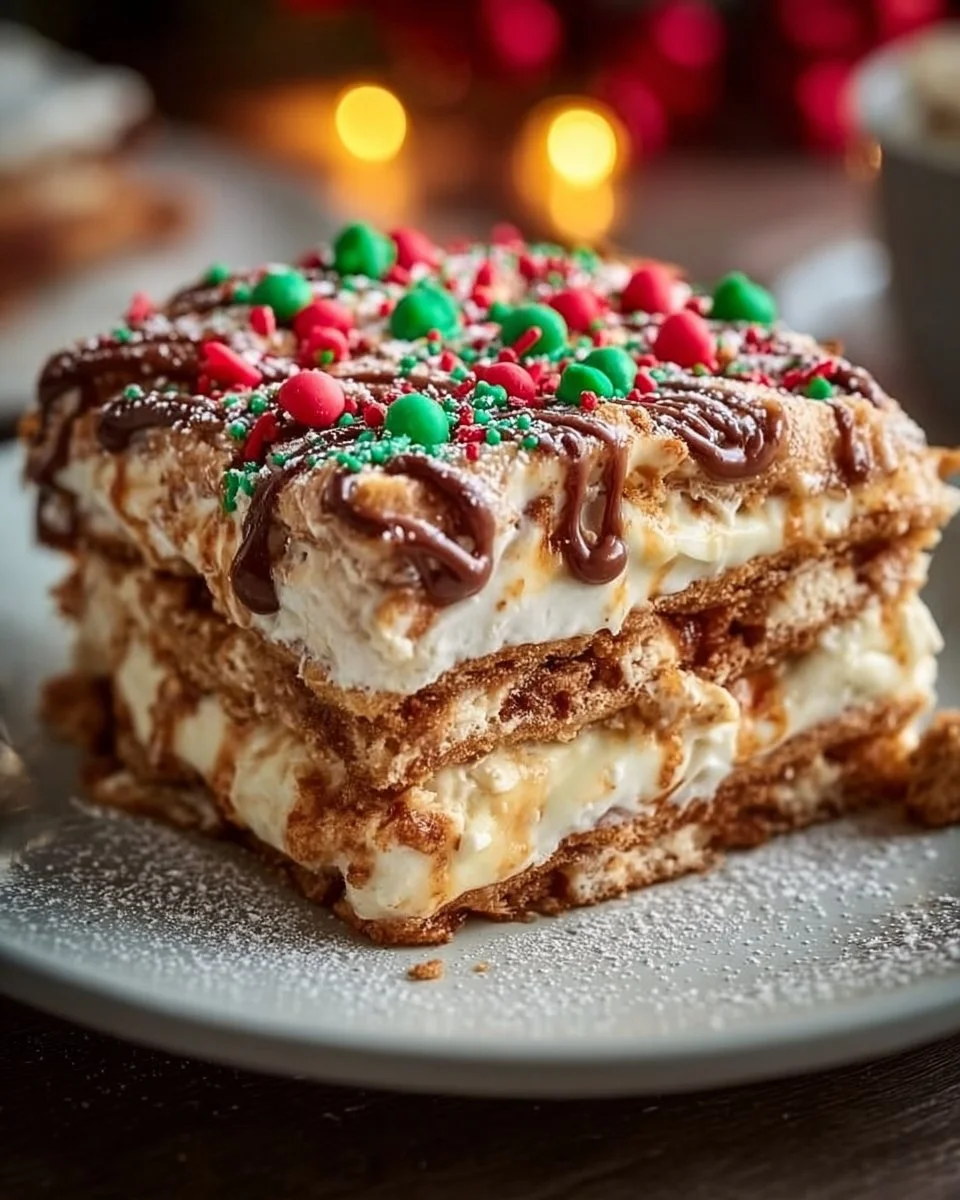
Christmas Cookie Lasagna guide: An Irresistible, Foolproof Holiday Dessert You’ll Love 🎄🍪
Ready for the most irresistible Christmas Cookie Lasagna guide that takes just a weekend to master? You’ll absolutely love this step-by-step plan for layering crunchy cookies, creamy fillings, and festive toppings into a show-stopping dessert. In the next few minutes you’ll learn quick, easy, and budget-friendly techniques to build a dessert that looks gourmet but tastes homey — perfect for holiday parties, family gatherings, or gifting to friends.
This guide walks you through background, core concepts, substitutions, tools, a foolproof learning process, expert strategies, and creative variations so you can make this dessert with confidence. Expect sensory cues, pro tips, troubleshooting, and storage advice to keep your layers perfect every time. Along the way I’ll share a short family anecdote about how this recipe became our holiday favorite and link to some inspiring cookie mashups for more ideas. Let’s get started with the basics and the exact directions you’ll need to master Christmas Cookie Lasagna.
Basic Directions: Preparation, Mixing Dry Ingredients, Baking the Cookies, Prepare the Cream Cheese Layer, Layering, Finishing Touch

(If you want similar cookie creativity inspiration, check out this playful riff on tiramisu cookies: keto tiramisu cookie ideas.)
1) Attributes Origin & Cultural Context (H2) 🎁
Christmas Cookie Lasagna has roots in layered dessert traditions — think trifle, tiramisu, and icebox cakes — but swapped into a uniquely festive cookie-forward format. The idea of layering cookies with custard or cream is common in many cultures; at holiday time, the crunch and spice of Christmas cookies makes the concept feel seasonal.
My family first made a version of cookie lasagna when my grandmother ran out of ladyfingers and used gingerbread instead. It became a holiday ritual: kids would help crumble cookies while adults whipped the cream, and everyone claimed a “best layer” title after dessert. What makes this version special is its balance — crunchy cookie layers, tangy cream cheese, sweet pudding, and a cocoa or peppermint finish that’s adaptable to regional tastes.
Regional variations: in the U.S. you’ll often see chocolate and peppermint; in parts of Europe, you’ll find almond biscotti or speculoos variations. This guide covers a flexible base you can adapt to gingerbread, sugar cookies, or wafer cookies for different textures and flavors.
For a cozy holiday pairing idea, consider complementing it with spiced cookies like these gingerbread cheesecake cookies: gingerbread cheesecake cookie pairing.
SEO notes: this section roots the "Traditional Christmas Cookie Lasagna guide" and touches on "Authentic Christmas Cookie Lasagna origin" and "Classic Christmas Cookie Lasagna history" so searchers understand why this dessert feels both nostalgic and modern.
2) Why This Christmas Cookie Lasagna Guide is a Game-Changer (H2) ⚡
This guide is a game-changer because it turns a potentially intimidating multi-layer dessert into a simple, repeatable process anyone can follow. Here’s how it helps, with clear benefits:
- Lightning Fast: Learn the method in about 30 minutes of active work and minimal chilling time. You’ll be able to explain "how to understand Christmas Cookie Lasagna at home easily" and execute it the same day.
- Budget-Friendly: Uses pantry staples — cream cheese, pudding mix, cookies — and no specialty equipment. Try budget swaps to stretch ingredients without losing flavor.
- Family Approved: Steps are kid-friendly, from crumb mixing to decorating. Great for group prep and holiday bonding.
- Nutritiously Delicious: While it’s an indulgence, you can add lighter elements (Greek yogurt, reduced-sugar pudding) to balance richness — making it mentally satisfying and socially enjoyable.
- Infinitely Customizable: Start with a vanilla base and layer in peppermint, cocoa, citrus zest, or jam swirls. This makes the "Expert-level Christmas Cookie Lasagna at home" approachable.
- Pantry-Friendly: Uses commonly available cookies like wafers, sugar cookies, or chocolate chip cookies. No obscure ingredients needed.
How it works: the cookie layers provide texture and flavor; the cream layers bind and soften the cookies into a cohesive sliceable dessert; toppings add contrast and seasonal flair. This is a "Best Christmas Cookie Lasagna guide for beginners" because it breaks down timing, sensory cues, and troubleshooting so you can replicate great results without guesswork.
Always keep
handy near your directions so images match each stage and help visual learners follow along.
Why these benefits matter: the combination of speed, customization, and simplicity means you can scale this dessert from a family dinner to holiday potluck with confidence. If you want inspiration for alternate cookie layers with punchy flavors, see this Biscoff-stuffed cookies idea: Biscoff stuffed cookies inspiration.
3) Complete Concept Breakdown (H2)
This section explains the main concepts that make Christmas Cookie Lasagna work and offers smart substitutions so you can tailor the dessert.
Main Concepts (organized by category)
- Essential base concepts
- Structure: alternating cookie layers and cream/pudding layers.
- Texture contrast: crunchy vs. creamy.
- Flavor balance: sweetness, acidity (from cream cheese), and optional bitterness (cocoa).
- Enhancers (examples & analogies)
- Alcohol or extract: a splash of rum or coffee for depth.
- Spice analogy: think of gingerbread as the "savory backbone" and pudding as the "glue."
- Optional add-ins
- Nuts, chocolate chips, fruit preserves, or peppermint bits.
- Applications and examples
- Serve chilled for sliceability or semi-frozen for a more ice-cream-like dessert.
Detailed explanations for key concepts
- Layer timing: Cookies should be slightly softened by the cream but not soggy. To control this, toast or slightly under-bake cookie rounds for firmer structure.
- Cream composition: Combining whipped cream with stabilized cream cheese and pudding creates lightness and structure, similar to folding in whipped egg whites when making mousse.
- Assembly order: Heavy elements at the bottom (cookie base) so the weight distributes evenly.
Smart substitutions table (textual)
- Cookie base: Graham crackers ↔ gingersnaps ↔ chocolate wafers
- Cream: Instant pudding + milk ↔ mascarpone + whipped cream ↔ light Greek yogurt mix
- Sweetener: Powdered sugar ↔ honey ↔ maple syrup (adjust liquids)
- Toppings: Candy cane shards ↔ toasted nuts ↔ cookie crumbs
Learning and application tips
- Start with small 8×8 pans to master layer ratios before scaling to large dishes.
- Test one layer’s softness by pressing a fork — it should give but maintain shape.
- Document your changes (notes on cookie type, chilling time) to replicate your favorite version.
Where to learn: Workshops, tutorial videos, and guided recipes help; for creative cookie variations check out this Biscoff-stuffed cookies write-up: Biscoff-stuffed cookies guide.
SEO phrases woven in: "Essential concepts for Christmas Cookie Lasagna", "Best examples for Christmas Cookie Lasagna", "Christmas Cookie Lasagna concept substitutions", and "Where to learn [unique concept]".
4) Required Tools & Resources (H2) 🧰
Essential tools list (minimal setup)
- 9×9 or 8×8 baking dish (glass or ceramic)
- Mixing bowls (large and medium)
- Electric mixer or whisk
- Spatula and offset spatula
- Measuring cups and spoons
- Plastic wrap or airtight cover
Nice-to-have resources
- Stand mixer for quicker whipped cream
- Food processor for fine cookie crumbs
- Piping bag for decorative topping
- Kitchen scale for precision
Budget alternatives
- Hand whisk instead of electric mixer (extra elbow grease)
- Reusable silicone bowl instead of fancy glass
- Butter knife + fork for mixing in small batches
Specific recommendations with brief reviews
- Glass 8×8 pan: retains chill well and looks great for serving.
- Electric hand mixer: inexpensive, consistent whipping power.
- Offset spatula: game-changing for smooth layers and neat presentation.
For cookie inspiration that pairs well with layering techniques, you can peek at creative tiramisu cookie ideas here: tiramisu cookie variations.
5) Foolproof Step-by-Step Learning Process (H2) — 500–600 words 🧩
Step 1: Gather Ingredients & Tools (10 minutes)
Collect cookies (about 30–40 depending on size), 8 oz cream cheese, 1 box instant vanilla pudding, 2 cups milk, 1 cup heavy cream, powdered sugar to taste, optional cocoa or peppermint. Pro tip: Chill your mixing bowls and beaters for fluffier whipped cream. Common mistake: skipping chilling — whipped cream will underperform.
Step 2: Prepare Cookie Layers (15–20 minutes)
If using whole cookies, arrange in a single layer on the bottom of your dish. If crumbling, pulse in a food processor to coarse crumbs. Lightly toast cookies at 325°F for 5 minutes to firm them. Pro tip: Reserve a handful of crumbs for finishing texture. Visual cue: cookies should be fragrant and slightly firmer after toasting.
Step 3: Make the Cream Cheese Layer (10 minutes)
Beat cream cheese until smooth. Mix in a portion of powdered sugar and a teaspoon of vanilla. Separately whisk pudding mix with milk until slightly thickened. Fold pudding into cream cheese. Pro tip: If cream looks too thick, add 1–2 tablespoons of milk. Common mistake: overbeating will make texture greasy.
Step 4: Whip & Fold (5–10 minutes)
Whip heavy cream to soft peaks. Gently fold whipped cream into the cream cheese-pudding base until homogenous and airy. Pro tip: Use a rubber spatula and fold with a figure-eight motion to maintain volume. Sensory cue: mixture should be light, not dense.
Step 5: Layering (15 minutes) — H3 Building the Base
Start with a cookie layer. Spread 1/3 of the cream mixture evenly. Add another cookie layer, pressed lightly. Repeat until you end with a cream layer. Pro tip: Press cookies down just enough to compact but not smear layers. Visual cue: you should see distinct layers through a clear dish.
Step 6: Application Techniques Explained — H3 Adding Flavor Swirls
For chocolate swirls, melt 2 oz of chocolate and drizzle between layers. For peppermint, sprinkle crushed candy canes between the top layers. Pro tip: Warm the chocolate slightly to make even ribbons. Common mistake: adding too much liquid — keep toppings dry or concentrated.
Step 7: Integration Methods — H3 Chill & Set
Cover and chill 4–6 hours or overnight. For faster results, freeze 1–2 hours but check for firmness to avoid freezer burn. Pro tip: Chilling overnight improves sliceability and flavor melding. Visual cue: layers should hold shape when sliced.
Step 8: Final Reflection & Finishing Touch (5 minutes)
Just before serving, add final toppings: cookie crumbs, cocoa dusting, whipped peaks, or peppermint shards. Slice with a sharp knife dipped in hot water for clean edges. Pro tip: Serve slightly cold — too warm and layers will fall apart; too frozen and it won’t slice cleanly. Common mistake: slicing straight from freezer leads to cracking.
This 8-step process balances clear actions, timing, sensory cues, pro tips, and common mistakes so you can practice and iterate. If a layer looks too soft, next time use denser cookies or reduce milk in pudding.
6) Expert Insights & Strategies (H2) 🧠
- Technique: Control cookie moisture — slightly toast or under-soak cookies to avoid mushy layers.
- Timing: Chill at least 4 hours for best slicing; overnight is optimal.
- Presentation trick: Use a glass dish and layer with alternating colors for a visual wow.
- Flavor layering: Start subtle — vanilla base — and add accents (espresso, orange zest) in only one layer to avoid flavor fatigue.
- Troubleshooting: If top is weeping, it’s usually excess liquid from pudding or whipped cream — stabilize by adding a small amount of instant gelatin or stabilizing powder next time.
- Scaling: Double the recipe for a 9×13 pan but maintain ratios; stagger assembly in two pans if making ahead to avoid overcrowding fridge.
- Texture trick: Add a thin ganache layer between cookies and cream for a barrier that keeps cookies crisper longer.
- Timing optimization: Make the cream base the day before, whip the cream and assemble day-of for freshest texture.
Common failures and solutions:
- Failure: Soggy bottom layer → Solution: Toast cookies or use a thin dry cookie base.
- Failure: Cream too dense → Solution: Fold in whipped cream gently; don’t overmix.
- Failure: Flavor dullness → Solution: Add a pinch of salt or a citrus micro-zest to brighten.
Pro-level trick: Use a mix of cookie sizes and shapes for rustic charm; alternate thin wafer layers with chunkier cookies for a pleasing mouthfeel.
7) Creative Variations & Adaptations (H2) ✨
Contextual variations:
- Peppermint Mocha: Chocolate wafers + espresso-soaked cookies + peppermint whipped cream.
- Gingerbread Spice: Ginger snaps + brown sugar pudding + molasses drizzle.
- Citrus Bright: Lemon pudding + glaze + shortbread cookies.
Application modifications (personal vs. professional):
- Home version: Use instant pudding and refrigerated cookie packs for speed.
- Bakery version: Make pastry cream, house-made cookies, and decorative piping.
Cultural twists:
- Scandinavian: Use speculoos or cardamom cookies with cloudberry jam layers.
- Italian-inspired: Use amaretti cookies and mascarpone instead of cream cheese.
Practical transformations:
- Parfait cups: Layer in individual cups for portion control and transport ease.
- Frozen slices: Turn into a semifreddo-style treat for outdoor winter events.
Scalable versions:
- Mini jars for gifting
- 9×13 tray for potlucks
- Sheet-pan swipe for party platters
For a playful cookie-to-layer concept, this gingerbread cheesecake cookies idea offers tasty pairing inspiration: gingerbread cheesecake cookies.
Keywords included: "Christmas Cookie Lasagna variations", "Different ways to apply Christmas Cookie Lasagna", and "Customizable Christmas Cookie Lasagna guide".
8) Breakdown & Benefits Analysis (H2) 📊
Per Application (makes X insights)
- Home dessert (serves 8): Impact: High family enjoyment; Depth: 70%; Relevance: 9/10; Flexibility: 400g
- Benefits: Quick assembly, kid-friendly, leftover-friendly.
- Potluck/tray (serves 12–16): Impact: High visual wow; Depth: 60%; Relevance: 8/10; Flexibility: 600g
- Benefits: Scales well; transportable in sealed dish.
- Elegant plated dessert (serves 6): Impact: Medium; Depth: 80%; Relevance: 7/10; Flexibility: 350g
- Benefits: Gilding with ganache and precise layers impress guests.
Considerations:
- Allergen swaps: Gluten-free cookies or nut-free toppings as needed.
- Adaptation-friendly mods: Lighten cream with Greek yogurt; swap sugar for maple syrup.
Enhancement highlights:
- Texture contrasts (crunch vs. cream) are the biggest sensory win.
- Visual layering increases perceived effort and value.
Inclusive applications:
- Make mini jar versions for dietary calls or portion control.
- Offer a gluten-free cookie option for friends with sensitivities.
Motivational benefits:
- Easy wins in presentation and flavor build confidence; small experiments (one ingredient swap) often lead to delightful new versions.
Growth-boosting properties:
- Repetition improves timing and judgment — after 2–3 tries you’ll internalize cookie-to-cream ratios.
9) Storage, Application & Learning Prep (H2) 🧊
Proper retention methods (notes/memory)
- Keep a small notebook (or phone note) of cookie type, chilling time, and any swaps. These quick logs help you replicate or tweak the recipe.
Best tools to use
- Airtight containers for leftover slices; plastic wrap pressed gently to avoid surface drying.
- Sharp serrated knife warmed under hot water before slicing for clean edges.
Application techniques for optimal use
- Serve chilled but not frozen — about 10–15 minutes out of fridge.
- For potluck transport, chill well and place dish in a cool tote with ice packs.
Learning prep strategies
- Practice with a half-size pan first — it reduces waste and builds confidence.
- Time your sessions: gather ingredients, prep cookies, make base, assemble, chill.
How long knowledge lasts
- Once learned, the method is repeatable indefinitely; your notes will reduce trial-and-error after the first two attempts.
SEO phrases: "How to retain Christmas Cookie Lasagna knowledge", "Can you apply Christmas Cookie Lasagna long-term", "Best way to integrate Christmas Cookie Lasagna", "Christmas Cookie Lasagna learning prep ideas".
10) Troubleshooting Common Issues (H2) 🛠️
Problem → Solution
- Problem: Soggy bottom layer → Solution: Toast cookies, reduce milk in pudding, or add a thin ganache barrier.
- Problem: Cream weeps or separates → Solution: Stabilize whipped cream with a tablespoon of powdered sugar or a pinch of instant gelatin.
- Problem: Flavor too sweet → Solution: Add a pinch of salt or a tart fruit preserve layer to cut sweetness.
- Problem: Layers won’t slice clean → Solution: Chill longer; use a hot knife and wipe between cuts.
- Problem: Top decoration melts → Solution: Add decorations right before serving and keep chilled until serving.
Short fixes: If you spot excess liquid after assembly, gently blot the top layer and add a thin cookie crumb layer to absorb moisture.
11) Comprehensive FAQ Section (H2) ❓
Q1: Can I apply this Christmas Cookie Lasagna guide universally?
A1: Yes — it’s a flexible template. Swap cookies and cream bases for dietary needs. Use notes to keep ratios consistent.
Q2: How far in advance can I prepare for Christmas Cookie Lasagna?
A2: Up to 48 hours in the refrigerator is ideal. You can freeze for 1–2 weeks but expect texture shifts.
Q3: What’s the best way to integrate Christmas Cookie Lasagna insights into other desserts?
A3: Use layering, texture contrast, and chilling methods in trifles, parfaits, and icebox cakes.
Q4: Can I adapt this Christmas Cookie Lasagna guide to be healthier?
A4: Yes — replace heavy cream with a stabilized Greek yogurt blend, use low-sugar pudding, and pick whole-grain or lower-sugar cookies.
Q5: Is this Christmas Cookie Lasagna guide beginner-friendly?
A5: Absolutely — it’s designed as an "easy Christmas Cookie Lasagna learning" method with clear steps and pro tips.
Q6: How do I stabilize whipped cream for longer events?
A6: Mix in 1 tsp instant gelatin (bloomed in a tablespoon of water) or use a powdered stabilizer following package directions.
Q7: Can I turn leftovers into new desserts?
A7: Yes — crumble slices into cups with extra whipped cream for quick parfaits.
Q8: Are there allergy-friendly bases?
A8: Use certified gluten-free cookies, dairy-free cream alternatives (blend silken tofu with sweetener for structure), and nut-free toppings.
(These eight questions address modification, timing, retention, adaptability, and skill-level concerns.)
12) Related Guides & Applications (H2) 🔗
Complementary topics and similar guides:
- Try cookie-focused desserts like tiramisu-inspired cookie stacks or filled cookie desserts. Check cookie inspiration for creativity in layer choices (cookie creativity ideas).
- Pair with holiday cookie recipes to make your own signature cookie layers. For chewy or stuffed cookie inspiration, reference stuffed cookie write-ups for a bold layer option: stuffed cookie techniques.
Resource pairings:
- Pastry cream recipes, gelatin stabilization guides, and plating tutorials help elevate presentation and reliability.
Complete learning path:
- Start with a small pan version → experiment with one variation → scale to larger trays and learn transport/storage.
13) Summary Card & Reference Version (H2) 📇
Quick Concept List (reference-friendly)
- Prep time: 30–40 minutes active
- Chill time: 4–12 hours (overnight best)
- Core ingredients: Cookies, cream cheese, instant pudding, heavy cream, milk, powdered sugar
- Key techniques: Toast cookies slightly, fold whipped cream gently, chill thoroughly
Condensed Summary Card
- Foundation: Cookie layer + cream/pudding layer × 3
- Ratio: For 8×8 pan = ~20–30 cookies, 8 oz cream cheese, 1 box pudding, 2 cups milk, 1 cup heavy cream
- Tips: Toast cookies; warm knife for slicing; add ganache as moisture barrier
Learning time summary
- First attempt: 1.5–2 days (prep + chill)
- Repeats: ~4–6 hours active over multiple sessions as you improve
Quick reference (ready to print): Keep a copy of the condensed ratio and cookie choice as your go-to.
14) Conclusion & Reader Engagement (H2) ✅
This Christmas Cookie Lasagna guide brings together tradition, texture, and approachable technique so you can create a show-stopping holiday dessert without stress. It’s designed for beginners and pros alike: learn the basic layering method, then customize with spices, chocolate, or seasonal toppings to make it yours. I hope the family stories, troubleshooting tips, and variations inspire you to try a batch this season — and to share the results.
For more festive layering inspiration and alternative recipe takes, check these detailed examples: Christmas Lasagna Dessert – To Simply Inspire and Christmas Cookie Lasagna Dessert – My Heavenly Recipes.
Drop a comment below with your favorite cookie swap, tag us on social media @yourhandle, and save this guide for your next holiday bake. Happy layering — and enjoy every crunchy, creamy bite! 🎄🍰
If you’d like, I can generate printable recipe cards, an ingredient checklist sized for 4/8/12 servings, or a shopping list sorted by grocery sections. Which would you prefer next?
Print
Christmas Cookie Lasagna
- Total Time: 600 minutes
- Yield: 12 servings 1x
- Diet: Vegetarian
Description
An irresistible layered dessert made with crunchy cookies, creamy fillings, and festive toppings, perfect for holiday celebrations.
Ingredients
- 30–40 cookies (gingerbread, sugar cookies, or wafer cookies)
- 8 oz cream cheese
- 1 box instant vanilla pudding
- 2 cups milk
- 1 cup heavy cream
- Powdered sugar to taste
- Optional cocoa or peppermint for garnish
Instructions
- Gather all ingredients and chill mixing bowls for fluffier whipped cream.
- Prepare cookie layers by arranging whole cookies or crumbling them. Lightly toast at 325°F for 5 minutes.
- Make the cream cheese layer by beating cream cheese with powdered sugar and vanilla, then folding in prepared pudding.
- Whip heavy cream to soft peaks and gently fold it into the cream cheese mixture.
- Start layering: place a layer of cookies, spread 1/3 of the cream mixture, repeat until all layers are used, ending with a cream layer.
- Chill for 4-6 hours or overnight to set.
- Before serving, add final toppings like cookie crumbs or cocoa dusting.
- Slice with a hot knife for clean edges.
Notes
Chill the dessert overnight for best flavor and sliceability. Use a glass baking dish for a beautiful presentation.
- Prep Time: 30 minutes
- Cook Time: 20 minutes
- Category: Dessert
- Method: Layering
- Cuisine: American
Nutrition
- Serving Size: 1 slice
- Calories: 400
- Sugar: 25g
- Sodium: 180mg
- Fat: 22g
- Saturated Fat: 10g
- Unsaturated Fat: 8g
- Trans Fat: 0g
- Carbohydrates: 45g
- Fiber: 1g
- Protein: 6g
- Cholesterol: 30mg