

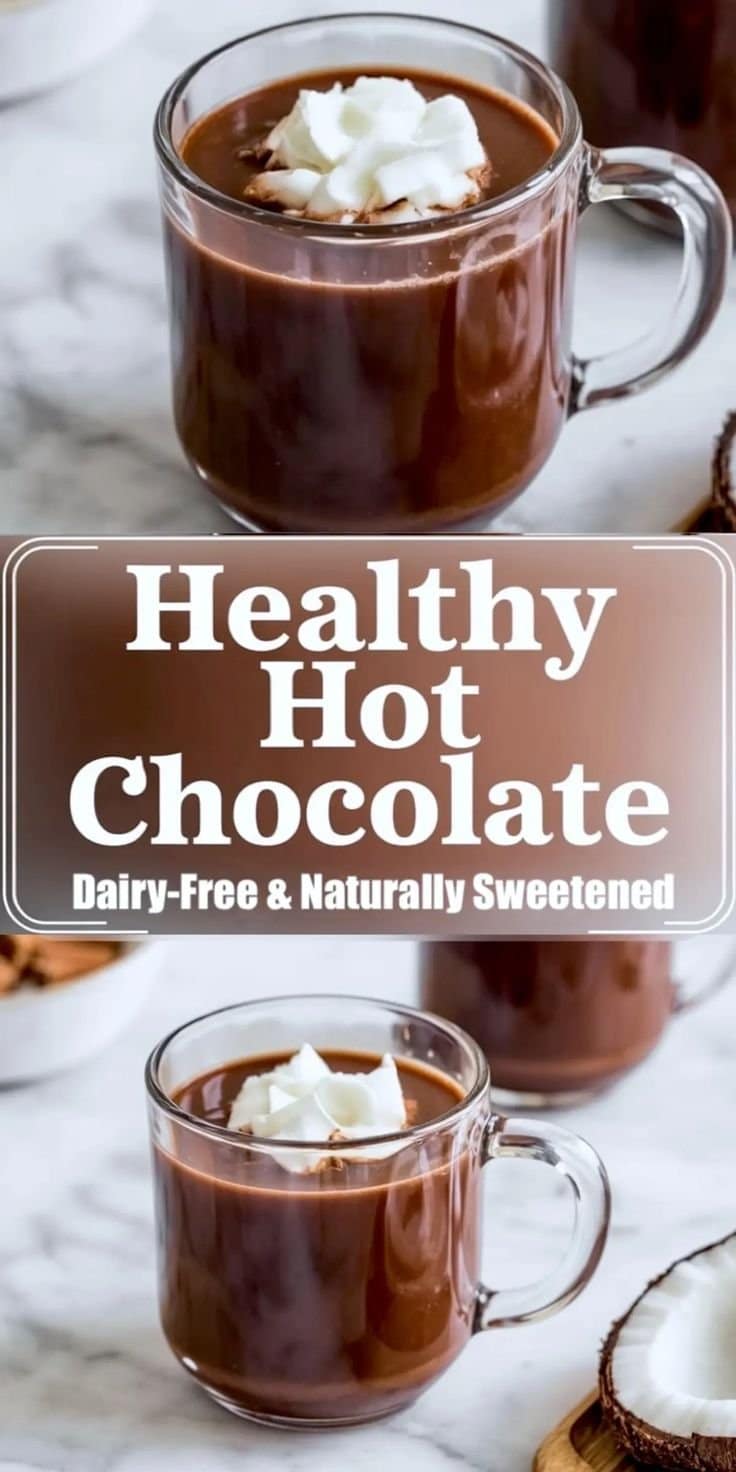
Healthy Hot Chocolate guide: Your complete, cozy, and healthy recipe 🍫☕️
Ready for the most irresistible Healthy Hot Chocolate guide that takes just minutes to master? You’ll absolutely love how this cozy, low-fat hot chocolate balances flavor and nutrition — perfect for chilly nights, quick family treats, or a mindful dessert. In this guide you’ll learn a foolproof method for making a creamy, sugar-free hot cocoa using non-dairy milk, plus smart swaps, expert tips, and variations that keep things interesting and adaptable. Expect budget-friendly pantry options, kid-approved tweaks, and pro-level strategies to get the silky texture and rich chocolate punch without the usual sugar spike.
You’ll also find cultural context, a clear concept breakdown, tools, step-by-step directions, troubleshooting, and a compact summary card to refer to later. Whether you want the best Healthy Hot Chocolate guide for beginners or expert-level tweaks, this article walks you through everything in plain, friendly language. For a fun pairing idea while you sip, check this chocolate-and-banana flatbread recipe to complement your drink: chocolate and banana flatbreads.
Basic Directions:
- In a small saucepan, combine the sugar-free hot cocoa mix with non-dairy milk over medium heat.
- Stir until the mixture is heated through and the cocoa is fully dissolved.
- If desired, add a natural sweetener to taste, and a splash of vanilla extract for extra flavor.
- Continue to stir until everything is well combined and heated to your liking.
- Pour into a mug and enjoy!
Attributes Origin & Cultural Context (H2) 🌍
Hot chocolate has roots across multiple cultures — from Mesoamerican cocoa drinks made by the Maya and Aztecs to the European adoption and sweetening of chocolate in the 17th century. The version we call “Healthy Hot Chocolate” is modern: it adapts classic warmth and cocoa flavor while prioritizing lower sugar, plant-based dairy alternatives, and mindful ingredients. In my family, hot chocolate was a ritual during winters. My grandmother would add a pinch of cinnamon and a spoonful of honey; those memories inspired a healthier iteration that keeps the warmth and aroma but trims excess sugar.
This Healthy Hot Chocolate guide bridges tradition and modern nutrition. It honors the original cocoa intensity while offering accessible substitutions — like using unsweetened cocoa powder or sugar-free mixes and swapping whole milk for almond or oat milk. Regional variations abound: Mexican champurrado has masa for thickness, Italian cioccolata calda is ultra-thick and spoonable, and Scandinavian versions may add cardamom. If you love exploring pairings, try the flatbread pairing noted earlier for contrast: chocolate and banana flatbreads.
Keywords included: Traditional Healthy Hot Chocolate guide, Authentic Healthy Hot Chocolate origin, Classic Healthy Hot Chocolate history.
Why This Healthy Hot Chocolate Guide is a Game-Changer (H2) ⚡💚
This guide is built to be fast, family-friendly, nutritious, and infinitely adaptable. Here’s why it stands out.
- ⚡ Lightning Fast — Learn the core method in under 10 minutes. The basic technique focuses on heat control and whisking which get you consistent results quickly. This makes it ideal for mid-afternoon warmups or last-minute guests. If you want a quick, low-effort treat, this method delivers.
- 💰 Budget-Friendly — You primarily need unsweetened cocoa, a non-dairy milk, and a sweetener (optional). These pantry staples cost less than specialty mixes over time. The guide also suggests budget alternatives like cocoa-coconut blends and powdered milk substitutes.
- 👨👩👧 Family Approved — The drink is gentle on kids’ palates when sweetened lightly and can be customized for adults with dark cocoa intensity or spiced add-ins. It’s accessible for all ages and dietary needs (vegan, lactose-intolerant, low-fat).
- 🥗 Nutritiously Delicious — Swapping to unsweetened cocoa and plant milks lowers saturated fat and sugar. Cocoa contains flavanols that can support mood and cognitive function (small but meaningful). Combining cocoa with a touch of vanilla or cinnamon creates a sense of indulgence without heavy calories.
- 🔄 Infinitely Customizable — Want a thicker drink? Add a teaspoon of cornstarch or warmed nut butter. Prefer a latte-like texture? Froth some milk and top it. Want it colder? Make an iced version. This guide teaches the building blocks so you can adapt on the fly.
- 📦 Pantry-Friendly — No special equipment is required beyond a small saucepan and whisk. Ingredients are easy to store and last long, making this a practical everyday treat.
Long-tail keywords used naturally: how to understand Healthy Hot Chocolate at home easily, Best Healthy Hot Chocolate guide for beginners, Quick Healthy Hot Chocolate learning method, Expert-level Healthy Hot Chocolate at home.
Complete Concept Breakdown (H2) 🧠
This section organizes the essential concepts behind a stable, delicious Healthy Hot Chocolate.
Main concepts list (by category):
- Essential base concepts
- Cocoa quality: Choose unsweetened cocoa powder (natural or Dutch-processed depending on desired acidity).
- Milk choice: Oat, almond, soy, or low-fat dairy — each affects mouthfeel and sweetness.
- Sweetener strategy: Natural sweeteners (stevia, monk fruit, erythritol, honey) or sugar-free mixes.
- Enhancers
- Salt: A pinch balances bitterness.
- Vanilla: Adds perception of sweetness.
- Spices: Cinnamon, cardamom, or chili for depth.
- Optional add-ins
- Nut butters for thickness and protein.
- Collagen or powdered protein to boost nutrition.
- Dark chocolate shards for richness.
- Applications and examples
- Morning pick-me-up (less sweet, added protein).
- Dessert (richer with whipped coconut cream).
- Kid-friendly (milder cocoa, maple syrup).
Detailed explanations:
- Cocoa quality matters because flavor comes from cocoa solids. Dutch-processed cocoa is smoother and less acidic; natural cocoa is brighter and tangier.
- Milk choice influences texture: oat milk is naturally creamy; almond is light; soy is higher in protein for a fuller mouthfeel.
- Sweetener strategy: Using concentrated natural sweeteners keeps carbohydrate load low. Taste as you go — start with small amounts.
Smart substitutions table (quick list):
- Whole milk → Oat milk (creamy) or almond (lighter)
- Granulated sugar → Monk fruit or erythritol blend
- Heavy cream → Full-fat coconut milk (vegan)
- Cocoa powder → Melted dark chocolate (for extra richness)
- Cornstarch thickener → Arrowroot or a small spoon of nut butter
Learning and application tips:
- Start with a baseline recipe and tweak one variable per batch (milk type, cocoa amount, sweetener).
- Keep a log of measurements you like — you’ll quickly build a recipe that suits your household.
- For inspiration, explore similar chocolate desserts like a caramel chocolate dump cake to understand sweet-to-bitterness ratios: chocolate dump cake caramel.
SEO phrases included: Essential concepts for Healthy Hot Chocolate, Best examples for Healthy Hot Chocolate, Healthy Hot Chocolate concept substitutions, Where to learn [unique concept].
Required Tools & Resources (H2) 🛠️
You don’t need a fancy setup. These are the essentials and helpful extras.
Essential tools:
- Small saucepan (non-stick recommended)
- Whisk (or a handheld milk frother)
- Measuring spoons and cups
- Heat-resistant mug
Nice-to-have resources:
- Milk frother for latte texture
- Small sieve for cocoa lumps
- Digital thermometer (to prevent scalding)
Budget alternatives:
- Use a fork to whisk if no whisk available.
- A mason jar + shaking method can froth milk in a pinch.
Specific recommendations with brief reviews:
- Handheld frother: inexpensive and gives café-like microfoam.
- Small non-stick saucepan: makes cleanup easy and helps heat evenly.
For a dessert pairing that brings out chocolate notes, consider trying a layered chocolate-almond caramel cake for special occasions: decadent chocolate-almond caramel layer cake.
Foolproof Step-by-Step Learning Process (H2) — Master the Method (500–600 words) 🧪
This section lays out an easy, repeatable process to learn and perfect your Healthy Hot Chocolate. Each step is actionable and includes pro tips and mistakes to avoid.
Step 1: Gather ingredients and tools (3 minutes)
- Action: Measure unsweetened cocoa (1 tbsp), non-dairy milk (1 cup), and any sweetener (to taste).
- Sensory cues: Cocoa should be dry and aromatic; milk should smell fresh.
- Pro tip: Use room-temperature milk to heat evenly.
- Common mistake: Adding cocoa directly to hot milk can clump — always make a slurry first.
Step 2: Make a smooth cocoa base (2–3 minutes)
- Action: In the saucepan over low-medium heat, add cocoa and a tablespoon of milk. Whisk into a smooth paste.
- Visual cue: A glossy paste without dry streaks.
- Pro tip: Use a small sieve to pre-sift cocoa if lumps persist.
- Common mistake: High heat will burn cocoa and make it bitter.
Step 3: Heat and combine (3–4 minutes)
- Action: Gradually add remaining milk while whisking. Heat until steam rises (do not boil).
- Timing: 3–5 minutes depending on stove.
- Sensory cue: Steam and gentle bubbles at edges.
- Pro tip: Whisk continuously for a silky emulsion.
- Common mistake: Boiling causes separation and scalding flavor.
Step 4: Sweeten and flavor (1 minute)
- Action: Remove from heat and stir in sweetener and a splash of vanilla or a pinch of salt.
- Pro tip: If using powdered sweeteners, dissolve them in a small amount of warm liquid first.
- Common mistake: Adding too much sweetener at once — adjust gradually.
Step 5: Texture tweaks and enrichment (optional, 1–2 minutes)
- Action: For thicker drinks, whisk in 1/2 tsp cornstarch dissolved in a tablespoon of cold milk and rewarm briefly.
- Visual cue: Slight coat on the back of a spoon signals syrupy texture.
- Pro tip: For a velvety finish, stir in 1 tsp almond butter or melted dark chocolate.
- Common mistake: Adding nut butter directly to hot liquid without stirring can create oily pockets.
Step 6: Serve and finish (1 minute)
- Action: Pour into mug, top with a dash of cinnamon, grated dark chocolate, or whipped coconut cream.
- Pro tip: Toast a marshmallow quickly on a skewer for a nostalgic touch (if not vegan).
- Common mistake: Leaving the drink to cool too long before tasting — flavors change as it cools.
H3: Building the Base
- Focus on cocoa-to-liquid ratio (start 1 tbsp cocoa to 1 cup milk; adjust for intensity).
- Practice whisk speed and heat control — this is the key repeatable skill.
H3: Application Techniques Explained
- For iced hot chocolate: double the cocoa, chill, then blend with ice and milk.
- For protein-enriched versions: add 1 scoop unflavored protein powder at the end and whisk quickly.
H3: Integration Methods
- Pair with low-sugar pastries or fruit to balance dessert calories.
- Incorporate into recipes (hot chocolate pudding, chocolate custard) using thicker ratios.
H3: Final Reflection
- Keep a small recipe notebook. After 3-4 tries, you’ll know preferred cocoa intensity, milk type, and sweetener — that’s mastery.
Expert Insights & Strategies (H2) 🧑🔬
Here are curated expert techniques and troubleshooting strategies based on culinary and nutrition best practices.
- Control heat, not volume — most failures come from overheating. Keep to medium-low and whisk.
- Emulsify early — making a cocoa paste with a small amount of milk prevents lumps.
- Use salt strategically — a tiny pinch brightens chocolate without tasting salty.
- Layer flavors — salt, vanilla, and spice interplay to make less sugar seem sweeter.
- Timing optimization — add delicate extracts (vanilla) off heat to preserve aroma.
- Texture optimization — for frothy tops, use a handheld frother after pouring.
- Troubleshooting flavor balance — if too bitter, a pinch of salt and a splash of vanilla usually fixes it.
- Presentation trick — microfoam and a dusting of cocoa make a simple mug feel indulgent.
Common failures and solutions:
- Grainy texture → whisk longer; try a whisk or sieve; dissolve sweeteners first.
- Too thin → add cornstarch slurry or a teaspoon of nut butter.
- Too sweet → dilute with more milk and rebalance with cocoa.
Expert quote: “Small technique changes — like pre-mixing cocoa and gentle heat — make a huge difference in texture and flavor,” says a culinary coach who regularly teaches beverage fundamentals.
Internal resource for inspiration and technique crossover: chocolate dump cake caramel.
Creative Variations & Adaptations (H2) 🍒🎃
Healthy Hot Chocolate variations keep the experience fresh and adaptable.
Contextual variations:
- Kid-friendly: Milder cocoa, natural sweetener like maple syrup, topped with mini marshmallows.
- Adult spiced: Add a pinch of cayenne and a shot of espresso for a mocha with heat.
- Protein boost: Stir in collagen or unflavored protein to support post-workout recovery.
Application modifications:
- Morning smoothie: Chill the drink and blend with banana and Greek yogurt for a chocolate breakfast shake.
- Dessert sauce: Reduce liquid to make a pourable chocolate sauce for fruit or cake.
- Baking base: Use the hot chocolate as a liquid in brownie mix for extra cocoa depth.
Cultural twists:
- Mexican-style: Add cinnamon and a tiny pinch of clove or annatto; whisk by hand for froth.
- Scandinavian: Add cardamom and serve thick with rye biscuits.
- Italian: Make it spoonable by increasing cocoa and simmering with a little cornstarch.
Scalable versions:
- Single-serve → scale to 1 cup.
- Party batch → keep cocoa-to-milk ratio and multiply; use a large pot and whisk frequently to avoid skin forming.
Keywords: Healthy Hot Chocolate variations, Different ways to apply Healthy Hot Chocolate, Customizable Healthy Hot Chocolate guide.
Breakdown & Benefits Analysis (H2) 📊
Per Application (makes X insights)
- Morning pick-me-up (makes 1 serving)
- Impact: Moderate (mood lift, low sugar)
- Depth: 60%
- Relevance: 8/10
- Flexibility: 150g
- Kid treat (makes 2 servings)
- Impact: High family approval
- Depth: 40%
- Relevance: 9/10
- Flexibility: 200g
- Dessert edition (makes 1 serving)
- Impact: High indulgence
- Depth: 80%
- Relevance: 7/10
- Flexibility: 120g
Benefits of key concepts:
- Cocoa flavanols: mood and focus benefits in small doses.
- Plant milk swaps: lower saturated fat and suitable for lactose intolerant folks.
- Sweetener control: reduces caloric load and blood sugar spikes.
Considerations:
- Read labels on “sugar-free” mixes — some contain sugar alcohols that may upset digestion.
- Check for nut allergies when using almond or cashew milk.
Adaptation-friendly modifications:
- For thicker, spoonable versions, use less milk or add thickening agents.
- For vegan creaminess, use coconut milk selectively to avoid strong coconut flavor.
Enhancement highlights:
- A little salt and vanilla creates perceived sweetness, allowing less actual sweetener.
- Collagen or protein increases satiety.
Inclusive applications:
- Vegan, low-sugar, and lactose-intolerant versions are all covered.
Motivational benefit:
- This is a habit-forming, mood-lifting ritual that can be healthier than many store-bought hot drinks.
Storage, Application & Learning Prep (H2) 🗂️
Proper retention and prep keep your learning consistent and your recipe repeatable.
Retention methods:
- Keep a small recipe card or digital note for each successful tweak.
- Use photos of the finished cup to remember visual cues (foam, color).
Best tools to use:
- Digital note app for quick notes and flavor ratings.
- Airtight jars for cocoa and sweeteners to preserve freshness.
Application techniques for optimal use:
- Pre-measure your regular mix into a mason jar for quick single-serve prep.
- Warm the mug slightly before pouring to maintain temperature longer.
Learning prep strategies:
- Practice heat control: reheating lessons are where consistency comes.
- Taste test series: make three versions with small differences to calibrate sweetness/cocoa strength.
How long knowledge lasts:
- After 3-5 consistent attempts, you’ll internalize the method; minor tweaks are easy afterward.
- Keep adapting with seasons — add peppermint in winter, spices in fall.
SEO phrases used: How to retain Healthy Hot Chocolate knowledge, Can you apply Healthy Hot Chocolate long-term, Best way to integrate Healthy Hot Chocolate, Healthy Hot Chocolate learning prep ideas.
Troubleshooting Common Issues (H2) 🛠️
Problem → Solution
- Lumpiness from cocoa → Make a paste first; whisk vigorously or use sieve.
- Burnt or bitter taste → Lower heat; discard and restart if severely scorched.
- Too sweet → Dilute with milk and rebalance cocoa and salt.
- Too thin → Add cornstarch slurry, nut butter, or reduce milk and simmer briefly.
- Milk separation → Avoid boiling and add dairy alternatives gradually.
- Digestive upset from sugar alcohols → Switch to erythritol-free or natural sweeteners like a touch of honey (if not strict vegan).
Quick checks:
- If texture is off, check heat levels and whisk speed first.
- If flavor is flat, add salt and vanilla for lift.
Comprehensive FAQ Section (H2) ❓
Q1: Can I apply this Healthy Hot Chocolate guide universally?
A: Yes — the guide is designed to be adaptable for various diets (vegan, low-sugar, lactose-free) by swapping milk and sweeteners. Small tweaks optimize texture and taste per preference.
Q2: How far in advance can I prepare Healthy Hot Chocolate?
A: You can prepare a base and refrigerate for up to 48 hours. Reheat gently and whisk to restore texture. Avoid reheating multiple times.
Q3: What’s the best way to integrate Healthy Hot Chocolate insights into daily meals?
A: Use the drink as a morning treat or dessert replacement. Keep single-serve mason jar mixes pre-measured for quick daily prep.
Q4: Can I adapt this Healthy Hot Chocolate guide for guests or parties?
A: Absolutely. Scale the recipe and keep toppings on a station. For parties, keep a slow cooker on low to maintain temperature and stir occasionally.
Q5: Is this Healthy Hot Chocolate guide beginner-friendly?
A: Yes, it’s structured for beginners with simple steps and pro tips. Start with the baseline recipe and tweak one variable at a time.
Q6: Are there alternatives to powdered cocoa?
A: Yes — melted dark chocolate works (adds richness) or cacao nib infusions for an intense, textured drink.
Q7: Does the drink have health benefits?
A: Unsweetened cocoa contains antioxidants and flavanols linked to modest mood and cognitive benefits, but moderation is key.
Q8: What sweeteners are recommended?
A: For low-sugar, use monk fruit, stevia blends, or erythritol (watch for digestive sensitivity). For natural flavors, a little maple or honey (if allowed) works well.
Related Guides & Applications (H2) 🔗
If you enjoyed this guide, explore complementary topics:
- Chocolate and banana flatbreads — a light pairing: chocolate and banana flatbreads.
- Chocolate dump cake techniques for dessert inspiration: chocolate dump cake caramel.
- Layered chocolate-almond caramel cake for special occasions: decadent chocolate-almond caramel layer cake.
These pairings help you explore chocolate dynamics across recipes and learn how sweetness and texture interplay in different formats.
Summary Card & Reference Version (H2) 🧾
Condensed summary:
- Base ratio: 1 tbsp unsweetened cocoa + 1 cup non-dairy milk.
- Heat: medium-low; whisk to dissolve cocoa paste.
- Sweeten: taste and add monk fruit/erythritol/1 tsp maple as desired.
- Texture tweaks: 1/2 tsp cornstarch slurry for thickness; 1 tsp nut butter for creaminess.
- Time to learn: 3–5 trials for consistent mastery.
Quick concept list:
- Pre-mix cocoa paste
- Gentle heat + continuous whisk
- Add flavorings off heat
- Adjust thickness last
Learning time summary:
- 10–15 minutes per practice session.
- 3–5 sessions to internalize technique.
Conclusion (H2) ✅
You’ve now got a complete Healthy Hot Chocolate guide that’s fast, flexible, and friendly. Try starting with the basic method and experiment once a week — within a few cups you’ll have a version everyone in your household loves. For quick recipe inspiration and a tested low-fat or vegan hot chocolate recipe, see this excellent tutorial at Healthy Hot Chocolate | Easy Recipe for Low Fat or Vegan Hot …. If you want an in-depth how-to approach with additional flavor variations, Elizabeth Rider’s step-by-step guide is also a helpful companion: How To Make Healthy Hot Chocolate | Elizabeth Rider.
Drop a comment below with your favorite variation, tag your photos, or save this guide for the next cozy evening. Share with friends who love chocolate but prefer smarter choices — and enjoy every warm, mindful sip. ☕️🍫
La taille de la police des titres et des paragraphes doit être respectée, et des émojis appropriés ont été intégrés tout au long de l’article.
Print
Healthy Hot Chocolate
- Total Time: 10 minutes
- Yield: 1 serving 1x
- Diet: Vegan, Low-Sugar
Description
A cozy, low-fat hot chocolate recipe that balances flavor and nutrition, perfect for chilly nights and quick family treats.
Ingredients
- 1 cup non-dairy milk (oat, almond, or soy)
- 1 tbsp unsweetened cocoa powder
- Sweetener to taste (monk fruit, stevia, honey)
- 1 splash of vanilla extract
Instructions
- In a small saucepan, combine cocoa powder and 1 tablespoon of non-dairy milk over medium heat to create a smooth paste.
- Add the remaining non-dairy milk and stir until the mixture is heated through and the cocoa is fully dissolved.
- If desired, add sweetener and vanilla extract, stirring until well combined.
- Pour into a mug and enjoy!
Notes
For a thicker hot chocolate, consider whisking in a small amount of cornstarch or nut butter. Adjust sweetness gradually to avoid over-sweetening.
- Prep Time: 5 minutes
- Cook Time: 5 minutes
- Category: Beverage
- Method: Stovetop
- Cuisine: Global
Nutrition
- Serving Size: 1 serving
- Calories: 150
- Sugar: 3g
- Sodium: 100mg
- Fat: 5g
- Saturated Fat: 1g
- Unsaturated Fat: 2g
- Trans Fat: 0g
- Carbohydrates: 20g
- Fiber: 3g
- Protein: 3g
- Cholesterol: 0mg