

Introduction
If you love bowls that balance earthy grains, sweet roasted vegetables, and bright greens, this Traditional Kale Sweet Potato Wild Rice Bowl guide is for you. In the next 2,000+ words you’ll learn not just a recipe, but why each element matters, how to execute it reliably, and ways to adapt for time, budget, or taste.
You’ll gain:
- A clear, step-by-step process to build a well-balanced bowl.
- The culinary reasoning behind each technique and ingredient.
- Beginner-friendly shortcuts and advanced techniques for more precision.
- Meal-prep and storage strategies so this becomes a repeatable weeknight favorite.
Along the way I’ll point out alternatives and troubleshooting tips so you can cook with confidence. If you want inspiration beyond bowls, try a riff on colorful sweet potato taco bowls for a similar flavor profile served differently.
Background & Context
The Classic Kale Sweet Potato Wild Rice Bowl history blends simple pantry staples with seasonal produce. Bowls like this are modern expressions of centuries-old practices: grains as foundation, roasted roots for energy and sweetness, and bitter greens for balance.
Kale’s rise in popularity is recent, but leafy greens have been used across cultures to cut fat and add nutrients. Wild rice, native to North America, provides a chewy, aromatic base different from common rices. Sweet potatoes bring caramelized sweetness and dense nutrition; roasted, they echo hearth-cooked root dishes around the world.
If you’re curious about variations on sweet potato preparations, you can read a practical guide on savory sweet potato taco bowls for ideas that translate back into bowl form.
Why this matters: understanding origin and ingredient history helps you make better swaps and respect textures, not just flavors.
Why This Approach Works
A successful bowl balances four elements: grain, vegetable, binder/dressing, and contrast (texture or acid). This guide emphasizes that balance.
- Grain (wild rice) provides chew, a nutty aroma, and a neutral backbone.
- Vegetable (roasted sweet potato) delivers sweetness and density.
- Green (kale) adds bitterness and a fresh mouthfeel.
- Dressing/toppings add fat, acid, and crunchy contrasts to tie it together.
Accessibility: these ingredients are widely available year-round; techniques are simple and scalable. Flexibility: swap quinoa for wild rice or use spinach instead of kale without breaking the structure.
Common doubts answered:
- “Is wild rice hard to cook?” Not if you plan time — it takes longer but rewards you with texture and flavor.
- “Is kale always tough?” No — massaging and choosing the right variety fixes that.
- “Does sweet potato overwhelm?” Proper roasting and acid in dressing prevent cloying sweetness.
For a compact rundown of basic sweet potato techniques (boiling, roasting), see this useful primer on how to boil sweet potatoes.
Core Concepts Explained
Break the bowl down into components. Each concept maps to a decision you’ll make in the kitchen.
Grain: Wild rice vs alternatives
- Wild rice: long cook time (40–60 min), chewy, nutty.
- Alternatives: brown rice (shorter, nuttier than white), quinoa (quick, light), farro (chewy, hearty).
- Choose wild rice for texture and flavor authenticity.
Root vegetable: Sweet potato behavior
- Roasting caramelizes sugars and concentrates flavor.
- Cut size affects cook time; smaller cubes roast faster.
- Substitutes: butternut squash, carrots, or parsnips.
Greens: Kale handling
- Lacinato vs curly kale: lacinato is less bitter and more tender.
- Massage or blanch to soften. Massaging with acid and oil breaks cell walls and integrates flavor.
Dressing: Fat and acid ratio
- Classic vinaigrette: 3 parts oil : 1 part acid, salt, and a touch of honey or mustard.
- Tahini- or yogurt-based dressings add creaminess and complement sweet potato.
Texture & Crunch
- Toasted seeds, nuts, or crispy shallots elevate mouthfeel.
- Fresh herbs and citrus zest add brightness.
If you want bowl ideas with a similar vibe, the savory sweet potato taco bowls piece shows how sweet potato works with contrasting toppings you can borrow.
Tools, Resources, or Foundations
Essentials:
- Oven + baking sheet (roasting is central)
- Medium pot with lid (for wild rice)
- Sharp knife and cutting board
- Mixing bowls and whisk
Optional enhancements:
- Baking rack (for even roasting)
- Microplane (for zest)
- Salad spinner (for washed greens)
- Immersion blender (for smooth tahini dressings)
Budget or beginner alternatives:
- Use canned or quick-cooking grains instead of raw wild rice in a pinch.
- Roast sweet potatoes on stovetop in a skillet if oven is unavailable.
- Skip microplane—grate citrus with a box grater.
If you prefer a vegetable-forward, cozy preparation, this cozy sweet potato and vegetable write-up gives complementary techniques for roasting and seasoning.
Commentary: invest in a good baking sheet and a heavy pot — they’ll outlast trendy gadgets and improve results consistently.
Step-by-Step Process
Below is a logical, time-aware workflow. Total active time: ~50–75 minutes (concurrent steps cut total time).
Plan and prep (10 minutes)
- Preheat oven to 425°F (218°C).
- Rinse wild rice; start it first since it takes the longest.
- Wash and cut produce.
Cook wild rice (40–50 minutes)
- Ratio: 1 cup wild rice : 3 cups water/broth.
- Simmer 40–50 minutes until split and chewy. Drain excess water if any.
Roast sweet potatoes (25–35 minutes)
- Toss cubes with oil, salt, pepper, and optional spice (smoked paprika, cumin).
- Roast at 425°F on a single layer for 25–35 minutes until caramelized.
Prepare kale (5–10 minutes)
- Remove stems, chop, and massage with oil and lemon; set aside.
Make dressing (5 minutes)
- Whisk oil, acid, mustard, salt, and sweetener to balance sweet potato.
Assemble and finish (5 minutes)
- Layer grain, kale, sweet potato, add dressing and crunchy toppings.
H3 Prepping the Wild Rice — practical details
- Rinse thoroughly to remove dust.
- Use low boil, keep lid tilted to monitor.
- Taste at 35 minutes; you want chew with no rawness.
H3 Roasting Sweet Potatoes — tips for caramelization
- Don’t overcrowd the pan; steam prevents browning.
- Use high heat so interior becomes tender as exterior crisps.
- Toss halfway through roasting for even color.
H3 Massaging Kale — technique
- Add 1 tsp oil and a pinch of salt per cup of chopped kale.
- Massage for 1–2 minutes until leaves darken and soften.
- Add a squeeze of lemon or vinegar after massaging to layer flavor.
Common mistakes + how to avoid them:
- Overcrowded roasting sheet → use two pans or roast in batches.
- Undercooked wild rice → start rice first and test for chewiness.
- Tough kale → don’t skip massaging or give it a brief blanch.
Pro tips:
- Roast sweet potatoes with a small amount of maple syrup for amplified caramelization.
- Use the wild rice cooking liquid reduced into a pan sauce for extra flavor.
- Toast seeds/nuts in a dry pan right before serving for maximum crunch.
For a technique that mixes roasted sweet potato into a fried rice-style finish, check this creative take on caramelized sweet potato and kale fried wild rice — though note that link is only referenced for inspiration and we’ll keep its full details for the conclusion.
Expert Techniques & Insights
Once you master the basics, a few advanced moves level up the bowl.
- Layering temperature: serve one hot component (sweet potato), one warm (wild rice), and one cool/fresh (kale) to create contrast.
- Finishing acids: a splash of sherry vinegar or umeboshi plum vinaigrette brightens and cuts sweetness.
- Smoke and char: blister sweet potato slices on a high-heat grill for smoky complexity.
- Umami boosters: add miso-tahini dressing, roasted garlic, or soy-caramelized shallots for savory depth.
- Textural mapping: think about bite-by-bite composition — a spoon should hit grain + soft veg + crunch + acid.
Efficiency hacks:
- Cook double the wild rice and freeze portions.
- Roast a large tray of sweet potatoes and use them across salads, tacos, and stews (see savory sweet potato taco bowls for repurposing ideas).
- Make a big batch of dressing; it keeps for a week refrigerated.
Lessons learned:
- Don’t skimp on acid — sweetness needs contrast.
- Use salt strategically: season in stages (vegetables before roasting, rice during cooking, and dressing to taste).
- Keep texture in mind when planning toppings.
Variations & Adaptations
Different contexts call for specific tweaks.
Meal-prep adaptation (Beginner)
- Roast sweet potatoes and cook wild rice in bulk.
- Store components separately; assemble before eating to keep textures.
Protein-forward (Intermediate)
- Add roasted chickpeas, pan-seared tofu, or shredded rotisserie chicken.
- Marinate proteins lightly for cohesion with the dressing.
Quick weeknight shortcut (Advanced)
- Use pre-cooked frozen wild rice blend and steam-sauté pre-cut sweet potato cubes in a skillet with spices.
- Thinly slice kale and fold into hot rice to soften it slightly.
Cultural variations:
- Mediterranean: add olives, feta, lemon-herb dressing.
- Mexican: top with pickled red onion, cilantro, and a lime crema.
- Asian-inspired: use sesame-tamari dressing, add scallions and toasted sesame seeds.
If you want more cozy vegetable combinations that pair well with sweet potato, the cozy sweet potato and vegetable resource offers seasonal ideas you can adapt.
Analysis & Benefits Breakdown
Below is a concise comparative summary showing why this bowl composition is effective and where it fits.
| Component | Benefit | Considerations |
|—|—:|—|
| Wild Rice | Nutty flavor, chewy texture, high fiber | Long cook time; can be swapped for quicker grains |
| Sweet Potato | Natural sweetness, vitamin-rich, filling | Can be starchy if overcooked; needs acid balance |
| Kale | Bitter green for balance, robust | Requires massaging or blanching for tenderness |
| Dressing | Brings cohesion, fat + acid for flavor | Too much oil masks other flavors |
| Crunch (nuts/seeds) | Texture contrast, healthy fats | Allergens; toast for best flavor |
Strengths:
- Nutrient-dense and satisfying.
- Versatile across diets (vegan, vegetarian, omnivore).
- Scales well for meal prep.
Limitations:
- Takes longer than simple salads.
- Wild rice requires planning.
- Not as light as a raw salad — it’s meant to be substantial.
Considerations:
- If time is limited, use quick-cooking grains and stove-top sauté for similar results.
- Adjust sweet potato portion to reduce glycemic impact if needed.
Preparation, Retention & Long-Term Use
How to prepare effectively:
- Plan: start rice first; roast while rice simmers.
- Mise en place: chop and measure ingredients before cooking.
Retention strategies:
- Store components separately in airtight containers.
- Keep dressing separate to prevent sogginess.
- Wild rice and roasted sweet potato will keep 3–4 days refrigerated.
Reheating tips:
- Reheat roasted sweet potato in the oven or in a hot skillet to revive caramelization.
- Reheat rice with a splash of water covered to prevent drying.
- Add fresh kale and crunchy toppings at the last minute.
Longevity of knowledge:
- Learning these foundational techniques (roasting, massaging greens, balancing dressings) applies to many dishes beyond this bowl.
Troubleshooting & Common Problems
Problem: Wild rice is chewy but undercooked.
- Cause: Not enough simmer time or insufficient water.
- Solution: Continue simmering with lid slightly ajar; add small amounts of water as needed.
Problem: Sweet potatoes steam instead of roast.
- Cause: Overcrowded pan or too-low heat.
- Solution: Use a single layer, high oven temperature, and space cubes apart.
Problem: Kale remains tough and bitter.
- Cause: Insufficient massaging or wrong variety.
- Solution: Massage longer with oil and acid, or blanch for 60 seconds.
Problem: Dressing tastes flat.
- Cause: Missing acid or salt.
- Solution: Add a splash of vinegar or lemon and a pinch of salt; taste and adjust.
Problem: Bowl is too sweet.
- Cause: Excess sweet potato or sweetener in dressing.
- Solution: Add more acid (vinegar or citrus), reduce sweet dressing, or add bitter greens.
Problem: Bowl soggy after storage.
- Cause: Components mixed before cooling or dressing added too early.
- Solution: Store components separately and add dressing just before serving.
FAQ
Q: How long does wild rice take to cook?
A: Typically 40–50 minutes. Start early and taste for tender chew; times vary by brand.
Q: Can I use frozen sweet potato cubes?
A: Yes. Roast frozen cubes but expect slightly different texture; thaw briefly and pat dry for best browning.
Q: Is kale necessary?
A: No — substitute spinach, chard, or thinly shredded cabbage if preferred.
Q: What proteins pair best with this bowl?
A: Roasted chickpeas, pan-fried tofu, grilled chicken, or a soft-boiled egg all work well.
Q: How do I make this gluten-free?
A: The base ingredients are gluten-free; watch dressings and toppings for hidden gluten.
Q: Can I make this nut-free?
A: Yes. Replace nut toppings with toasted seeds (pumpkin or sunflower).
Q: What’s the best dressing for sweet potato bowls?
A: A bright vinaigrette (lemon or apple cider vinegar) or a miso-tahini dressing balances sweet potato nicely.
Q: How do I scale this for a crowd?
A: Multiply components; roast sweet potatoes on multiple sheets and cook wild rice in large pots. Keep dressing in a pitcher.
Related Topics & Next Steps
If you want to expand skills, explore:
- Techniques for roasting other root vegetables and mapping their roast times.
- Grain cooking methods: pilafs, risottos, and multigrain blends.
- Making an array of dressings: vinaigrettes, tahini-based, and creamy herb dressings.
- Meal-prep systems for weekly bowl assembly.
For inspiration on turning roasted sweet potato into taco fillings and other meal formats, the savory sweet potato taco bowls article provides practical crossovers.
Quick Reference Summary
- Start wild rice first (1 cup rice : 3 cups water, 40–50 min).
- Roast sweet potato at 425°F for 25–35 minutes; don’t overcrowd the pan.
- Massage kale with oil and acid to soften.
- Build a dressing with a 3:1 oil-to-acid ratio, then adjust to taste.
- Assemble hot, warm, and cold components for balance.
- Store components separately for up to 4 days.
Bookmark: core steps = grain → roast veg → soften greens → dressing → assemble.
Conclusion
You’ve now got a complete Traditional Kale Sweet Potato Wild Rice Bowl guide that covers history, technique, troubleshooting, and ways to make it your own. This is more than a recipe — it’s a repeatable framework for building balanced, satisfying bowls.
For practical recipe inspiration and different preparations to try alongside this guide, see this well-tested variant on a Kale & Sweet Potato Wild Rice Bowl – Cooking For Peanuts and a creative pan-fried take in Caramelized Sweet Potato and Kale Fried Wild Rice. Both are useful references as you experiment with textures and finishes.
If you’d like, I can convert this guide into a reusable system prompt, adapt it into a step-by-step printable recipe card, or create a checklist for evaluating bowl recipes against the balance framework used here. Which would you prefer next?
Print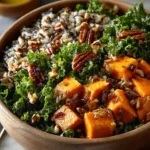
Traditional Kale Sweet Potato Wild Rice Bowl
- Total Time: 70 minutes
- Yield: 4 servings 1x
- Diet: Vegetarian
Description
A well-balanced bowl featuring earthy wild rice, sweet roasted sweet potatoes, and fresh kale, perfect for meal prep and customization.
Ingredients
- 1 cup wild rice
- 3 cups water or broth
- 2 medium sweet potatoes, diced
- 2 tablespoons olive oil
- Salt and pepper to taste
- 1 bunch kale, stems removed and chopped
- 1 tablespoon lemon juice
- 1 tablespoon mustard
- Honey or maple syrup to taste
- Optional toppings: toasted nuts or seeds
Instructions
- Preheat oven to 425°F (218°C).
- Rinse wild rice and add to a medium pot with water or broth. Bring to a simmer and cook for 40-50 minutes until chewy.
- While the rice is cooking, prepare sweet potatoes by tossing with olive oil, salt, pepper, and optional spices. Spread on a baking sheet and roast for 25-35 minutes until caramelized.
- In the last 10 minutes of cooking, chop kale and massage with olive oil and lemon juice. Set aside.
- Make the dressing by whisking together olive oil, mustard, honey, and a splash of vinegar or lemon juice.
- Once everything is cooked, assemble the bowl by layering wild rice, sweet potatoes, and kale. Drizzle with dressing and add your choice of crunchy toppings.
Notes
This bowl can be customized with different grains or vegetables based on availability and preference. Add protein options like chickpeas or tofu for a heartier meal.
- Prep Time: 10 minutes
- Cook Time: 60 minutes
- Category: Main Course
- Method: Baking
- Cuisine: American
Nutrition
- Serving Size: 1 bowl
- Calories: 450
- Sugar: 8g
- Sodium: 320mg
- Fat: 18g
- Saturated Fat: 3g
- Unsaturated Fat: 11g
- Trans Fat: 0g
- Carbohydrates: 60g
- Fiber: 10g
- Protein: 12g
- Cholesterol: 0mg