
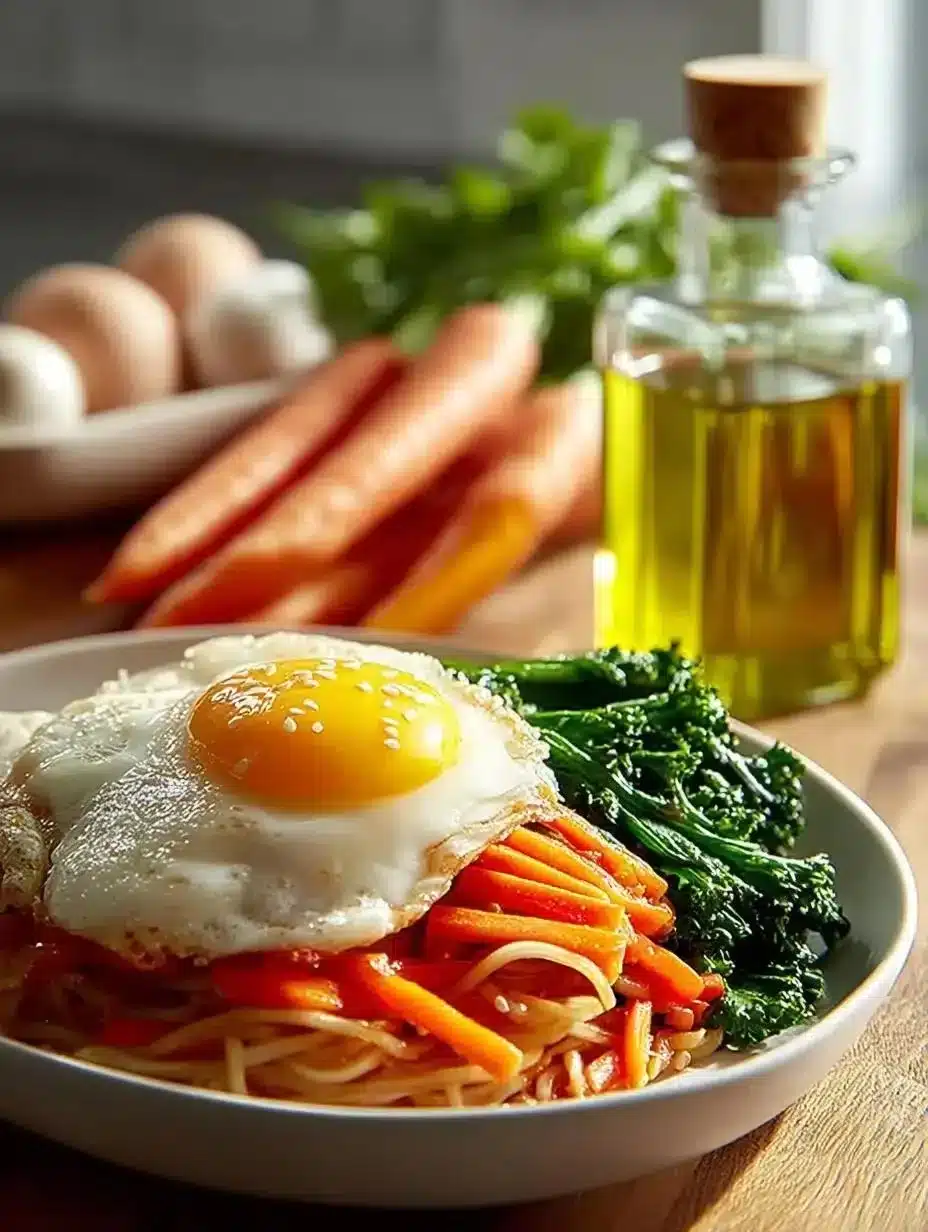
Crispy Weeknight Stir-Fry Noodles
The first bite snaps with a golden, crunchy edge while the center stays tender and saucy — that’s the payoff of Korean fried noodles cooked the right way. Korean fried noodles are pan-crisped and tossed with a balanced sauce of soy, gochujang (Korean chili paste), and a touch of sweetness so every forkful has contrast. After testing this recipe a dozen times in a busy test kitchen and refining the sauce ratios, I landed on a method that finishes in about 30 minutes and holds up for leftovers. This version is flexible: use tofu, chicken, or keep it vegetarian. Read on for the technique that creates crisp edges without drying the noodles, plus easy swaps for what’s in your fridge.
Why this recipe works
- Hot oil and a tight pan contact crisp the noodle surface quickly, creating crunchy edges while leaving the interior chewy.
- A simple cornstarch wash on proteins and vegetables helps the sauce cling, which prevents a watery stir-fry.
- The sauce balances salty (soy), spicy (gochujang), sweet (brown sugar or honey), and acidic (rice vinegar) for savory depth without overpowering.
- Tossing briefly off the heat stops the noodles from overcooking and keeps a glossy finish.
- Small batches and high heat reduce steaming and promote the Maillard reaction for better flavor.
If you like crisp textures, you’ll love how the edges brown here.
Ingredients breakdown
- Noodles — 400 g (14 oz) fresh or refrigerated wheat noodles (or 300 g / 10.5 oz dried, cooked to al dente). Fresh-style wheat noodles crisp best; dried will work but finish time increases.
- Neutral oil — 60 ml (4 tbsp) vegetable or canola oil for frying. Avoid olive oil for high-heat frying.
- Protein (optional) — 300 g (10 oz) boneless chicken thigh (sliced thin) or 340 g (12 oz) firm tofu, pressed and cut into 2 cm (¾ in) cubes. Cornstarch helps create a light crust.
- Vegetables — 150 g (1½ cups) shredded cabbage, 1 medium carrot (about 70 g / ½ cup, julienned), 1 bell pepper (about 120 g / 1 cup, thinly sliced), 2 scallions (sliced on the bias).
- Aromatics — 3 cloves garlic (9 g), minced; 1 tsp (5 g) ginger, minced.
- Sauce — 45 ml (3 tbsp) soy sauce; 15 ml (1 tbsp) sesame oil; 30 g (2 tbsp) gochujang; 20 g (1½ tbsp) brown sugar or honey; 15 ml (1 tbsp) rice vinegar; 60 ml (¼ cup) water or low-sodium broth.
- Binder — 10 g (1 tbsp) cornstarch mixed with 30 ml (2 tbsp) water to thicken.
- Finish — 1 tbsp toasted sesame seeds and extra scallions to garnish.
- Salt — Use Diamond Crystal kosher salt if possible; if you use Morton’s, use about half the volume because it’s denser.
Substitutions and impacts:
- Rice noodles: They crisp differently and can break; reduce frying time and handle gently.
- Gluten-free: Use tamari and a certified gluten-free noodle; cornstarch is fine.
- Vegan: Use tofu and maple syrup instead of honey.
- Protein swap warnings: Using lean chicken breast dries faster; reduce cook time by 1–2 minutes and remove from the pan as soon as cooked through.
For a sweeter counterpoint, consider adding a small amount of caramelized pineapple rings as a garnish.
Essential equipment
- Large nonstick or seasoned carbon steel skillet (12-inch / 30 cm) — needed for even browning and room to toss. If you don’t have a 12-inch skillet, use a 28–30 cm wok.
- Tongs or a wide spatula for flipping and tossing.
- Small bowl for mixing sauce and cornstarch slurry.
- Mesh strainer for draining noodles if using store-bought fresh noodles.
- Cast-iron or stainless pan alternative: use two smaller skillets if your single pan is too small; cook in batches.
Pro tip on pans: a thin stainless pan won’t hold heat as well as carbon steel, so allow extra time between batches.
Step-by-step instructions
Prep Time: 15 minutes; Cook Time: 15 minutes; Inactive Time: None; Total Time: 30 minutes. Serves 4.
Step 1: Ready the noodles and sauce
If using dried noodles, cook 300 g (10.5 oz) dried noodles to al dente according to package directions, then drain and toss with 1 tsp oil to prevent sticking; if using 400 g (14 oz) fresh noodles, separate gently by hand. Mix 45 ml (3 tbsp) soy sauce, 15 ml (1 tbsp) sesame oil, 30 g (2 tbsp) gochujang, 20 g (1½ tbsp) brown sugar, 15 ml (1 tbsp) rice vinegar, and 60 ml (¼ cup) water in a bowl. Add the cornstarch slurry but keep it separate until thickening is needed.
Step 2: Prep the proteins and vegetables
Pat 300 g (10 oz) sliced chicken or 340 g (12 oz) pressed tofu dry. Toss in 10 g (1 tbsp) cornstarch and a pinch of salt. Slice cabbage, carrot, pepper, and scallions so they cook quickly — aim for thin, uniform pieces for even timing. This takes about 8–10 minutes.
Step 3: Crisp the noodles
Heat 45 ml (3 tbsp) oil in a 30 cm (12-inch) skillet over medium-high until shimmering, about 180–200°C (355–390°F) surface heat. Add half the noodles, pressing them into an even layer; cook undisturbed for 2–3 minutes, then flip with tongs and crisp the other side 1–2 minutes until golden brown. Repeat with remaining noodles. Cook time per batch: 3–5 minutes. Do not crowd the pan — crisping requires single layers.
Step 4: Cook proteins and vegetables
Wipe skillet, add 15 ml (1 tbsp) oil, and cook chicken slices (3–4 minutes) until internal temperature reaches 74°C (165°F) or tofu cubes until golden, turning every 1–2 minutes. Remove and rest. Add another 15 ml (1 tbsp) oil, then sauté garlic and ginger 30–40 seconds until fragrant. Add carrots and bell pepper, sauté 2–3 minutes until bright and slightly tender. Add cabbage and cook 1–2 minutes more.
Step 5: Combine and finish the sauce
Return protein to the pan, add crisped noodles, pour the prepared sauce over, and toss for 45–60 seconds off high heat so the sauce thickens with the cornstarch slurry and glazes the ingredients. Stop tossing as soon as the sauce is glossy and evenly distributed. Finish with sliced scallions and 1 tbsp toasted sesame seeds. Total finishing time: 1–2 minutes.
Expert Tips & Pro Techniques
- Avoid steaming: High heat and quick, direct contact make crisp edges. Use a wide, hot pan and work in batches to avoid crowding.
- Common mistake — soggy noodles: Too much sauce or adding noodles while the pan is wet causes sogginess. Keep the pan hot and sauce concentrated; add cornstarch slurry sparingly.
- Make-ahead: Crisp the noodles up to 6 hours ahead and store in a single layer on a sheet pan, loosely covered. Reheat in a hot skillet for 1–2 minutes per side to revive the crunch.
- Professional trick adapted for home: Toss proteins in a light cornstarch coating for a thin, crisp shell that holds sauce without getting mushy.
- Temperature control: If your pan smokes, lower the heat 10–20%. If nothing browns, the pan isn’t hot enough — give it a minute to recover between batches.
- Leftover rescue: If the noodles soften in the fridge, flash-fry them in a hot, oiled skillet for 1–2 minutes to re-crisp before saucing.
Storage & Reheating
- Refrigerator: Cool to room temperature within 2 hours and store in an airtight container for up to 3 days. Keep sauce slightly separate if you expect long storage to prevent sogginess.
- Freezer: Not recommended for best texture — freezing changes noodle texture and reduces crispness. If necessary, freeze cooked components (no sauce) for up to 1 month; thaw overnight in the fridge before reheating.
- Reheating: Reheat in a 175°C (350°F) oven for 8–10 minutes or in a skillet over medium-high heat for 2–4 minutes, tossing to re-crisp. Avoid microwaving — it makes the noodles limp.
Variations & Substitutions
- Spicy-sesame pork: Replace chicken with 340 g (12 oz) thinly sliced pork shoulder. Cook as directed and increase gochujang to 40 g (2½ tbsp) for more heat. Pork cooks in 3–4 minutes per batch.
- Vegetarian & gluten-free: Use firm tofu 340 g (12 oz) and tamari instead of soy. Use rice or gluten-free wheat noodles and ensure gochujang is gluten-free. Cooking times remain similar.
- Seafood version: Swap protein for 300 g (10 oz) peeled shrimp; sauté 1–2 minutes per side until opaque. Add to pan at the very end so shrimp stay tender.
- Cheater stir-fry: Use cooked instant ramen (discard flavor packet) 2 packs (about 240 g / 8.5 oz total) — separate strands and crisp briefly; reduce sauce by 25% to avoid overpowering the noodle texture.
Serving suggestions & pairings
- Garnish with quick-pickled cucumber slices and a wedge of lime for brightness.
- Pair with a simple side like steamed greens or our crisp oat cookies for a contrasting sweet finish.
- For a heartier meal, serve with pan-fried dumplings or our apple cider cookies to round out flavors.
- Drinks: A cold lager or lightly sweetened iced barley tea complements the spice and richness.
Nutrition information (per serving)
Serving size: about 1 of 4 plates. Recipe yields 4 servings.
- Calories: 510 kcal
- Total Fat: 18 g
- Saturated Fat: 3.5 g
- Cholesterol: 45 mg (varies with protein)
- Sodium: 820 mg (varies with soy sauce and brands)
- Total Carbohydrates: 64 g
- Dietary Fiber: 4 g
- Sugars: 9 g
- Protein: 20 g
Nutrition values are estimates. Actual values may vary based on specific ingredients and preparation methods.
Frequently Asked Questions
Q: Why did my noodles turn out dry after frying?
A: Dry noodles often mean they were overcooked or left in the pan too long after crisping. Crisp for short bursts (2–3 minutes) and finish by tossing briefly with sauce off high heat so they stay tender inside.
Q: Can I make this without eggs or egg noodles?
A: Yes. Use firm wheat or rice noodles and confirm any packaged noodles don’t contain egg. The texture will differ slightly but the technique stays the same.
Q: Can I double this recipe for a crowd?
A: Yes, but cook in batches to avoid crowding the pan. Doubling in one skillet usually causes steaming, which prevents crisping.
Q: Can I prepare this the night before?
A: Yes. Crisp the noodles and cool on a sheet pan, then refrigerate up to 6 hours. Cook vegetables and protein separately and combine when reheating to maintain texture.
Q: How long does this keep in the fridge?
A: Stored in an airtight container, it keeps 3 days. Re-crisp the noodles in a hot skillet when reheating.
Q: My sauce is thin — how do I fix it?
A: Stir 10 g (1 tsp) cornstarch with 15 ml (1 tbsp) cold water and add a little at a time while heating until glossy and slightly thickened, about 30–60 seconds.
Q: What’s the best noodle to use for maximum crisp?
A: Fresh, chewy wheat noodles (like fresh ramen or udon-style wheat) crisp best. Dried noodles can work but may need slightly more time and care.
Conclusion
This recipe gives you a fast, forgiving path to crisp-edged, saucy Korean-style fried noodles that work for weeknights or a weekend experiment. If you’re looking for other speedy stir-fry ideas that use pantry proteins, try an easy tofu stir fry ready in 25 minutes for a lighter option, or explore Dave Chang’s fridge cleanout tofu noodle stir-fry for a flavor-packed, no-fuss approach from a pro chef. Enjoy the crunch, and tweak the heat to make it your own.
PrintCrispy Weeknight Stir-Fry Noodles
- Total Time: 30 minutes
- Yield: 4 servings 1x
- Diet: Vegetarian, but can be made with chicken or tofu
Description
This quick and easy Korean-style stir-fry features crispy noodles tossed with a savory sauce, perfect for a weeknight meal.
Ingredients
- 400 g (14 oz) fresh or refrigerated wheat noodles (or 300 g / 10.5 oz dried, cooked to al dente)
- 60 ml (4 tbsp) vegetable or canola oil for frying
- 300 g (10 oz) boneless chicken thigh (sliced thin) or 340 g (12 oz) firm tofu, pressed and cut into 2 cm (¾ in) cubes
- 150 g (1½ cups) shredded cabbage
- 1 medium carrot, julienned (about 70 g / ½ cup)
- 1 bell pepper (about 120 g / 1 cup, thinly sliced)
- 2 scallions (sliced on the bias)
- 3 cloves garlic (9 g), minced
- 1 tsp (5 g) ginger, minced
- 45 ml (3 tbsp) soy sauce
- 15 ml (1 tbsp) sesame oil
- 30 g (2 tbsp) gochujang
- 20 g (1½ tbsp) brown sugar or honey
- 15 ml (1 tbsp) rice vinegar
- 60 ml (¼ cup) water or low-sodium broth
- 10 g (1 tbsp) cornstarch mixed with 30 ml (2 tbsp) water
- 1 tbsp toasted sesame seeds (for garnish)
- Diamond Crystal kosher salt (to taste)
Instructions
- Ready the noodles and sauce: If using dried noodles, cook 300 g (10.5 oz) according to package directions, then drain and toss with 1 tsp oil. If using fresh noodles, separate by hand. Mix the sauce ingredients in a bowl.
- Prep the proteins and vegetables: Pat chicken or tofu dry, toss in cornstarch, and slice vegetables evenly.
- Crisp the noodles: Heat oil in a skillet and cook half the noodles undisturbed for 2–3 minutes, then flip to crisp the other side.
- Cook proteins and vegetables: Cook chicken or tofu, then sauté garlic and ginger, followed by carrots, bell pepper, and cabbage.
- Combine and finish the sauce: Return protein to the pan, add noodles, pour sauce over, and toss briefly until the sauce is glossy.
Notes
For added sweetness, caramelized pineapple rings can be included as a garnish.
- Prep Time: 15 minutes
- Cook Time: 15 minutes
- Category: Main Course
- Method: Stir-Frying
- Cuisine: Korean
Nutrition
- Serving Size: 1 serving
- Calories: 510
- Sugar: 9g
- Sodium: 820mg
- Fat: 18g
- Saturated Fat: 3.5g
- Unsaturated Fat: 9g
- Trans Fat: 0g
- Carbohydrates: 64g
- Fiber: 4g
- Protein: 20g
- Cholesterol: 45mg

Written by Chef Anna
I'm Anna - a Le Cordon Bleu-trained chef, recipe developer, and the voice behind Chef Johns Gourmet. After a decade in professional kitchens, I now spend my mornings testing recipes and my afternoons writing them down so you can make them perfectly in your own kitchen. Every one of the 1,100+ recipes on this site has been personally cooked, tasted, and refined. I write like I'm standing next to you, walking you through every step. Simple recipes. Bold flavors. Made for real kitchens.