
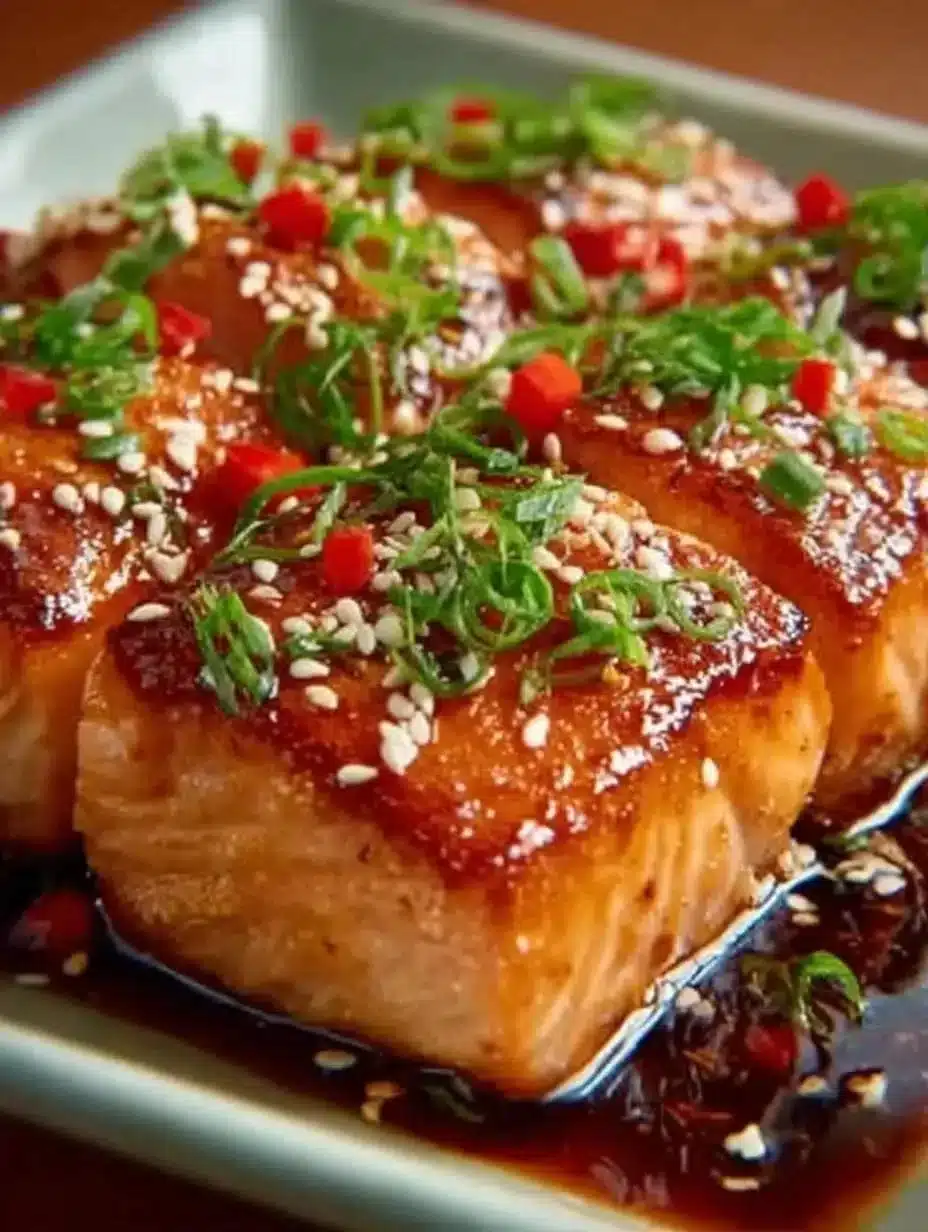
Orange Teriyaki Salmon | Sticky Baked Fillets
The first bite should be glossy, bright, and just a touch sticky from the glaze. Orange Teriyaki Salmon balances citrus brightness with salty-sweet depth for a fast weeknight winner; this version yields shiny fillets and a lacquered finish every time. I developed and tested this glaze over 12 iterations, adjusting sugar, acid, and reduce times to avoid burning while keeping a glossy coat. I also refined oven timing after testing fresh and frozen fillets at multiple thicknesses. Read on for a clear technique, a short ingredient breakdown, and precise timing so you can make it reliably tonight. For a quick protein swap that uses the same glaze, try the air fryer alternative linked below to see how the sauce performs on chicken.
Why This Recipe Works
- Balanced glaze chemistry: acid from orange juice brightens while sugar and mirin boost shine when reduced.
- Short, high-heat bake seals juices and sets the glaze without overcooking the salmon.
- A light cornstarch slurry thickens the sauce quickly without adding graininess.
- Brushing halfway through baking gives an even lacquer instead of a burnt glaze.
- Testing across fillet thicknesses led to reliable timing that preserves moist flesh.
Ingredients Breakdown
- Salmon fillets (680 g / 1.5 lb total; about four 170 g / 6 oz fillets): Firm, cold-water salmon has the best flavor. Thicker fillets require 1–2 minutes extra baking.
- Orange juice (120 ml / ½ cup), zest of one orange: Provides bright acid and citrus aroma. Fresh juice is important; bottled juice tastes flat.
- Soy sauce (60 ml / ¼ cup): Salt and umami base. For low-sodium, use reduced-sodium soy and adjust to taste.
- Mirin (60 ml / ¼ cup) or sweet rice wine: Adds sweetness and gloss. If you don’t have mirin, use 1 tbsp honey plus 3 tbsp water — the result will be less complex.
- Brown sugar (50 g / ¼ cup packed): Deepens caramelization. You can substitute coconut sugar, but the glaze will be earthier.
- Rice vinegar (15 ml / 1 tbsp): Balances sweetness. Do not omit — the glaze needs acid to keep flavor bright.
- Garlic (2 cloves, minced ~6 g): Aroma base. Cook briefly in the glaze to tame harshness.
- Ginger (1 tbsp, finely grated ~6 g): Fresh ginger lifts the glaze.
- Toasted sesame oil (5 ml / 1 tsp): Added off-heat for nutty finish.
- Cornstarch (8 g / 1 tbsp) + cold water (15 ml / 1 tbsp): Slurry to thicken the glaze quickly.
- Sesame seeds and sliced scallions for garnish (optional).
Substitution notes:
- Use Diamond Crystal kosher salt when salting the salmon; if you use Morton’s, halve the amount as it’s denser.
- For a Paleo version, replace soy sauce with coconut aminos and use maple syrup instead of brown sugar (see Variations).
- If using frozen salmon, thaw fully and pat dry to ensure the glaze sticks.
Essential Equipment
- Rimmed baking sheet or ovenproof skillet: A rimmed sheet catches drips; an ovenproof skillet (cast-iron or stainless) lets you finish on the stove.
- Wire rack (optional): Elevates fillets so air circulates and the underside browns slightly.
- Small saucepan: For reducing the glaze before finishing.
- Instant-read thermometer: For precise doneness (highly recommended).
- Fine microplane or zester for orange zest.
- Pastry brush for glazing. If you don’t have one, spoon the glaze over the fillets.
If you lack an instant-read thermometer, use visual cues described in the steps and err on the side of slightly undercooked for moistness.
Prep Time: 15 minutes | Cook Time: 12 minutes | Inactive Time: None | Total Time: 27 minutes | Servings: 4
Step 1: Preheat and dry the fish
Preheat the oven to 200°C (400°F). Pat 680 g (1.5 lb) salmon fillets very dry with paper towels and place them skin-side down on a lightly oiled rimmed baking sheet or on a wire rack set over the sheet. Lightly season the fillets with a pinch of Diamond Crystal kosher salt (about 1 tsp / 5 g) and ¼ tsp freshly ground black pepper.
Step 2: Make the glaze
In a small saucepan, combine 120 ml (½ cup) fresh orange juice, zest of 1 orange, 60 ml (¼ cup) soy sauce, 60 ml (¼ cup) mirin, 50 g (¼ cup) packed brown sugar, 15 ml (1 tbsp) rice vinegar, 2 minced garlic cloves (~6 g), and 1 tbsp grated ginger (~6 g). Bring to a gentle simmer over medium heat, stirring, and simmer 6–8 minutes until reduced and fragrant. Taste and adjust balance — it should be bright and slightly sweeter than you expect.
Step 3: Thicken the glaze
Whisk 8 g (1 tbsp) cornstarch with 15 ml (1 tbsp) cold water to make a slurry. Whisk the slurry into the simmering glaze and cook 1 minute more until glossy and slightly thickened, about the texture of heavy cream. Remove from heat and stir in 5 ml (1 tsp) toasted sesame oil. Let the glaze cool 2 minutes — it will thicken a bit more as it cools. Do not over-reduce the glaze — overcooked sugar will taste bitter.
Step 4: Bake and baste
Place the fillets in the preheated oven and bake 6 minutes. Remove the pan, brush each fillet with half the glaze, and return to the oven for another 4–6 minutes. Baking time depends on thickness: aim for an internal temperature of 52–57°C (125–135°F) for medium-rare, or 63°C (145°F) for well-done; total oven time usually 10–12 minutes. The glaze should be shiny and cling to the fish; if it darkens rapidly, lower the oven by 10–20°C (50–68°F).
Step 5: Rest and finish
Let the fillets rest 3 minutes after baking. Spoon any pan juices into the remaining glaze and heat briefly to loosen. Brush the fillets one last time with the warm glaze, sprinkle with sesame seeds and sliced scallions, and serve immediately. Resting lets the juices redistribute and the glaze set lightly.
Expert Tips & Pro Techniques
- Use an instant-read thermometer for consistency; salmon thickness varies. Aim for 52–57°C (125–135°F) for slightly rare, 63°C (145°F) if you prefer fully cooked.
- Common mistake: brushing too early causes burning. Brush halfway through baking and again after resting for the best shine.
- Reduce the glaze over medium heat; high heat caramelizes too fast and tastes bitter.
- Make-ahead: prepare the glaze up to 48 hours in advance and refrigerate in an airtight jar. Rewarm gently before using and whisk in 1 tsp water if it’s thickened too much.
- Professional technique adapted for home cooks: finish the glaze with a teaspoon of butter or a drizzle of toasted sesame oil off-heat to add silkiness without splitting.
- To keep the fish from sticking, oil the rack or sheet lightly and ensure fillets are very dry before oiling.
Storage & Reheating
- Refrigerator: Store cooled salmon in an airtight container for up to 3 days. Place the fillets skin-side down and pour a thin layer of the leftover glaze on top to protect moisture.
- Freezer: You can freeze glazed salmon for up to 2 months. Wrap tightly in plastic wrap then foil, or place in a freezer-safe container. Thaw overnight in the refrigerator before reheating.
- Reheating: Reheat in a 175°C (350°F) oven for 8–10 minutes until warmed through. For best texture, warm uncovered on a baking sheet to re-crisp the glaze slightly. Avoid microwaving — it will make the fish watery and the glaze gummy.
Variations & Substitutions
- Paleo / Whole30-friendly: Replace soy sauce with 60 ml (¼ cup) coconut aminos and swap brown sugar for 30 ml (2 tbsp) pure maple syrup. Keep same cooking times but watch sugar for faster browning.
- Grilled version: Brush fillets with glaze and grill over medium-high heat (200–230°C / 400–450°F) for 3–4 minutes per side. Keep a spray bottle of water handy to manage flare-ups.
- Citrus swap: Use 60 ml (¼ cup) orange juice + 60 ml (¼ cup) pineapple juice for a tropical note; reduce glaze 1–2 minutes less to avoid over-thinning.
- Baked Tasmanian-style upgrade: Use a fattier cut like Tasmanian salmon and reduce oven time by 1–2 minutes; see our linked recipe for more on that approach.
- Gluten-free: Use tamari or a GF soy sauce substitute; everything else remains the same.
Serving Suggestions & Pairings
- Serve alongside steamed jasmine rice and quick blanched broccolini for a balanced plate.
- Pair with a creamy avocado salsa or our baked salmon with avocado for a cooling contrast.
- For a hearty side, roasted sweet potatoes or miso-glazed eggplant complement the glaze’s sweetness.
- End the meal with a citrus-forward dessert like chocolate orange marble cake or a buttery chocolate orange rosemary shortbread to echo the orange notes.
Nutrition Information
Per serving (1 fillet; recipe makes 4 servings)
- Serving size: 1 fillet (approx. 170 g / 6 oz)
- Calories: 420 kcal
- Total Fat: 20 g
- Saturated Fat: 4.5 g
- Cholesterol: 95 mg
- Sodium: 780 mg
- Total Carbohydrates: 18 g
- Dietary Fiber: 0.5 g
- Sugars: 13 g
- Protein: 39 g
Nutrition values are estimates. Actual values may vary based on specific ingredients and preparation methods.
Frequently Asked Questions
Q: Why did my salmon turn out dry?
A: Dry salmon usually means it was cooked too long or at too high a temperature. Check with an instant-read thermometer and aim for 52–57°C (125–135°F) for moist fillets. Also pat the fish dry before baking so the glaze sticks without steaming the flesh.
Q: Can I make this without soy sauce?
A: Yes. Use 60 ml (¼ cup) coconut aminos for a soy-free version — flavor will be slightly sweeter and less savory. If avoiding added sugar, replace brown sugar with 30 ml (2 tbsp) maple syrup and reduce the amount if desired.
Q: Can I double this recipe?
A: Yes, you can double the ingredients and glaze. Spread fillets in a single layer across two rimmed sheets or bake in two batches to keep oven air circulation even. Doubling the glaze reduces and thickens at the same rate; watch it closely so it doesn’t over-reduce.
Q: Can I prepare this the night before?
A: You can make the glaze up to 48 hours ahead and refrigerate. For the fish, season and store uncovered in the fridge for a short time, but it’s best to bake and glaze just before serving for optimal texture.
Q: How long does this keep in the fridge?
A: Properly stored in an airtight container, refrigerated glazed salmon keeps 2–3 days. Reheat gently as directed to preserve texture.
Q: Will this glaze burn under the broiler?
A: Yes. Sugars in the glaze can burn quickly under high direct heat. If you want more color, broil briefly and watch continuously, or use a blowtorch at a safe distance for controlled caramelization.
Q: Is this recipe safe for kids or pregnant people?
A: For pregnant people who follow FDA guidance, cook salmon to 63°C (145°F) to be fully cooked. Adjust the oven time and use an instant-read thermometer to confirm.
Conclusion
If you want a quick, reliably glossy glaze that sings of citrus and umami, this Orange Teriyaki Salmon is an easy weeknight main that still feels special. For another fast orange-glazed option that finishes in about 20 minutes, compare methods in this orange glazed salmon guide from Chef Savvy and for a paleo take on orange teriyaki baked salmon, see the detailed notes and swaps at Cooked & Loved. Easy Orange Glazed Salmon (20 Minute Meal!) – Chef Savvy and Orange Teriyaki Baked Salmon – Cooked & Loved provide useful variations and timing notes to expand on this base recipe.
PrintOrange Teriyaki Salmon
- Total Time: 27 minutes
- Yield: 4 servings 1x
- Diet: Gluten-Free, Dairy-Free
Description
A quick and flavorful salmon dish with a glossy orange teriyaki glaze that balances citrus brightness and salty-sweet depth.
Ingredients
- 680 g salmon fillets (about four 170 g fillets)
- 120 ml fresh orange juice (½ cup)
- Zest of 1 orange
- 60 ml soy sauce (¼ cup)
- 60 ml mirin (¼ cup) or sweet rice wine
- 50 g packed brown sugar (¼ cup)
- 15 ml rice vinegar (1 tbsp)
- 2 cloves garlic, minced (~6 g)
- 1 tbsp ginger, finely grated (~6 g)
- 5 ml toasted sesame oil (1 tsp)
- 8 g cornstarch (1 tbsp)
- 15 ml cold water (1 tbsp)
- Sesame seeds and sliced scallions for garnish (optional)
Instructions
- Preheat the oven to 200°C (400°F). Pat salmon fillets dry and place them skin-side down on a lightly oiled rimmed baking sheet.
- Make the glaze by combining orange juice, zest, soy sauce, mirin, brown sugar, rice vinegar, garlic, and ginger in a saucepan. Simmer for 6–8 minutes.
- Whisk cornstarch with cold water to create a slurry, then mix it into the sauce and let it thicken for 1 minute.
- Bake the salmon for 6 minutes, then brush with half the glaze and return to the oven for another 4–6 minutes.
- Let the fillets rest for 3 minutes, then brush again with warm glaze and sprinkle with sesame seeds and scallions before serving.
Notes
Ensure the salmon is dry before applying the glaze to prevent steaming. You can prepare the glaze up to 48 hours in advance.
- Prep Time: 15 minutes
- Cook Time: 12 minutes
- Category: Main Course
- Method: Baking
- Cuisine: Asian
Nutrition
- Serving Size: 1 fillet
- Calories: 420
- Sugar: 13g
- Sodium: 780mg
- Fat: 20g
- Saturated Fat: 4.5g
- Unsaturated Fat: 15.5g
- Trans Fat: 0g
- Carbohydrates: 18g
- Fiber: 0.5g
- Protein: 39g
- Cholesterol: 95mg

Written by Chef Anna
I'm Anna - a Le Cordon Bleu-trained chef, recipe developer, and the voice behind Chef Johns Gourmet. After a decade in professional kitchens, I now spend my mornings testing recipes and my afternoons writing them down so you can make them perfectly in your own kitchen. Every one of the 1,100+ recipes on this site has been personally cooked, tasted, and refined. I write like I'm standing next to you, walking you through every step. Simple recipes. Bold flavors. Made for real kitchens.