
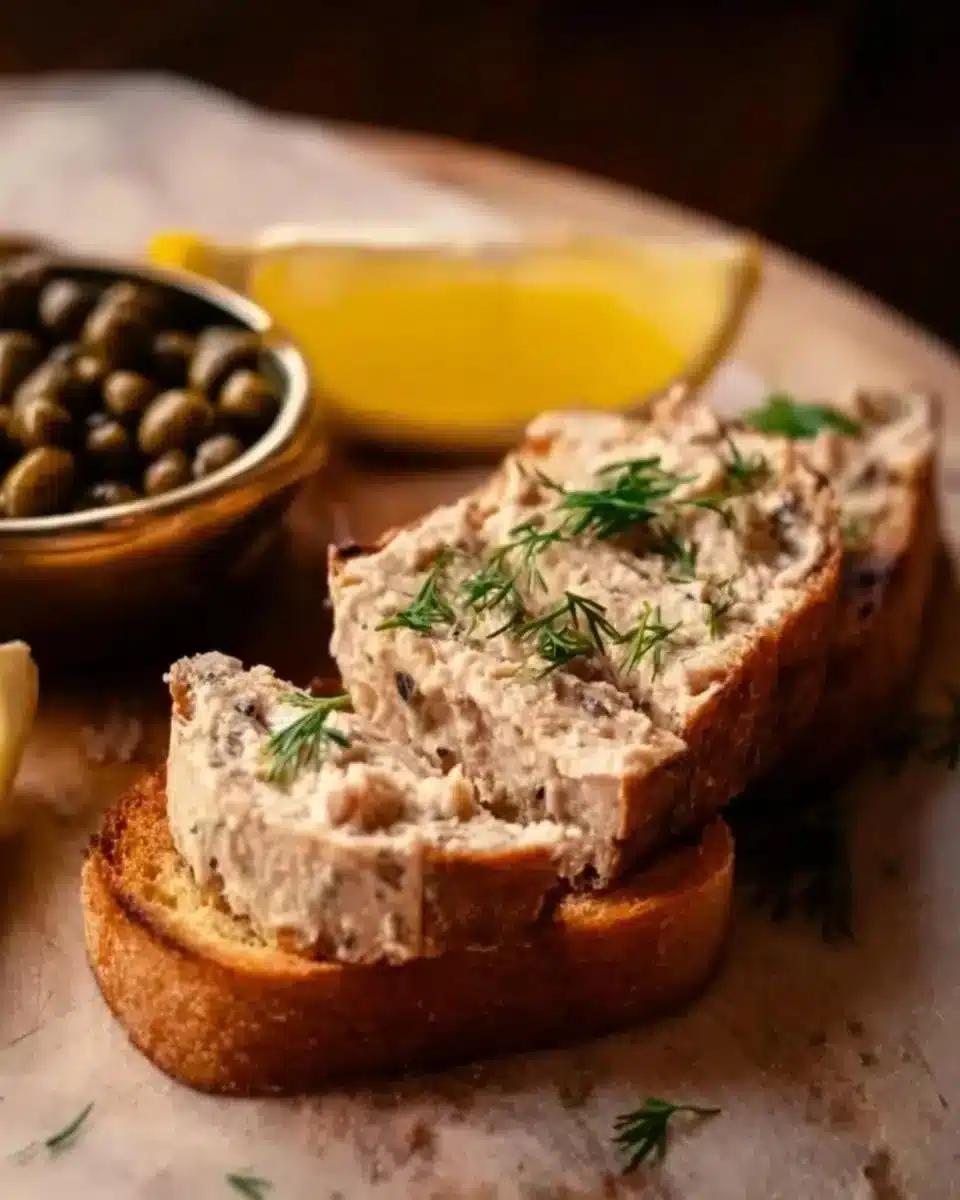
Sardine Pâté Recipe — Easy, Creamy Spread
The first bite is smoky, salty, and wildly satisfying — a rich, silky spread that wakes up plain crackers and weeknight dinners. Sardine pâté is quick, bold, and budget-friendly; this version balances oil-packed fish, tangy cream, and bright lemon for a smooth texture and bright flavor. After testing this recipe eight times with different tins and ratios, I settled on a mix that keeps body without tasting heavy. I perfected the timing and texture while cooking in a small bistro kitchen, so these steps work in a home blender or a food processor.
This recipe is noteworthy because it treats canned fish with the same care you’d give fresh seafood. Small choices — draining but reserving oil, folding in cool dairy, and resting briefly in the fridge — change the texture and flavor dramatically. Read on for a clear ingredient breakdown, exact measurements in metric and imperial, pro techniques, and troubleshooting tips so your pâté comes out smooth and bright every time.
Why This Recipe Works
- Balancing oil from the sardines with a creamy binder (cream cheese + mayo) gives a spreadable texture without tasting greasy.
- Acid (lemon juice) brightens the fish and cuts through fat, making the flavor clean and lively.
- A short chill lets flavors meld and firms the pâté just enough to slice or pipe.
- Pulsing in a food processor prevents overworking the mixture and keeps a pleasant, slightly rustic texture.
- Reserving a tablespoon of the sardine oil and finishing with it enhances silkiness and aroma.
Ingredients Breakdown
- Sardines (in oil): The star. Draining removes excess oil, but reserve 1 tbsp (15 ml) to adjust texture and flavor. Using sardines in oil gives more body than water-packed.
- Substitution impact: Water-packed sardines will be milder and drier; add an extra tablespoon of olive oil.
- Cream cheese: Adds body and tang. Use full-fat for silkiness.
- Substitute: Greek yogurt will lighten it but make the pâté looser and tangier.
- Mayonnaise: Emulsifies and smooths. You can use low-fat mayo but texture will be thinner.
- Lemon juice and Dijon mustard: Brightness and zip. They keep the fish from tasting flat.
- Shallot and capers: Provide bite and briny contrast; mince finely so the pâté remains smooth.
- Fresh parsley: Adds freshness and a green note. Dill is a good alternative.
- Kosher salt & black pepper: Season carefully — the canned sardines and capers add salt.
- Brand note: Use Diamond Crystal kosher salt if you have it; if using Morton’s, use about half the volume because it’s denser.
Essential Equipment
- Food processor (preferred) or blender — for a smooth, even texture. If using a blender, pulse rather than run continuously.
- Rubber spatula — to scrape the sides and fold gently.
- Fine mesh strainer or paper towel — to drain sardines if needed.
- Measuring spoons and kitchen scale — for accurate metric/imperial measurements.
- Airtight container (for storing) and small serving bowl.
If you don’t have a food processor, use a fork and a bowl: mash sardines, stir in softened cream cheese, and whisk in mayo. The texture will be chunkier but still delicious.
Prep time 15 minutes. Cook time 0 minutes. Inactive time 30 minutes for chilling. Total time 45 minutes. Makes 6 servings; serving size about 2 tablespoons (30 g / 1 oz).
Step 1: Prepare and drain the sardines
Open 200 g (7.1 oz) drained sardines (about 2 standard cans). Place them on a paper towel or in a fine mesh sieve and let them drain for 1–2 minutes. Reserve 15 ml (1 tbsp) of the oil from the can — this adds flavor and silkiness.
Step 2: Combine the soft ingredients
In the food processor, add 113 g (1/2 cup) full-fat cream cheese and 60 g (1/4 cup / 60 ml) mayonnaise. Add 15 ml (1 tbsp) lemon juice, 10 g (2 tsp) Dijon mustard, and 15 ml (1 tbsp) extra-virgin olive oil if using. Pulse 6–8 times until smooth and homogenous, about 6–8 seconds.
Step 3: Add the sardines and aromatics
Add the drained sardines, 30 g (1 small) finely chopped shallot, 15 g (1 tbsp) capers (rinsed if very salty), 10 g (2 tbsp) chopped parsley, 1/4 tsp (1.5 g) kosher salt, and 1/4 tsp (0.5 g) freshly ground black pepper. Pulse 6–12 times until you reach the texture you want — slightly coarse for rustic texture or longer for silky smooth, about 12–20 seconds total. Do not overprocess; stopping while small flakes remain keeps a pleasant mouthfeel.
Step 4: Adjust seasoning and texture
Taste and adjust: add up to 15 ml (1 tbsp) reserved sardine oil or extra-virgin olive oil for silkier texture. Add more lemon juice 5–10 ml (1–2 tsp) if you prefer brightness. If too salty, balance with a teaspoon (5 g) of honey or sugar.
Step 5: Chill for flavor melding
Transfer pâté to a serving bowl or airtight container. Chill in the refrigerator for at least 30 minutes to let flavors meld and texture firm. Chill up to 24 hours for best results. If piping or decorating, bring back to room temperature for 10 minutes before serving.
Step 6: Serve and garnish
When ready, garnish with chopped parsley, a drizzle of olive oil, or a few whole capers. Serve with toasted baguette slices, crackers, or crudités. Pâté keeps a firm spreadable texture and is easiest to spread straight from the fridge.
Expert Tips & Pro Techniques
- Use the reserved oil: A tablespoon of the tin oil adds aroma and silkiness without greasing the mixture.
- Pulse, don’t run: Short pulses prevent the pâté from becoming gluey. Stop once texture looks cohesive.
- Common mistake — oversalting: Taste before adding salt. Sardines and capers add significant sodium. Start small and adjust.
- Make-ahead: Pâté improves after 4–24 hours in the fridge. Make it the day before parties and keep chilled until serving.
- Professional trick at home: Warm the cream cheese slightly (about 20–30 seconds in the microwave) to make it blend smoother. It should be soft, not melted.
- Texture control: For a chunkier spread, reserve half the sardines and fold them in by hand after pulsing the rest.
Storage & Reheating
- Refrigerator: Store in an airtight container for up to 4 days. Keep a thin layer of olive oil on top to prevent oxidation and discoloration.
- Freezer: Freezing is not recommended; the dairy and texture change on thawing. If you must freeze, use an airtight container for up to 1 month and expect a change in texture. Thaw slowly in the fridge overnight and re-whisk before serving.
- Reheating: Do not heat — this is a cold spread. If you want a warm topping, spoon onto warm toast right before serving and broil for 1 minute to crisp the bread (watch closely).
Variations & Substitutions
- Lighter, lower-fat: Replace cream cheese with 150 g (2/3 cup / 150 g) Greek yogurt. Texture will be softer; chill longer to firm. Keep mayonnaise at 60 g (1/4 cup).
- Vegan-ish alternative: Use smoked mashed chickpeas (200 g / 1 cup cooked) with 60 g (1/4 cup) vegan mayo, 1 tsp smoked paprika, and 1 tbsp caper brine. Flavor will be different but smoky and spreadable.
- Herb-forward: Replace parsley with 15 g (1/4 cup) dill and add 5 g (1 tsp) lemon zest for a brighter, herbaceous profile. No timing changes.
- Spicy version: Add 5–10 ml (1–2 tsp) of your favorite hot sauce or 1 small minced jalapeño. Keep other quantities the same.
- French-style: Use 60 g (1/4 cup) crème fraîche instead of mayo and 5 g (1 tsp) whole-grain mustard. This increases richness and gives a slightly tangy finish.
Serving Suggestions & Pairings
- Classic: Toasted baguette slices or crackers; spread and top with thin cucumber slices.
- Fresh: Serve alongside a green salad tossed with lemon vinaigrette for contrast.
- Rich pairings: Pair with a chilled glass of dry white wine like Muscadet or Sauvignon Blanc.
- For gatherings: Offer with pickles, cornichons, and sliced radish for texture. Pair with our [Garlic Roasted Potatoes] for a hearty match.
Nutrition Information
Per serving (about 2 tbsp / 30 g). Recipe makes 6 servings.
- Calories: 225 kcal
- Total Fat: 23 g
- Saturated Fat: 5 g
- Cholesterol: 60 mg
- Sodium: 420 mg
- Total Carbohydrates: 1 g
- Dietary Fiber: 0 g
- Sugars: 1 g
- Protein: 9 g
Nutrition values are estimates. Actual values may vary based on specific ingredients and preparation methods.
Frequently Asked Questions
Q: Why did my pâté turn out too oily?
A: Too much retained oil from the can or adding extra olive oil can make it oily. Drain the sardines well and start with only 1 tbsp (15 ml) reserved oil. Add more only if needed.
Q: Can I make this without dairy?
A: Yes. Substitute 150 g (2/3 cup) Greek-style vegan yogurt and 60 g (1/4 cup) vegan mayo. The texture will be slightly lighter and tangier.
Q: Can I double this recipe?
A: Yes. Double all ingredients and use a larger food processor or work in two batches to ensure even processing.
Q: Can I prepare this the night before?
A: Absolutely. This pâté benefits from a night in the fridge. Make it up to 24 hours ahead for deeper flavor. Bring to room temperature for 10 minutes before serving for easier spreading.
Q: How long does this keep in the fridge?
A: Store in an airtight container for up to 4 days. Keep a thin layer of oil on top to slow oxidation and discoloration.
Q: My pâté is grainy — what happened?
A: Overprocessing or using very cold cream cheese can create a grainy or greasy texture. Warm cream cheese slightly before blending and pulse gently until smooth.
Q: Can I use fresh sardines instead of canned?
A: Yes, if you cook and debone them first. Grill or pan-sear about 200 g (7 oz) fresh sardines, remove bones, and proceed. The flavor will be fresher and less briny; reduce added salt.
Conclusion
Sardine pâté is fast, flavorful, and surprisingly versatile. It elevates simple ingredients into a classy spread for snacks, light dinners, and entertaining. For another simple take using canned fish and easy pantry staples, see Easy Sardine Pate (with Canned Sardines) – Creative in My Kitchen. If you want a version with a French twist and slightly different technique, check Incredibly Tasty French Sardine Pate – May Simpkin.
Print
Sardine Pâté
- Total Time: 45 minutes
- Yield: 6 servings 1x
- Diet: Pescatarian
Description
A rich and creamy sardine pâté that elevates simple crackers and meals with its smoky, tangy flavor.
Ingredients
- 200 g sardines in oil (drained)
- 113 g full-fat cream cheese
- 60 g mayonnaise
- 15 ml lemon juice
- 10 g Dijon mustard
- 15 ml extra-virgin olive oil (optional)
- 30 g finely chopped shallot
- 15 g capers (rinsed if salty)
- 10 g chopped parsley
- 1/4 tsp kosher salt
- 1/4 tsp freshly ground black pepper
Instructions
- Prepare and drain the sardines. Let them drain for 1–2 minutes and reserve 15 ml of the oil.
- In a food processor, combine cream cheese, mayonnaise, lemon juice, and Dijon mustard. Pulse until smooth for 6–8 seconds.
- Add the drained sardines, shallot, capers, parsley, salt, and pepper. Pulse until desired texture is reached, being careful not to overprocess.
- Taste and adjust seasoning by adding reserved sardine oil or extra lemon juice if needed.
- Transfer to a container and chill in the refrigerator for at least 30 minutes.
- Serve garnished with parsley, olive oil, and with crackers or toasted bread.
Notes
The pâté benefits from chilling for at least 30 minutes to meld flavors. Use the reserved oil for added silkiness.
- Prep Time: 15 minutes
- Cook Time: 0 minutes
- Category: Appetizer
- Method: Blending
- Cuisine: Mediterranean
Nutrition
- Serving Size: 30 g (about 2 tablespoons)
- Calories: 225
- Sugar: 1g
- Sodium: 420mg
- Fat: 23g
- Saturated Fat: 5g
- Unsaturated Fat: 18g
- Trans Fat: 0g
- Carbohydrates: 1g
- Fiber: 0g
- Protein: 9g
- Cholesterol: 60mg

Written by Chef Anna
I'm Anna - a Le Cordon Bleu-trained chef, recipe developer, and the voice behind Chef Johns Gourmet. After a decade in professional kitchens, I now spend my mornings testing recipes and my afternoons writing them down so you can make them perfectly in your own kitchen. Every one of the 1,100+ recipes on this site has been personally cooked, tasted, and refined. I write like I'm standing next to you, walking you through every step. Simple recipes. Bold flavors. Made for real kitchens.