
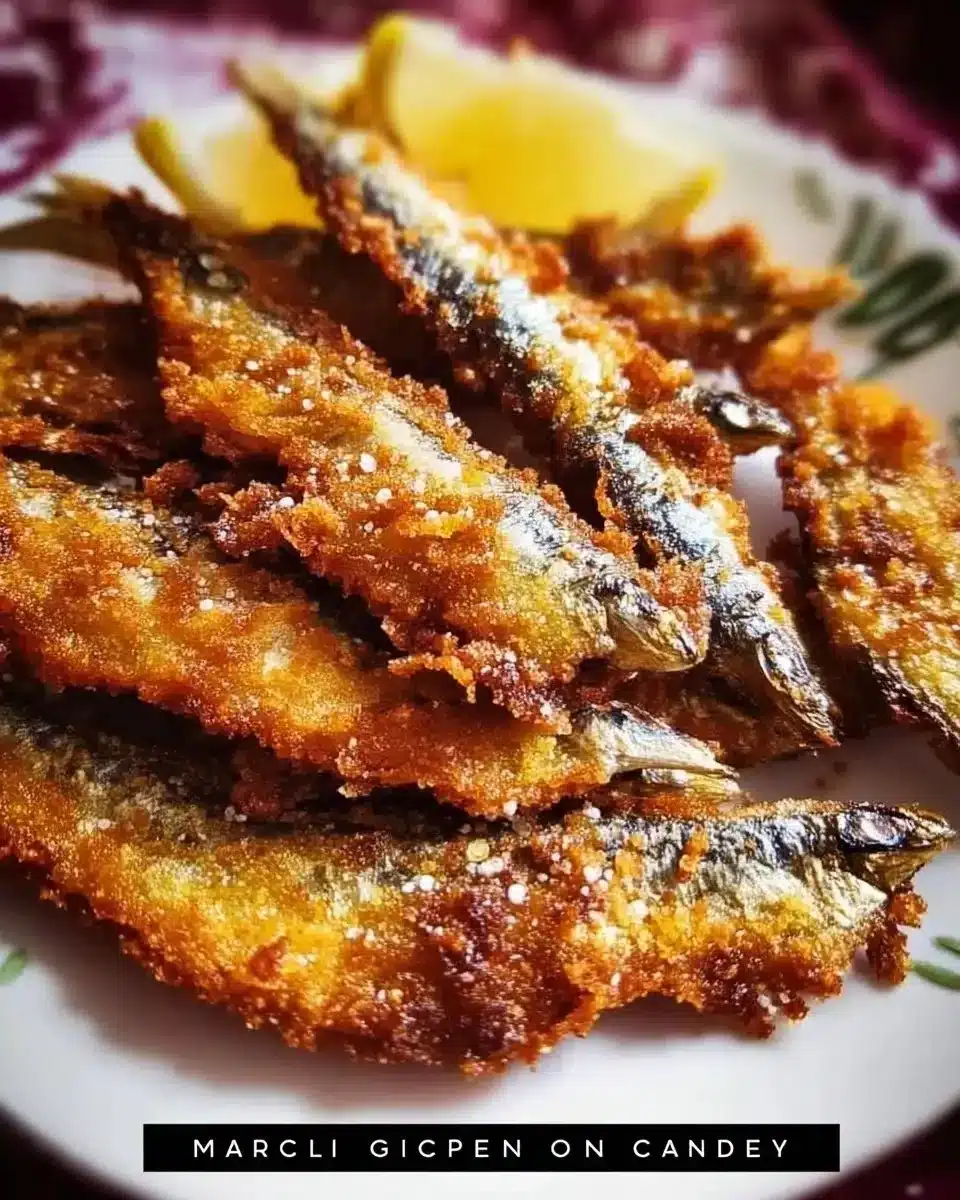
Crispy Fried Sardines — Quick Mediterranean Bites
The first bite crackles with salt, citrus, and hot oil — a small, bright explosion of texture and flavor that makes Crispy Fried Sardines impossible to stop eating. I developed this fried sardine method during busy summer service at a seaside trattoria and tested it eight times at home to tune the coating and frying temperature. The result is a fast Mediterranean appetizer that stays crisp, drains well, and highlights the sardine’s rich, oily flesh. It’s a great party starter when you want something rustic but precise. Read on for exact measurements, timing, and pro tips to get consistently golden results every time.
Try another crisp seafood starter while you plan the rest of the menu.
Why This Recipe Works
- High-heat frying in clean oil seals the sardine skin quickly, keeping the interior moist while creating a thin, shatteringly crisp crust.
- A light, two-part coating (seasoned flour + semolina) gives crunchy texture without masking the fish.
- Brief brine (or a quick salt rub) firms the flesh and seasons evenly without making the sardines soggy.
- Holding on a wire rack instead of paper keeps air around the fish so the crust stays crisp.
- Tested across different sardine sizes to find cook time windows that prevent overcooking.
Ingredients Breakdown
- Fresh whole sardines, cleaned — 600 g (1 lb 5 oz), about 16–20 small sardines. Choose bright eyes and firm flesh. If using larger fish, adjust cook time by 30–60 seconds.
- Kosher salt — 10 g (1 3/4 tsp Diamond Crystal or 1 tsp Morton’s). Use Diamond Crystal for this measure; if using Morton’s, reduce by half. Salt firms and seasons the flesh.
- Lemon — 1 medium, zested and cut into wedges. Acid brightens oily fish.
- Garlic — 2 cloves, finely grated. Adds background savory flavor when tossed with drained sardines.
- All-purpose flour — 150 g (1 1/4 cups). The base for the light coating.
- Fine semolina or fine cornmeal — 50 g (1/3 cup). Gives extra crunch; do not replace entirely with flour.
- Ground black pepper — 1/2 tsp, freshly cracked.
- Paprika (optional) — 1/2 tsp smoked or sweet. Adds color and a warm note.
- Neutral frying oil (peanut, sunflower, or vegetable) — enough for shallow to medium-deep frying, about 1 liter (4 cups) depending on pan. Use a neutral oil with a high smoke point. Olive oil will burn at these temperatures.
- Fresh parsley — 15 g (1/4 cup, chopped) for garnish.
Substitutions with impact warnings: - Semolina → 1:1 cornmeal works but gives a coarser crunch and a slightly grainy mouthfeel.
- Use gluten-free 1:1 blend? The crust will be lighter if you replace flour and semolina with a fine rice flour + cornmeal mix; expect a crisper but more delicate coating.
- Salt brand matters: Diamond Crystal is fluffier. If using Morton’s, use half the measured volume.
For a contrasting sweet crunch, try crispy fried pineapple rings as a palate play.
Essential Equipment
- Large heavy skillet or shallow Dutch oven (28–30 cm / 11–12 in) to hold oil with good heat retention.
- Candy or deep-fry thermometer (range up to 200°C / 400°F) — critical for maintaining 180°C (350°F). If you don’t have one, use a small cube of bread: it should brown in 45–60 seconds.
- Tongs and a spider skimmer for safe handling and draining.
- Wire cooling rack set over a sheet pan to keep fried fish crisp. Paper towels alone will make the coating soggy.
- Large shallow tray or rimmed baking sheet for dredging. If you lack semolina, a second tray with extra flour works as a substitute.
If you don’t have a thermometer, use a heavy pan and test with a 1-cm piece of bread; if it browns in 45–60 seconds, the oil is close to 180°C (350°F).
Step-by-Step Instructions
Prep Time: 20 minutes · Cook Time: 10 minutes · Inactive Time: None · Total Time: 30 minutes · Servings: 4
Step 1: Clean and season the sardines
Rinse 600 g (1 lb 5 oz) whole sardines and pat dry with paper towels. Sprinkle with 10 g (1 3/4 tsp Diamond Crystal) kosher salt and let sit for 5 minutes to firm the flesh. Rinse off excess salt if you used a heavier hand, then pat dry again. This quick cure tightens the flesh and seasons inside.
Step 2: Make the coating mix
Combine 150 g (1 1/4 cups) all-purpose flour, 50 g (1/3 cup) fine semolina, 1/2 tsp ground black pepper, and 1/2 tsp paprika in a shallow tray. Whisk to blend. Keep the mixture slightly loose so each fish gets an even dusting. Do not overpack the coating — a light layer is all you need.
Step 3: Dredge the sardines
Working in batches of 6–8, lightly dust each sardine in the flour-semolina mix. Shake off excess and place on a wire rack for a minute to set the layer. This pause helps the coating adhere and prevents clumps when frying. Total dredging time: about 6–8 minutes.
Step 4: Heat the oil and test
Pour neutral oil into the skillet to a depth of 3–4 cm (1 1/4–1 1/2 in); you’ll need roughly 750–1000 ml (3–4 cups) depending on pan size. Heat to 180°C (350°F). If using a thermometer, monitor closely and adjust heat. If using the bread test, a cube should brown in about 45–60 seconds. Heat stabilization takes 3–5 minutes.
Step 5: Fry the sardines
Fry in single layers for 90–120 seconds per side, about 3–4 minutes total, until the coating is deep golden and the fish are crisp. Flip once with tongs or a spider. Sensory cue: the fish should emit a steady, lively sizzle and the coating should sound crisp when tapped. Do not overcrowd — fry in batches. Drain on a wire rack set over a sheet pan and hold in a warm oven at 90°C (200°F) if serving all at once.
Step 6: Finish and serve
Toss hot sardines with 2 cloves grated garlic and 15 g (1/4 cup) chopped parsley, squeeze fresh lemon over the top, and serve immediately with extra lemon wedges. Total active frying time for all batches: 8–12 minutes. The fish are done when the crust is golden and the flesh flakes easily with a fork.
Expert Tips & Pro Techniques
- Always dry the fish thoroughly before dredging. Moisture is the enemy of crispness.
- Common mistake: oil too hot or too cool. Too hot burns the crust before the fish cooks; too cool makes the coating soggy. Keep oil at 180°C (350°F).
- Use a light semolina layer — it gives crunch without forming a heavy shell that hides the sardine flavor.
- Make-ahead: Dredge sardines up to 30 minutes ahead and keep on a wire rack in the fridge. Fry from cold for best adhesion. Do not dredge more than 30 minutes in advance or the coating will absorb moisture.
- Professional technique adapted for home cooks: raise the oil temperature to 190°C (375°F) for 30–45 seconds at the start of each batch to set the crust, then lower to 180°C (350°F) for finishing. This jump sears the coating and prevents excessive oil absorption.
- Avoid paper towels under the fish; they trap steam. Use a wire rack so steam escapes and crust stays crisp.
- To check doneness: the fish should flake easily and reach an internal feel of springy, not mushy.
Pair with a simple starch like egg fried rice to turn these into a fuller plate.
Storage & Reheating
- Refrigerator: Store cooled sardines in a single layer on a wire rack or in a shallow airtight container for up to 2 days. Cover loosely with foil to avoid condensation.
- Freezer: Fried sardines lose crispness if frozen. You can freeze raw, dredged sardines on a tray for up to 1 month, then fry from frozen for 2–3 minutes longer. Do not freeze after frying — texture suffers.
- Reheating: Reheat in a 175°C (350°F) oven on a wire rack for 6–8 minutes until warm and crisp. Avoid microwaving — it will make the crust soggy.
Variations & Substitutions
- Gluten-Free Version: Replace 150 g (1 1/4 cups) all-purpose flour with 150 g (1 1/4 cups) rice flour and keep 50 g (1/3 cup) fine cornmeal. Add 1/4 tsp xanthan gum if coating seems fragile. Fry time is the same.
- Herbed Crunch: Mix 1 tbsp finely chopped rosemary or thyme into the coating. Use the same amounts; flavor is stronger, so use sparingly.
- Spicy North African: Add 1/2 tsp ground cumin and 1/4 tsp cayenne to the flour mix. Serve with a lemon-yogurt dip (125 ml / 1/2 cup Greek yogurt + lemon). Yogurt dip adds tang and cools the heat.
- Asian-style: Swap semolina for panko (50 g / 1 3/4 cups loosely packed) for a larger flaky crunch. Fry at the same temperature but reduce time by 15–30 seconds per side if panko browns faster.
- Oven “fried” option: For lower oil use, spray lightly with oil and bake at 220°C (425°F) for 12–14 minutes, flipping once. The crust will be lighter, not as deep-fried, but still pleasant.
Serving Suggestions & Pairings
- Serve with crisp lemon wedges and a simple parsley-garlic salsa verde.
- Pair with a chilled dry white wine like Vermentino or a light pilsner to cut the oil.
- Offer sides like a bright tomato-cucumber salad or the sweet contrast of crispy fried pineapple rings for a playful surf-and-sweet pairing.
- For a tapas spread, add bang-bang shrimp and marinated olives to create varied textures and flavors.
Nutrition Information
Serving size: about 6 sardines (150 g cooked per serving) · Servings: 4
Per serving (estimate):
- Calories: 340 kcal
- Total Fat: 22 g
- Saturated Fat: 3.5 g
- Cholesterol: 105 mg
- Sodium: 520 mg
- Total Carbohydrates: 12 g
- Dietary Fiber: 0.5 g
- Sugars: 0.5 g
- Protein: 24 g
Nutrition values are estimates. Actual values may vary based on specific ingredients and preparation methods.
Frequently Asked Questions
Q: Why did my sardines turn out soggy instead of crispy?
A: Most often the oil was too cool or the fish were wet. Dry the sardines thoroughly, keep oil at 180°C (350°F), and fry in small batches so the oil temperature doesn’t drop.
Q: Can I make this without eggs?
A: Yes. This recipe uses a dry dredge only, so no eggs are needed. If you prefer an egg wash for a thicker crust, whisk 1 egg with 15 ml (1 tbsp) water and dip the fish before dredging.
Q: Can I double this recipe for a party?
A: Yes. Double the ingredients, but fry in more batches and keep the finished sardines warm in a 90°C (200°F) oven on a wire rack. Never double the oil volume in a single pan beyond safe capacity.
Q: Can I prepare this the night before?
A: You can clean and dry the sardines and refrigerate them overnight. Dredge up to 30 minutes before frying; do not dredge more than 30 minutes ahead or the coating will absorb moisture.
Q: How long does this keep in the fridge?
A: Store fried sardines in the fridge for up to 2 days. Crispness will decrease; reheat in a 175°C (350°F) oven to restore texture.
Q: What oil is best for frying sardines?
A: Use a neutral oil with a high smoke point like peanut, sunflower, or refined vegetable oil. Extra-virgin olive oil has too low a smoke point and will burn at frying temperatures.
Q: Why is semolina included? Can I skip it?
A: Semolina adds a distinct crunchy texture. You can omit it, but the crust will be softer and less toothsome. Substitute with fine cornmeal or panko for different textures.
Conclusion
These Crispy Fried Sardines are quick, bold, and ideal for a relaxed Mediterranean spread. For a classic Italian take on fried small fish, see Fried Sardines – The Italian Kitchen to compare techniques and regional variations. If you want a similarly light, crunchy frying method for small whole fish, check out Light and Crispy Fried Smelt – The Bold Appetite for useful tips on batter and temperature. Enjoy them hot, with lemon and a cold drink.
Print
Crispy Fried Sardines
- Total Time: 30 minutes
- Yield: 4 servings 1x
- Diet: Pescatarian
Description
Crispy Fried Sardines are a quick Mediterranean appetizer that combines salt, citrus, and hot oil for a delightful burst of flavor and texture.
Ingredients
- 600 g (1 lb 5 oz) fresh whole sardines, cleaned
- 10 g (1 3/4 tsp) kosher salt
- 1 medium lemon, zested and cut into wedges
- 2 cloves garlic, finely grated
- 150 g (1 1/4 cups) all-purpose flour
- 50 g (1/3 cup) fine semolina or fine cornmeal
- 1/2 tsp ground black pepper
- 1/2 tsp paprika (optional)
- 1 liter (4 cups) neutral frying oil (peanut, sunflower, or vegetable)
- 15 g (1/4 cup, chopped) fresh parsley for garnish
Instructions
- Clean and season the sardines by rinsing and patting dry. Sprinkle with kosher salt and let sit for 5 minutes. Rinse off excess salt if needed, then pat dry again.
- Make the coating mix by combining all-purpose flour, semolina, black pepper, and paprika in a shallow tray and whisking to blend.
- Dredge the sardines by lightly dusting each fish in the coating mix and shaking off excess, then placing on a wire rack to set.
- Heat the oil in a skillet to 180°C (350°F). Use a thermometer or perform the bread test to check the temperature.
- Fry sardines in single layers for 90–120 seconds per side until golden and crispy, then drain on a wire rack.
- Finish by tossing the hot sardines with garlic and parsley, squeezing fresh lemon over the top, and serving immediately with extra lemon wedges.
Notes
For best results, keep the oil temperature stable at 180°C (350°F) and avoid overcrowding the pan during frying.
- Prep Time: 20 minutes
- Cook Time: 10 minutes
- Category: Appetizer
- Method: Frying
- Cuisine: Mediterranean
Nutrition
- Serving Size: 6 sardines (150 g cooked)
- Calories: 340
- Sugar: 0.5g
- Sodium: 520mg
- Fat: 22g
- Saturated Fat: 3.5g
- Unsaturated Fat: 18.5g
- Trans Fat: 0g
- Carbohydrates: 12g
- Fiber: 0.5g
- Protein: 24g
- Cholesterol: 105mg

Written by Chef Anna
I'm Anna - a Le Cordon Bleu-trained chef, recipe developer, and the voice behind Chef Johns Gourmet. After a decade in professional kitchens, I now spend my mornings testing recipes and my afternoons writing them down so you can make them perfectly in your own kitchen. Every one of the 1,100+ recipes on this site has been personally cooked, tasted, and refined. I write like I'm standing next to you, walking you through every step. Simple recipes. Bold flavors. Made for real kitchens.