
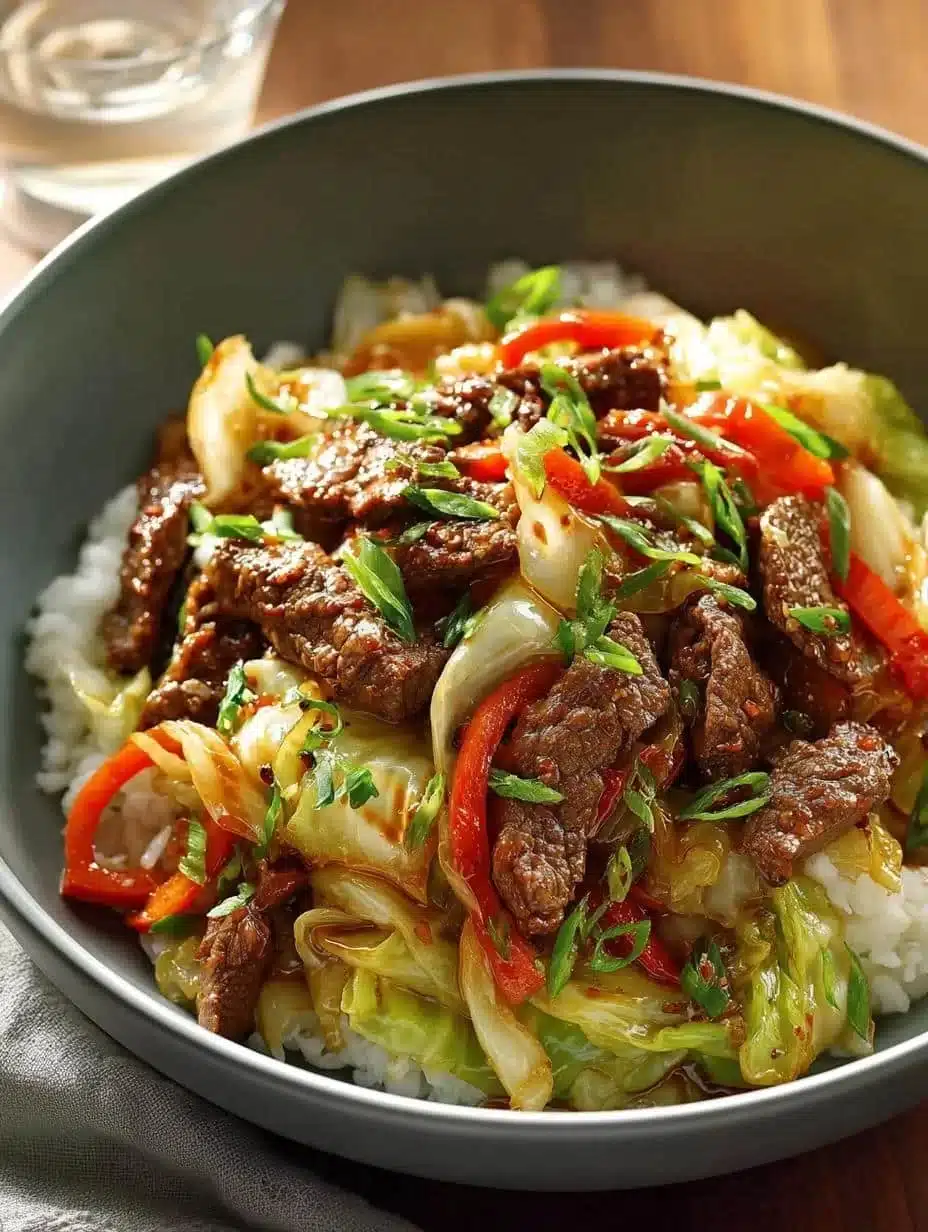
Skillet Beef & Cabbage for Quick Weeknight Dinners
The savory sizzle of beef, the sweet snap of cabbage, and a glossy soy glaze make this Skillet Beef Cabbage Stir-Fry a fast weeknight winner. I developed and refined this version after testing it eight times with different cuts of beef and pan finishes to lock in the best sear and crisp-tender cabbage. The technique is simple: hot pan, thin slices, quick toss — it keeps the meat juicy and the cabbage brightly textured. If you like bold, quick Asian-style weeknight meals, this one delivers. It’s the version I taught junior cooks at my restaurant and adapted for home kitchens; read on for exact timing, swaps, and pro tips so you can make it tonight.
Why This Recipe Works
- Fast, high-heat searing locks juices in thinly sliced beef and creates caramelized flavor.
- Blanching or briefly steaming the cabbage softens it just enough so it stays crisp when tossed with hot beef.
- A two-part sauce (marinade for the beef + finishing sauce) layers savory, sweet, and tangy notes without watering down the pan.
- Acid (rice vinegar or lime) cut through fat to make the dish feel light and bright.
- Precise timing — 2–3 minutes per side on the beef, 3–4 minutes for cabbage — gives consistent doneness every time.
Ingredients Breakdown
- 500 g (1.1 lb) flank steak or skirt steak, thinly sliced across the grain — the best balance of flavor and speed. Cutting across the grain shortens fibers and makes bites tender.
- Substitute: 500 g (1.1 lb) sirloin tip or rump if you prefer milder flavor; cook the same but watch doneness.
- 600 g (about 1 medium head) green cabbage, thinly sliced (about 6 cups) — provides bulk, crunch, and sweetness.
- Substitute: Napa cabbage for a softer, slightly sweeter result.
- 2 tbsp (30 ml) neutral oil (grapeseed or light olive oil) — high smoke point for fast searing.
- 3 garlic cloves, minced (about 9 g) and 2 tsp (6 g) fresh ginger, grated — aromatics that brighten the sauce.
- 60 ml (1/4 cup) low-sodium soy sauce — adds umami and salt. If using regular soy sauce, reduce additional salt.
- 30 ml (2 tbsp) rice vinegar — balances richness.
- 15 ml (1 tbsp) honey or brown sugar — rounds the edges with sweetness.
- 15 ml (1 tbsp) toasted sesame oil — finishing oil for aroma; do not use for searing.
- 1 tsp (5 g) cornstarch mixed with 30 ml (2 tbsp) cold water — thickens the finishing sauce.
- 2 spring onions, sliced on the diagonal for garnish.
- 1 tsp (5 g) Diamond Crystal or preferred kosher salt — if using Morton’s, use 1/2 tsp because it’s denser.
- Freshly ground black pepper to taste.
Notes on exchangeable ingredients: swapping honey for maple syrup will change the flavor profile; it’s fine but slightly less caramel. Using a different salt requires volume adjustment — Diamond Crystal is less dense than Morton’s.
Essential Equipment
- Large heavy skillet or 12-inch (30 cm) cast-iron skillet — holds heat for a good sear.
- No cast iron? Use a heavy stainless-steel sauté pan and preheat it well.
- Sharp chef’s knife and cutting board for thin, even slices.
- Mixing bowls for marinade and sauce.
- Tongs or a spatula for quick tosses.
- Small bowl for cornstarch slurry.
If you don’t have a mandoline, slice the cabbage thinly with a sharp knife; take your time and keep fingers tucked.
Step-by-Step Instructions
Prep Time: 10 minutes; Cook Time: 12 minutes; Inactive Time: None; Total Time: 22 minutes; Servings: 4 (about 1 generous cup per person)
Step 1: Slice and marinate the beef
Pat 500 g (1.1 lb) flank steak dry and slice across the grain into 3 mm (1/8 inch) strips. Toss with 15 ml (1 tbsp) soy sauce and 1 tsp (5 g) cornstarch; let sit 5 minutes. This light marinade seasons the meat and uses cornstarch to protect juices during searing.
Step 2: Make the sauce
Whisk together 45 ml (3 tbsp) soy sauce, 30 ml (2 tbsp) rice vinegar, 15 ml (1 tbsp) honey, 15 ml (1 tbsp) sesame oil, 30 ml (2 tbsp) water, and the reserved cornstarch slurry. Set aside. This sauce will thicken quickly when it hits the hot pan.
Step 3: Preheat the pan and sear the beef
Heat a large skillet over high heat until very hot (the oil should shimmer). Add 2 tbsp (30 ml) oil and spread. Working in two batches, sear beef for 60–90 seconds per side until browned but not fully cooked, about 3 minutes total per batch. Transfer beef to a plate. Do not overcrowd the pan — crowding steams the meat instead of searing.
Step 4: Cook the cabbage and aromatics
Reduce heat to medium-high. Add a splash of oil if needed, then 3 minced garlic cloves and 2 tsp (6 g) grated ginger; cook 30 seconds until fragrant. Add 600 g (about 6 cups) thinly sliced cabbage and 1/2 tsp (2.5 g) salt; sauté, tossing often, until cabbage is wilted but still bright, about 3–4 minutes. Look for softened leaves with lightly browned edges.
Step 5: Combine and finish
Return beef and any accumulated juices to the pan. Pour the sauce over and toss constantly for 60–90 seconds until sauce thickens and coats the meat and cabbage. Taste and adjust: add pepper or 5–10 ml (1–2 tsp) rice vinegar for brightness. Serve immediately garnished with sliced spring onions.
Expert Tips & Pro Techniques
- Slice the beef while it’s slightly chilled — it’s easier to get uniform, thin strips if the meat is cold.
- Common mistake: overcrowding the pan. If the meat steams, it won’t brown. Cook in batches and keep the pan hot.
- For the best sear, pat slices completely dry before marinating. Moisture creates steam and blocks browning.
- Make-ahead: slice the beef and mix the marinade up to 24 hours ahead. Store covered in the fridge. Keep cabbage and aromatics separately.
- Professional trick for consistent sauce: add the cornstarch slurry to warm sauce off-heat to avoid lumps, then return to the pan to finish.
- For meal prep, double the recipe and store in shallow containers. Reheat briefly in a hot skillet for best texture.
(Internal link) If you want a sweeter take on seared beef, compare techniques with this Asian sweet ginger beef recipe to see different glazing steps.
Storage & Reheating
- Refrigerator: Cool to room temperature, transfer to an airtight container, and refrigerate up to 3 days. Reheat in a skillet over medium heat for 3–5 minutes until hot.
- Freezer: This dish can be frozen but cabbage softens on thawing. Portion into freezer-safe containers and freeze up to 3 months. Thaw in the fridge overnight before reheating.
- Reheating: Reheat in a skillet over medium heat with a splash of water or soy sauce to revive moisture, 3–6 minutes. Avoid microwaving when possible to preserve texture.
Variations & Substitutions
- Gluten-Free Version: Use tamari instead of soy sauce and a gluten-free cornstarch or arrowroot. No other changes; cook time stays the same.
- Low-Carb / Keto: Omit honey and use 1 tsp erythritol or a pinch of monk fruit sweetener; all other amounts remain.
- Vegetarian Version: Replace beef with 400 g (14 oz) extra-firm tofu, pressed and cubed; pan-fry until golden, then follow the same sauce and cabbage timing. Cooked tofu needs slightly more time to crisp: 4–5 minutes per side.
- Spicy Variation: Add 1–2 tsp chili garlic sauce or 1/2 tsp red pepper flakes to the sauce. Keep everything else the same.
- Add mushrooms: Stir in 150 g (5 oz) sliced shiitakes when you add the cabbage; sauté 3–4 minutes until soft.
(Internal link) For hearty comfort recipes that pair well with this stir-fry, check out the autumn harvest beef stew method for slow-cooking tips.
Serving Suggestions & Pairings
- Serve over steamed jasmine rice or brown rice for a simple meal.
- For a lower-carb plate, serve over cauliflower rice or a bed of shredded lettuce.
- Garnish with toasted sesame seeds, extra sliced scallions, and a wedge of lime.
- Pair with a light beer or a chilled dry Riesling to balance the dish’s savory notes. (Internal link) If you’re planning a full menu, this also works as a flavorful counterpoint to the richness in our beef chowder Reuben twist.
(Internal link) If you want to compare slow-simmered sauces and textures, this autumn harvest beef stew explains low-and-slow techniques that differ from high-heat stir-frying.
Nutrition Information
Serving size: about 1 generous cup. Makes 4 servings.
Per serving (estimate):
- Calories: 350 kcal
- Total Fat: 20 g
- Saturated Fat: 6 g
- Cholesterol: 75 mg
- Sodium: 700 mg
- Total Carbohydrates: 10 g
- Dietary Fiber: 3 g
- Sugars: 6 g
- Protein: 34 g
Nutrition values are estimates. Actual values may vary based on specific ingredients and preparation methods.
Frequently Asked Questions
Q: Why did my beef turn out tough?
A: Tough beef usually means it was overcooked or sliced with the grain. Slice across the grain into thin strips and cook only until browned — 60–90 seconds per side for thin slices.
Q: Can I make this without soy sauce?
A: Yes. Use coconut aminos as a soy-free alternative, but the flavor will be slightly sweeter and less salty. Adjust seasonings to taste.
Q: Can I double this recipe?
A: You can double ingredients, but cook the beef in separate batches to avoid crowding the pan. Overcrowding steams the meat and lowers browning.
Q: Can I prepare this the night before?
A: Prep most components — slice the beef, mix the sauce, and chop the cabbage — the night before. Keep them refrigerated separately and finish the cooking the next day for best texture.
Q: How long does this keep in the fridge?
A: Store in an airtight container for up to 3 days. Reheat in a skillet over medium heat for 3–5 minutes.
Q: Is there a low-sodium version?
A: Yes — use low-sodium soy sauce or dilute regular soy with extra water, and taste before adding salt.
Q: What’s the best cut of beef for this dish?
A: Flank or skirt steak gives great flavor and slices thinly for quick cooking. Sirloin works well too; avoid very tough cuts unless you braise them.
Conclusion
This skillet method gives tender beef, crisp-tender cabbage, and a glossy sauce in under 25 minutes — perfect for busy nights. For a slightly different take that leans sweeter and more caramelized, see the Budget Bytes beef and cabbage stir fry. If you’d like a meal-prep friendly one-pan version with clean-eating notes, check the Clean Food Crush one-pan beef and cabbage skillet for additional ideas and swaps.
Enjoy — and remember: hot pan, thin slices, and quick tosses are the keys to perfect weekday stir-fry.
Print
Skillet Beef & Cabbage Stir-Fry
- Total Time: 22 minutes
- Yield: 4 servings 1x
- Diet: Gluten-Free
Description
A quick and delicious stir-fry featuring thinly sliced beef and crisp cabbage, all coated in a savory soy glaze.
Ingredients
- 500 g (1.1 lb) flank steak or skirt steak, thinly sliced
- 600 g (about 1 medium head) green cabbage, thinly sliced
- 2 tbsp (30 ml) neutral oil (grapeseed or light olive oil)
- 3 garlic cloves, minced
- 2 tsp (6 g) fresh ginger, grated
- 60 ml (1/4 cup) low-sodium soy sauce
- 30 ml (2 tbsp) rice vinegar
- 15 ml (1 tbsp) honey or brown sugar
- 15 ml (1 tbsp) toasted sesame oil
- 1 tsp (5 g) cornstarch mixed with 30 ml (2 tbsp) cold water
- 2 spring onions, sliced for garnish
- 1 tsp (5 g) kosher salt
- Freshly ground black pepper to taste
Instructions
- Slice and marinate the beef: Pat the beef dry, slice into thin strips, and toss with soy sauce and cornstarch; let sit for 5 minutes.
- Make the sauce: Whisk together remaining soy sauce, rice vinegar, honey, sesame oil, water, and cornstarch slurry; set aside.
- Preheat the pan and sear the beef: Heat skillet, add oil, and sear beef in batches for 60–90 seconds per side; transfer to a plate.
- Cook the cabbage and aromatics: Sauté garlic and ginger, then add cabbage and salt; cook until wilted but bright, about 3–4 minutes.
- Combine and finish: Return beef to pan, pour sauce over, and toss until thickened; garnish with spring onions and serve immediately.
Notes
For a gluten-free version, substitute tamari for soy sauce. For spicy variation, add chili garlic sauce.
- Prep Time: 10 minutes
- Cook Time: 12 minutes
- Category: Main Course
- Method: Stir-frying
- Cuisine: Asian
Nutrition
- Serving Size: 1 generous cup
- Calories: 350
- Sugar: 6g
- Sodium: 700mg
- Fat: 20g
- Saturated Fat: 6g
- Unsaturated Fat: 10g
- Trans Fat: 0g
- Carbohydrates: 10g
- Fiber: 3g
- Protein: 34g
- Cholesterol: 75mg

Written by Chef Anna
I'm Anna - a Le Cordon Bleu-trained chef, recipe developer, and the voice behind Chef Johns Gourmet. After a decade in professional kitchens, I now spend my mornings testing recipes and my afternoons writing them down so you can make them perfectly in your own kitchen. Every one of the 1,100+ recipes on this site has been personally cooked, tasted, and refined. I write like I'm standing next to you, walking you through every step. Simple recipes. Bold flavors. Made for real kitchens.