
Key Takeaways
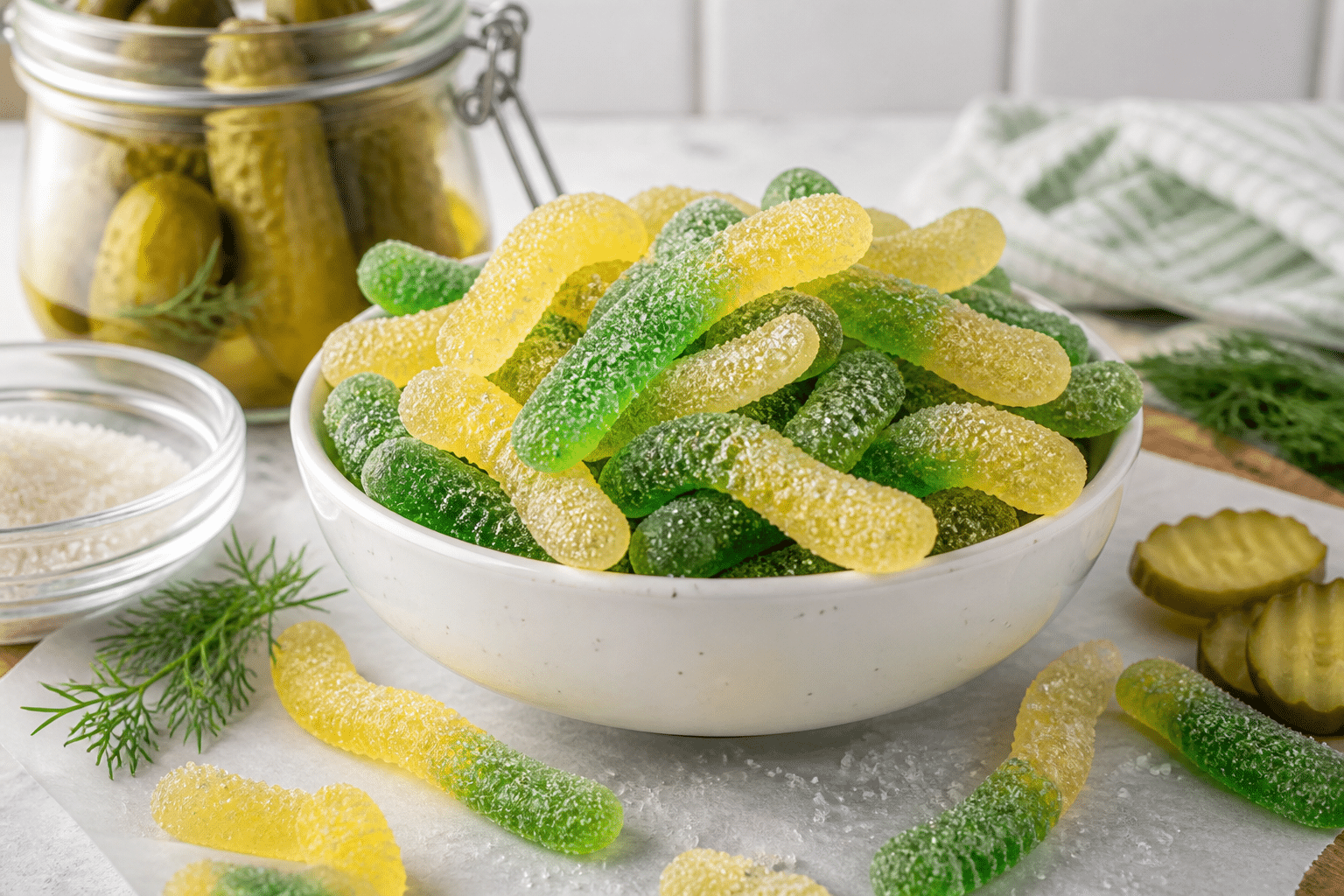
- Dill pickle gummy worms combine tangy dill pickle juice with gelatin for a unique, addictively sour candy that both kids and adults love.
- The recipe requires only 4 main ingredients: pickle juice, gelatin, sugar, and citric acid.
- Total prep time is about 20 minutes with 2 hours of refrigerator setting time.
- These gummies are naturally gluten-free and can be made sugar-free with alternative sweeteners.
- Dill pickle gummy worms make an incredible party snack that pairs well with homemade lemon bars for a sweet-and-sour spread.
- You can customize the sourness level by adjusting the citric acid coating from mild to extreme pucker.
Why Dill Pickle Gummy Worms Are the Hottest Candy Trend
Pickle-flavored candy has exploded in popularity across social media, with dill pickle gummy worms leading the charge. These tangy, chewy treats deliver an unexpected flavor combination that keeps people coming back for more. The savory dill and vinagar tang from real pickle juice creates a gummy experience unlike anything you can buy in stores.
Part of the appeal is the novelty factor — serving dill pickle gummies at a party guarantees reactions and conversations. But beyond the fun factor, many people genuinely prefer savory-sour candies over ultra-sweet options. The pickle juice provides a satisfying tang that is refreshing and addictive in a way that traditional fruit gummies cannot replicate.
Making them at home means you control the ingredients, avoid artificial colors and preservatives, and can adjust the pickle intensity to your exact preference. Plus, gummy-making is a fantastic kitchen activity for families, similar to making chocolate almond bark — simple, fun, and the results are impressive.
| Feature | Pickle Gummy Worms | Regular Gummy Worms |
|---|---|---|
| Primary Flavor | Sour dill pickle | Sweet fruit |
| Sugar Content | Lower (tangy focus) | High (sugar focus) |
| Artificial Colors | None (pickle juice = natural green) | Usually contains FD&C dyes |
| Novelty Factor | Very high | Standard |
| Electrolytes | Yes (from pickle brine) | None |
| Gluten Content | Gluten-free | Usually gluten-free |
| Homemade Cost | ~$3 per batch | ~$4 per bag (store) |
Essential Ingredients for Pickle Gummy Worms
Dill pickle juice (1 cup) is the star ingredient. Use juice from a jar of whole dill pickles — Claussen and Vlasic both work excellently. The juice should be at room temperature for best gelatin blooming. More vinegary brines produce tangier gummies, while milder brines create a subtler pickle flavor.
Unflavored gelatin (3 tablespoons) provides the chewy, gummy texture. Knox brand is widely available and works perfectly. For a firmer, more candy-like gummy, increase to 4 tablespoons. For softer, jello-like gummies, reduce to 2.5 tablespoons.
Granulated sugar (2 tablespoons) balances the intense sourness of the pickle juice. For a completely sugar-free version, substitute with erythritol or monk fruit sweetener at a 1:1 ratio. The sugar also helps with the overall texture and mouthfeel.
Citric acid (1-2 teaspoons) creates the sour coating that makes these gummies truly addictive. Find it in the canning section of grocery stores or online. More citric acid equals more pucker power. Combine with a tablespoon of sugar for the classic sour-coating effect.
| Ingredient | Amount | Purpose | Substitution |
|---|---|---|---|
| Dill pickle juice | 1 cup | Base flavor + liquid | Pickle brine from any brand |
| Unflavored gelatin | 3 tbsp | Gummy texture | Agar agar (vegan, different texture) |
| Granulated sugar | 2 tbsp | Balance sourness | Erythritol, monk fruit |
| Citric acid | 1-2 tsp | Sour coating | Tartaric acid, sour candy sugar |
| Green food color | Optional, 2 drops | Vibrant green color | Spinach juice (natural) |
| Dill weed | 1/2 tsp (optional) | Extra dill flavor | Dried dill flakes |
How to Make Dill Pickle Gummy Worms Step by Step
Step 1: Bloom the Gelatin
Pour 1 cup of room-temperature dill pickle juice into a small saucepan. Sprinkle 3 tablespoons of unflavored gelatin evenly over the surface. Do not stir yet — let the gelatin sit undisturbed for 5 minutes to bloom. The gelatin will absorb the liquid and swell into a thick, spongy mass. This blooming step is critical for a smooth, lump-free final product.
Step 2: Heat and Dissolve
Place the saucepan over low heat and stir continuously until the gelatin is completely dissolved, about 3 to 4 minutes. Add 2 tablespoons of sugar and stir until dissolved. Do not let the mixture boil — excessive heat breaks down gelatin proteins and results in gummies that won’t set properly. The liquid should be warm and completely smooth with no visible granules.
Step 3: Pour Into Molds
Using a small squeeze bottle, dropper, or steady hand with a spouted measuring cup, carefully fill silicone gummy worm molds with the warm mixture. Work quickly as the gelatin begins to set at room temperature. If using a flat baking dish instead of molds, pour to about 1/4 inch depth and cut into worm shapes after setting. Tap the mold gently on the counter to remove air bubbles.
Step 4: Set and Coat
Refrigerate the filled molds for at least 2 hours or until completely firm. Pop the gummy worms out of the molds. In a small bowl, mix 1 tablespoon of sugar with 1 teaspoon of citric acid. Toss the gummy worms in this sour coating for that signature pucker-worthy finish. Serve immediately or store in an airtight container.
What Does Pickle Juice Do in Gummy Candy?
Pickle juice serves as both the primary liquid and the flavoring agent in these gummies. The acetic acid (vinegar) in the brine gives the gummies their characteristic tang while also acting as a natural preservative that extends shelf life. The dill and garlic compounds in the brine provide the distinctive savory pickle flavor.
Interestingly, pickle juice also contains electrolytes — particularly sodium and potassium — which is why athletes sometimes drink pickle juice for cramp prevention. This means your gummy worms actually have a small functional benefit beyond just being delicious. The salt content in the brine also enhances flavor perception, making the sour and sweet elements taste more pronounced.
The pH level of pickle juice (typically 3.0-3.5) works perfectly with gelatin. Slightly acidic conditions help gelatin set firmly while creating a tangier end product. Very high acidity can weaken gelatin, so do not add extra vinegar to the recipe.
Are Pickle Gummy Worms Safe for Kids?
Yes, dill pickle gummy worms are safe for children to eat and make. The ingredients are food-grade and commonly consumed. However, since these gummies contain a significant amount of sodium from the pickle brine, limit portions for very young children. A serving of 5-6 gummy worms contains approximately 200mg of sodium.
The citric acid sour coating can be intense for sensitive palates, so consider using less citric acid for a kid-friendly version. Making gummies is also a wonderful educational kitchen activity that teaches children about food science, patience, and following recipes — skills that translate to cooking projects like simple 3-ingredient pancakes.
| Nutrient | Amount | % Daily Value |
|---|---|---|
| Calories | 35 | 2% |
| Total Fat | 0g | 0% |
| Sodium | 200mg | 9% |
| Total Carbs | 5g | 2% |
| Sugars | 4g | — |
| Protein | 3g | 6% |
| Vitamin A | 0mg | 0% |
| Calcium | 5mg | 0% |
How Long Do Homemade Pickle Gummies Last?
Stored in an airtight container in the refrigerator, homemade pickle gummy worms last 1 to 2 weeks. The high salt and acid content from the pickle juice acts as natural preservatives, giving these gummies a longer shelf life than most homemade gelatin candies.
At room temperature, they hold their shape for about 4 to 6 hours before becoming sticky. For parties, set them out in a cool area and serve within a few hours. The sour citric acid coating may absorb moisture over time, so re-coat with fresh sour sugar before serving if they have been stored for several days.
| Climate | Storage Method | Duration | Notes |
|---|---|---|---|
| Refrigerator | Airtight container | 1-2 weeks | Best quality and texture |
| Room temperature | Covered plate | 4-6 hours | Will get sticky over time |
| Freezer | Freezer bag | Up to 3 months | Thaw in fridge before eating |
| Hot weather (80°F+) | Keep refrigerated | Do not leave out | Gelatin melts in heat |
Can You Make Pickle Gummies Without Gelatin?
For a vegan or vegetarian version, substitute agar agar for the gelatin. Use 1.5 teaspoons of agar agar powder per cup of liquid instead of 3 tablespoons of gelatin. The process is slightly different — agar agar must be brought to a full boil to activate, unlike gelatin which should never boil.
The texture will differ from traditional gelatin gummies. Agar agar produces a firmer, more brittle gummy that snaps rather than chews. Some people prefer this texture, while others find it less satisfying than the stretchy chew of gelatin-based gummies. Experiment with a small batch first to determine your preference.
Creative Variations on Pickle Gummy Worms
Once you master the basic recipe, explore these exciting variations that push the pickle gummy concept further:
Spicy Pickle Gummies: Add 1/4 teaspoon of cayenne pepper or a few drops of hot sauce to the mixture before pouring into molds. The heat combined with pickle tang creates an irresistible flavor bomb.
Ranch Pickle Gummies: Stir in 1 tablespoon of ranch seasoning mix for a pickle-and-ranch flavor combination that replicates the popular snack pairing.
Sweet and Sour Pickle Gummies: Replace 1/4 cup of pickle juice with pineapple juice for a tropical-sour twist that bridges the gap between candy and pickle flavors.
For another creative snack recipe, try making slow cooker chicken shawarma wraps with these pickle gummies as a tangy side snack — the flavor contrast is surprisingly excellent.
Why Are My Pickle Gummies Not Setting Properly?
The most common reason for soft or non-setting gummies is not using enough gelatin. Ensure you measure 3 full tablespoons (not teaspoons) of unflavored gelatin per cup of liquid. Another culprit is boiling the mixture, which destroys the gelatin’s setting ability. Keep the heat low and stir constantly.
Very acidic pickle juice (pH below 2.5) can also interfere with gelatin setting. If using a particularly strong vinegar brine, dilute with 2 tablespoons of water. Fresh pineapple or kiwi juice should never be mixed with gelatin raw, as they contain enzymes that break down the protein — but this is not an issue with pickle juice.
Temperature is also critical. The molds must be refrigerated on a flat, stable surface for a minimum of 2 hours. Opening the refrigerator frequently during setting disrupts the process. Place the molds on a level shelf in the back of the fridge where temperature is most consistent.
Best Molds for Making Gummy Worms at Home
Silicone gummy worm molds are available online and in craft stores for about $8 to $15. Look for molds with thin, elongated cavities that produce authentic worm shapes. The flexibility of silicone makes it easy to pop out the finished gummies without tearing them.
If you do not have specialty molds, pour the mixture into a shallow baking dish lined with parchment paper. Once set, use a sharp knife or pizza cutter to slice into worm-like strips. A zipper bag with a tiny corner cut off works as a makeshift squeeze bottle for filling molds. These same molds work for other gelatin treats and fruit-based sodas frozen into popsicle form.
The Food Science Behind Gelatin Gummies
Gelatin is a protein derived from animal collagen, typically from pork or beef bones and connective tissue. When dissolved in warm liquid and cooled, gelatin molecules form a triple-helix structure that traps water molecules in a semi-solid matrix — this is what creates the characteristic chewy bounce of gummy candies. The amount of gelatin per unit of liquid determines the firmness: more gelatin equals firmer, chewier gummies.
The acid in pickle juice (typically 5 percent acetic acid from vinegar) interacts with gelatin in an interesting way. Moderate acidity actually helps gelatin set more firmly and cleanly, which is why vinegar-based pickle gummies have a satisfying snap that plain water-based gelatin lacks. However, extremely high acidity (pH below 2.5) can break down gelatin’s protein bonds, so do not add extra vinegar to the recipe.
Temperature control during the recipe is critical. Gelatin denatures (loses its setting ability) above 176°F (80°C), which is why you must never boil the mixture. The ideal dissolution temperature is 140-160°F — warm enough to fully dissolve the granules but cool enough to preserve protein structure. Use a kitchen thermometer for consistent results batch after batch. This same temperature precision applies to many dessert recipes including carrot cake batter preparation.
| Temperature Range | Gelatin State | Effect on Gummies |
|---|---|---|
| Below 59°F (15°C) | Fully set | Firm, ready to eat |
| 59-77°F (15-25°C) | Set but softening | Slightly sticky surface |
| 77-100°F (25-38°C) | Softening | Losing shape, tacky |
| 100-140°F (38-60°C) | Melting | Reverting to liquid |
| 140-176°F (60-80°C) | Dissolved | Ideal for mixing |
| Above 176°F (80°C) | Denatured | Will not set properly |
Creative Party Ideas for Pickle Gummy Worms
Pickle gummy worms are the ultimate conversation-starting party snack. For Halloween, display them in a glass jar labeled “Specimen Jar” alongside other creepy candy for a mad scientist theme. The natural green color of pickle gummies makes them perfect for slime-themed kids’ parties. Thread them onto pretzel sticks to create “magic wands” that kids absolutely love.
For adult gatherings, serve pickle gummy worms alongside a charcuterie board as an unexpected palate cleanser between rich cheeses and cured meats. The tangy, vinegar-forward flavor of the gummies cuts through the fat of cheese and salami, refreshing your palate similarly to how pickles function on a traditional deli platter. They also pair surprisingly well with craft beer, especially sour ales and wheat beers.
For a memorable gift, package pickle gummy worms in small mason jars with a custom label listing the ingredients and a playful tagline like “Pucker Up!” or “Dill With It.” Tie with twine and a mini pickle ornament for a gift that costs under $3 per jar but feels creative and personal. These make excellent stocking stuffers, party favors, and white elephant gifts. Set up a gummy-making station alongside a strawberry cream soda bar for the ultimate interactive party experience.
If you want to take your pickle obsession further, create a whole pickle-themed party menu: pickle gummy worms for candy, fried pickle spears for appetizers, pickle-brined fried chicken for the main course, and pickle-back shots for the brave. The gummy worms serve as both dessert and an ongoing snack that guests return to throughout the event. Include honey garlic chicken as a non-pickle option for guests who want variety.
Frequently Asked Questions About Dill Pickle Gummy Worms
What kind of pickle juice is best for gummy worms?
Full-sour kosher dill pickle juice produces the most intensely flavored gummies. Claussen and Vlasic Kosher Dill brands are excellent choices. Avoid sweet pickle juice or bread-and-butter pickle brine unless you specifically want a sweeter gummy. The brine should taste strongly of dill and vinegar for the best results.
How many gummy worms does one batch make?
One cup of pickle juice produces approximately 40 to 50 gummy worms using standard silicone molds. This varies depending on the size and shape of your specific mold cavities. If using a flat dish and cutting into strips, you can expect about 30 to 40 worm-sized pieces from one batch.
Can you use flavored pickle juice like hot pickle or garlic pickle?
Absolutely — flavored pickle juice creates incredible gummy variations. Hot pickle juice produces spicy gummies with real heat. Garlic dill brine adds extra savory depth. Even pickle juice from pickled jalapeños or pickled onions can be used for completely unique candy flavors.
Are dill pickle gummy worms keto-friendly?
The base recipe contains only about 5 grams of carbs per serving from the added sugar. For a strict keto version, replace the sugar with allulose or erythritol at a 1:1 ratio. Skip the citric acid sugar coating or use pure citric acid without sugar. Gelatin itself is zero-carb and high in protein.
Why do my gummy worms taste too salty?
Some pickle brines are extremely salty. If your gummies taste too salty, dilute the pickle juice with water — use 3/4 cup pickle juice and 1/4 cup water for a milder result. You can also rinse finished gummies briefly under cool water to remove surface salt before applying the sour coating.
Can you make pickle gummies with Jell-O instead of unflavored gelatin?
Yes, lime or lemon Jell-O can be combined with pickle juice, but the fruit flavor will compete with the pickle taste. Use half the recommended water in the Jell-O instructions and replace it with pickle juice. The result is a milder pickle-citrus hybrid that some people find more approachable than the pure pickle version.
How do you get gummy worms out of the mold without breaking?
Ensure the gummies are fully set and cold before attempting removal. Gently peel back the silicone mold edges to release the suction, then push from the bottom of each cavity. If any stick, place the mold in the freezer for 10 minutes — the slight shrinkage from cold makes removal effortless.
Do pickle gummy worms actually taste like pickles?
Yes — they have a distinctive dill pickle flavor with a chewy candy texture. The taste is tangy, salty, and herbaceous with a satisfying vinegar kick. People who enjoy eating pickles generally love these gummies. The sour citric acid coating amplifies the pucker factor for an even more intense experience.
What is citric acid and where do you buy it?
Citric acid is a naturally occurring acid found in citrus fruits. In powder form, it creates the sour coating on candies like Sour Patch Kids and Warheads. Buy it in the canning/preserving section of grocery stores, in bulk food stores, or online. A small container lasts a long time since you only need 1-2 teaspoons per batch.
Can you sell homemade pickle gummy worms?
Many cottage food laws allow selling homemade candy from home kitchens. Check your local regulations — requirements vary by state and country. You will likely need proper labeling with ingredients, allergens (gelatin is an allergen for some), and net weight. Pickle gummy worms are extremely popular at farmers markets and craft fairs due to their novelty appeal.

Written by Chef Anna
I'm Anna - a Le Cordon Bleu-trained chef, recipe developer, and the voice behind Chef Johns Gourmet. After a decade in professional kitchens, I now spend my mornings testing recipes and my afternoons writing them down so you can make them perfectly in your own kitchen. Every one of the 1,100+ recipes on this site has been personally cooked, tasted, and refined. I write like I'm standing next to you, walking you through every step. Simple recipes. Bold flavors. Made for real kitchens.