

Key Takeaways
- Shortbread Meets Custard: A buttery shortbread crust topped with silky rhubarb custard creates the perfect balance between crunch and creaminess.
- 45-Minute Total Time: Only 15 minutes of active prep and 30 minutes of baking make these bars a weeknight-friendly spring dessert.
- Fresh or Frozen Rhubarb: Both work equally well — no need to wait for the farmers market if you have frozen rhubarb on hand.
- Naturally Pink Color: Rhubarb provides a gorgeous natural pink hue without any food coloring or artificial dyes.
- Make-Ahead Friendly: These bars taste even better the next day as the custard firms up and flavors meld in the refrigerator.
- Crowd Pleaser: One 9×13 pan yields 24 bars — perfect for potlucks, bake sales, and spring entertaining.
Rhubarb custard bars are the spring dessert that serious bakers wait all year to make. The combination of a buttery, press-in shortbread crust and tangy rhubarb custard filling creates a bar cookie that walks the perfect line between sweet and sour. Every bite delivers crumble, cream, and that unmistakable rhubarb tartness that signals warm weather has finally arrived.
Unlike rhubarb pie, which requires rolling dough and crimping edges, these bars use a simple press-in crust that even beginning bakers nail on the first try. The custard pours directly over the prebaked crust and sets in the oven, emerging with a silky, jiggly texture that firms up perfectly in the refrigerator. These bars improve overnight, making them the ideal make-ahead dessert for spring gatherings, Easter brunch, Mother’s Day celebrations, and Memorial Day cookouts.
Rhubarb Custard Bars Nutrition Facts
| Nutrient | Per Bar (1/24 pan) | % Daily Value |
|---|---|---|
| Calories | 195 kcal | 10% |
| Protein | 3 g | 6% |
| Total Fat | 10 g | 13% |
| Saturated Fat | 6 g | 30% |
| Carbohydrates | 24 g | 9% |
| Fiber | 0.5 g | 2% |
| Sugar | 16 g | — |
| Sodium | 95 mg | 4% |
Why Rhubarb Custard Bars Beat Traditional Rhubarb Pie
Rhubarb custard bars win over pie for several practical reasons that matter in a real kitchen. Bars require no pie dish, no rolling pin, no blind baking, and no lattice skills. The press-in shortbread crust takes 3 minutes to mix and 2 minutes to press into the pan. The custard is a simple whisk-together filling that needs no tempering or double boiler.
Rhubarb Custard Bars vs. Rhubarb Pie Comparison
| Feature | Rhubarb Custard Bars | Traditional Rhubarb Pie |
|---|---|---|
| Prep Time | 15 minutes | 45+ minutes |
| Skill Level | Beginner | Intermediate to Advanced |
| Transportability | Excellent — cut and stack | Poor — tips and spills easily |
| Serving Ease | Pick up and eat by hand | Needs plate, fork, server |
| Make-Ahead | Improves overnight in fridge | Best day of baking |
| Yield | 24 bars from one pan | 8 slices from one pie |
| Crust Ratio | Thick, buttery shortbread | Thin, flaky pastry |
| Clean Up | One pan, one bowl | Pie dish, rolling surface, 2+ bowls |
Essential Ingredients for Rhubarb Custard Bars
| Component | Ingredient | Amount | Purpose and Notes |
|---|---|---|---|
| Shortbread Crust | All-purpose flour | 2 cups | Structure — do not use self-rising flour |
| Powdered sugar | 1/2 cup | Sweetness without graininess — gives tender texture | |
| Unsalted butter (cold) | 1 cup (2 sticks) | Must be cold and cubed for sandy, crumbly texture | |
| Salt | 1/4 tsp | Enhances butter flavor and balances sweetness | |
| Rhubarb Custard | Fresh rhubarb (diced) | 3 cups (about 4 stalks) | Cut into 1/2-inch pieces — frozen works if thawed and drained |
| Granulated sugar | 1 1/2 cups | Counterbalances rhubarb tartness — do not reduce or bars will be too sour | |
| Large eggs | 4 | Bind the custard and create silky texture when baked | |
| Heavy cream | 1 cup | Richness and smooth mouthfeel — do not substitute milk | |
| All-purpose flour | 3/4 cup | Thickens custard so it slices cleanly |
How to Make Rhubarb Custard Bars Step-by-Step
Step 1: Mix and Press the Shortbread Crust
Preheat oven to 350 degrees Fahrenheit. Line a 9×13-inch baking pan with parchment paper, leaving 2-inch overhangs on the long sides for easy lifting. In a large bowl, whisk together 2 cups flour, 1/2 cup powdered sugar, and 1/4 teaspoon salt. Cut in 1 cup cold cubed butter using a pastry cutter or your fingertips until the mixture resembles coarse sand with pea-sized butter pieces. Press the mixture firmly and evenly into the bottom of the prepared pan. Use the flat bottom of a measuring cup to compact the crust — gaps lead to custard leaking underneath. Bake the crust for 20 to 22 minutes until the edges are light golden. Do not overbake or the bottom will be too hard.
Step 2: Prepare the Rhubarb While the Crust Bakes
Wash and trim the rhubarb stalks, removing all leaves (which are toxic) and any dried ends. Cut the stalks into 1/2-inch dice. If using frozen rhubarb, thaw completely in a colander and press gently to remove excess liquid — too much moisture makes the custard watery. You need 3 cups of diced rhubarb, which is approximately 4 medium stalks. Choose stalks that are firm and brightly colored; avoid any that are limp or have brown spots.
Step 3: Whisk Together the Custard Filling
In a large bowl, whisk together 1 1/2 cups granulated sugar and 3/4 cup flour until combined. Add 4 large eggs and 1 cup heavy cream. Whisk vigorously until smooth with no lumps, about 2 minutes. The mixture should be pale yellow and pourable. Fold in the 3 cups of diced rhubarb, distributing the pieces evenly through the custard.
Step 4: Pour Custard Over Hot Crust and Bake
Remove the hot crust from the oven and immediately pour the rhubarb custard evenly over the top. Use a spatula to distribute the rhubarb pieces so every slice gets fruit. Return the pan to the oven and bake for 40 to 45 minutes until the custard is set around the edges but still has a slight jiggle in the center when you gently shake the pan. The center will continue to firm up as the bars cool.
Step 5: Cool Completely Before Cutting into Bars
Let the bars cool in the pan at room temperature for 30 minutes, then transfer to the refrigerator for at least 2 hours or overnight. The custard must be fully chilled and set before cutting or the bars will be a gooey mess. Use the parchment overhang to lift the entire slab from the pan, then cut into 24 bars using a sharp knife wiped clean between cuts. Dust with powdered sugar just before serving for a bakery-quality presentation.
Pro Tips and Troubleshooting for Rhubarb Custard Bars
How to Prevent a Soggy Bottom Crust
The number one complaint about custard bars is a soggy crust. Three strategies prevent this: first, press the crust firmly with a flat measuring cup so there are no gaps. Second, prebake the crust until the edges are genuinely golden, not just barely set. Third, pour the custard over the hot crust immediately out of the oven — the heat starts setting the bottom of the custard on contact, creating a seal between crust and filling.
Getting Clean, Sharp Cuts
Clean cuts require a fully chilled bar slab and a sharp thin-bladed knife. Run the knife under hot water and wipe dry between each cut. A bench scraper also works well for straight, clean lines. Never try to cut these bars while they are still warm — the custard will squish and smear rather than slicing cleanly.
Using Frozen Rhubarb Successfully
Frozen rhubarb works perfectly if you drain it thoroughly after thawing. Place the thawed rhubarb in a fine-mesh colander set over a bowl for 15 minutes, then gently press with paper towels to absorb surface moisture. The extra liquid from frozen rhubarb can make the custard too thin if not removed. Do not thaw in the microwave — it cooks the edges and creates mushy spots.
How to Store and Keep Rhubarb Custard Bars Fresh
Rhubarb Custard Bar Storage Guide
| Storage Method | Duration | Tips |
|---|---|---|
| Room temperature (covered) | 2 hours max | Fine for serving on a buffet — return to fridge after 2 hours |
| Refrigerator (airtight) | 5 days | Best after 12+ hours of chilling — dust with powdered sugar fresh before serving |
| Freezer (wrapped) | 3 months | Wrap individual bars in plastic wrap then foil — thaw in fridge overnight |
Best Serving Suggestions and Pairings
Rhubarb custard bars shine on their own but can be elevated with thoughtful pairings. These combinations work for everything from casual spring picnics to elegant Easter brunch spreads:
- Strawberry banana smoothie — fruity, cool complement to the tangy bars
- Summer salad twists — a light savory course before the sweet bars
- Fruity Pebbles cheesecake tacos — a fun second dessert option alongside these elegant bars
- Cottage cheese taco bowl — protein-packed lunch before a sweet rhubarb dessert
- Healthy taco bowl — savory main course that pairs with a sweet rhubarb bar dessert
- Cottage cheese bowl — light lunch before gifting a plate of bars to friends
- Beef taco bowl — bold savory dinner that resets the palate for rhubarb custard
- Mexican chicken breast — quick weeknight dinner followed by bars from the fridge
- Vanilla ice cream — classic pairing that tempers the rhubarb tartness
- Earl Grey tea — bergamot complements rhubarb beautifully
Rhubarb Custard Bar Variations
Strawberry Rhubarb Custard Bars
Replace 1 cup of the rhubarb with 1 cup diced fresh strawberries. The strawberries add natural sweetness and gorgeous red color. Reduce the sugar by 2 tablespoons since strawberries are sweeter than rhubarb. This is the most popular variation and works especially well when rhubarb is hard to find.
Rhubarb Custard Bars with Oat Crumble Topping
Add a crumble topping made from 1/2 cup oats, 1/4 cup brown sugar, 1/4 cup flour, and 3 tablespoons cold butter. Sprinkle over the custard before the final bake. The oat crumble adds textural contrast and a butterscotch-like flavor that complements the tangy custard. Add 5 minutes to the baking time so the crumble turns golden.
Vegan Rhubarb Custard Bars
Replace butter with cold coconut oil in the crust, swap eggs for 1/2 cup silken tofu blended smooth, and use full-fat coconut cream instead of heavy cream. The coconut oil crust is slightly less tender but still delicious. The silken tofu custard sets firmer than egg custard, so reduce baking time by 5 minutes.
The Science and History Behind Rhubarb in Baking
Rhubarb’s journey from Chinese medicine to American dessert bars spans over 5,000 years. Originally cultivated in China around 2700 BCE for its medicinal root, rhubarb traveled the Silk Road to Europe where it was prized as an expensive laxative through the Middle Ages. The shift to culinary use began in 18th century England when sugar became affordable enough to offset rhubarb’s intense sourness. By the 1800s, rhubarb had earned the nickname “pie plant” in America, where it became a staple of spring baking.
The science behind rhubarb’s tartness lies in its high concentration of malic acid and oxalic acid — the same acids found in green apples and spinach, respectively. When combined with sugar and heat, these acids undergo partial neutralization while retaining enough tang to create the distinctive rhubarb flavor profile that bakers love. The oxalic acid also reacts with calcium in dairy (cream, custard, butter) to create a smoother mouthfeel, which is why rhubarb custard combinations work so exceptionally well from a food chemistry perspective.
Modern rhubarb cultivation has expanded beyond the traditional spring season. Forced rhubarb, grown in heated dark sheds in Yorkshire, England, produces tender pink stalks from January through March. Field-grown rhubarb peaks from April to June in most of North America. Frozen rhubarb, available year-round, has made rhubarb custard bars a recipe that is no longer limited to a narrow spring window.
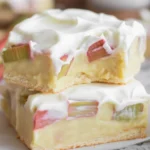
Rhubarb Custard Bars
Total Time: 45
Yield: 12 servings 1x
Diet: Vegetarian
Description
Delicious and easy-to-make Rhubarb Custard Bars, perfect for spring gatherings.
Ingredients
Scale
- 3 cups chopped rhubarb
- 2 cups all-purpose flour (divided)
- 2 cups sugar (divided)
- 1 cup cold, cubed butter
- 3 large eggs
- 2 tsp vanilla extract (optional)
Instructions
- Preheat oven and prepare a baking pan.
- Mix 1 cup flour, 1 cup sugar, and cold cubed butter until crumbly; press into the pan and bake until golden.
- Whisk together eggs, 1 cup sugar, and remaining 1 cup flour for the custard.
- Fold in the chopped rhubarb and pour over the baked crust.
- Return to oven and bake until set; let cool before cutting.
Notes
For a sweeter flavor, consider adding strawberries or a sprinkle of cinnamon. Use cold butter for a crisp crust and ensure to pre-bake to avoid sogginess.
- Prep Time: 15
- Cook Time: 30
- Category: Dessert
- Method: Baking
- Cuisine: American
Nutrition
- Serving Size: 1 bar
- Calories: 250
- Sugar: 18g
- Sodium: 180mg
- Fat: 12g
- Saturated Fat: 7g
- Unsaturated Fat: 4g
- Trans Fat: 0g
- Carbohydrates: 35g
- Fiber: 2g
- Protein: 3g
- Cholesterol: 60mg
Frequently Asked Questions About Rhubarb Custard Bars
Can I use frozen rhubarb for custard bars?
Yes, frozen rhubarb works perfectly for custard bars. Thaw it completely in a colander, then press gently with paper towels to remove excess moisture. Skip this step and the extra liquid will make your custard watery and prevent it from setting properly. The flavor and color are identical to fresh rhubarb once baked.
Why is my rhubarb custard still jiggly after baking?
A slight jiggle in the center is normal and desirable when you remove the bars from the oven. The custard continues to set as it cools and firms up completely in the refrigerator. If the entire surface is liquid and moves like water, return the pan to the oven for another 5 to 8 minutes. Overbaking causes cracks in the custard surface.
How do I prevent a soggy bottom on custard bars?
Three steps prevent a soggy bottom: press the crust firmly with no gaps, prebake until the edges are genuinely golden (not just pale), and pour the custard over the hot crust immediately out of the oven. The heat creates an instant seal between crust and filling. Using a metal pan instead of glass also helps because metal conducts heat more efficiently to the crust bottom.
Can I substitute strawberries for some of the rhubarb?
Absolutely — replace up to one-third of the rhubarb with diced fresh strawberries for a strawberry rhubarb version. Reduce the sugar by 2 tablespoons since strawberries are sweeter. The strawberries add a beautiful red color and natural sweetness. Do not replace more than one-third or the bars will be too sweet and lose the characteristic tang.
Do rhubarb custard bars need to be refrigerated?
Yes, rhubarb custard bars must be refrigerated because they contain eggs and dairy. Store them in an airtight container in the refrigerator for up to 5 days. They can sit at room temperature for serving up to 2 hours. The bars actually taste better cold, straight from the fridge, because the custard is firmer and the flavors are more concentrated.
What is the best pan size for rhubarb custard bars?
A 9×13-inch metal baking pan is the standard and best choice. Glass or ceramic pans work but conduct heat differently, requiring 5 extra minutes of baking. Line the pan with parchment paper for easy removal. If you only have an 8×8 pan, halve the recipe and increase the baking time by 10 minutes since the deeper custard layer takes longer to set.
Can I make rhubarb custard bars gluten-free?
Yes, substitute a 1:1 gluten-free flour blend (like Bob’s Red Mill) in both the crust and custard. The crust will be slightly more crumbly, so press it extra firmly. Add 1 tablespoon cornstarch to the custard for extra binding power. The flavor difference is minimal and most guests will not notice the swap.
How far ahead can I make rhubarb custard bars?
Make them up to 3 days ahead and store in the refrigerator. They actually improve overnight as the crust absorbs a tiny bit of moisture from the custard, softening to a cookie-like texture while the custard firms up. Dust with powdered sugar just before serving for a fresh look. The crust stays distinctly separate from the custard for up to 3 days; after that, it softens noticeably.
Why are my rhubarb custard bars too sour?
If the bars are too sour, you may have used too much rhubarb or too little sugar. The 1 1/2 cups sugar to 3 cups rhubarb ratio is calibrated for balanced tartness. Late-season rhubarb (June and July) tends to be more sour than early-season stalks. A dusting of powdered sugar on top also helps balance perceived sourness. Next time, taste a raw piece of your rhubarb to gauge tartness and adjust sugar accordingly.
Can I freeze rhubarb custard bars?
Yes, freeze individual bars wrapped in plastic wrap and then aluminum foil for up to 3 months. Thaw overnight in the refrigerator. The custard texture after freezing is slightly softer than fresh but still delicious. Do not freeze with the powdered sugar topping — apply that after thawing. For best quality, freeze within 2 days of baking.
Rhubarb Season and Selection Guide
| Rhubarb Type | Color | Best For | Season | Sweetness Level |
|---|---|---|---|---|
| Field-grown (outdoor) | Deep red stalks | Baking, sauces | April – June | Most tart |
| Hothouse (forced) | Pale pink/green | Raw, garnishes | January – March | Milder |
| Victoria variety | Green with red base | Jams, compotes | May – July | Moderate tart |
| Cherry Red variety | Bright red throughout | Custard bars, pies | April – June | Best balanced |
Frequently Asked Questions About Rhubarb Custard Bars
How Long Do Rhubarb Custard Bars Last?
Stored in an airtight container in the refrigerator, rhubarb custard bars keep for 4-5 days. The custard layer actually firms up beautifully overnight, making day-two bars the tastiest. Keep them chilled since the custard contains eggs and dairy — never leave at room temperature for more than 2 hours.
Can You Freeze Rhubarb Custard Bars?
Yes! Freeze individually wrapped bars for up to 3 months. Place parchment paper between layers to prevent sticking. Thaw overnight in the refrigerator — microwaving creates a soggy bottom crust. The shortbread base holds up remarkably well to freezing.
What Can I Substitute for Rhubarb?
Cranberries are the closest substitute — they match rhubarb’s tartness and color beautifully. Tart Granny Smith apples with extra lemon juice also work well. Gooseberries or sour cherries provide similar acidity. Avoid sweet fruits like strawberries alone as they won’t provide the necessary tart contrast to the sweet custard.
Why Is My Custard Layer Runny?
The most common cause is underbaking — custard needs at least 40-45 minutes at 350°F to set properly. It should jiggle slightly in the center (like Jello, not liquid) when you pull it out. Another cause: too much rhubarb juice. Pat rhubarb pieces dry before layering and toss with 1 tablespoon flour to absorb excess moisture during baking.
Do You Need to Peel Rhubarb for Bars?
No peeling needed. The skin softens completely during baking and adds a lovely pink color to the filling. Simply trim the ends, discard any leaves (which are toxic), and cut stalks into ½-inch pieces. Choose stalks that are firm and crisp — avoid limp, bendy rhubarb which indicates it’s past prime.
How Do You Know When Rhubarb Custard Bars Are Done?
The custard is done when the edges are set and slightly golden, and the center jiggles gently like set gelatin when you tap the pan. A toothpick inserted in the center should come out clean or with only a tiny smear of custard. The bars continue to set as they cool, so don’t wait for a completely firm center in the oven.
Can You Make Rhubarb Custard Bars Gluten-Free?
Absolutely. Replace all-purpose flour with a 1:1 gluten-free baking blend (Bob’s Red Mill or King Arthur work well) for both the crust and custard. Add ¼ teaspoon xanthan gum if your blend doesn’t include it. The almond flour crust variation is naturally gluten-free and adds wonderful nutty flavor to the shortbread base.
What Is the Best Pan Size for Rhubarb Custard Bars?
A 9×13-inch pan produces thin, cookie-like bars perfect for parties. An 8×8-inch pan makes thicker, more dessert-like portions with a higher custard-to-crust ratio. Use light-colored metal pans for even baking — dark pans absorb more heat and can over-brown the bottom crust before the custard sets properly.
How Do You Make the Crust Extra Crispy?
Pre-bake the shortbread crust for 12-15 minutes before adding the custard layer. This blind-baking step ensures a crisp, golden base that doesn’t become soggy from the wet custard filling. Press the dough firmly and evenly — thin spots will burn while thick spots stay doughy.
Can You Use Frozen Rhubarb for Custard Bars?
Yes, but thaw completely first and drain all excess liquid thoroughly. Frozen rhubarb releases significantly more moisture than fresh, which can make the custard watery. Pat the thawed pieces dry with paper towels and toss with an extra tablespoon of flour to absorb remaining moisture during baking.

Written by Chef Anna
I'm Anna - a Le Cordon Bleu-trained chef, recipe developer, and the voice behind Chef Johns Gourmet. After a decade in professional kitchens, I now spend my mornings testing recipes and my afternoons writing them down so you can make them perfectly in your own kitchen. Every one of the 1,100+ recipes on this site has been personally cooked, tasted, and refined. I write like I'm standing next to you, walking you through every step. Simple recipes. Bold flavors. Made for real kitchens.