
Best Shakshuka: Smoky Spiced Tomato & Egg Skillet in 25 Minutes
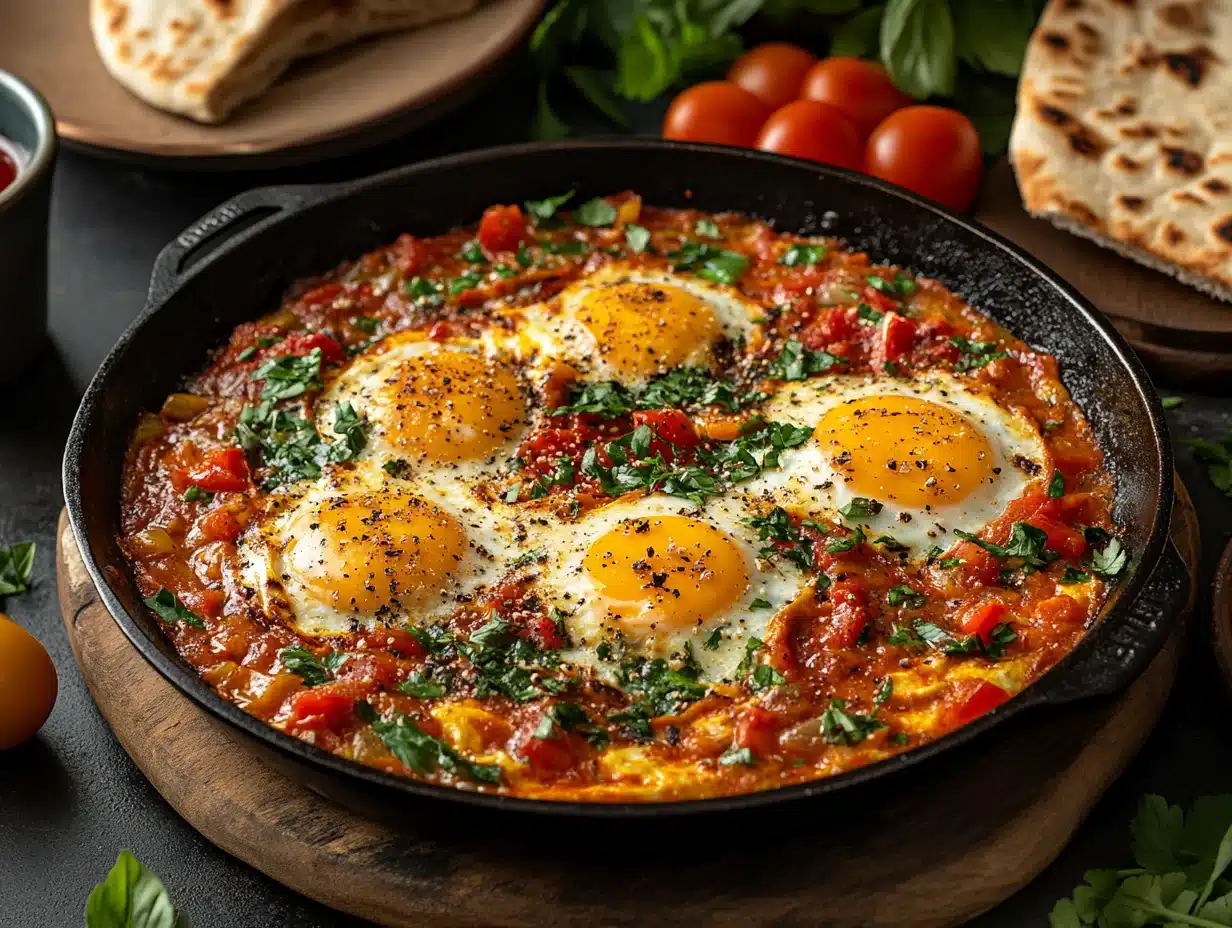
Shakshuka is eggs poached in a smoky, spiced tomato sauce that bubbles and caramelizes around the edges of a cast iron skillet. The yolks set just enough to hold their shape but stay gloriously runny when you break into them with bread. This is the version I’ve refined over years of testing — the tomato base simmers long enough to concentrate and sweeten, the spice blend builds warmth without overpowering, and the eggs cook gently under a lid so the whites set while the yolks stay liquid gold.
What separates the best shakshuka from a mediocre one is three things: proper spice blooming, tomato reduction, and egg timing. Most recipes dump spices into sauce without blooming them in oil first — that leaves raw, harsh spice flavors. This recipe toasts cumin, paprika, and cayenne in hot oil until fragrant before adding anything else. The tomatoes then simmer long enough to lose their raw acidity and develop deep sweetness. Finally, the eggs go in last and cook for exactly 5-7 minutes with a lid — enough to set the whites but leave the yolks runny.
Key Takeaways
- 25 minutes total: 10 min sauce, 5-7 min eggs — true one-pan meal
- Bloom spices first: Toast in oil before adding tomatoes for deep flavor
- Simmer the sauce: 8-10 minutes to reduce and sweeten the tomatoes
- Make wells for eggs: Create craters in the sauce, crack eggs directly in
- Cover and steam: 5-7 min with lid for set whites + runny yolks
- Serve with bread: Warm pita, crusty sourdough, or challah for scooping
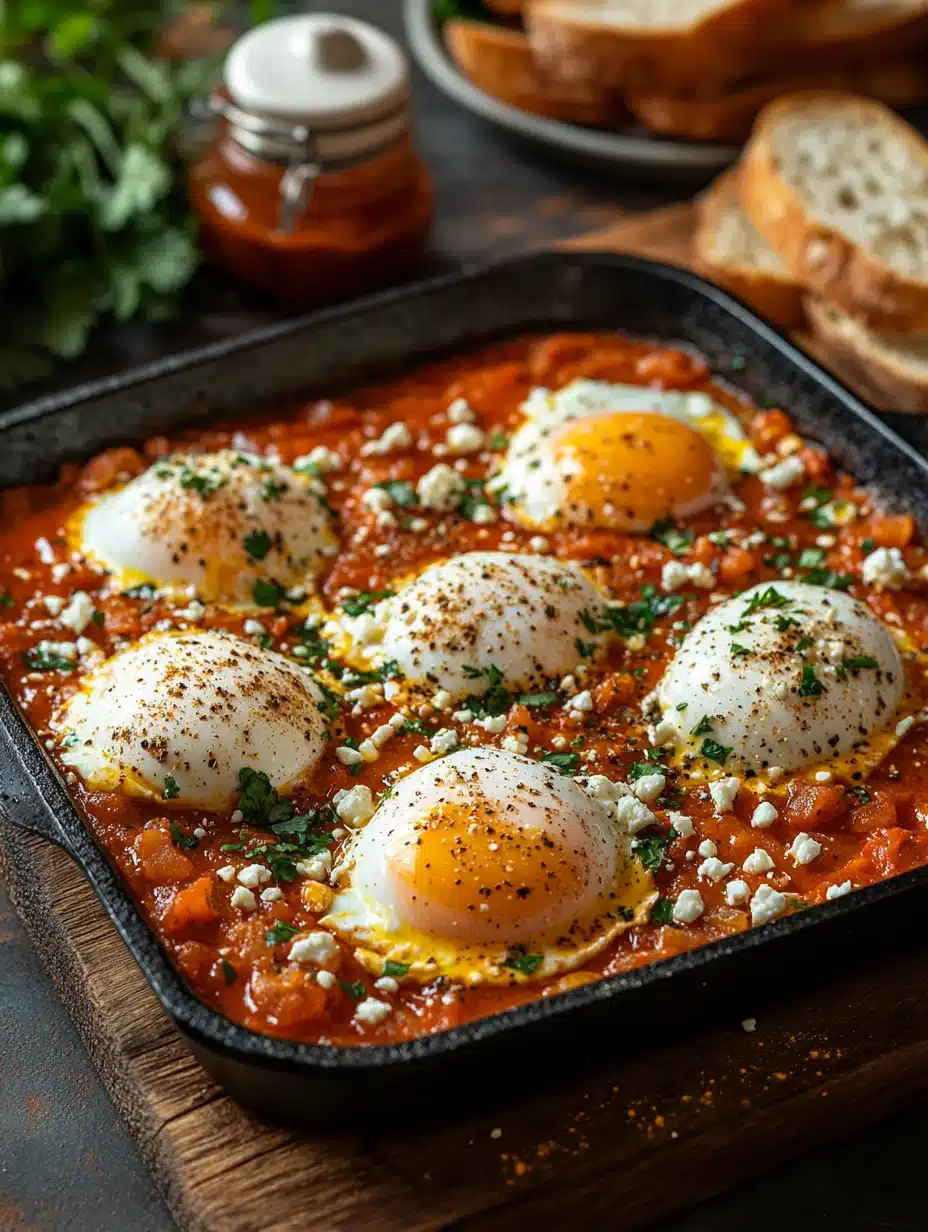
What Makes Authentic Shakshuka Different
Authentic shakshuka is a North African and Middle Eastern staple — it’s the kind of dish every family makes slightly differently, but the best versions share the same foundation: a deeply reduced tomato sauce, properly bloomed spices, and just-set eggs. This isn’t scrambled eggs in marinara sauce (a common mistake). The eggs poach in the sauce, absorbing flavor from the surrounding tomatoes while maintaining their individual integrity.
The cast iron skillet matters too. Cast iron holds heat evenly and creates those caramelized edges where the sauce thickens along the rim — that’s the best part, and you won’t get it in a regular pan. If you love tomato-based dishes, our pizza sauce recipe uses a similar slow-reduction technique.
Shakshuka Nutrition Facts
| Nutrient | Per Serving (2 eggs) | Per Batch (6 eggs) | % Daily Value |
|---|---|---|---|
| Calories | 280 kcal | 840 kcal | 14% |
| Protein | 16g | 48g | 32% |
| Total Fat | 16g | 48g | 21% |
| Saturated Fat | 4g | 12g | 20% |
| Carbohydrates | 20g | 60g | 7% |
| Fiber | 5g | 15g | 18% |
| Sugar | 12g | 36g | — |
| Sodium | 620mg | 1,860mg | 27% |
Essential Ingredients for Shakshuka
| Ingredient | Amount | Purpose | Substitution |
|---|---|---|---|
| Large eggs | 6 | Main protein, the star | — |
| Canned crushed tomatoes | 28 oz (1 can) | Sauce base | San Marzano whole, crushed by hand |
| Yellow onion | 1 large, diced | Aromatic base | White onion |
| Red bell pepper | 1, diced | Sweetness, color, texture | Green pepper (less sweet) |
| Garlic | 4 cloves, minced | Aromatic depth | 1 tsp garlic powder |
| Olive oil | 3 tbsp | Cooking fat, flavor carrier | Avocado oil |
| Ground cumin | 1 tsp | Earthy warmth | — |
| Smoked paprika | 1 tsp | Smoky depth, color | Regular paprika (less smoky) |
| Cayenne pepper | ¼ tsp | Gentle heat | Skip for no heat |
| Salt | 1 tsp | Seasoning | — |
| Crumbled feta | ¼ cup | Creamy, tangy contrast | Goat cheese |
| Fresh cilantro or parsley | Garnish | Freshness, color | Flat-leaf parsley |
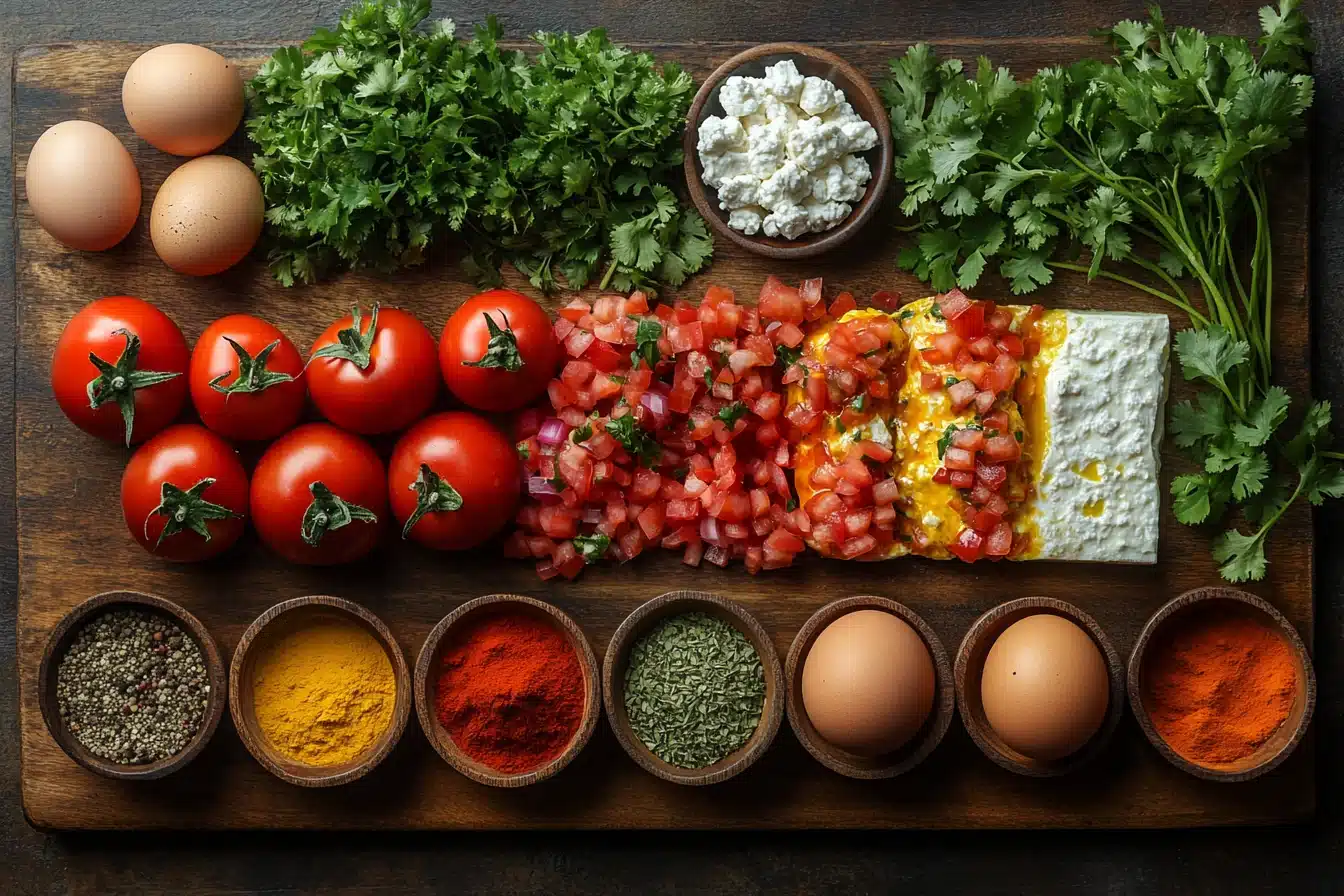
Step-by-Step: How to Make Shakshuka
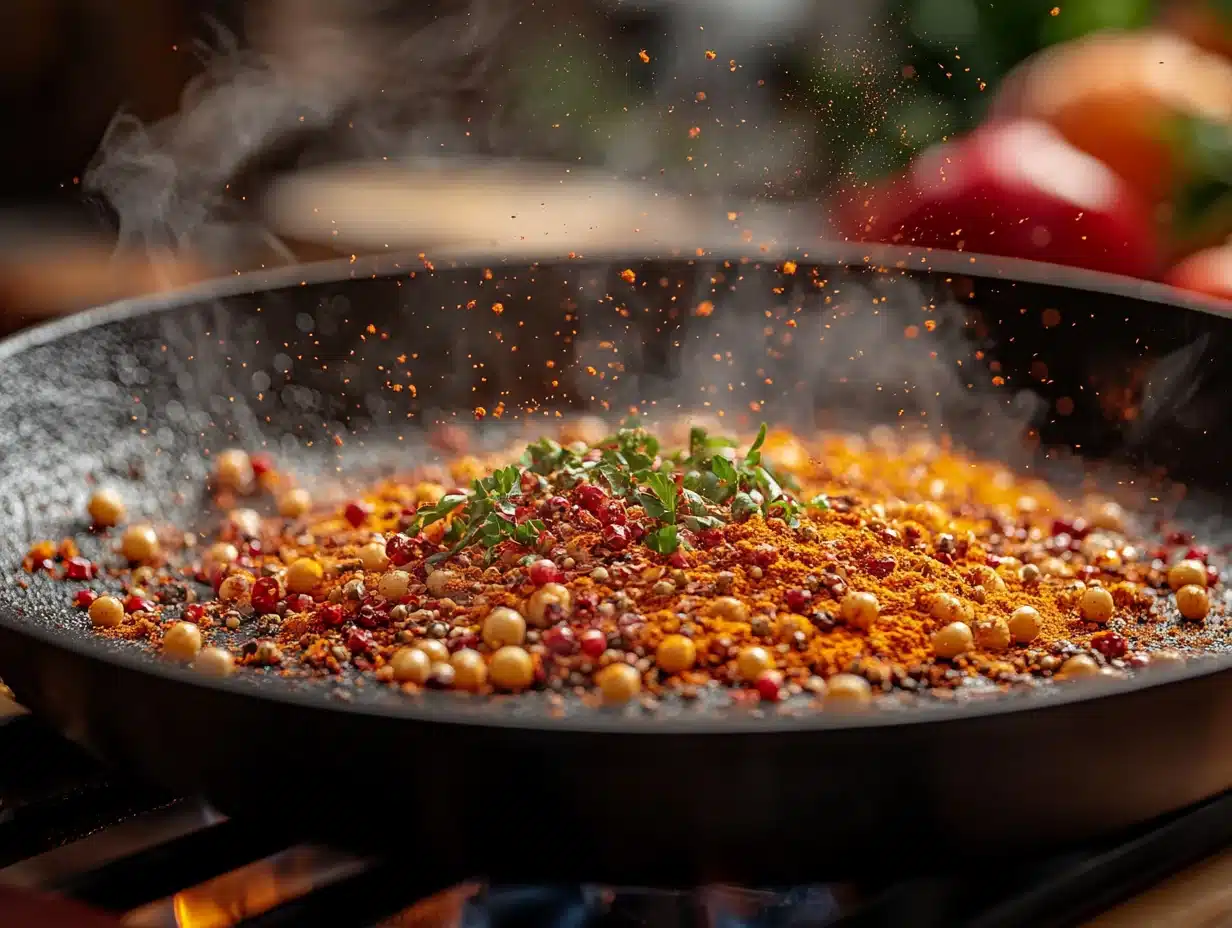
Step 1: Bloom the Spices (2 Minutes)
Heat olive oil in a 12-inch cast iron skillet over medium heat. Add cumin, smoked paprika, and cayenne — stir for 30-45 seconds until the spices are fragrant and slightly darkened. This step transforms raw, harsh spice powder into deep, toasty, complex flavor. It’s the most important technique in the entire recipe. If you can smell the spices from across the kitchen, they’re ready.
Step 2: Sauté the Aromatics (5 Minutes)
Add diced onion and bell pepper to the spiced oil. Cook for 4-5 minutes, stirring occasionally, until softened and edges begin to caramelize. Add garlic and cook 30 seconds until fragrant. Don’t rush this step — the onion and pepper sweetness forms the backbone of the sauce.
Step 3: Build the Sauce (8 Minutes)
Pour in crushed tomatoes, add salt, and stir well. Let the sauce simmer for 8-10 minutes, stirring occasionally, until it thickens noticeably and the raw tomato acidity mellows into sweetness. You’ll see the sauce reduce by about a third and start to darken slightly. The surface should bubble gently, not boil aggressively.
Step 4: Add the Eggs (7 Minutes)
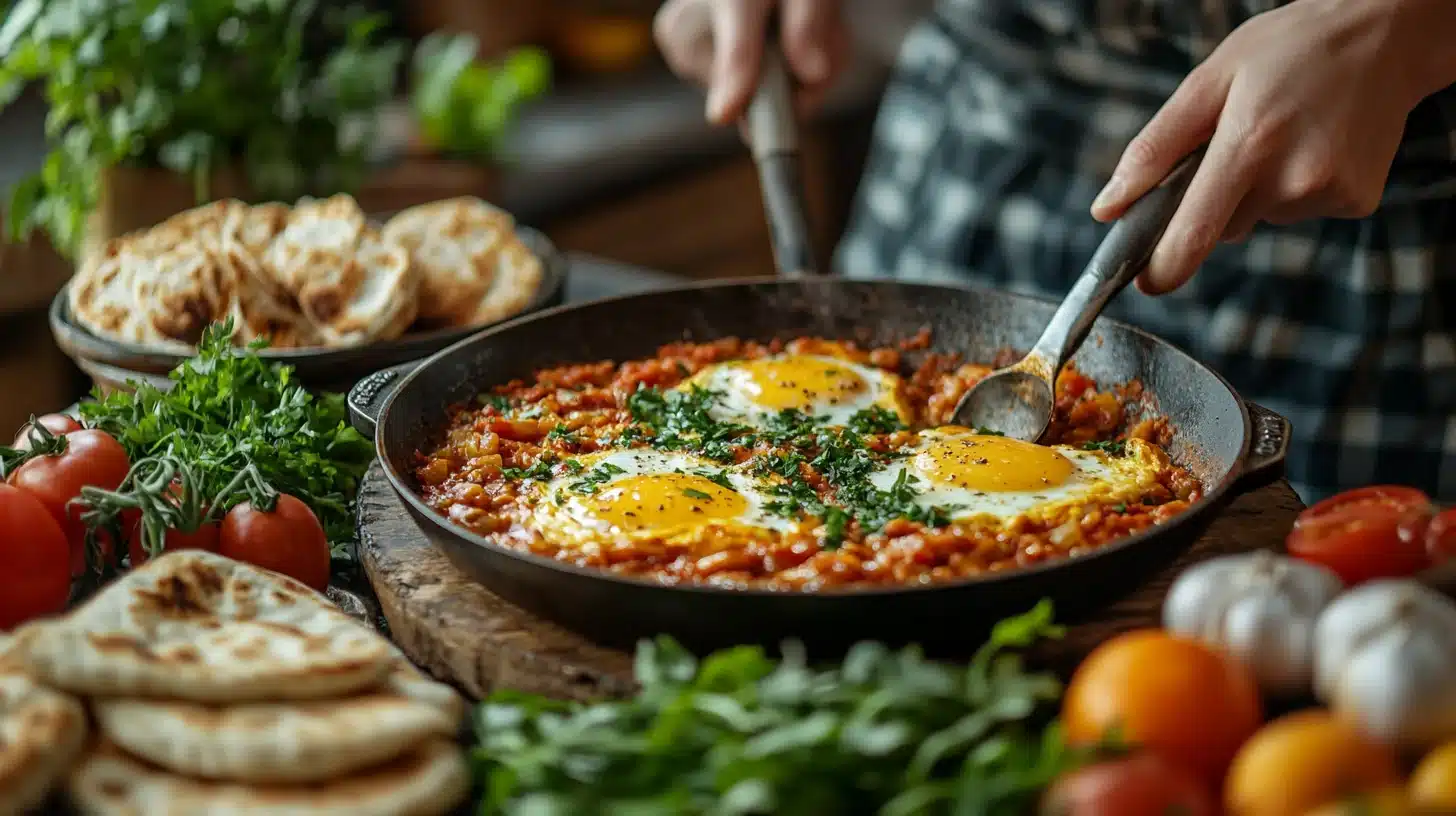
Using the back of a spoon, make 6 wells in the sauce, evenly spaced. Crack one egg into each well. Season the eggs with a pinch of salt and pepper. Cover the skillet with a lid (or foil) and cook 5-7 minutes: 5 minutes for very runny yolks, 6 for jammy, 7 for set. Don’t remove the lid before 5 minutes — the steam is what sets the whites.
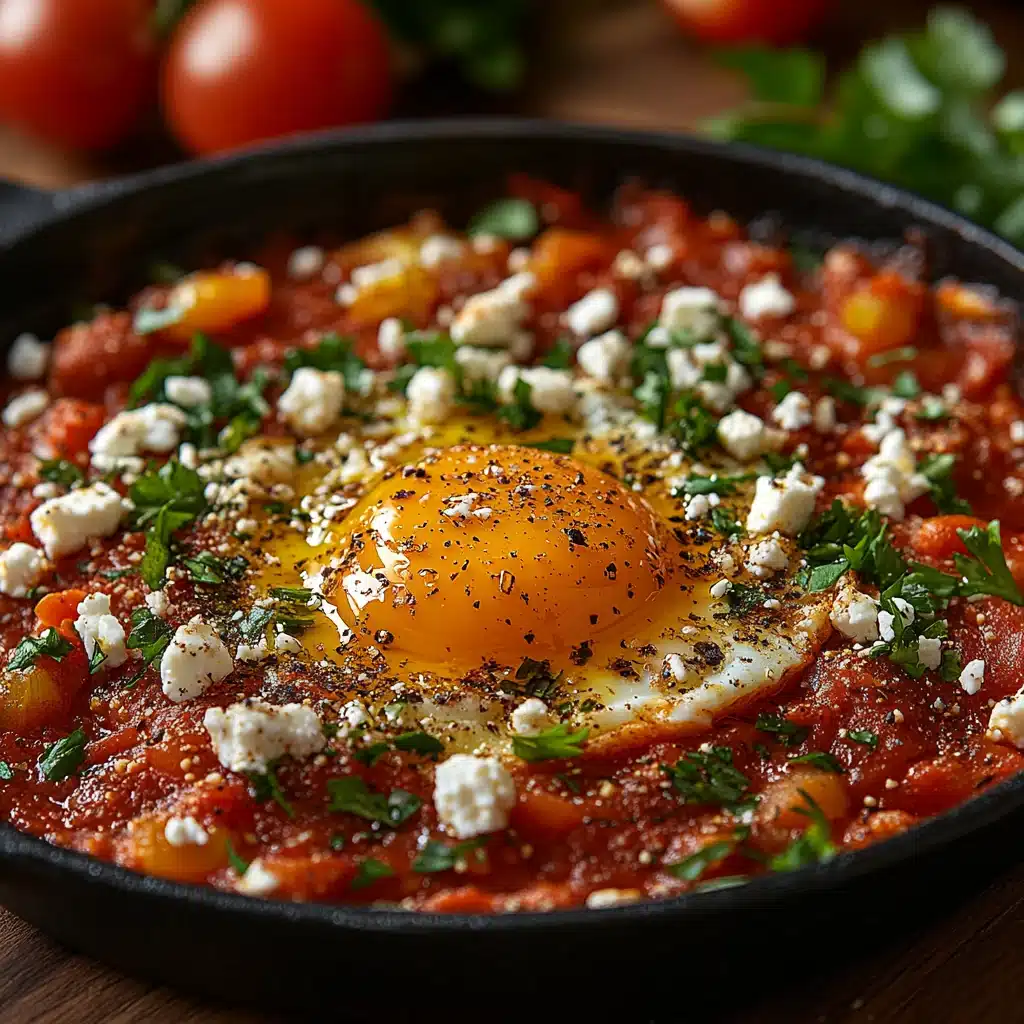
Step 5: Garnish and Serve
Remove from heat, crumble feta cheese over the top, and scatter fresh cilantro or parsley. Serve the skillet directly at the table with warm pita bread, crusty sourdough, or challah for scooping. Shakshuka waits for nobody — the eggs continue cooking from residual heat, so serve immediately.
Shakshuka Spice Blend Comparison
| Spice Profile | Spices Used | Heat Level | Best For |
|---|---|---|---|
| Classic (This Recipe) | Cumin, smoked paprika, cayenne | Mild-medium | Everyday, universal crowd-pleaser |
| North African | Add harissa paste (2 tbsp) | Medium-hot | Authentic heat lovers |
| Turkish | Add Aleppo pepper, urfa biber | Mild-warm | Smoky, fruity heat |
| Israeli Breakfast | Add za’atar, sumac | Mild | Tangy, herbal brunch |
| Spicy Mexican | Swap cumin for chipotle, add jalapeño | Hot | Southwestern brunch |
5 Shakshuka Variations
| Variation | Modification | Flavor Profile |
|---|---|---|
| Green Shakshuka | Replace tomatoes with spinach, kale, green chili | Herby, lighter, tangy |
| Cheesy Shakshuka | Add ½ cup mozzarella melted over eggs | Rich, stretchy, indulgent |
| Shakshuka with Sausage | Add crumbled lamb or beef sausage | Hearty, meaty |
| Shakshuka with Chickpeas | Add 1 can drained chickpeas | More protein, heartier |
| Eggplant Shakshuka | Add roasted eggplant cubes to sauce | Creamy, smoky, Mediterranean |
How to Store Shakshuka
| Method | Duration | Notes | Reheating |
|---|---|---|---|
| Sauce only (no eggs) | 5 days fridge | Store in airtight jar | Reheat sauce, add fresh eggs |
| Complete with eggs | 2 days fridge | Eggs will overcook when reheated | Microwave gently, eggs will be set |
| Freezer (sauce only) | 3 months | Freeze sauce in portions | Thaw, reheat in skillet, add eggs |
Expert Tips for the Best Shakshuka
Use Cast Iron If You Can
Cast iron’s heat retention creates those caramelized edges where the sauce thickens along the rim — that’s the best part of any shakshuka. It also goes from stovetop to oven to table seamlessly. If you don’t have cast iron, any oven-safe skillet works — just expect slightly less browning around the edges.
Don’t Be Afraid to Reduce the Sauce More
A thin, watery sauce is the #1 shakshuka mistake. The sauce should be thick enough that a well stays open when you make it. If the wells fill back in immediately with sauce, it’s too thin — keep simmering. Extra reduction also concentrates sweetness and mutes acidity.
Fresh Eggs Make a Difference
Fresh eggs hold their shape better than older ones. If your eggs spread out flat in the wells instead of sitting up tall, they’re past their prime. The freshest eggs you can find will give you the tallest, most dramatic yolk presentation — which is half the appeal of serving shakshuka at the table.
Best Shakshuka
- Total Time: 30 minutes
- Yield: 3 servings 1x
- Diet: Vegetarian, Gluten-Free
Description
Perfectly spiced shakshuka with eggs poached in smoky tomato sauce. A one-skillet Middle Eastern breakfast that’s ready in 30 minutes.
Ingredients
- 6 Large eggs
- 28 oz (1 can) Canned crushed tomatoes
- 1 large, diced Yellow onion
- 1, diced Red bell pepper
- 4 cloves, minced Garlic
- 3 tbsp Olive oil
- 1 tsp Ground cumin
- 1 tsp Smoked paprika
- ¼ tsp Cayenne pepper
- 1 tsp Salt
- ¼ cup Crumbled feta
- Garnish Fresh cilantro or parsley
Instructions
- Bloom the Spices (2 Minutes) — Heat olive oil in a 12-inch cast iron skillet over medium heat. Add cumin, smoked paprika, and cayenne — stir for 30-45 seconds until the spices are fragrant and slightly darkened. This step transforms raw, harsh spice powder into deep, toasty, complex flavor. It’s the most important technique in the entire recipe. If you can smell the spices from across the kitchen, they’re ready.
- Sauté the Aromatics (5 Minutes) — Add diced onion and bell pepper to the spiced oil. Cook for 4-5 minutes, stirring occasionally, until softened and edges begin to caramelize. Add garlic and cook 30 seconds until fragrant. Don’t rush this step — the onion and pepper sweetness forms the backbone of the sauce.
- Build the Sauce (8 Minutes) — Pour in crushed tomatoes, add salt, and stir well. Let the sauce simmer for 8-10 minutes, stirring occasionally, until it thickens noticeably and the raw tomato acidity mellows into sweetness. You’ll see the sauce reduce by about a third and start to darken slightly. The surface should bubble gently, not boil aggressively.
- Add the Eggs (7 Minutes) — Using the back of a spoon, make 6 wells in the sauce, evenly spaced. Crack one egg into each well. Season the eggs with a pinch of salt and pepper. Cover the skillet with a lid (or foil) and cook 5-7 minutes: 5 minutes for very runny yolks, 6 for jammy, 7 for set. Don’t remove the lid before 5 minutes — the steam is what sets the whites.
- Garnish and Serve — Remove from heat, crumble feta cheese over the top, and scatter fresh cilantro or parsley. Serve the skillet directly at the table with warm pita bread, crusty sourdough, or challah for scooping. Shakshuka waits for nobody — the eggs continue cooking from residual heat, so serve immediately.
- Prep Time: 10 minutes
- Cook Time: 20 minutes
- Category: Breakfast, Main Course
- Method: Stovetop
- Cuisine: Middle Eastern
Nutrition
- Serving Size: 1 serving
- Calories: 280
- Sugar: 12g
- Sodium: 620mg
- Fat: 16g
- Saturated Fat: 4g
- Carbohydrates: 20g
- Fiber: 5g
- Protein: 16g
Frequently Asked Questions
Can I make shakshuka ahead of time?
Make the sauce up to 3 days ahead — it actually improves with time as the flavors meld. Store in the fridge, then reheat the sauce in the skillet and add fresh eggs when ready to serve. Never store pre-cooked eggs in the sauce — they turn rubbery.
What bread goes best with shakshuka?
Warm pita is the traditional choice. Crusty sourdough, challah, and naan all work beautifully for scooping. The bread should be slightly warm and sturdy enough to hold up to scooping sauce and egg without falling apart.
How do I get runny yolks every time?
Cover the skillet and cook exactly 5 minutes — no peeking. The steam from the lid sets the whites while the yolks stay liquid. At 6 minutes, yolks are jammy. At 7+, they’re fully set. Use a timer — guessing leads to overcooked yolks.
Is shakshuka breakfast or dinner?
Both. In Israel and North Africa, it’s eaten any time of day. For dinner, add crusty bread and a side salad. For breakfast, serve with coffee and a simple chopped cucumber-tomato salad. It’s one of the most versatile dishes in the Mediterranean repertoire.
Can I add meat to shakshuka?
Absolutely. Crumbled lamb sausage, ground beef, or chorizo added after the onions are softened makes shakshuka heartier. Brown the meat first, then continue with the spice blooming and sauce steps. Adjust salt since the meat adds its own.
Why does my shakshuka taste too acidic?
The sauce didn’t cook long enough. Raw tomatoes are acidic — simmering for 8-10 minutes allows the natural sugars to develop and mellows the sharpness. Add ½ teaspoon of sugar if the acidity is still too bright after full cooking.
Recipe by Anna — Le Cordon Bleu-trained chef and recipe developer at Chef Johns Gourmet. This shakshuka has been tested across dozens of batches to nail the spice balance and egg texture.

Written by Chef Anna
I'm Anna - a Le Cordon Bleu-trained chef, recipe developer, and the voice behind Chef Johns Gourmet. After a decade in professional kitchens, I now spend my mornings testing recipes and my afternoons writing them down so you can make them perfectly in your own kitchen. Every one of the 1,100+ recipes on this site has been personally cooked, tasted, and refined. I write like I'm standing next to you, walking you through every step. Simple recipes. Bold flavors. Made for real kitchens.