Cottage Cheese Pancakes — 3-Ingredient High-Protein Breakfast
Cottage cheese pancakes deliver the fluffy texture of traditional pancakes with a serious protein upgrade — and you only need three core ingredients to make them. Each serving packs roughly 15 grams of protein, making these pancakes a go-to for meal preppers, busy parents, and anyone who wants a breakfast that actually keeps them full past 10 AM.
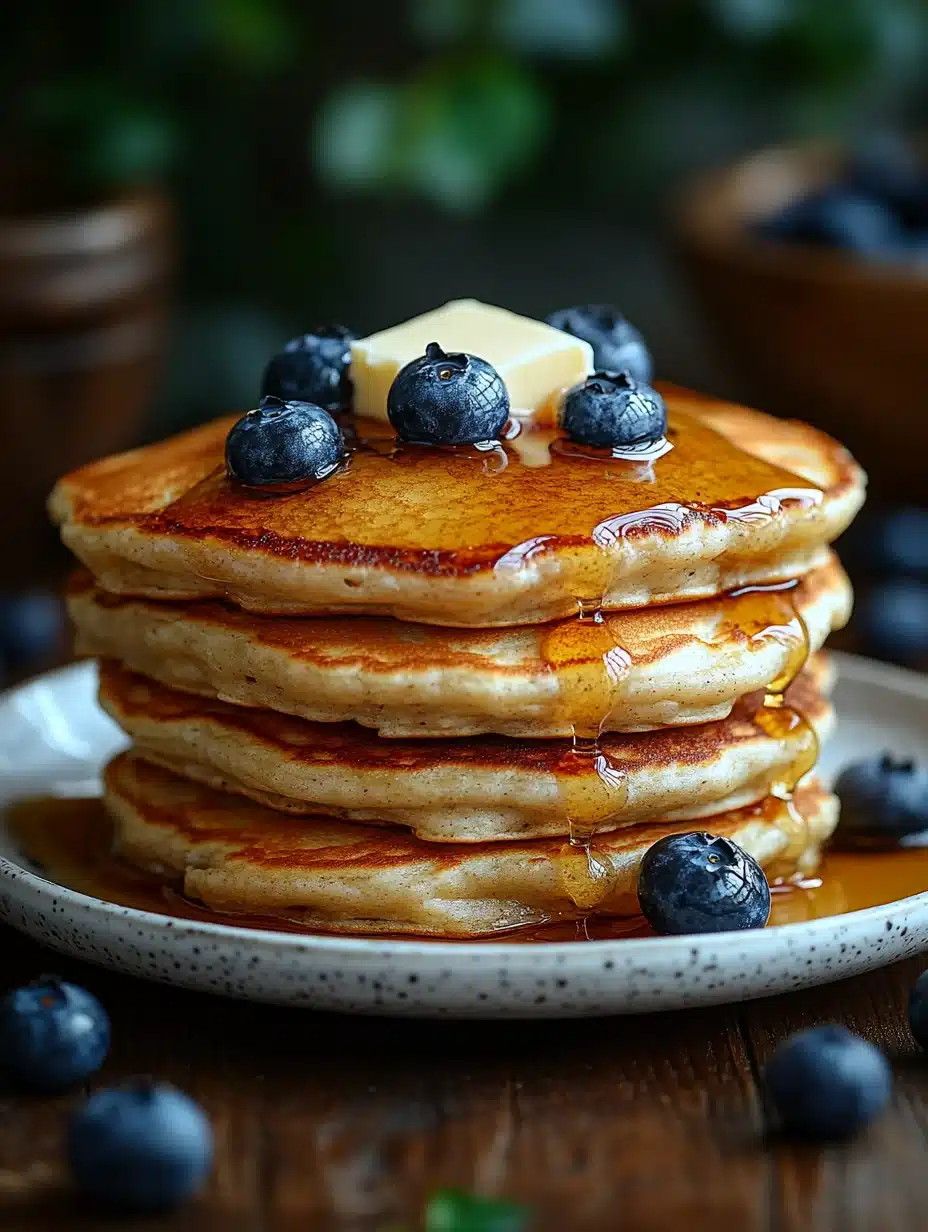
Unlike regular pancakes that rely on buttermilk or baking powder for lift, cottage cheese pancakes use the natural moisture and protein in cottage cheese to create a tender, slightly tangy interior with crisp golden edges. The result? A stack that tastes indulgent but supports your nutrition goals. Whether you’re new to cottage cheese in baking or a seasoned pro, this comprehensive guide covers everything from the basic 3-ingredient recipe to advanced variations, troubleshooting, and meal prep strategies.
Key Takeaways
- 3 ingredients only: Cottage cheese, eggs, and flour — that’s all you need for fluffy, protein-rich pancakes
- 15g protein per serving: Nearly double the protein of traditional buttermilk pancakes without supplements
- 5-minute prep: Blend, pour, cook — ready in under 15 minutes total
- Freezer-friendly: Make a double batch and freeze for grab-and-go breakfasts all week
- Endlessly customizable: Works with gluten-free flour, add-ins like blueberries, and sweet or savory toppings
- Kid-approved: The mild tang disappears when cooked — kids love these without knowing they’re “healthy”
Cottage Cheese Pancakes Nutrition Facts per Serving
Understanding the macronutrient profile helps you see why cottage cheese pancakes outperform traditional versions. Here’s a detailed comparison based on a standard 3-pancake serving:
| Nutrient | Cottage Cheese Pancakes | Traditional Buttermilk Pancakes | Difference |
|---|---|---|---|
| Calories | 220 kcal | 350 kcal | −37% |
| Protein | 15g | 8g | +88% |
| Carbohydrates | 22g | 45g | −51% |
| Fat | 7g | 12g | −42% |
| Fiber | 1g | 1g | Same |
| Sugar | 3g | 10g | −70% |
| Sodium | 320mg | 580mg | −45% |
| Calcium | 12% DV | 15% DV | −3% |
Why Do Cottage Cheese Pancakes Work So Well?
The science behind cottage cheese pancakes is surprisingly simple. Cottage cheese is roughly 80% water and 11% protein by weight. When blended smooth and combined with eggs, those proteins create a batter that sets firmly on the griddle while retaining moisture inside — giving you that coveted crispy-outside, custard-inside texture.
The Protein Advantage
Casein protein in cottage cheese coagulates slowly with heat, which means your pancakes stay tender rather than turning rubbery. This is the same principle that makes cottage cheese chocolate mousse so silky smooth. The eggs provide structure through albumin, while flour acts as a minimal binder — you need far less than traditional recipes.
Moisture Management
The high water content in cottage cheese serves double duty: it creates steam for fluffiness and keeps the interior moist. Straining isn’t necessary if you blend thoroughly, but using full-fat or 4% cottage cheese yields the richest flavor and best texture.
Essential Ingredients for Perfect Cottage Cheese Pancakes
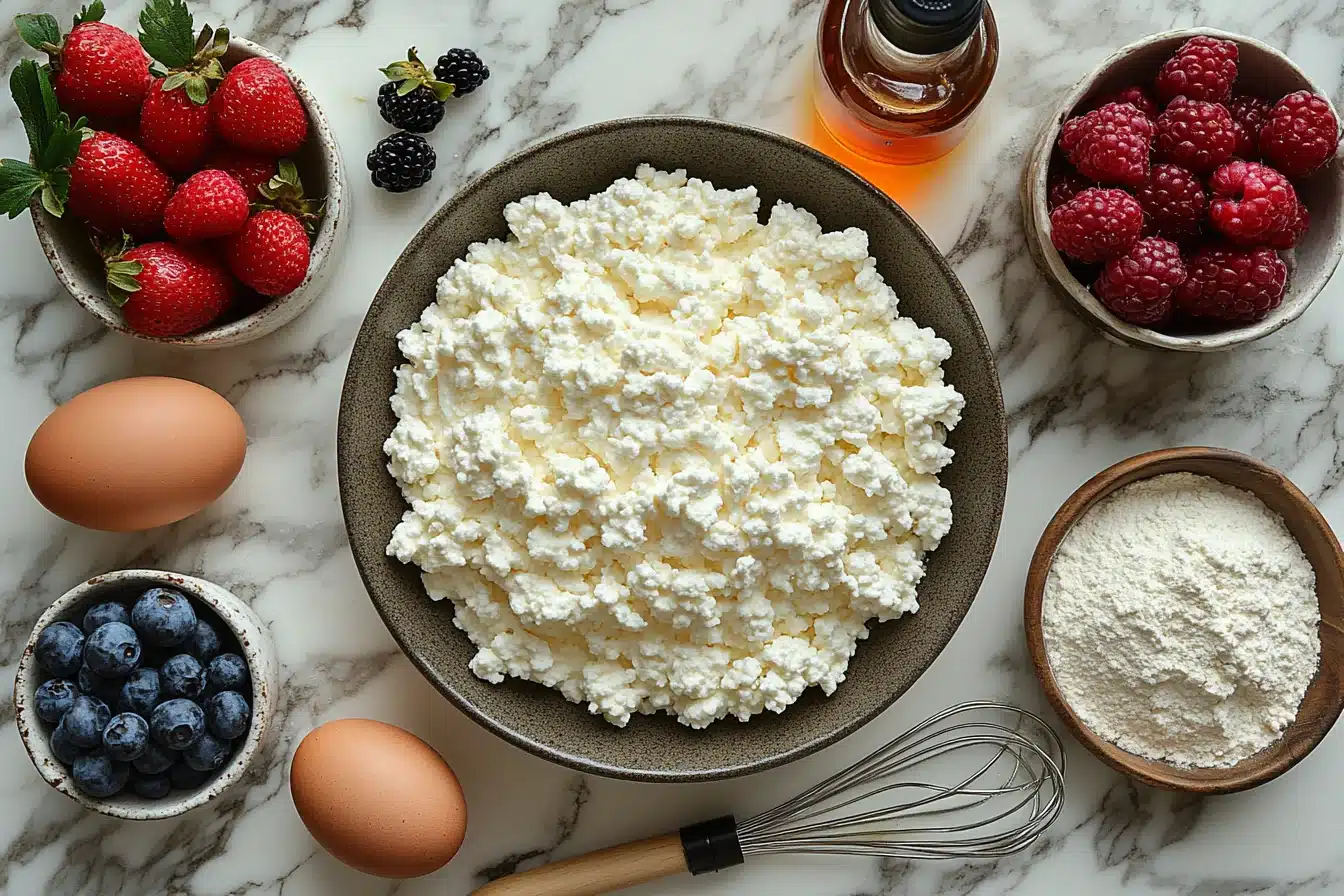
The beauty of this recipe is its simplicity. You need just three core ingredients, plus a few optional additions for flavor and variety.
| Ingredient | Amount | Purpose | Best Substitution |
|---|---|---|---|
| Cottage cheese (4% full-fat) | 1 cup (226g) | Protein base + moisture | Ricotta cheese (slightly denser) |
| Large eggs | 2 | Structure + binding | 3 egg whites (lower fat) |
| All-purpose flour | ⅓ cup (42g) | Light binder | Oat flour or almond flour (GF) |
| Vanilla extract (optional) | 1 tsp | Flavor depth | Almond extract |
| Salt | Pinch | Flavor enhancer | — |
| Butter or oil | For pan | Prevents sticking | Coconut oil spray |
Pro tip: Avoid low-fat or fat-free cottage cheese — the reduced fat content creates drier, less flavorful pancakes. Full-fat (4%) or at minimum 2% delivers the best results. If you enjoy protein-packed breakfasts, also try our strawberry peach smoothie for a perfect complement.
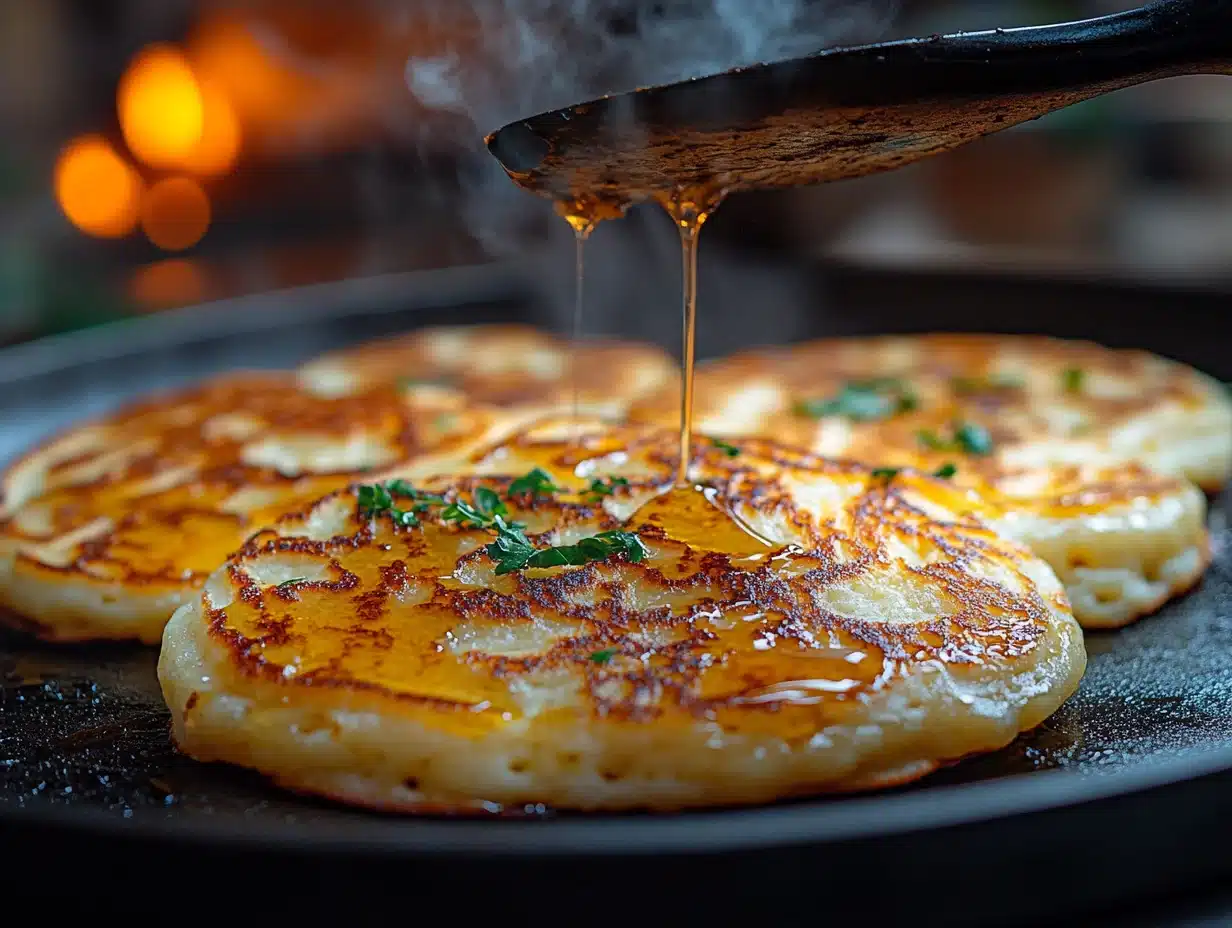
Step-by-Step: How to Make Cottage Cheese Pancakes
Follow these precise steps for pancakes that turn out perfectly every single time. The entire process takes under 15 minutes from start to plate.
Step 1: Blend the Batter (2 Minutes)
Add cottage cheese, eggs, flour, vanilla (if using), and salt to a blender or food processor. Blend on high for 20–30 seconds until completely smooth — no lumps or cottage cheese curds should remain. The batter should pour like heavy cream.
Don’t have a blender? Use an immersion blender in a tall container, or mash the cottage cheese through a fine-mesh sieve first, then whisk vigorously with the other ingredients.
Step 2: Heat the Pan (2 Minutes)
Set a non-stick skillet or griddle over medium-low heat (around 300°F/150°C). Add a thin layer of butter or oil. To test readiness, flick a drop of water onto the surface — it should sizzle gently, not violently.
Temperature is critical: Too hot and the outside burns before the inside sets. Too cool and pancakes spread thin and turn pale. Medium-low is the sweet spot for cottage cheese pancakes because the high moisture content needs time to cook through.
Step 3: Pour and Shape (1 Minute)
Pour roughly 3 tablespoons (about ¼ cup) of batter per pancake onto the surface. Don’t crowd — leave at least 2 inches between pancakes. The batter will spread slightly on its own; resist the urge to tilt the pan.
Step 4: Cook the First Side (2–3 Minutes)
Cook undisturbed until you see small bubbles forming on the surface and the edges look set and slightly dry. This takes about 2–3 minutes. The bottom should be a uniform golden brown.
Step 5: Flip and Finish (1–2 Minutes)
Use a thin, wide spatula to flip in one confident motion. Cook the second side for 1–2 minutes until golden. Cottage cheese pancakes are more delicate than traditional ones, so a gentle touch helps.
Step 6: Serve Warm
Transfer to a warm plate or keep in a 200°F oven while you cook remaining batches. Stack and top as desired. Pair with fresh fruit, maple syrup, or — for a savory twist — try them alongside our fluffy egg sandwiches for a complete brunch spread.
Cooking Time Reference Guide
Different equipment and batch sizes affect timing. Use this table to adjust:
| Equipment | Heat Setting | First Side | Second Side | Total per Batch |
|---|---|---|---|---|
| Non-stick skillet (10″) | Medium-low | 2–3 min | 1–2 min | 4–5 min |
| Electric griddle | 300°F | 2.5 min | 1.5 min | 4 min |
| Cast iron skillet | Medium | 3 min | 2 min | 5 min |
| Waffle maker | Medium setting | 3–4 min total | N/A | 3–4 min |
| Air fryer (mini pancakes) | 350°F | 4 min | 2 min | 6 min |
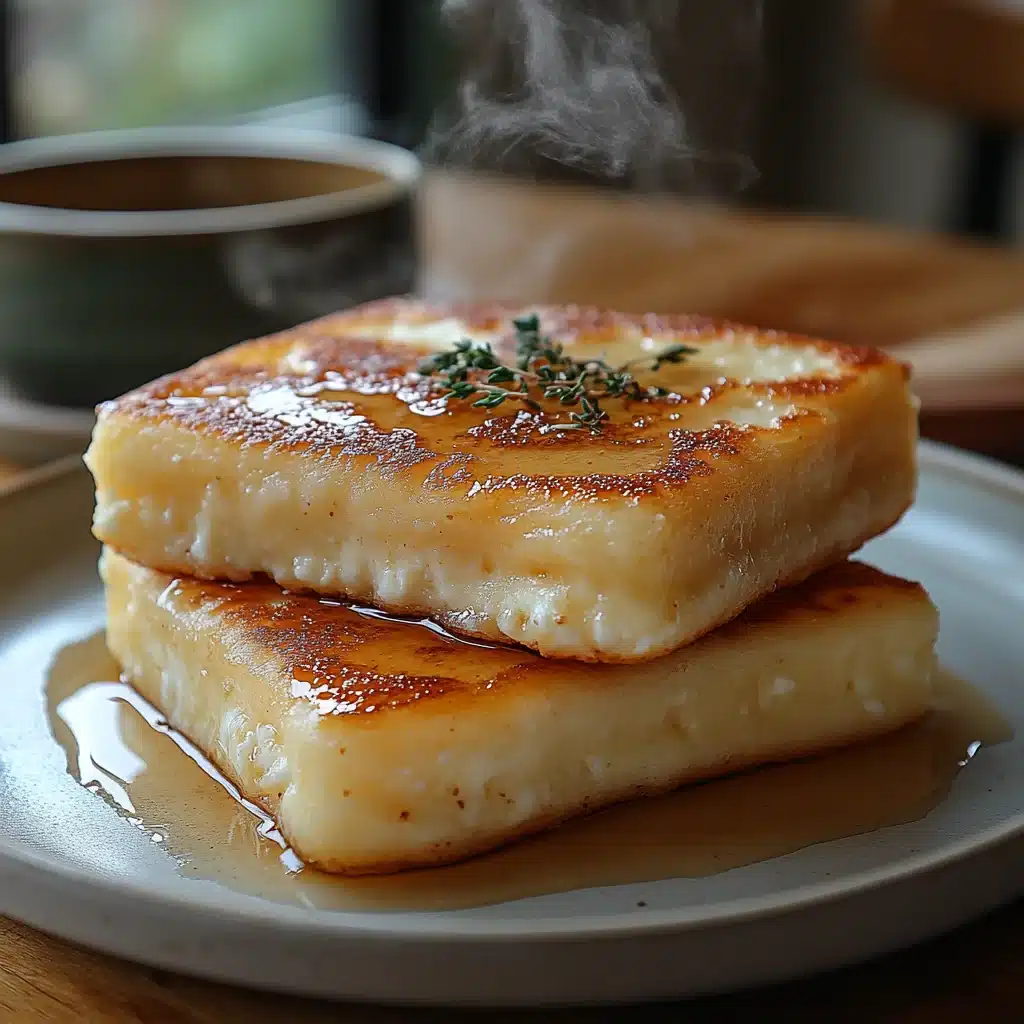
Expert Tips for Perfect Cottage Cheese Pancakes Every Time
After testing dozens of batches, these are the tips that consistently make the biggest difference:
What Type of Cottage Cheese Works Best for Pancakes?
Full-fat (4%) small curd cottage cheese delivers the best flavor and texture. Large curd works too — the blender handles it — but small curd creates a smoother batter faster. Avoid whipped or blended cottage cheese products (like Muuna or Good Culture smoothies) since they have different moisture ratios.
Can You Make Cottage Cheese Pancakes Without a Blender?
Yes. Press cottage cheese through a fine sieve or potato ricer, then whisk with eggs and flour. The texture won’t be quite as smooth, but pancakes will still taste great. An immersion blender in a tall glass is the best alternative.
How Do You Prevent Cottage Cheese Pancakes From Falling Apart?
Three keys: blend until completely smooth (no curds), cook on medium-low heat (not medium or high), and wait for bubbles before flipping. If pancakes still break, add 1 extra tablespoon of flour to thicken the batter slightly.
Why Are My Pancakes Too Thin?
Your cottage cheese likely has higher moisture content. Solutions: strain for 10 minutes in a fine-mesh sieve, use 1 extra tablespoon flour, or switch to a thicker brand. Also check that your eggs are large, not extra-large — the extra liquid matters at this scale.
8 Delicious Cottage Cheese Pancake Variations
The basic recipe is a canvas for creativity. These tested variations all work with the same 3-ingredient base — just fold in or swap as noted.
| Variation | Add to Batter | Best Topping | Protein Boost |
|---|---|---|---|
| Blueberry Burst | ½ cup fresh blueberries (fold in) | Lemon zest + maple syrup | +0g (same base) |
| Chocolate Chip | 2 tbsp mini chocolate chips | Peanut butter drizzle | +1g |
| Banana Bread | ½ mashed banana + cinnamon | Walnut pieces + honey | +0g |
| Lemon Ricotta Style | 1 tsp lemon zest + 1 tsp sugar | Powdered sugar + berries | +0g |
| Savory Herb | 2 tbsp chives + ¼ tsp garlic powder | Sour cream + smoked salmon | +5g (salmon) |
| Pumpkin Spice | 2 tbsp pumpkin puree + pumpkin spice | Cream cheese drizzle | +0g |
| Protein Power | 1 scoop vanilla protein powder | Greek yogurt + granola | +20g |
| Oat Flour (GF) | Replace AP flour with oat flour | Almond butter + banana slices | +2g |
Love creative pancake ideas? Try our mini pancake cereal bowls for a fun twist, or go in a completely different direction with savory dinner pancakes topped with chili butter.
How to Make Gluten-Free Cottage Cheese Pancakes?
Swapping flour is straightforward, but each alternative behaves slightly differently:
Oat Flour Method (Most Popular)
Replace all-purpose flour 1:1 with certified gluten-free oat flour. The pancakes will be slightly denser with a mild nutty flavor. Make your own by blending rolled oats in a food processor for 30 seconds.
Almond Flour Method
Use ¼ cup almond flour instead of ⅓ cup AP flour (almond flour is denser). Pancakes will be more fragile — make them smaller (2 tablespoons each) and flip very carefully. The flavor is slightly nutty and rich.
For a protein-packed start to any morning, combine these with a glass of protein coffee — the combination hits 30+ grams of protein before lunch.
Meal Prep and Storage Guide for Cottage Cheese Pancakes
Cottage cheese pancakes are one of the best breakfast options for meal prepping. Here’s how to store them for maximum freshness:
| Storage Method | Duration | Container | Reheating |
|---|---|---|---|
| Room temperature | 2 hours max | Covered plate | Not needed |
| Refrigerator | 3–4 days | Airtight container with parchment between layers | Microwave 30s or toaster |
| Freezer | 2–3 months | Freezer bag with parchment between layers | Toaster 2 cycles or microwave 60s |
| Batter (fridge) | Overnight only | Sealed jar or container | Stir well, may need 1 tbsp flour |
Best reheating method: Toaster on medium heat — it restores the crispy exterior that microwaving loses. If you enjoy weekly meal prep, also check out our no-bake energy bites for a grab-and-go snack option.
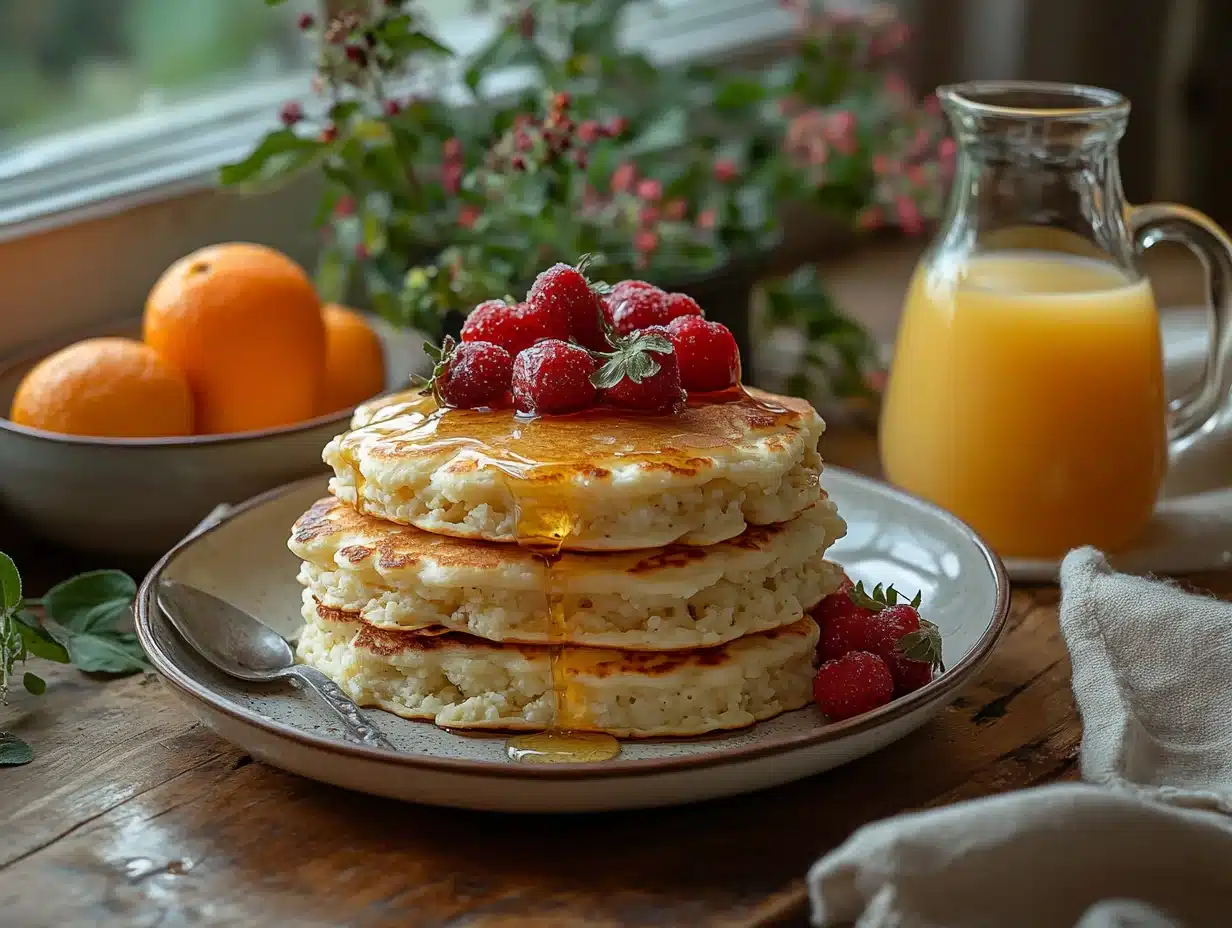
What to Serve With Cottage Cheese Pancakes?
These pancakes work beautifully as a standalone breakfast, but pairing them with complementary sides creates a complete, balanced meal.
Sweet Toppings
- Fresh berries + maple syrup — the classic combination, roughly 50 extra calories
- Banana slices + peanut butter drizzle — adds healthy fats and potassium
- Greek yogurt + honey + granola — extra protein boost plus crunch
- Lemon curd + powdered sugar — makes the mild tang pop beautifully
- Nutella + sliced strawberries — kid-approved indulgence
Savory Pairings
- Smoked salmon + cream cheese + dill — brunch-restaurant quality at home
- Scrambled eggs + avocado — protein on protein for a truly filling meal
- Turkey bacon + cherry tomatoes — balanced savory breakfast plate
If you’re going the savory route, our vegan tofu scramble makes an excellent plant-based side. For a sweet-and-savory brunch spread, add cheddar chive waffles to the table too.
Common Cottage Cheese Pancake Problems and How to Fix Them
Even simple recipes can go wrong. Here’s a quick-reference troubleshooting guide:
| Problem | Likely Cause | Fix |
|---|---|---|
| Pancakes too thin/runny | Excess moisture in cottage cheese | Strain for 10 min; add 1 tbsp flour |
| Pancakes fall apart when flipping | Heat too high; flipped too early | Lower to medium-low; wait for bubbles |
| Gummy/underdone center | Pancakes too thick; heat too high | Make smaller pancakes; lower heat |
| Bland flavor | Missing salt; using low-fat cheese | Add pinch of salt; use 4% cottage cheese |
| Lumpy texture | Not blended enough | Blend 30+ seconds until smooth |
| Edges burn before center cooks | Pan too hot | Reduce to medium-low; use thinner pancakes |
| Sticking to pan | Insufficient oil; pan not seasoned | Add more butter/oil; use non-stick |
| Rubbery texture | Overcooked; too much flour | Cook less time; use ⅓ cup flour max |
Which Cottage Cheese Brand Is Best for Pancakes?
Not all cottage cheese is created equal. Fat content, curd size, and moisture level all affect your pancakes. Here’s how popular types compare:
| Cottage Cheese Type | Fat % | Best For | Pancake Result |
|---|---|---|---|
| Full-fat small curd (Daisy, Good Culture) | 4% | All-purpose pancakes | Rich, fluffy, golden ⭐ |
| Full-fat large curd (Store brand) | 4% | Textured pancakes | Slightly lumpy but flavorful |
| 2% reduced fat | 2% | Lower-calorie option | Good flavor, slightly drier |
| 1% low-fat | 1% | Calorie-conscious | Acceptable but less rich |
| Fat-free (0%) | 0% | Not recommended | Dry, bland, breaks easily |
| Whipped/blended (Muuna) | Varies | Not recommended for pancakes | Too thin, inconsistent |
Are Cottage Cheese Pancakes Good for Kids and Toddlers?
Absolutely — and they’re one of the best hidden-protein strategies for picky eaters. Once blended and cooked, the cottage cheese flavor is virtually undetectable. Here’s how to make them kid-friendly:
- Make them mini: Silver-dollar sized (1 tablespoon each) pancakes are easier for small hands and cook faster
- Add a touch of sweetness: 1 teaspoon of honey or maple syrup in the batter helps
- Fun shapes: Use silicone molds or squeeze bottles for shapes
- Dipping stations: Kids love dipping mini pancakes in yogurt, applesauce, or nut butter
For toddlers under 12 months, skip added honey (botulism risk) and cut pancakes into finger-food-sized strips. These freeze beautifully — perfect for daycare lunchboxes. If your family loves breakfast variety, our fluffy banana pancakes are another kid-favorite that uses simple ingredients.

Frequently Asked Questions About Cottage Cheese Pancakes
How Many Calories Are in Cottage Cheese Pancakes?
A serving of 3 cottage cheese pancakes (using full-fat cottage cheese, 2 eggs, and ⅓ cup flour) contains approximately 220 calories, 15g protein, 22g carbs, and 7g fat. This is roughly 37% fewer calories than traditional buttermilk pancakes with nearly double the protein.
Can You Taste the Cottage Cheese in These Pancakes?
No — when properly blended, the cottage cheese flavor is completely masked. You get a subtle tang similar to buttermilk pancakes, but the dominant flavors are egg and vanilla. Even cottage cheese skeptics are surprised by how delicious these taste.
Can You Make the Batter Ahead of Time?
Yes, you can refrigerate the batter overnight (up to 12 hours). It may thicken slightly — just stir and add a splash of milk if needed. Don’t store batter longer than overnight, as the eggs can cause the mixture to separate. This makes them perfect for a quick breakfast rolls-and-pancakes morning.
Do Cottage Cheese Pancakes Freeze Well?
Exceptionally well. Cook completely, cool on a wire rack, then stack with parchment paper between layers in a freezer bag. They last 2–3 months frozen. Reheat directly in a toaster — no thawing needed.
What Is the Best Flour for Cottage Cheese Pancakes?
All-purpose flour gives the most consistent results. For gluten-free, oat flour is the top choice (1:1 swap). Almond flour works but makes pancakes more fragile — use slightly less (¼ cup) and cook smaller sizes.
Can You Use Ricotta Instead of Cottage Cheese?
Yes, ricotta makes an excellent substitute with a slightly creamier, denser result. Ricotta pancakes are actually an Italian-American classic. Use the same amount (1 cup) and reduce flour by 1 tablespoon since ricotta is thicker than cottage cheese.
How Do You Make Cottage Cheese Pancakes Fluffier?
Three techniques: (1) Separate eggs and whip whites to soft peaks before folding in, (2) Add ½ teaspoon baking powder to the batter, (3) Don’t press pancakes with the spatula while cooking. The combination of all three creates cloud-like pancakes.
Are Cottage Cheese Pancakes Keto-Friendly?
The standard recipe isn’t strictly keto (22g carbs from flour). However, replacing flour with 2 tablespoons almond flour drops net carbs to about 5g per serving — well within keto limits. Some people skip flour entirely and add a tablespoon of coconut flour for binding.
Why Do My Cottage Cheese Pancakes Stick to the Pan?
Three reasons: (1) Not enough oil or butter, (2) Pan isn’t hot enough, (3) Flipping too early. Use a well-seasoned non-stick pan, add butter for each batch, and wait until bubbles form before attempting to flip. A thin, flexible spatula designed for fish works best.
Can You Add Protein Powder to Cottage Cheese Pancakes?
Yes — add one scoop of vanilla or unflavored protein powder during blending. This boosts protein to 35g+ per serving. The batter will be slightly thicker, so add 1–2 tablespoons of milk to compensate. Whey and plant-based protein both work.
How Many Pancakes Does This Recipe Make?
The base recipe (1 cup cottage cheese, 2 eggs, ⅓ cup flour) yields approximately 6–8 pancakes depending on size, or about 2 servings. Double the recipe for a family of four or for meal prep purposes.
How Do Cottage Cheese Pancakes Compare to Other High-Protein Breakfasts?
If you’re optimizing for protein intake, here’s how cottage cheese pancakes stack up against other popular breakfast options:
| Breakfast Option | Calories | Protein | Prep Time | Meal-Prep Friendly? |
|---|---|---|---|---|
| Cottage cheese pancakes (3) | 220 | 15g | 10 min | Yes ⭐ |
| Greek yogurt + granola | 280 | 18g | 2 min | Limited |
| Scrambled eggs (3) | 210 | 18g | 5 min | No |
| Protein smoothie | 250 | 25g | 3 min | No |
| Overnight oats + protein | 350 | 20g | 5 min (night before) | Yes |
| Traditional buttermilk pancakes | 350 | 8g | 15 min | Yes |
| Chocolate waffles | 380 | 7g | 12 min | Yes |
Cottage cheese pancakes hit a sweet spot: high protein, low calorie, fast prep, and great for meal prepping. For a different high-protein breakfast angle, try our healthy cottage cheese pancakes variation that uses Greek yogurt for even more protein.
Cottage Cheese Pancakes
- Total Time: 20 minutes
- Yield: 4 servings 1x
- Diet: Gluten-Free Option Available
Description
Warm, tender pancakes made with just three ingredients: cottage cheese, eggs, and flour. A quick protein-packed breakfast option.
Ingredients
- 226 g (1 cup) full-fat cottage cheese
- 3 large eggs (about 150 g total)
- 60 g (1/2 cup) all-purpose flour
- Pinch of fine salt (optional)
Instructions
- Combine the cottage cheese and eggs in a medium bowl and whisk until mostly smooth, about 30 seconds.
- Add the flour and salt, mixing just until no dry streaks remain.
- Heat a skillet over medium heat and add 1 tbsp (15 g) butter or oil until shimmering.
- Cook the pancakes by pouring 2 tbsp (30 ml) portions of batter into the pan; cook until bubbles form.
- Transfer the cooked pancakes to a plate and keep warm, repeating until all batter is used.
Notes
For best results, use room-temperature eggs and avoid overmixing to keep pancakes fluffy.
- Prep Time: 10 minutes
- Cook Time: 10 minutes
- Category: Breakfast
- Method: Pan-frying
- Cuisine: American
Nutrition
- Serving Size: 2 pancakes
- Calories: 220
- Sugar: 3g
- Sodium: 220mg
- Fat: 12g
- Saturated Fat: 5g
- Unsaturated Fat: 7g
- Trans Fat: 0g
- Carbohydrates: 12g
- Fiber: 0.5g
- Protein: 16g
- Cholesterol: 155mg

Written by Chef Anna
I'm Anna - a Le Cordon Bleu-trained chef, recipe developer, and the voice behind Chef Johns Gourmet. After a decade in professional kitchens, I now spend my mornings testing recipes and my afternoons writing them down so you can make them perfectly in your own kitchen. Every one of the 1,100+ recipes on this site has been personally cooked, tasted, and refined. I write like I'm standing next to you, walking you through every step. Simple recipes. Bold flavors. Made for real kitchens.