
Key Takeaways
- Just 3 Core Ingredients: Cottage cheese, eggs, and oats — no flour needed.
- 25 g Protein per Serving: A standard stack of 4 pancakes delivers more protein than 3 scrambled eggs.
- Naturally Gluten-Free: Swap oats for certified GF oats and it is celiac-safe.
- Ready in 15 Minutes: Blend 2 minutes, cook 10 minutes, eat 3 minutes.
- Freezer-Friendly: Batch-cook Sunday and microwave fresh pancakes every morning for a week.
- Kid-Approved: Cottage cheese disappears completely in the batter — no lumpy texture.
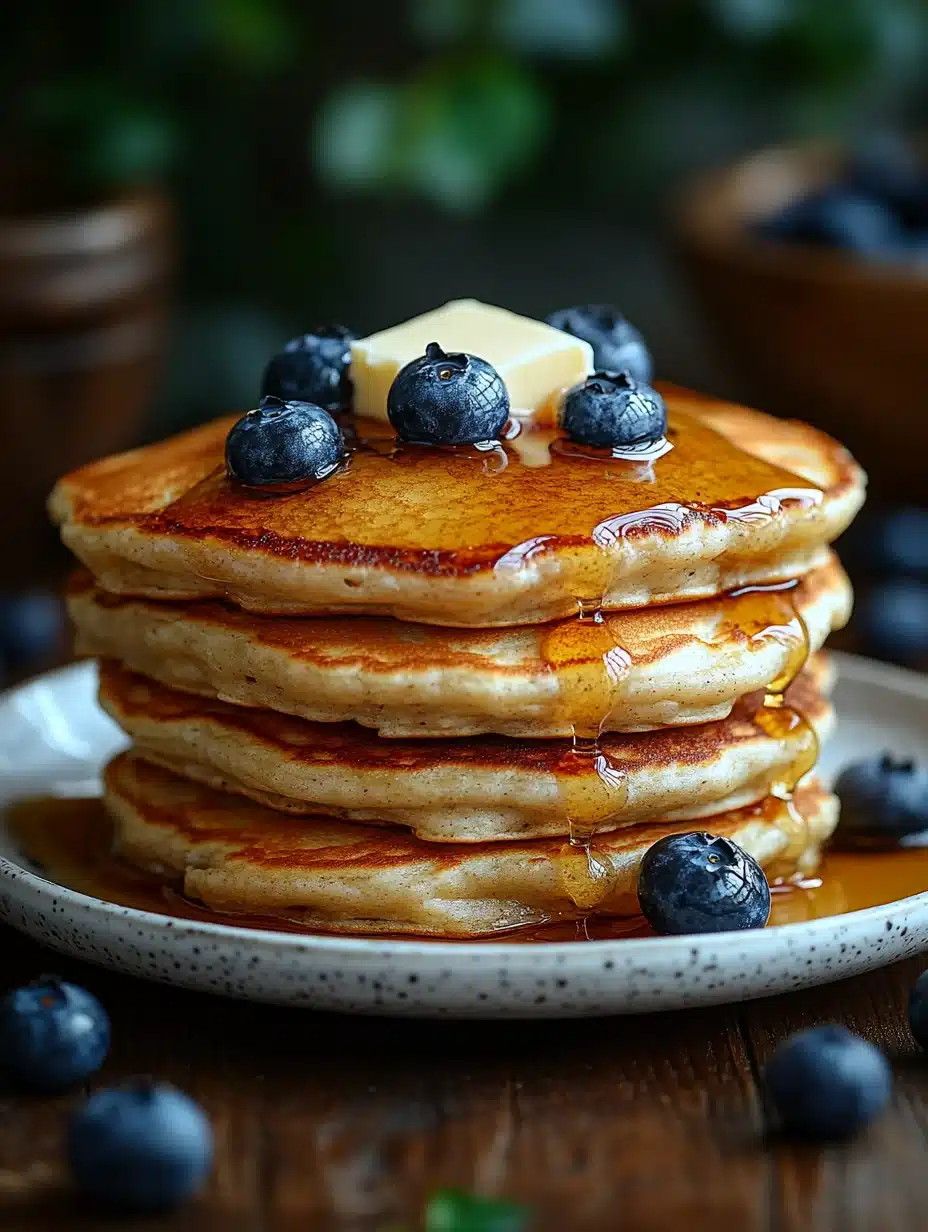
Cottage cheese pancakes are the high-protein breakfast trick that gym people have kept quiet for years. Three ingredients — cottage cheese, eggs, and oats — blend into a batter that cooks into pancakes so fluffy you would never guess they contain zero flour and zero added sugar. Each stack delivers 25 grams of protein, making them the densest protein-per-bite breakfast you can cook in a skillet in under 15 minutes.
The secret is blending the cottage cheese completely smooth. The curds liquify into a creamy, protein-rich base that replaces both milk and flour in the batter. The result is a pancake that tastes like a classic buttermilk stack but with double the protein and half the refined carbs. If you love protein banana pudding for dessert, these pancakes are the breakfast version of the same high-protein philosophy.
Cottage Cheese Pancake Nutrition Facts
| Nutrient | Per Serving (4 pancakes) | % Daily Value |
|---|---|---|
| Calories | 320 kcal | 16% |
| Protein | 25 g | 50% |
| Total Fat | 10 g | 13% |
| Saturated Fat | 3 g | 15% |
| Carbohydrates | 30 g | 11% |
| Fiber | 3 g | 11% |
| Sugar | 5 g | — |
| Sodium | 420 mg | 18% |
| Calcium | 150 mg | 12% |
| Iron | 2.5 mg | 14% |
Why Cottage Cheese Makes Better Pancakes Than Flour
Traditional pancakes rely on all-purpose flour for structure, but flour contributes almost zero protein and spikes blood sugar fast. Cottage cheese replaces flour as the structural backbone of the batter — casein protein coagulates when heated, creating the same firm-yet-tender crumb that gluten provides, but with 14 grams of protein per cup instead of 3 grams per cup of flour.
Cottage Cheese Pancakes vs. Traditional Pancakes — Complete Comparison
| Feature | Cottage Cheese Pancakes | Traditional Buttermilk Pancakes |
|---|---|---|
| Protein (per 4-pancake stack) | 25 g | 8 g |
| Calories | 320 | 450 |
| Flour | None (oats only) | 1½ cups AP flour |
| Glycemic impact | Low-moderate (GI ~45) | High (GI ~70+) |
| Post-meal fullness | 4+ hours | 1.5–2 hours |
| Prep time | 2 minutes (blender) | 5 minutes (whisk) |
| Cook time | 10 minutes | 12 minutes |
| Texture | Dense, creamy interior, crisp edges | Fluffy, airy, soft |
| Gluten-free option | Yes (use certified GF oats) | Requires specialty flour |
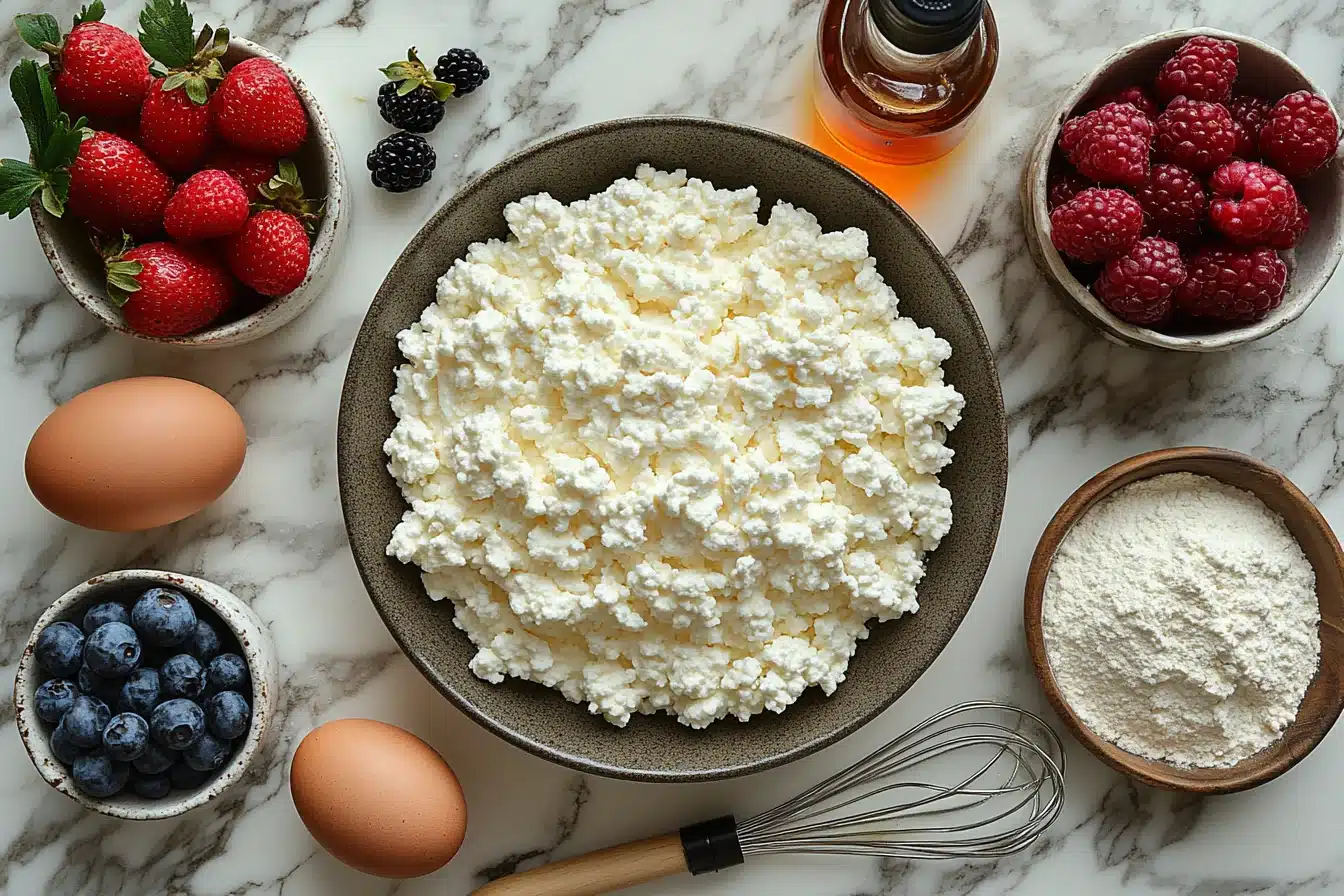
Essential Ingredients for Cottage Cheese Pancakes
| Component | Ingredient | Amount | Purpose & Notes |
|---|---|---|---|
| Core Batter | Cottage cheese (4% full-fat) | 1 cup (226 g) | Protein base — small curd blends smoother than large curd |
| Large eggs | 2 | Binding agent + structure + 12 g protein | |
| Rolled oats | ½ cup (45 g) | Fiber + structure — grinds to flour in the blend | |
| Flavor | Vanilla extract | 1 tsp | Masks any cottage cheese tang |
| Cinnamon | ½ tsp | Warmth + pairs with banana or berry toppings | |
| Honey or maple syrup (optional) | 1 tbsp | Only if you like sweet batter — banana topping may be enough | |
| Cooking | Butter or coconut oil | 1 tsp per batch | Prevents sticking + golden crust |
| Baking powder | ½ tsp | Extra lift — optional but makes them fluffier |
Which Cottage Cheese Is Best for Pancakes?
| Cottage Cheese Type | Fat % | Pancake Texture | Flavor | Best For |
|---|---|---|---|---|
| Full-fat (4%) | 4% | Richest, most tender | Mild, creamy | ★ Best overall |
| 2% low-fat | 2% | Slightly drier | Mild | Good balance |
| 1% low-fat | 1% | Drier, can be rubbery | Tangier | Cutting calories aggressively |
| Fat-free (0%) | 0% | Tough, dry, rubbery | Very tangy | Not recommended |
| Whipped cottage cheese | Varies | Thin batter, flat pancakes | Mild | Not recommended |
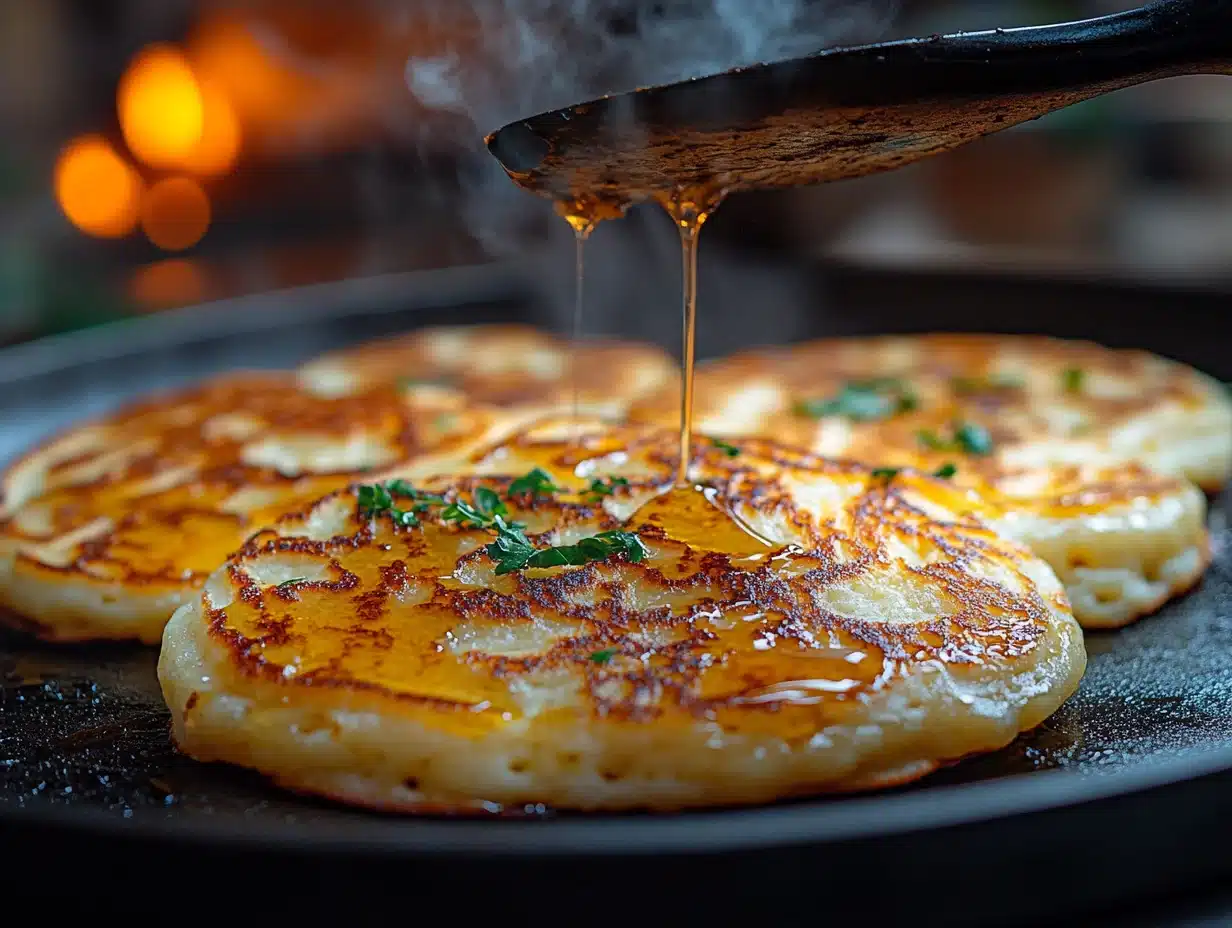
Step-by-Step: How to Make Cottage Cheese Pancakes
Step 1: Blend the Batter Until Smooth
Add cottage cheese, eggs, oats, vanilla extract, cinnamon, and baking powder to a blender. Pulse 3–4 times to break up the oats, then blend on high for 30 seconds until completely smooth with no visible curds or oat flakes. The batter should pour like thick cream. Do not over-blend — 30 seconds is enough. If the batter is too thick, add 1 tablespoon of milk at a time.
Step 2: Rest the Batter for 3 Minutes
Let the batter sit in the blender for 3 minutes while you heat the pan. This rest allows the oat flour to absorb moisture, thickening the batter so the pancakes hold their round shape on the griddle instead of spreading thin. Skip this step and you get flat, crepe-like discs instead of fluffy pancakes.
Step 3: Heat a Non-Stick Pan to Medium-Low
Heat a non-stick skillet or griddle over medium-low heat (not medium — cottage cheese pancakes burn faster than flour pancakes because of the higher protein content). Add ½ teaspoon of butter and swirl to coat. Test with a drop of batter — it should sizzle gently, not splatter.
Step 4: Pour and Cook for 2–3 Minutes Per Side
Pour ¼ cup batter per pancake onto the skillet. Cook until bubbles form on the surface and the edges look set (about 2–3 minutes). Flip gently with a wide spatula — these are more delicate than flour pancakes. Cook the second side for 1.5–2 minutes until golden brown. The center should spring back when pressed lightly.
Step 5: Serve with Toppings
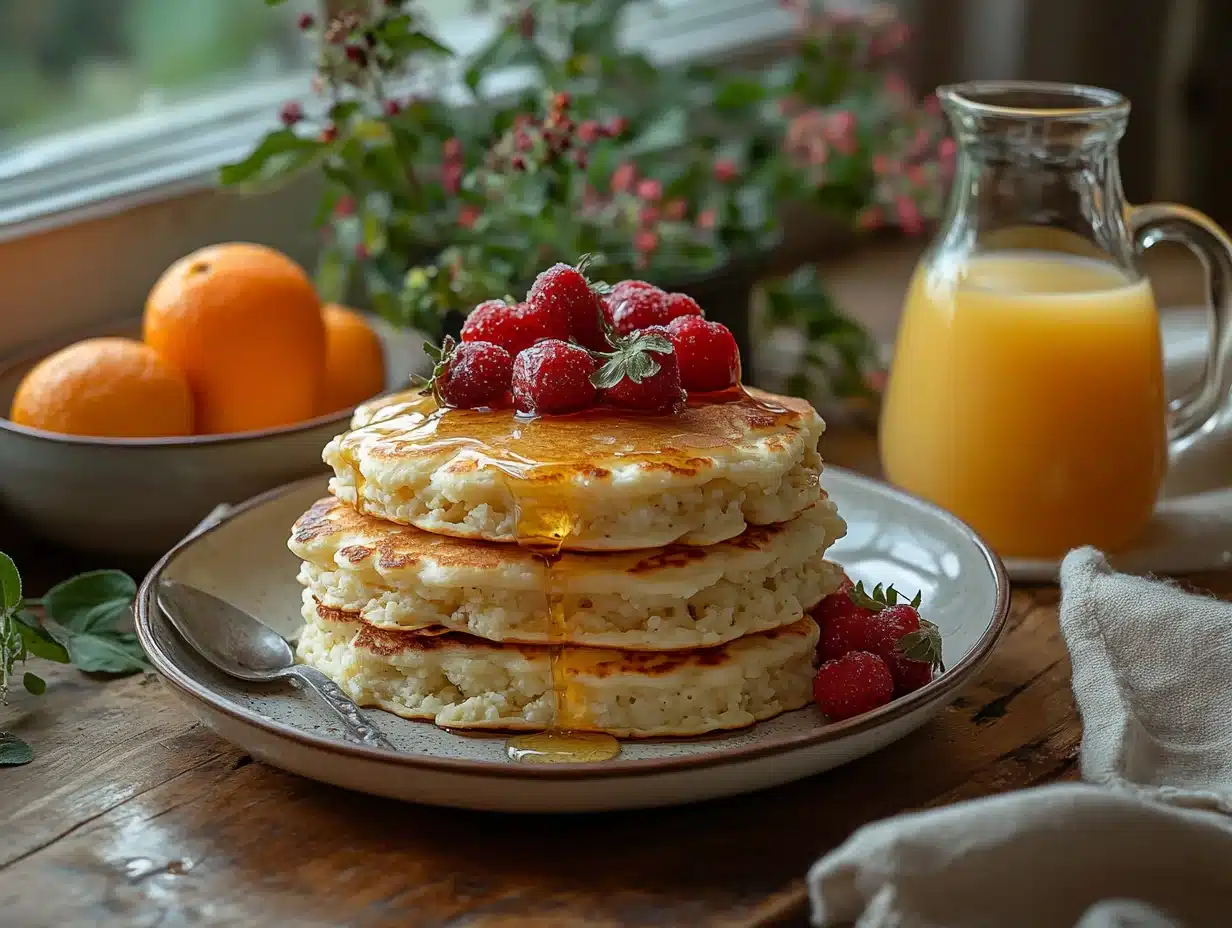
Stack 4 pancakes per serving. Top with sliced banana, fresh berries, a drizzle of maple syrup, or a dollop of Greek yogurt. For the highest protein stack, add a tablespoon of peanut butter between layers — the heat softens it into a warm, melty filling that brings the protein total to 33 grams per serving.
8 Cottage Cheese Pancake Flavor Variations
| Variation | Add to Batter | Topping | Flavor Profile |
|---|---|---|---|
| Blueberry Burst | ½ cup fresh blueberries | Lemon zest + maple | Sweet, fruity, classic |
| Banana Bread | ½ ripe banana + walnuts | Cinnamon butter | Warm, nutty, sweet |
| Chocolate Chip | 2 tbsp mini chocolate chips | Whipped cream | Kid-approved indulgent |
| Lemon Ricotta | 1 tbsp lemon juice + zest | Powdered sugar + berries | Light, citrusy, elegant |
| Pumpkin Spice | 3 tbsp pumpkin purée + spice | Pecans + maple | Fall breakfast classic |
| PB & J | 1 tbsp PB powder | Strawberry jam | Nostalgic, high protein |
| Savory Herb | Skip vanilla; add chives + dill | Smoked salmon + cream cheese | Brunch-worthy savory |
| Protein Boost | ½ scoop vanilla protein powder | Greek yogurt | 35 g protein per stack |
Common Cottage Cheese Pancake Mistakes and How to Fix Them
Mistake 1: Leaving Cottage Cheese Curds in the Batter
If you skip the blender and just whisk, visible curds survive and create a lumpy, uneven pancake with a tangy cottage cheese taste. The blender is non-negotiable — it transforms the curds into smooth liquid protein. A food processor works too, but not a fork or whisk.
Mistake 2: Cooking on Medium-High Heat
The extra protein in cottage cheese browns faster than flour-based batter. Medium-high heat creates pancakes that are charred on the outside and raw in the center. Always use medium-low heat and be patient — the extra minute of cook time is worth evenly golden pancakes.
Mistake 3: Flipping Too Early
Cottage cheese pancakes are more delicate than flour pancakes. Wait until you see bubbles form across the entire surface and the edges look dry and set before flipping. If the pancake falls apart during the flip, it needed another 30 seconds.
Mistake 4: Using Fat-Free Cottage Cheese
Zero-fat cottage cheese produces tough, rubbery, dry pancakes that taste like protein cardboard. The fat in 4% cottage cheese is what gives these pancakes their tender, melt-in-your-mouth texture. Use full-fat or at minimum 2%.
Mistake 5: Making Pancakes Too Large
Pour ¼ cup batter max per pancake. Larger pancakes are nearly impossible to flip without breaking because the batter is more delicate than flour-based. Smaller pancakes also cook more evenly — the center gets done at the same time as the edges.
What to Serve With Cottage Cheese Pancakes
Build a complete high-protein breakfast by pairing your pancakes with complementary dishes:
- Peanut butter coffee smoothie — adds caffeine + 28 g more protein
- Protein coffee — lighter option, still high protein with a caffeine boost
- Fresh fruit salad — berries, banana, and kiwi add vitamins without extra cooking
- Energy bites — grab-and-go afternoon snack using leftovers from Sunday meal prep
- Turkey bacon or sausage — lean protein rounds out a savory brunch spread
- Scrambled eggs with spinach — classic breakfast plate with even more protein
How to Store and Freeze Cottage Cheese Pancakes
Refrigerator Storage
Cool pancakes completely on a wire rack, then store in an airtight container with parchment paper between layers to prevent sticking. They keep for 4 days in the fridge. Reheat in a toaster, microwave (30 seconds), or dry skillet (1 minute per side).
Freezer Storage for Meal Prep
Flash-freeze pancakes on a parchment-lined baking sheet for 1 hour, then transfer to a zip-top bag. They keep for 2 months. Reheat from frozen in the toaster (2 cycles) or microwave (45 seconds). Batch-cook 20 pancakes on Sunday and you have protein-packed breakfasts for the entire work week — no bake chocolate protein bars make a great grab-and-go pairing on rushed mornings.
Cottage Cheese Pancakes for Different Diets
| Diet | Modification | Impact on Nutrition |
|---|---|---|
| Gluten-Free | Use certified GF rolled oats | No change — naturally GF |
| Keto / Low-Carb | Replace oats with 2 tbsp almond flour | Net carbs drop from 30 g to 8 g |
| Dairy-Free | Use dairy-free cottage cheese (Kite Hill brand) | Protein drops by ~5 g |
| Egg-Free | Replace eggs with 2 flax eggs (2 tbsp ground flax + 5 tbsp water) | Weaker structure, slightly crumbly |
| Higher Protein | Add ½ scoop protein powder to batter | +10 g protein (total 35 g) |
| Lower Calorie | Use 2% cottage cheese, 1 egg + 1 white | ~260 kcal per serving |
The Science of Cottage Cheese in Baking
Cottage cheese is 80% casein protein — a slow-digesting protein that coagulates (thickens and firms) when heated above 150°F (65°C). This is the same principle that makes cheese firm up in cooking. In pancake batter, heat-set casein creates a stable internal structure that holds air bubbles, producing the fluffy lift that wheat gluten normally provides.
The whey liquid in cottage cheese acts as a tenderizer, keeping the interior moist even as the exterior crisps. This dual action — firming casein outside plus moistening whey inside — explains why cottage cheese pancakes have that unique texture: crisp edges with a soft, almost custard-like center that flour pancakes cannot replicate.
This same protein coagulation is why cottage cheese chocolate mousse works — the protein structure holds air, creating a mousse texture without gelatin or heavy cream.
Healthy Cottage Cheese Pancakes
Healthy Cottage Cheese Pancakes
Total Time: 32 minutes
Yield: 4 servings 1x
Diet: High Protein
Description
Warm, tender pancakes with a high protein content, perfect for a nutritious breakfast.
Ingredients
Scale
- 225 g (1 cup) small-curd low-fat cottage cheese
- 3 large eggs
- 125 g (1 cup) all-purpose flour
- 10 g (2 tsp) baking powder
- 15 g (1 tbsp) honey or maple syrup (optional)
- 60 ml (1/4 cup) milk (any kind)
- 1/4 tsp fine salt (about 1.5 g)
- 1 tsp (5 ml) vanilla extract (optional)
- 28 g (2 tbsp) unsalted butter or neutral oil, plus extra for the pan
Instructions
- Blend the wet ingredients: Add cottage cheese, eggs, honey or maple syrup, vanilla, and milk to a blender. Pulse 6–8 times until mostly smooth but still a little curd texture remains.
- Combine dry ingredients: In a medium bowl whisk together the flour, baking powder, and fine salt until evenly mixed.
- Fold batter together: Pour the wet mixture into the dry ingredients and stir with a spatula until just combined.
- Rest the batter: Let the batter rest 5–10 minutes at room temperature.
- Heat the pan and cook: Heat a nonstick skillet over medium heat. Add oil or butter and spoon 60 ml (1/4 cup) batter per pancake into the pan. Cook until edges look set and bubbles appear on top, about 2–3 minutes; flip and cook 1–2 minutes more until golden brown.
- Serve or hold: Transfer cooked pancakes to a cooling rack placed on a baking sheet and keep in a warm oven before serving.
Notes
Avoid overblending to maintain texture. Store chilled pancakes for up to 3 days.
- Prep Time: 10 minutes
- Cook Time: 12 minutes
- Category: Breakfast
- Method: Pan-Frying
- Cuisine: American
Nutrition
- Serving Size: 2 pancakes
- Calories: 290
- Sugar: 6g
- Sodium: 420mg
- Fat: 11g
- Saturated Fat: 4g
- Unsaturated Fat: 7g
- Trans Fat: 0g
- Carbohydrates: 29g
- Fiber: 2g
- Protein: 15g
- Cholesterol: 140mg

Frequently Asked Questions About Cottage Cheese Pancakes
Do cottage cheese pancakes taste like cottage cheese?
No. When blended smooth and cooked, the cottage cheese flavor disappears completely. The vanilla and cinnamon dominate, creating a taste similar to classic buttermilk pancakes with a slightly richer, more custard-like texture.
Can I use large curd cottage cheese?
Yes, as long as you use a blender. Large curds take a few extra seconds to fully break down. A whisk or fork will not work — you need a blender or food processor to achieve smooth batter.
How many calories are in cottage cheese pancakes?
A stack of 4 pancakes made with this recipe has approximately 320 calories, 25 g protein, 10 g fat, and 30 g carbs. Without toppings.
Can I make the batter the night before?
Yes. Blend the batter and refrigerate in a covered container overnight. Stir gently before cooking — it may thicken slightly, so add 1 tablespoon of milk if needed.
Why are my cottage cheese pancakes flat?
Three common causes — the batter was too thin (add more oats), the pan was too hot (use medium-low), or you skipped the 3-minute rest step that lets oats absorb moisture and thicken the batter.
Are cottage cheese pancakes good for weight loss?
Yes. At 320 calories with 25 g protein, they keep you full for 4+ hours — much longer than traditional pancakes. High protein breakfasts reduce total daily calorie intake by 400+ calories on average.
Can I freeze cottage cheese pancakes?
Absolutely. Flash-freeze on a parchment-lined sheet for 1 hour, then store in a zip-top bag for up to 2 months. Reheat from frozen in a toaster (2 cycles) or microwave (45 seconds).
What can I substitute for oats in cottage cheese pancakes?
For keto, use 2 tablespoons of almond flour or coconut flour. For nut-free, use 2 tablespoons of buckwheat flour. Each substitution changes the texture slightly but all produce good results.
Do I need a special pan for cottage cheese pancakes?
A non-stick pan is strongly recommended. These pancakes are more delicate than flour-based ones and will stick to stainless steel or cast iron unless very well-seasoned and generously buttered.
Can I add protein powder to cottage cheese pancakes?
Yes. Add half a scoop of vanilla protein powder to the blender with the other ingredients. This bumps protein to 35 g per serving. Use whey or casein — plant protein can make the pancakes gritty.

Written by Chef Anna
I'm Anna - a Le Cordon Bleu-trained chef, recipe developer, and the voice behind Chef Johns Gourmet. After a decade in professional kitchens, I now spend my mornings testing recipes and my afternoons writing them down so you can make them perfectly in your own kitchen. Every one of the 1,100+ recipes on this site has been personally cooked, tasted, and refined. I write like I'm standing next to you, walking you through every step. Simple recipes. Bold flavors. Made for real kitchens.