
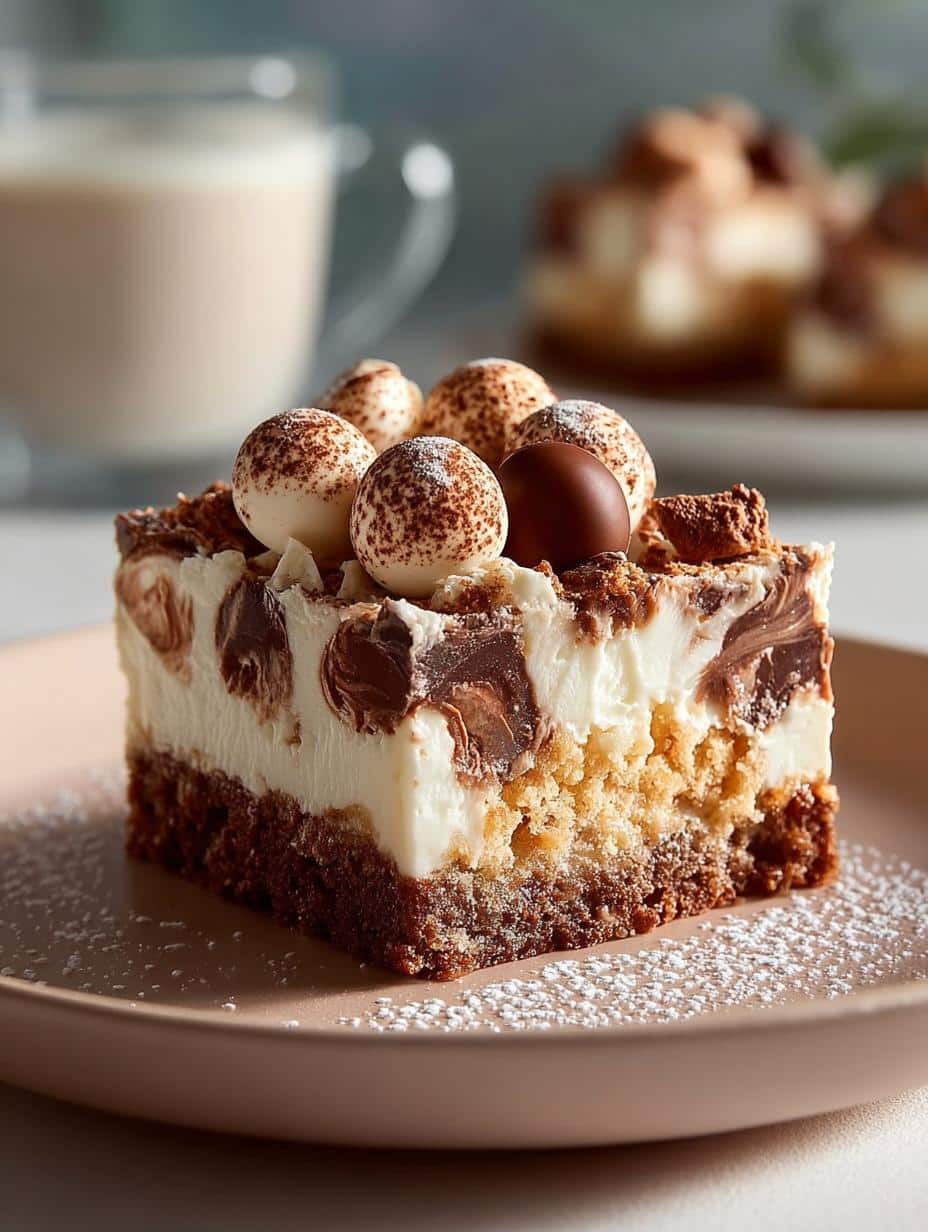
Key Takeaways
- 20-minute no-bake dessert: Mix on the stovetop, press into pan, chill until set — no oven required.
- 5 core ingredients: Milk chocolate, golden syrup, butter, digestive biscuits, and Maltesers — pantry simple.
- Crowd-pleasing crunch: Crushed biscuits and whole Maltesers create irresistible texture in every bite.
- Make-ahead friendly: Keeps 1 week refrigerated, freezes 3 months — perfect for entertaining.
- Customizable foundation: Swap chocolate types, add nuts, or layer with white chocolate for variety.
Why Malteser Traybake Became a British Baking Classic
The Malteser traybake represents the perfect intersection of nostalgia, simplicity, and crowd-pleasing flavor that defines British home baking culture at its best. Maltesers themselves — those crispy malt-honeycomb centers wrapped in milk chocolate — have been British candy aisle staples since 1937, beloved across generations for their distinctive lightness and signature crunch. Combining them with a traditional chocolate biscuit base creates a dessert that satisfies childhood cravings while delivering legitimate sophistication when prepared properly.
Unlike fussy patisserie-style desserts that require precise techniques and specialized equipment, the Malteser traybake comes together in a single saucepan with basic kitchen tools available in every home. The forgiving recipe handles imprecise measurements, substitute ingredients, and varying chill times without compromising results. This combination of guaranteed success and exceptional final flavor explains why the recipe appears in virtually every British family cookbook, school fundraising bake sale, and casual dinner party dessert spread across the United Kingdom.
Malteser Traybake vs Other No-Bake Desserts
| Dessert | Active Time | Chill Time | Difficulty |
|---|---|---|---|
| Malteser Traybake (this) | 20 min | 2-4 hours | Beginner |
| Chocolate Tiffin | 15 min | 2 hours | Beginner |
| Rocky Road | 15 min | 3 hours | Beginner |
| No-Bake Cheesecake | 30 min | 6+ hours | Easy |
| Tiramisu | 30 min | 4+ hours | Intermediate |
| Banoffee Pie | 40 min | 2 hours | Easy |
| Chocolate Fridge Cake | 15 min | 2-3 hours | Beginner |
| Mille-Feuille | 2+ hours | 1 hour | Advanced |
Ingredient Guide & Substitutions
| Ingredient | Amount | Substitute | Notes |
|---|---|---|---|
| Milk chocolate | 300g | Dark chocolate, half-and-half mix | Quality matters here |
| Unsalted butter | 150g | Salted (omit added salt) | Real butter only |
| Golden syrup | 3 tbsp | Light corn syrup, honey | Adds chewy texture |
| Digestive biscuits | 250g | Graham crackers, McVitie’s | Crush coarsely |
| Maltesers | 200g | Whoppers (US equivalent) | Mix in + top |
| Cocoa powder (optional) | 2 tbsp | Skip for milder version | Deeper chocolate flavor |
| Vanilla extract (optional) | 1 tsp | Skip | Rounds out flavor |
| Pinch of salt | 1/4 tsp | Flaky sea salt on top | Critical balance |
Choosing the Right Chocolate Makes All the Difference
The chocolate selection determines whether your traybake tastes mass-market commercial or genuinely homemade exceptional. Cadbury Dairy Milk represents the classic British choice and produces the authentic flavor most people associate with quality Malteser traybake — sweet, creamy, with that distinctive Cadbury richness. Galaxy chocolate (Dove brand in the US) offers smoother texture and milder sweetness for those who find Cadbury too pronounced.
For more sophisticated palates, blend half milk chocolate with half good-quality dark chocolate (60-70% cocoa). This combination delivers complexity that elevates the dessert beyond simple sweetness while maintaining the kid-friendly appeal that makes traybake universally loved. Avoid baking chocolate or chocolate chips — both produce inferior melting behavior and flatter flavor compared to proper eating chocolate. Spend slightly more on quality chocolate; it represents the largest portion of the recipe and most directly affects final taste perception.
Step-by-Step Method
Line a 23x33cm (9×13 inch) baking pan with parchment paper, leaving overhang on two sides for easy lifting later. Break the chocolate into rough pieces and place in a large heavy-bottomed saucepan with the butter and golden syrup. Set over the lowest possible heat and stir constantly with a wooden spoon or silicone spatula. The mixture will look separated and grainy at first — keep stirring patiently as everything melts together into smooth glossy chocolate sauce.
Once fully melted and uniform, remove from heat immediately to prevent scorching. Stir in vanilla and salt if using. Crush the digestive biscuits in a food processor for fine texture, or place in a sealed bag and crush with a rolling pin for varied texture (recommended — chunks add wonderful crunch). Stir crushed biscuits into the chocolate mixture until fully coated. Add about 2/3 of the Maltesers and gently fold them in, being careful not to crush them.
Transfer the mixture to your prepared pan and spread evenly using the back of a spatula. Press down firmly to ensure compact, sliceable texture. Press the remaining Maltesers into the top in a decorative pattern — even rows look professionally presented. Refrigerate for at least 2-4 hours, or ideally overnight, until completely set firm. Lift out using parchment overhang, transfer to cutting board, and slice into squares with a sharp knife dipped in hot water between cuts for clean edges.
5 Variations to Try
1. Salted Caramel Malteser: Drizzle warm salted caramel sauce over the top before chilling. The caramel sets into the surface and adds luxurious depth that transforms basic traybake into bakery-worthy dessert.
2. White Chocolate Layer: After pressing the base mixture, drizzle melted white chocolate over the top and swirl with a knife for marbled effect before adding final Maltesers. Beautiful presentation with flavor contrast.
3. Festive Christmas Edition: Add 100g chopped glace cherries, 50g chopped pistachios, and edible gold stars on top. Wrap individual squares in cellophane for elegant homemade gifts that look professional.
4. Peanut Butter Power: Stir 4 tablespoons peanut butter into the melted chocolate mixture. The PB adds richness and protein while creating an addictive flavor combination that disappears immediately.
5. Adult Boozy Version: Replace 1 tablespoon golden syrup with Baileys Irish Cream or Kahlua for sophisticated dinner party version. Just enough alcohol for warmth without overwhelming the chocolate.
Equipment Recommendations
| Tool | Why It Helps | Budget Pick |
|---|---|---|
| 9×13 inch pan | Standard traybake size | Pyrex or USA Pan |
| Heavy-bottomed saucepan | Even melting, no scorching | Stainless 2-quart |
| Parchment paper | Easy lift-out, no sticking | Reynolds or store brand |
| Silicone spatula | Scrapes pan clean | OXO or GIR |
| Rolling pin | Crushing biscuits | Wooden classic |
| Sealed plastic bags | Mess-free crushing | Ziploc gallon |
| Sharp chef’s knife | Clean square cuts | Victorinox 8-inch |
| Kitchen scale | Accurate measurement | OXO digital scale |
Troubleshooting Common Problems
| Problem | Cause | Solution |
|---|---|---|
| Chocolate seized/grainy | Water in pan, too high heat | Start over with dry pan, lowest heat |
| Crumbly when sliced | Not enough binding chocolate | Add 50g more melted chocolate |
| Too soft at room temp | Too much butter/syrup | Refrigerate, serve cold |
| Maltesers sank to bottom | Mixture too hot when added | Cool 5 minutes before folding |
| Won’t set firm | Insufficient chill time | Refrigerate 6+ hours minimum |
| Bland flavor | Skipped salt or vanilla | Always add pinch of salt |
| Scorched chocolate | Heat too high, not stirring | Lowest heat, constant stirring |
| Cuts crack apart | Knife not warm enough | Dip knife in hot water between cuts |
The Crushing Technique That Matters
How you crush your digestive biscuits dramatically affects the final texture of your traybake. The most common approach — pulverizing biscuits in a food processor — produces uniform fine crumbs that create dense, brownie-like texture similar to American cookie crust. While acceptable, this approach loses the textural variety that distinguishes great traybake from merely good versions.
The superior technique uses a sealed plastic bag and rolling pin or kitchen mallet to crush biscuits into varied chunks. Aim for a mixture that includes powder fines, small pebble-sized pieces, and several chunky bits up to fingernail size. This range creates fascinating textural contrasts within each bite — soft fudgy chocolate against crunchy biscuit chunks against crispy Malteser shells. The complexity feels intentional and crafted rather than generic and machine-made, even though the technique is actually easier than processor crushing.
Storage, Freezing & Make-Ahead
Malteser traybake is one of the absolute best make-ahead desserts because it actually improves over the first 24 hours as flavors meld and texture stabilizes. Store in airtight containers in the refrigerator for up to 1 week. Layer between sheets of parchment paper if stacking. The chocolate stays glossy, the Maltesers retain their crunch (a remarkable feat for a refrigerated dessert), and slices remain easy to remove from the container.
For longer storage, individual squares freeze beautifully for up to 3 months. Wrap each piece in plastic wrap then place in a freezer bag with air pressed out. Thaw overnight in the refrigerator before serving — the texture remains essentially identical to fresh-made. This freezer-friendly nature makes traybake ideal for unexpected guests, last-minute dessert needs, or building a dessert stash for busy weeks. Many bakers double the recipe specifically to freeze half for future occasions.
Pairing Malteser Traybake With Drinks & Desserts
Malteser traybake pairs beautifully with hot beverages that complement its richness. Strong English breakfast tea cuts through chocolate sweetness for classic British afternoon enjoyment. Espresso or strong filter coffee creates sophisticated dessert pairings worthy of dinner parties. For non-coffee drinkers, hot chocolate spiked with marshmallows doubles down on the chocolate theme for ultimate indulgence.
Serve alongside other dessert favorites like classic lemon bars for citrus contrast, apple crumbles for warm comfort pairing, dark chocolate almond bark for chocolate variety, protein bars for healthier balance, bakery chocolate chip cookies for cookie variety, PB chocolate bites, peanut butter mousse, cottage cheese chocolate mousse, or banana pudding for dessert spread variety.
The History of Maltesers and British Confectionery
Maltesers were invented in 1937 by Forrest Mars Sr., who originally marketed them as “Energy Balls” aimed at slimming-conscious women — a marketing angle that seems hilariously dated today. The distinctive honeycomb-like malt center surrounded by milk chocolate represented genuine innovation in confectionery, creating a candy that felt indulgent but lighter than solid chocolate. The unique “shake” you can hear when rattling a Malteser comes from this hollow malt structure that gives the candy its signature airy crunch.
Throughout the latter half of the 20th century, Maltesers became deeply embedded in British culture as the quintessential cinema candy, after-school treat, and tea-time biscuit accompaniment. Their popularity inspired countless homemade dessert applications, with the traybake emerging as the definitive way to incorporate Maltesers into shareable bakery-style treats. The recipe spread through community cookbooks, school fundraising publications, and family-passed handwritten cards long before the internet democratized recipe sharing globally.
Today Maltesers remain owned by Mars Wrigley and sold in over 100 countries worldwide, though they remain most beloved in the United Kingdom, Australia, Ireland, and parts of Europe. American audiences encountered the Whoppers as a similar concept, though Whoppers tend to be slightly larger with more intense malt flavor compared to the more delicate Maltesers. For authentic traybake, source proper Maltesers from international grocery sections or online retailers — the difference in final taste is genuinely noticeable.
Variations Across British Bakery Traditions
| Style | Distinctive Feature | Region |
|---|---|---|
| Classic Malteser Traybake | Even mix of Maltesers throughout | Universal UK |
| Scottish Tablet Style | Sweeter, more sugar-based | Scotland |
| Welsh Bara Brith Twist | Adds dried fruit, tea soaking | Wales |
| Irish Whiskey Edition | Splash of Irish cream | Ireland |
| Northern Tea Cake Style | Larger, served warmed | Yorkshire |
| London Salted Caramel | Caramel layer drizzled on top | Modern London |
| Cornish Cream Style | White chocolate base, clotted cream | Cornwall |
| Australian Hedgehog Slice | Cocoa powder, condensed milk | Australia (related) |
Mastering Chocolate Tempering for Professional Results
While Malteser traybake doesn’t require true chocolate tempering (which involves precise temperature control to create stable cocoa butter crystals), understanding basic chocolate-handling principles dramatically improves your results. The single most important rule: keep all moisture away from melting chocolate. Even a single drop of water can cause chocolate to “seize” — turning into a thick, grainy paste that ruins the entire batch. Use completely dry pans, dry utensils, and dry hands throughout the process.
The second critical principle: low and slow heating. Chocolate begins burning around 130°F (55°C), but bitter off-flavors develop even at lower sustained temperatures. The lowest possible heat with constant stirring produces glossy, smooth melted chocolate with optimal flavor. If you have a double boiler, use it — placing the saucepan over simmering water (not in it) provides gentle indirect heat that virtually eliminates scorching risk. Microwave melting works too: 30-second intervals at 50% power, stirring between each round.
For traybake specifically, allow the melted chocolate mixture to cool slightly (5-10 minutes off heat) before adding the Maltesers. Adding them to extremely hot chocolate causes the outer chocolate shell to melt and lose definition, plus tends to soften the malt centers prematurely. The slight cooling preserves the distinctive Malteser texture that makes the dessert special. This single small patience point separates exceptional traybake from merely acceptable versions made by impatient cooks.
Entertaining and Gifting With Malteser Traybake
Malteser traybake represents one of the most reliable choices for entertaining because it combines crowd-pleasing universal appeal, complete make-ahead capability, beautiful presentation potential, and exceptional ease of execution. For dinner parties, slice into elegant small squares and arrange on a tiered cake stand alongside fresh berries and dollops of whipped cream. The visual presentation suggests far more effort than the recipe actually requires, earning impressed reactions from guests of all ages.
For gifting purposes, the recipe shines exceptionally well. Cut squares to uniform size, wrap individually in cellophane bags tied with raffia or ribbon, and arrange in decorative tins or boxes for homemade gifts that feel personal and luxurious despite costing relatively little to produce. Holiday gifting becomes effortless when you make multiple batches with seasonal variations — Christmas with cherries and gold dust, Easter with mini eggs replacing some Maltesers, Valentine’s with pink white chocolate drizzle. Each variation appears thoughtfully customized while using the same foundational recipe.
For larger events like office parties, school fundraisers, or community bake sales, the recipe scales effortlessly to triple or quadruple batches in larger pans. The economics work brilliantly: ingredient cost is roughly $1 per substantial square, while equivalent purchased fudge or chocolate confections retail for $3-5 each. This profit margin makes it among the best fundraising bake choices available, while the universal appeal ensures everything sells out reliably regardless of audience demographics or competing offerings on the table.
Final Tips for Malteser Traybake Mastery
After making Malteser traybake dozens of times across different variations, certain refinements emerge that consistently produce superior results. Always weigh your ingredients with a kitchen scale rather than using volume measurements — chocolate and biscuit weights vary significantly when measured by cups, and the precision matters for proper setting and texture. British baking traditions universally use weight measurements for good reason: they produce dramatically more consistent results across different bakers and kitchens.
Reserve your most attractive Maltesers for the top decoration. When you open the bag, separate them into two groups: smaller or slightly damaged ones for mixing into the base (where appearance does not matter), and pristine round ones for the top layer where they will be visible. This small organizational step elevates the visual presentation considerably without requiring any additional effort or ingredients. Press the top Maltesers gently into the surface so they adhere properly when the chocolate sets, preventing them from falling off when slicing or transferring.
Consider adding flaky sea salt sprinkled across the top just before refrigerating. The salt crystals catch light beautifully on the chocolate surface and provide intermittent flavor pops that transform every bite into a more interesting eating experience. Use Maldon salt or similar large-flake variety rather than fine table salt for both visual and flavor reasons. This single optional finishing touch genuinely separates homemade traybake that tastes amateur from versions that taste professionally crafted by an experienced chocolatier.
Master this single recipe and you have a year-round dessert template that handles birthdays, holidays, casual gatherings, dinner parties, gift-giving, fundraisers, and unexpected guests with equal reliability and consistent crowd-pleasing success.
The combination of foolproof technique, exceptional flavor, beautiful presentation, and outstanding make-ahead capability makes Malteser traybake one of the single most valuable additions any home baker can adopt into their permanent dessert repertoire for everyday occasions throughout every season.
Try this recipe today and discover why generations of British home bakers have made Malteser traybake their go-to crowd-pleasing dessert for every conceivable occasion across decades of baking traditions.
The simple combination of quality milk chocolate, crunchy biscuits, and signature Maltesers creates magic that transcends its humble pantry-staple ingredient list every single time you prepare it for family or friends.
Once you make this recipe and witness the unanimous joy it produces around any table, you will understand why it holds a permanent and irreplaceable place in the British baking canon alongside scones, Victoria sponge, and shortbread as a defining classic of the tradition.
Frequently Asked Questions About Malteser Traybake
Can I use dark chocolate instead?
Yes — dark chocolate works beautifully and produces more sophisticated flavor. Use 60-70% cocoa for balance. Reduce by 25g and add equivalent extra butter to maintain proper texture.
What can I substitute for golden syrup?
Light corn syrup is the closest substitute. Honey works but adds distinct flavor. Maple syrup changes the character significantly. Brown rice syrup produces good texture.
How long does it need to set?
Minimum 2 hours refrigerated, ideally 4 hours or overnight. Don’t rush — proper setting determines clean slicing and ideal texture throughout.
Can I make this without Maltesers?
In the US, Whoppers are direct equivalent. Other substitutes include malt balls, M&Ms, or chopped chocolate-covered nuts. Texture varies but all work deliciously.
How long does it last?
1 week refrigerated in airtight containers, 3 months frozen. Quality remains excellent throughout. Slices freeze individually for grab-and-go convenience.
Why won’t my mixture set firm?
Either too much butter/syrup ratio, insufficient chocolate, or inadequate chill time. Verify ingredient amounts and refrigerate at least 4 hours before slicing.
Can I add nuts?
Absolutely — chopped almonds, hazelnuts, or pistachios all work wonderfully. Add 75-100g to the chocolate mixture along with the biscuits for nutty crunch.
Is this recipe gluten-free?
Not as written — digestives contain wheat. Use gluten-free digestive biscuits (Schar makes excellent ones) and verify Maltesers status (some markets sell GF versions).
Can children help make this?
Perfect kids’ recipe — let them crush biscuits in bags, stir mixtures, press into pans, and arrange Maltesers on top. Just supervise the melting chocolate step.
What pan size works best?
Standard 9×13 inch (23x33cm) baking pan creates ideal thickness. Smaller 8×8 inch creates thicker squares; larger jellyroll pan creates thinner traybake.

Written by Chef Anna
I'm Anna - a Le Cordon Bleu-trained chef, recipe developer, and the voice behind Chef Johns Gourmet. After a decade in professional kitchens, I now spend my mornings testing recipes and my afternoons writing them down so you can make them perfectly in your own kitchen. Every one of the 1,100+ recipes on this site has been personally cooked, tasted, and refined. I write like I'm standing next to you, walking you through every step. Simple recipes. Bold flavors. Made for real kitchens.