Kashmiri Chai: Authentic Pink Tea Recipe with Cardamom & Pistachios

Key Takeaways

  • The signature pink color: Comes from a slow oxidation reaction between green tea, baking soda, and cold water — no food coloring required.
  • Authentic Kashmiri technique: Long simmer plus vigorous aeration creates the legendary creamy texture and rose-pink hue.
  • Aromatic spice blend: Green cardamom, star anise, and a pinch of salt define the traditional Noon Chai flavor.
  • Garnished with elegance: Crushed pistachios and almonds float on top, adding crunch and visual beauty.
  • Customizable sweetness: Traditionally salty in Kashmir, sweetened in Pakistan and India — both versions equally authentic.

What Makes Kashmiri Chai Truly Special

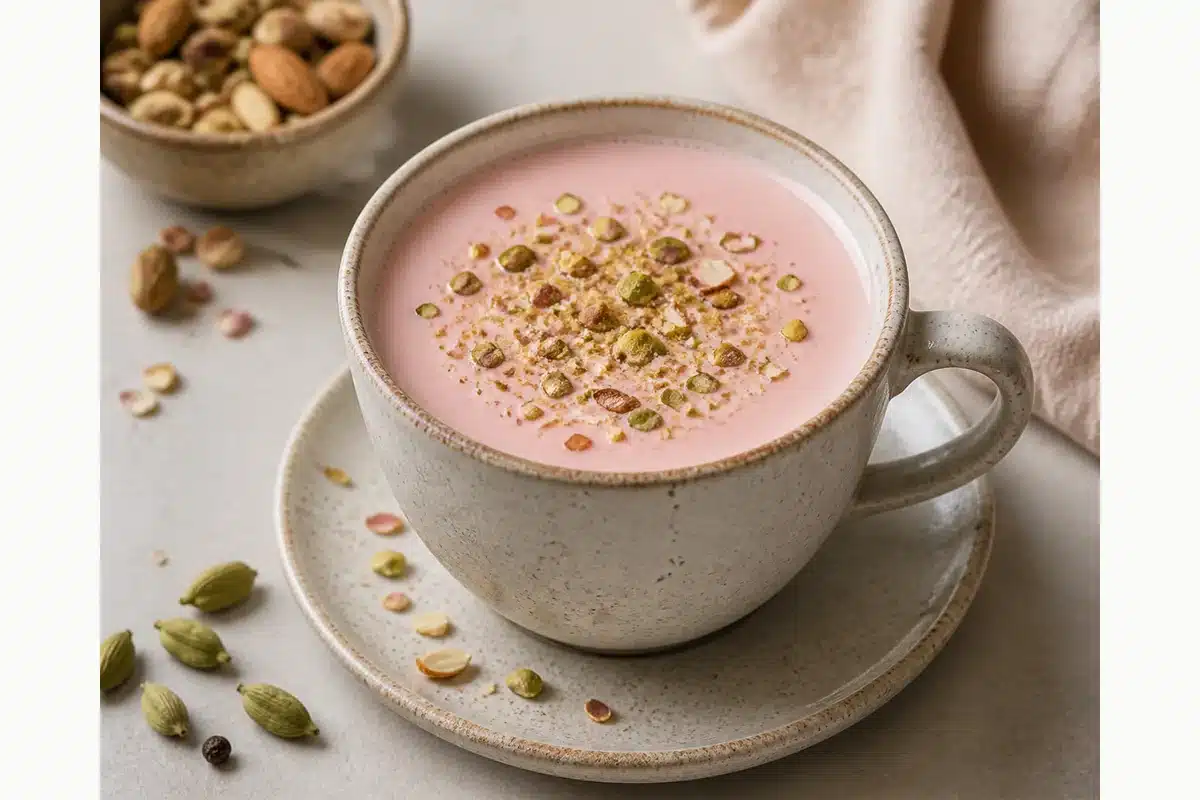
Kashmiri chai — also called Noon Chai (literally “salt tea”) in its homeland or Pink Tea (Gulabi Chai) in Pakistani households — is unlike any other tea on Earth. It’s milky, slightly salty or subtly sweet, fragrant with cardamom, topped with crushed nuts, and most strikingly, naturally pink. The color isn’t from added dye or beetroot; it emerges through a centuries-old chemical reaction between green tea leaves, baking soda, and prolonged exposure to cold water and oxygen. Mastering this transformation is what separates real Kashmiri chai from imitations.

🎯 Key Takeaways

  • Pink color comes from adding baking soda to green tea + ice water shock.
  • Traditional samovar whisk method aerates the tea for its signature hue.
  • Flavored with cardamom, cinnamon, star anise, and salt—not sugar by default.
  • Garnished with crushed pistachios, almonds, and saffron threads.
  • Originally from Kashmir Valley; also called Noon Chai or Sheer Chai.

This drink has warmed Kashmiri families through brutal Himalayan winters for over 500 years. It’s served at breakfast with crisp Kashmiri bread (girda), at weddings in elaborate samovars, and during religious festivals as a symbol of hospitality. Each cup carries the weight of regional history, cultural identity, and meticulous craft. Once you understand the technique, you can recreate authentic Kashmiri chai in any kitchen — though the journey from green tea to that perfect pink hue requires patience and attention.

Kashmiri Chai vs Other Famous Teas

TeaOriginColorDistinctive Feature
Kashmiri Chai (this)Kashmir ValleyPinkBaking soda oxidation + nuts
Masala ChaiIndiaBrownBlack tea + heavy spice blend
Hong Kong Milk TeaHong KongTanPantyhose-strained, evaporated milk
Thai Iced TeaThailandOrangeStar anise, food coloring, condensed milk
Hong Cha (Black Tea)ChinaAmberFully oxidized leaves
MatchaJapanBright greenPowdered shade-grown leaves
Earl GreyEnglandReddish-brownBergamot oil flavoring
Moroccan MintMoroccoPale greenGunpowder green + fresh mint

The Science Behind the Pink Color

The signature pink hue of Kashmiri chai is one of the most fascinating chemistry experiments in world cuisine. Green tea leaves contain catechins (powerful antioxidants) and chlorophyll. When you boil these leaves with baking soda (sodium bicarbonate) for an extended time, the alkaline environment causes the catechins to oxidize and polymerize into theaflavins and thearubigins — the same compounds that give black tea its color.


However, in Kashmiri chai, the process is interrupted at a specific point and combined with rapid cooling and aeration using cold water. This creates an entirely different compound profile that produces the rose-pink color rather than the brown of fully oxidized black tea. The vigorous aeration step — pouring the cold water from a height repeatedly — incorporates oxygen and develops the color further. Add milk at the end, and the pink becomes that iconic creamy salmon shade you see in every authentic cup.

Ingredients: The Complete Guide

IngredientAmountSubstituteNotes
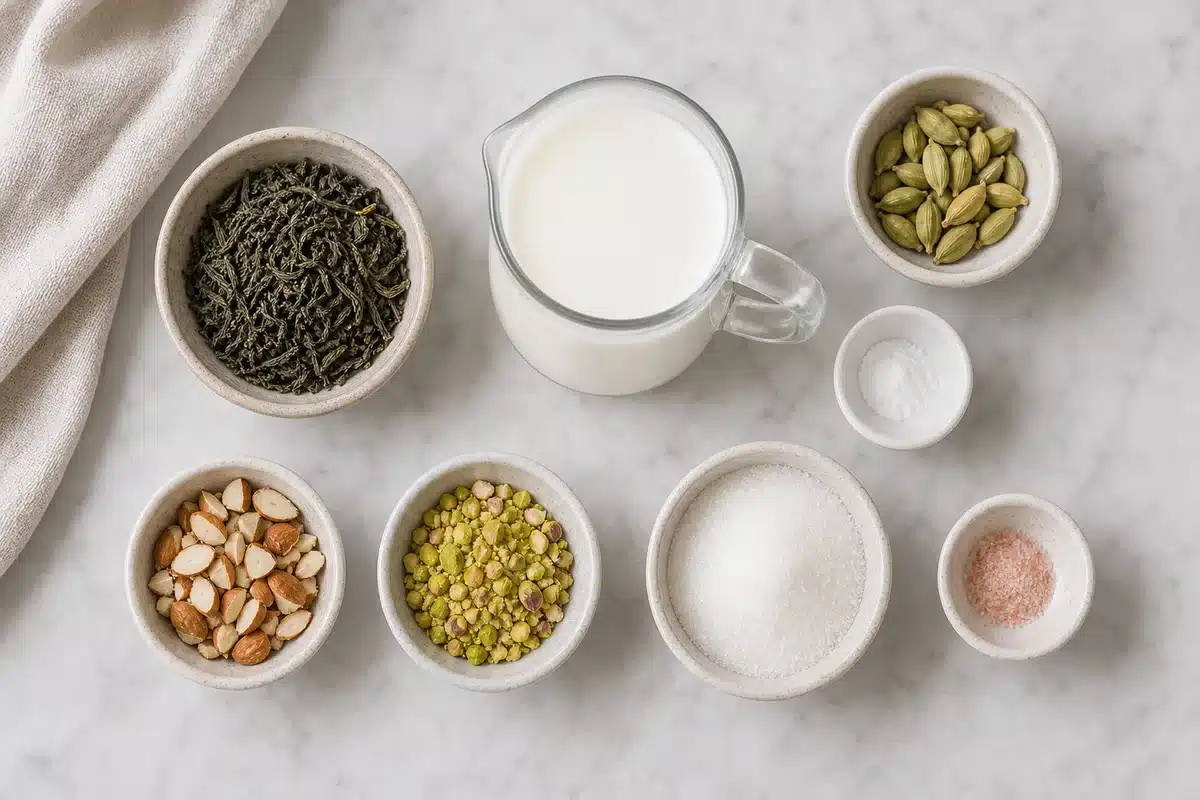
Kashmiri green tea leaves2 tbspGunpowder green teaAuthentic source: South Asian groceries
Cold water (initial)4 cupsNoneMust be cold, not warm
Baking soda1/4 tspNone — essentialThe key to pink color
Cold water (for aeration)1 cupIce waterIce-cold = best results
Whole milk2 cupsHalf-and-halfWhole = richest texture
Green cardamom pods4-51/4 tsp ground cardamomCrushed for max flavor
Star anise (optional)1 pieceSkipAdds licorice depth
Salt OR sugar1/4 tsp / 2 tbspHoney, condensed milkTraditional: salt | Modern: sugar
Crushed pistachios2 tbspAlmonds, walnutsFor garnish
Crushed almonds1 tbspOptionalAdds crunch contrast

Step-by-Step Technique for Perfect Pink Tea

Bring 4 cups of cold water to a boil in a wide saucepan. Add the green tea leaves and baking soda, then reduce heat to medium-low. Simmer uncovered for 15-20 minutes, stirring occasionally. The water will gradually darken to a deep maroon-red color. This long simmer is essential — rushing this step prevents the pink color from developing properly. Be patient; good Kashmiri chai cannot be made in 5 minutes.

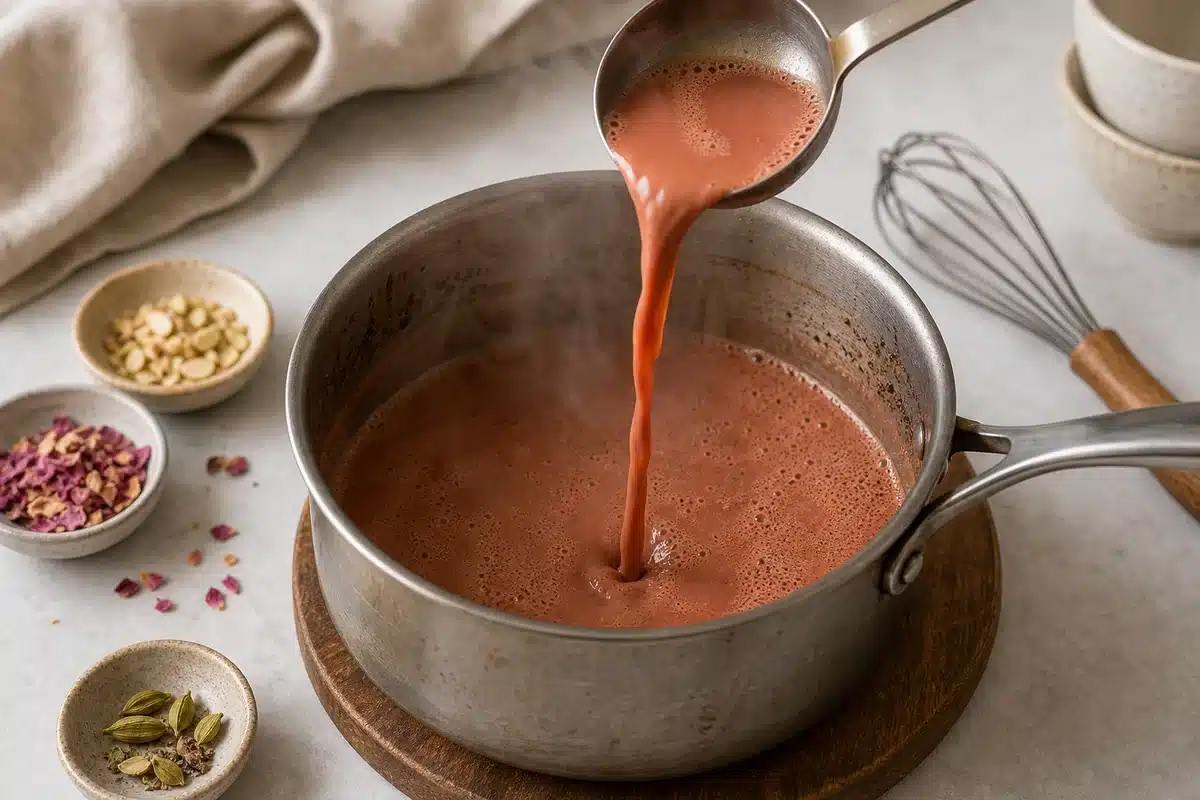
When the liquid has reduced by about half and turned dark red, it’s time for the magic step: aeration. Add 1 cup of ice-cold water all at once and immediately begin pouring the tea from a height of 12-18 inches back into the pot using a ladle, repeating this 15-20 times. The shock of cold water plus oxygen exposure transforms the dark red into vibrant pink. Watch the color change happen — it’s genuinely satisfying to witness.

Strain out the tea leaves and return the pink concentrate to the pot. Add 2 cups of whole milk, the crushed cardamom pods, optional star anise, and salt or sugar. Simmer gently for 5-10 minutes, stirring frequently to prevent the milk from scorching. The final color should be a beautiful creamy pink. Pour into cups, garnish generously with crushed pistachios and almonds, and serve hot. Traditional accompaniments include flaky Kashmiri bread or sweet biscuits.

Common Mistakes That Prevent the Pink Color

MistakeWhy It FailsHow to Fix
Using black teaAlready oxidized — won’t develop pinkUse Kashmiri green or gunpowder green only
Skipping baking sodaNo alkaline reaction = no color shiftAdd 1/4 tsp; do not skip
Adding warm aeration waterNo thermal shock = no color changeUse ice-cold water only
Aerating only 2-3 timesInsufficient oxygen exposurePour from height 15-20 times minimum
Boiling too shortTannins not extracted enoughSimmer 15-20 minutes uncovered
Using a narrow potLimited surface area = less oxidationUse wide saucepan or sauté pan
Adding milk too earlyLocks color before it developsAdd only after aeration complete
Too much baking sodaBitter, soapy aftertasteStick to 1/4 tsp per 4 cups water

Sweet vs Salty: The Two Traditions

StyleRegionSweetener/SaltBest Pairing
Noon Chai (Salty)Kashmir Valley1/4 tsp saltGirda bread, savory snacks
Gulabi Chai (Sweet)Pakistan, North India2 tbsp sugarBiscuits, sweet pastries
Modern SweetenedDiaspora globallyCondensed milk + sugarCookies, cakes
Honey-SweetenedHealth-conscious2 tbsp raw honeyWhole grain crackers
Half-and-HalfAdventurous palatesPinch salt + 1 tbsp sugarBoth savory and sweet
Saffron-InfusedSpecial occasionsSugar + 5 saffron threadsWedding desserts
Iced Pink ChaiModern hot weatherSugar + iceSummer entertaining
Vegan Pink ChaiPlant-based dietsSugar + oat or coconut milkDairy-free crowds

Equipment That Helps Get It Right

ToolWhy It HelpsBudget Pick
Wide saucepan (3-4 qt)Maximum surface for oxidationStainless saucier
Long-handled ladleSafe aeration from heightHeat-resistant stainless
Fine mesh strainerRemoves leaves and podsAny fine sieve
Mortar & pestleCrush cardamom + nuts freshGranite mortar
Measuring spoonsCritical baking soda accuracyStandard set
Heat-safe pitcherFor optional pre-strainPyrex measuring cup
Traditional samovarAuthentic serving vesselHeated thermal carafe
Small ceramic cupsAuthentic presentationEspresso cups work

5 Modern Variations to Try

1. Iced Pink Chai Latte: Make concentrated chai (use only 1 cup milk), cool completely, then serve over ice with extra cold milk and a drizzle of honey for summer refreshment.

2. Saffron Rose Pink Chai: Add 5-6 saffron threads steeped in 2 tbsp warm milk plus 1 tsp rose water during the milk simmer for floral elegance.

3. Vegan Coconut Pink Chai: Replace dairy with full-fat coconut milk for a richer, slightly tropical version that maintains the signature pink color beautifully.

4. Pink Chai Concentrate: Make double-strength concentrate, cool, and refrigerate up to 5 days. Mix 1:1 with hot milk for instant Kashmiri chai any morning.

5. Pink Chai Affogato: Pour hot Kashmiri chai over a scoop of vanilla ice cream and top with crushed pistachios for an Indo-Italian fusion dessert.

Cultural Significance and History

Kashmiri chai dates back at least 500 years and possibly much longer. The exact origin is debated — some historians attribute it to Central Asian Turkic traders who brought tea-brewing techniques across the Silk Road, while others credit Tibetan and Mongolian influences that crossed the Himalayas with monks and merchants. What’s certain is that by the 15th century, Noon Chai was firmly established as a daily ritual throughout the Kashmir Valley, served from elaborate copper samovars in homes, mosques, and bazaars.

During Mughal rule (1500s-1700s), Kashmiri chai gained royal patronage. Emperors like Akbar and Jahangir reportedly loved the drink during their summer retreats to Kashmir, helping spread its fame throughout the Indian subcontinent. The sweetened version (Gulabi Chai) developed in Lahore and other Punjabi cities, where local tastes preferred sugar over salt. Both versions remain culturally important today, with families across South Asia and the diaspora preserving their preferred regional traditions.

In modern times, Kashmiri chai has experienced a global renaissance through Pakistani and Indian wedding catering, Instagram food culture, and South Asian diaspora communities introducing the tea to broader audiences. It’s now served in trendy cafés from London to New York, often labeled simply as “Pink Tea.” The drink carries deep emotional weight for South Asian families — many people associate the smell of brewing pink chai with grandmothers, winter mornings, and Eid celebrations.

Pairing Pink Chai With Sweet & Savory Foods

Traditional Kashmiri pairings include flaky girda bread, kulchas (sweet semolina cookies), and savory roghan josh leftovers from the previous evening’s meal. Modern pairings work beautifully with cottage cheese pancakes, 3-ingredient banana pancakes, or simple buttered toast with jam. The creamy, slightly spiced tea works equally well with breakfast and afternoon snacks.

For dessert pairings, the floral notes of Kashmiri chai complement classic lemon bars, dark chocolate almond bark, and favorite carrot cake beautifully. Try with no-bake chocolate protein bars, individual apple crumbles, or classic banana pudding for elegant high-tea presentations. Health-focused pairings include no-bake peanut butter energy bites and cottage cheese chocolate mousse.

Storage & Make-Ahead Strategies

Kashmiri chai is best served immediately after brewing for maximum flavor and aroma. However, you can make the pink concentrate up to 5 days in advance and refrigerate in an airtight glass jar. To serve, simply heat 1/2 cup concentrate with 1/2 cup whole milk and your preferred sweetener or salt. The concentrate keeps its color beautifully when properly sealed.

For larger gatherings, scale the recipe by 4x or 8x and brew in a large stockpot. Keep finished chai warm in a thermal carafe or slow cooker on the warm setting for up to 2 hours. Avoid reheating multiple times — each reheat dulls the color and diminishes the cardamom aroma. If freezing leftover concentrate, portion into ice cube trays; one cube equals roughly 2 tablespoons, perfect for single-cup servings later.

Sourcing Authentic Kashmiri Tea Leaves

The single most important ingredient is the tea itself. Authentic Kashmiri green tea, sometimes labeled “Kahwa tea” or “Kashmiri Sabz Chai,” comes from specific tea gardens in the Kashmir Valley and adjacent Himalayan regions. The leaves are processed differently from standard Chinese or Japanese green tea — they’re slightly more oxidized than typical sencha but far less than black tea, creating the perfect chemistry for the pink-developing reaction.

Online retailers specializing in South Asian groceries (Patel Brothers, Subzi Mandi, House of Spices) carry authentic Kashmiri tea. Brand names to look for include Tapal Danedar Green Tea (Pakistan), Lipton Kashmir Tea, and Wagh Bakri Premium Green. Each delivers reliable pink color development. If genuine Kashmiri tea is unavailable, Chinese gunpowder green tea is the closest substitute and works admirably for the chemistry, though the authentic flavor will be slightly different from real Kashmiri leaves.

Avoid Japanese green teas (sencha, matcha, gyokuro) for this recipe — their processing creates different catechin profiles that don’t develop the pink color reliably. Standard supermarket green tea bags also struggle because they’re often blended with multiple varieties and contain dust rather than whole leaves. The investment in proper Kashmiri or gunpowder green tea (typically $8-15 for a generous quantity that lasts months) pays off enormously in consistent results.

The Pakistani Wedding Tradition

Pink chai holds a place of unique honor in Pakistani wedding culture. At traditional weddings throughout Punjab, Sindh, and Karachi, the morning Mehndi ceremony often begins with elaborate samovars of pink chai served alongside breakfast. The bride’s family demonstrates hospitality and abundance through these massive batches, sometimes serving hundreds of guests from copper or silver samovars passed down through generations.

The chai at weddings often features special touches not seen in everyday preparation: extra cardamom, a pinch of saffron, sometimes rose petals scattered on top, and always generous nut garnish — pistachios, almonds, and occasionally crushed walnuts. The pink color symbolizes celebration, romance, and the rosy future the couple is meant to enjoy together. Many South Asian families across the diaspora maintain this tradition even at modern Western-style weddings, hiring chai-walas (specialized tea makers) to brew authentic pink chai for guests.

For Western families hosting South Asian guests or celebrating multicultural events, serving authentic Kashmiri pink chai shows genuine cultural respect and effort. Even simple gatherings benefit from the visual drama of the rose-pink tea served in clear glass cups, garnished with green pistachios and brown almonds — a presentation that consistently impresses guests who have never experienced Pink Chai before.

Health Benefits of Kashmiri Pink Chai

Beyond its cultural and aesthetic appeal, Kashmiri chai offers genuine health benefits worth noting. The base of green tea provides catechins (especially EGCG), which are powerful antioxidants linked to cardiovascular health, improved metabolism, and reduced inflammation. The long simmering process actually concentrates these beneficial compounds rather than destroying them, contrary to common assumptions about overheating green tea.

Cardamom — the dominant spice in pink chai — has been used in traditional medicine for thousands of years for digestive support, fresh breath, and respiratory health. Modern research confirms cardamom’s antibacterial properties and its ability to support healthy digestion after heavy meals. The ceremonial use of pink chai after rich Kashmiri or Mughlai feasts is no accident; the spices genuinely help digest fatty foods like roghan josh or biryani.

The crushed pistachios and almonds garnish add modest but meaningful protein, healthy monounsaturated fats, vitamin E, and minerals. A typical serving provides about 50 calories of nut nutrition, contributing to satiety and balanced nutrition. The whole milk base adds calcium, vitamin D, and protein. Together, pink chai functions as a small balanced meal — perhaps explaining why generations of Kashmiris have started winter mornings with this drink alongside flatbread for centuries.

Final Tips for Pink Chai Perfection

Make this recipe at least three times before judging your skill — pink chai has a learning curve, and even experienced cooks need a few attempts to dial in the exact simmer time, aeration count, and sweetness ratio that works in their kitchen with their water and equipment. Each attempt teaches you something specific about what your tea wants. By the fourth or fifth batch, you will produce consistently beautiful pink chai that rivals any Kashmiri household.

Document what works for you: exact simmer minutes, number of aerations, milk-to-concentrate ratio, and sweetener preference. Pin these numbers to your fridge for repeatable success. Pink chai becomes a treasured family ritual once you nail the technique, and the visual drama of that perfect rose-pink color appearing through aeration never stops feeling magical no matter how many times you witness the transformation.

Whether you serve pink chai for an intimate breakfast for two, an elaborate Pakistani-style wedding event, or a casual afternoon visit with friends, this authentic Kashmiri recipe never fails to delight everyone present. The combination of cardamom, slowly developed pink color, creamy milk, and crunchy nut garnish creates a sensory experience that is genuinely unlike any other tea on Earth worldwide forever.

Frequently Asked Questions About Kashmiri Pink Chai

Why isn’t my chai turning pink?

Most common causes: not enough simmering time (needs 15-20 min), insufficient aeration (pour from height 15+ times), wrong tea type (must be green, not black), or skipping baking soda. All four steps are essential — you cannot shortcut any of them.

Can I use regular green tea bags?

Standard sencha or supermarket green tea bags work poorly because they’re processed differently. Authentic Kashmiri tea or Chinese gunpowder green tea both give excellent results. Look for these at South Asian or Chinese groceries.

Is the salty version really better?

Different rather than better — both are equally authentic. Salty Noon Chai is the original Kashmir Valley tradition. Sweet Gulabi Chai is the popular Pakistani/Indian adaptation. Try both and decide your preference.

Why does my chai taste bitter?

Either too much baking soda (use exactly 1/4 tsp), over-simmered the green tea (don’t exceed 25 min), or used water that was hard. Try filtered water and exact measurements next time.

Can I make this without dairy?

Absolutely — full-fat coconut milk, oat milk, or almond milk all work. Coconut milk produces the creamiest texture; oat milk produces the most neutral flavor that lets the cardamom shine.

What’s the best way to crush the cardamom?

Use a mortar and pestle to crush whole green pods until they crack open and release seeds. The seeds carry the strongest flavor. Pre-ground cardamom loses aroma quickly and tastes muted.

How do I prevent the milk from curdling?

Add milk only after the pink concentrate is strained, and keep heat at medium-low rather than high. The acidic baking soda residue can curdle milk if combined too aggressively.

Can I add other spices?

Authentic Kashmiri chai is minimal — cardamom is essential, star anise optional. Adding cloves, cinnamon, or ginger turns it into masala chai (different drink entirely). Stick to tradition for first attempts.

How long does the pink concentrate last in the fridge?

Up to 5 days in an airtight glass container. The color remains vibrant; the flavor stays bright. Reheat gently with milk to reconstitute the full chai.

Why do I need to pour from a height during aeration?

The pouring action incorporates oxygen into the liquid, which drives the chemical reaction that develops the pink color. Without vigorous aeration, the color stays dark red rather than transitioning to pink.

Frequently Asked Questions

Why is Kashmiri chai pink?

The pink hue comes from a chemical reaction: green tea leaves boiled with baking soda, then shocked with cold water, oxidize in a way that turns milk pink when added.

Can I make Kashmiri chai without special tea leaves?

Authentic versions use Kashmiri green tea (gunpowder tea works as substitute). Avoid Japanese matcha or sencha—flavor profile is wrong. Mamri Kashmiri tea is ideal.

Is Kashmiri chai sweet or salty?

Traditional Noon Chai is salty—’noon’ means salt in Kashmiri. Modern restaurant versions are sweetened with sugar or condensed milk. Choose your preferred style.

How long does it take to make Kashmiri chai?

About 30-40 minutes done right. The boiling, aerating (pounding or whisking), and ice-shock stages each take 10 minutes. Shortcuts compromise the signature color.

What does Kashmiri chai taste like?

Rich, nutty, lightly spiced, and creamy—closer to Turkish salep or Indian masala chai than English tea. Cardamom and cinnamon dominate; pistachios add texture.

Chef Anna

Written by Chef Anna

I'm Anna - a Le Cordon Bleu-trained chef, recipe developer, and the voice behind Chef Johns Gourmet. After a decade in professional kitchens, I now spend my mornings testing recipes and my afternoons writing them down so you can make them perfectly in your own kitchen. Every one of the 1,100+ recipes on this site has been personally cooked, tasted, and refined. I write like I'm standing next to you, walking you through every step. Simple recipes. Bold flavors. Made for real kitchens.

Leave a Comment