
Roast Lamb Leg with Gravy: Herb-Crusted, Pink Center, and Rich Pan Gravy
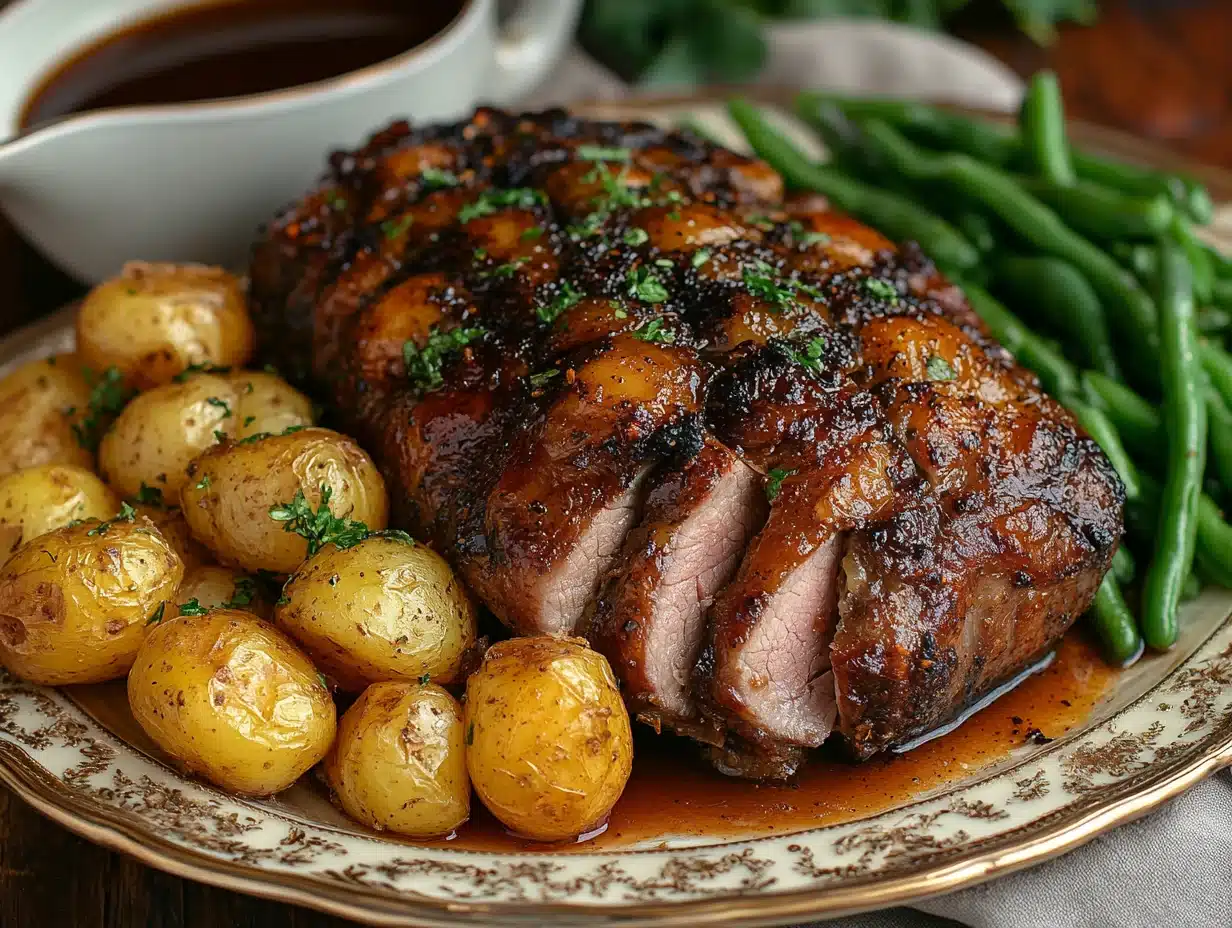
A perfect roast lamb leg with gravy is the kind of centerpiece that makes an entire table go quiet on the first bite — herb-crusted exterior shattering into deeply savory meat that’s still blushing pink in the center, all served alongside a rich, silky pan gravy made from the drippings. This is the roast I serve at Easter, dinner parties, and any Sunday when I want something spectacular without spending all day in the kitchen.
The technique is surprisingly simple: stud the lamb with garlic and rosemary, sear it for a deep crust, then roast at moderate heat until the internal temperature hits exactly 135°F for medium-rare. The gravy builds itself — the drippings, aromatic vegetables, and a splash of red wine create a sauce that tastes like it simmered for hours. The rest period is non-negotiable: 20 minutes minimum so the juices redistribute. Cut too early and you lose all that moisture to the cutting board.
Key Takeaways
- Bone-in leg preferred: Bone insulates meat and adds flavor to gravy
- Stud with garlic and rosemary: Cut slits and push aromatics deep inside
- Sear first: High-heat sear creates the crust that defines great roast lamb
- 325°F roast: Moderate heat for even cooking — about 20 min per pound
- 135°F for medium-rare: Use a probe thermometer — don’t guess
- Rest 20 minutes: This redistributes juices for perfectly moist slices
- Gravy from drippings: Pan drippings + red wine + stock = incredible gravy
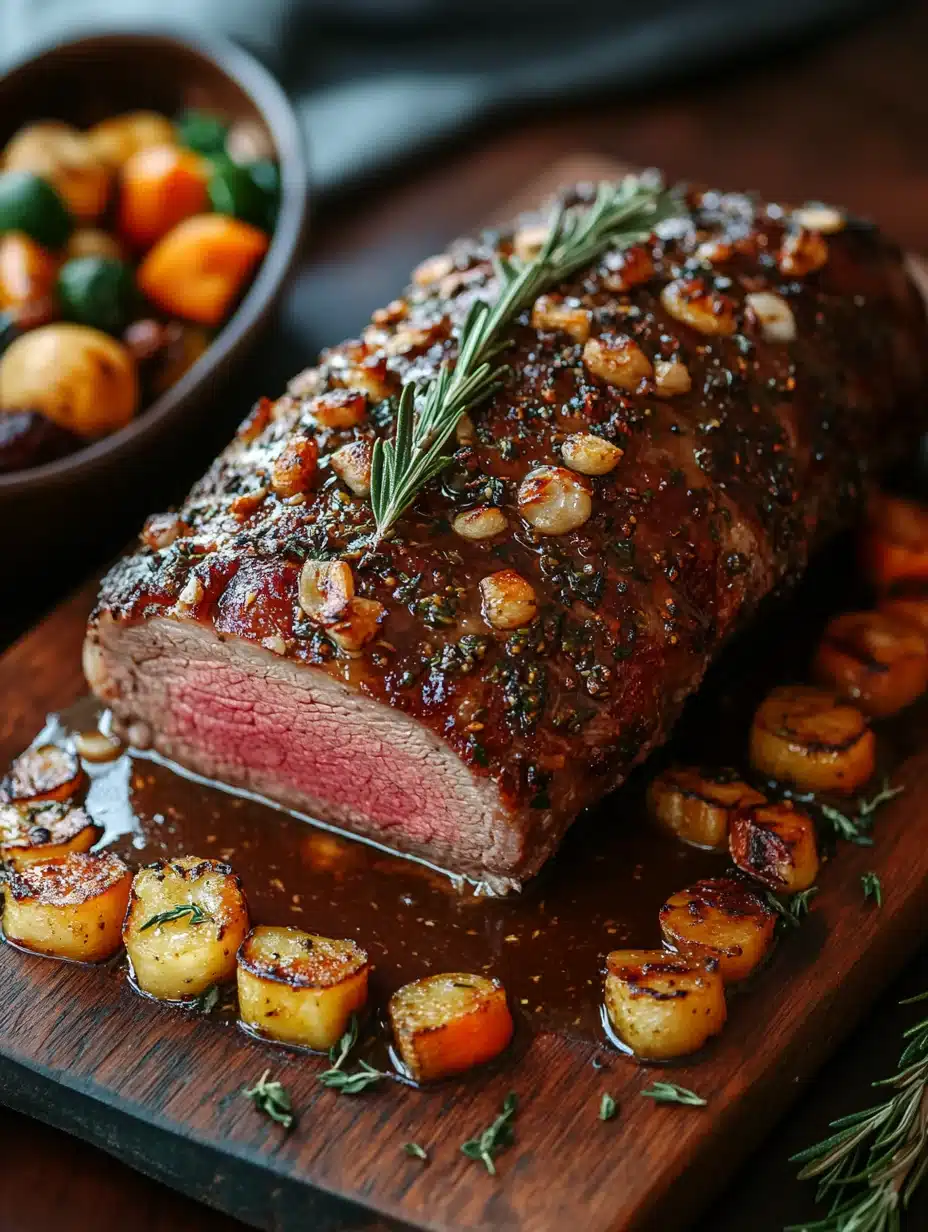
Why Bone-In Lamb Leg Produces Better Results
Boneless lamb leg is convenient for slicing, but bone-in leg produces measurably juicier, more flavorful meat. The bone acts as a heat conductor that cooks the meat more evenly from the inside, and the marrow and connective tissue around the bone melt into the drippings — creating a richer gravy base than boneless could ever produce. Bone-in also holds its shape better during roasting, preventing the slab of meat from splaying out and cooking unevenly.
The knuckle end of the bone makes a natural handle for carving, and the shank end has some of the most tender, succulent meat on the entire animal. For formal presentations, ask your butcher to French the bone — this means trimming the exposed bone clean so it looks elegant at the table. The same roasting principles apply to our slow cooker chicken shawarma, where low-and-slow heat does all the work.
Roast Lamb Leg Nutrition Facts
| Nutrient | Per Serving (6 oz) | Per 6-lb Leg | % Daily Value |
|---|---|---|---|
| Calories | 380 kcal | 3,040 kcal | 19% |
| Protein | 42g | 336g | 84% |
| Total Fat | 22g | 176g | 28% |
| Saturated Fat | 9g | 72g | 45% |
| Carbohydrates | 0g | 0g | 0% |
| Iron | 3.5mg | 28mg | 19% |
| Zinc | 7mg | 56mg | 64% |
| B12 | 3.2μg | 25.6μg | 133% |
Essential Ingredients for Roast Lamb Leg
| Ingredient | Amount | Purpose | Substitution |
|---|---|---|---|
| Bone-in lamb leg | 5-6 lbs | Main roast | Boneless (reduce cook time 25%) |
| Garlic cloves | 8-10 | Studded into meat, aromatic | — |
| Fresh rosemary | 4 sprigs (leaves stripped) | Classic lamb herb | Dried rosemary (2 tbsp) |
| Fresh thyme | 4 sprigs | Herbal depth | 1 tsp dried thyme |
| Olive oil | 3 tbsp | Searing fat, herb paste binder | Avocado oil |
| Dijon mustard | 2 tbsp | Crust binder, tangy flavor | Whole grain mustard |
| Salt | 2 tsp | Seasoning | — |
| Black pepper | 1 tsp | Heat, crust | — |
| Onion | 1 large, quartered | Roasting bed, gravy base | Shallots |
| Carrots | 2, cut into chunks | Roasting bed, sweetness | Celery |
| Red wine | 1 cup | Deglaze, gravy depth | Beef stock (for alcohol-free) |
| Beef or lamb stock | 2 cups | Gravy liquid | Chicken stock |
| Flour | 2 tbsp | Gravy thickener | Cornstarch (1 tbsp) |
| Butter | 2 tbsp | Gravy richness | — |
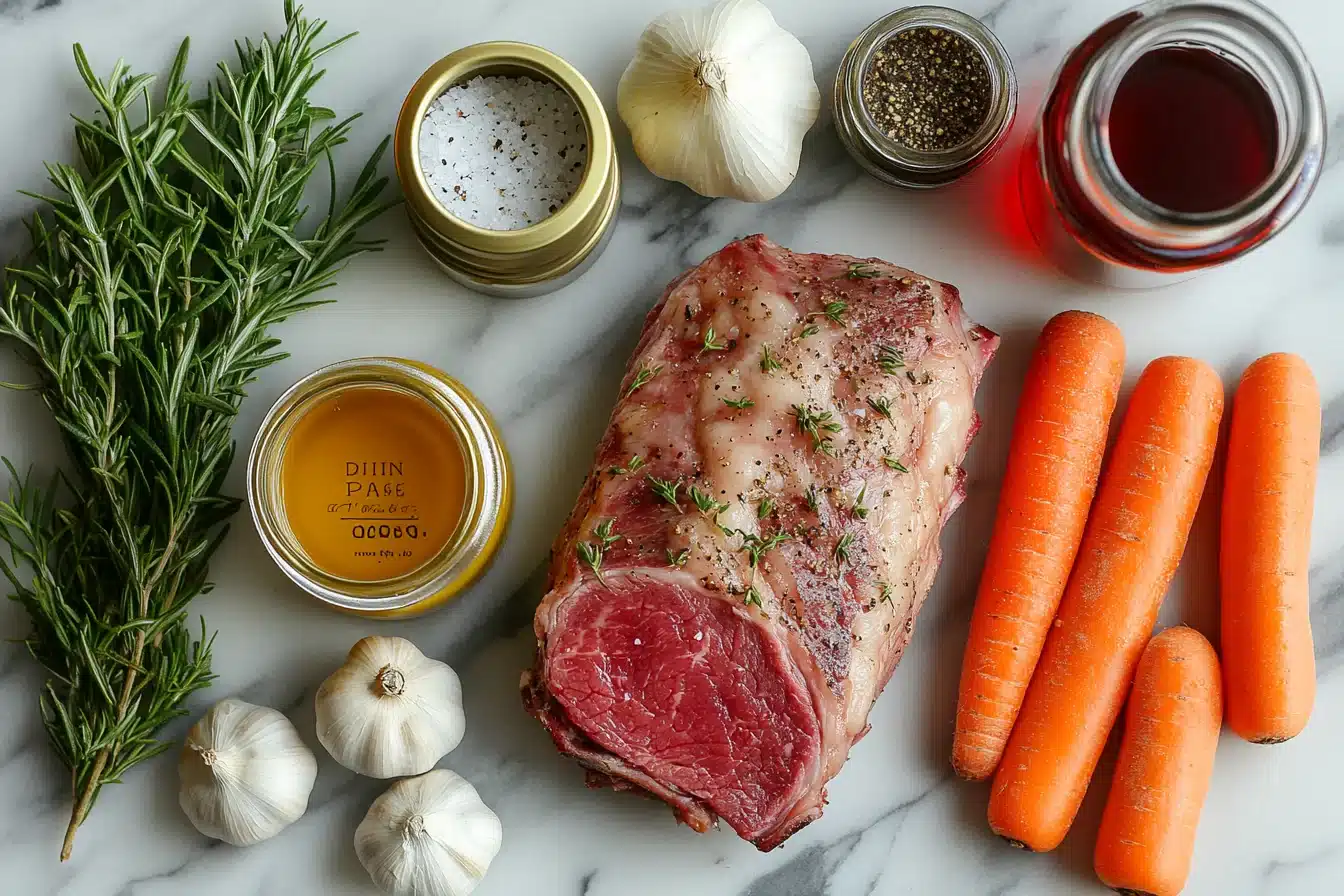
Step-by-Step: How to Roast a Lamb Leg with Gravy
Step 1: Prepare the Lamb (15 Minutes)
Remove lamb from fridge 45 minutes before cooking — room temperature meat cooks more evenly. Make 15-20 deep slits all over the surface with a sharp paring knife. Cut garlic cloves in half and push a piece into each slit along with a rosemary sprig or leaves. Mix remaining rosemary with olive oil, Dijon mustard, salt, and pepper to form a paste. Rub this all over the lamb, covering every surface.
Step 2: Sear the Lamb (8 Minutes)
Preheat oven to 325°F. Heat a large roasting pan or Dutch oven on the stovetop over high heat. Sear the lamb on all sides for 2 minutes per side until deeply browned. The sear creates a crust that locks in flavor and gives the finished roast its signature look. Remove lamb temporarily and scatter onion and carrots in the pan as a roasting bed.
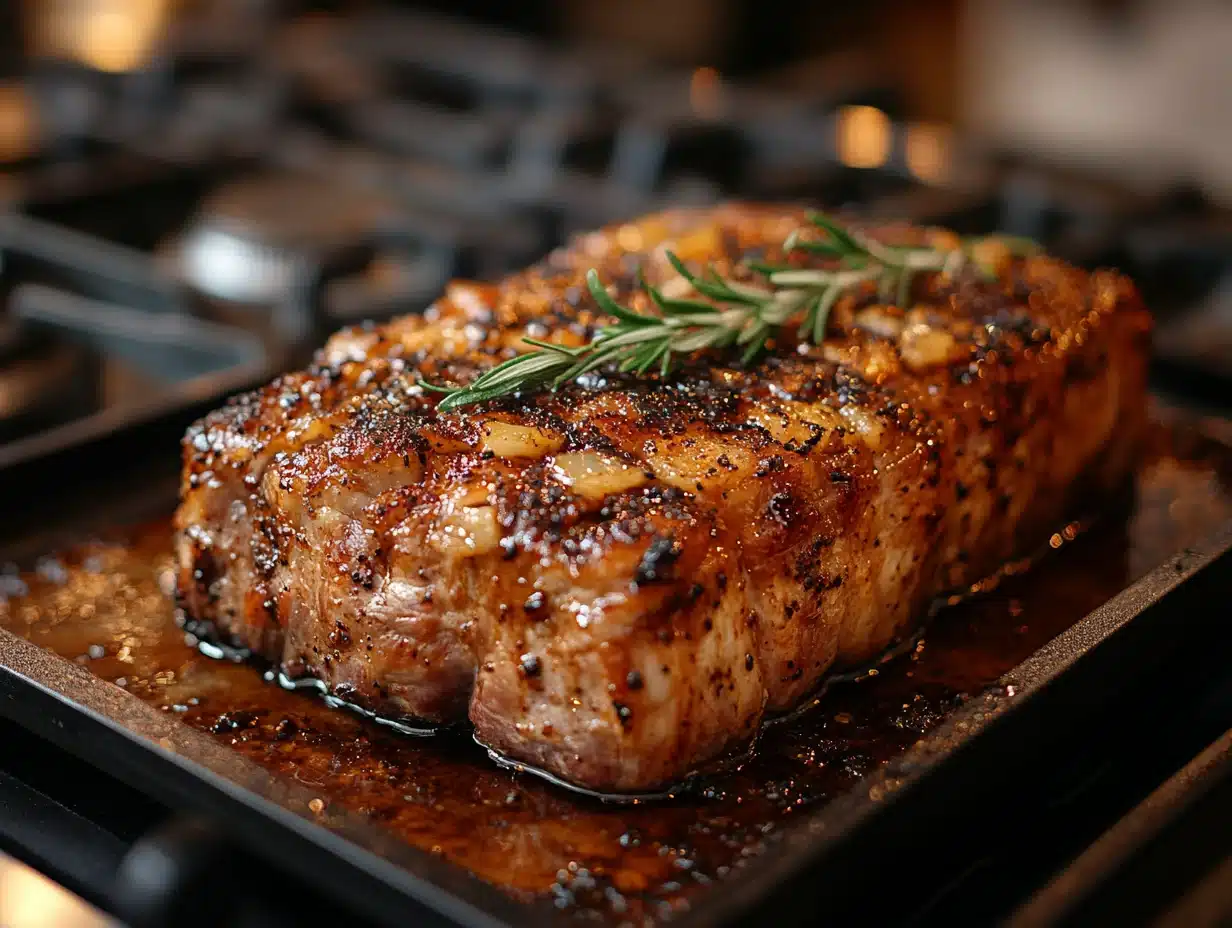
Step 3: Roast Low and Slow (1.5-2 Hours)
Place the lamb on top of the vegetables. Insert a probe thermometer into the thickest part of the meat, away from the bone. Roast at 325°F for approximately 20 minutes per pound — a 6-pound leg takes about 2 hours. Baste with pan juices every 30 minutes. The kitchen will smell extraordinary after the first hour.
Step 4: Rest the Lamb (20 Minutes)
Remove lamb when internal temperature reaches 135°F for medium-rare (it will rise 5-10°F during resting). Transfer to a cutting board and tent loosely with foil. Rest for a minimum of 20 minutes — this is non-negotiable. Cutting too early releases all the juices onto the board instead of keeping them in the meat. Save the roasting pan with all the drippings for gravy.
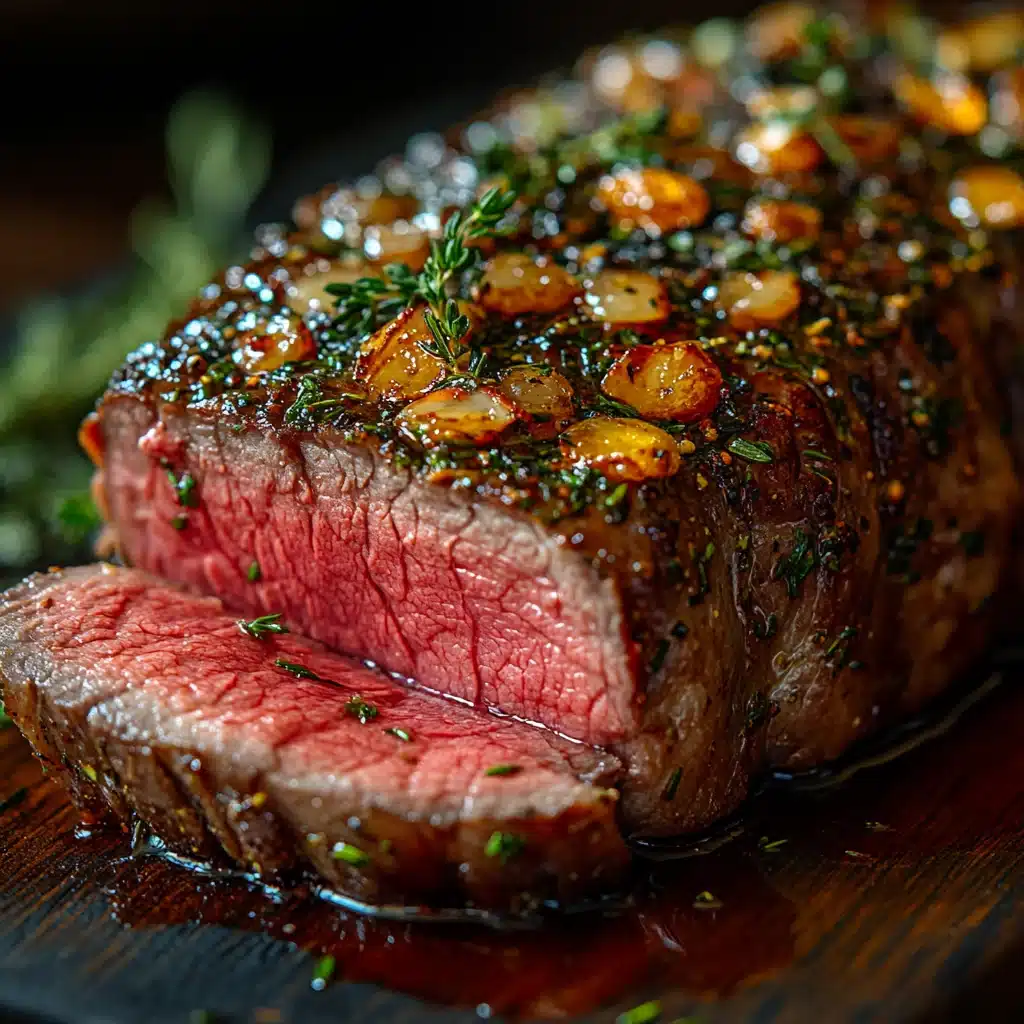
Step 5: Make the Pan Gravy (10 Minutes)
Place the roasting pan on the stovetop over medium heat. Remove vegetables (or leave for rustic gravy). Pour in red wine and scrape up all the browned bits — the fond. Simmer 2 minutes until wine reduces by half. Whisk in flour and cook 1 minute, then gradually add stock while whisking constantly. Simmer 5-7 minutes until the gravy thickens enough to coat the back of a spoon. Finish with butter, season with salt and pepper. Strain for smooth gravy or leave chunky.
Lamb Doneness Temperature Guide
| Doneness | Remove at | After Resting | Appearance | Recommended? |
|---|---|---|---|---|
| Rare | 120°F | 125-130°F | Cool red center | For experienced lamb lovers |
| Medium-Rare (Best) | 135°F | 140-145°F | Warm pink center | Yes — ideal for lamb leg |
| Medium | 145°F | 150-155°F | Hot pink center | Good, still juicy |
| Medium-Well | 155°F | 160-165°F | Slight pink | Starting to dry |
| Well-Done | 165°F+ | 170°F+ | No pink | Not recommended |
5 Herb and Spice Rubs for Lamb Leg
| Rub | Ingredients | Flavor Profile |
|---|---|---|
| Classic (This Recipe) | Rosemary, garlic, Dijon, thyme | French-Mediterranean |
| Moroccan | Cumin, coriander, cinnamon, ginger | Warm, aromatic |
| Greek | Oregano, lemon zest, garlic, olive oil | Bright, herbal |
| Indian | Garam masala, yogurt, turmeric, chili | Rich, complex |
| Mint & Garlic | Fresh mint, garlic, olive oil, salt | Classic British |
How to Store Roast Lamb Leftovers
| Method | Duration | Container | Reheating |
|---|---|---|---|
| Refrigerator (sliced) | 4 days | Airtight with gravy poured over | Microwave 2 min or warm in gravy on stovetop |
| Freezer (sliced) | 3 months | Vacuum sealed or freezer bag flat | Thaw overnight, reheat in gravy |
| Gravy only | 5 days fridge / 3 months freezer | Glass jar or container | Stovetop, whisk while warming |
Expert Tips for Perfect Roast Lamb
Bring Lamb to Room Temperature
Cold meat from the fridge cooks unevenly — the outside overcooks before the center reaches temperature. Forty-five minutes at room temperature is enough for a 6-pound leg. This single step can mean the difference between a uniformly pink roast and one that’s grey on the outside and raw in the middle.
Use a Probe Thermometer — Never Guess
Lamb leg varies in thickness, bone density, and fat cap. The only reliable way to nail the doneness is an instant-read or leave-in probe thermometer. Insert it into the thickest section, away from bone (bone conducts heat and gives false high readings). Pull at 135°F and trust the resting process.
Make Gravy While the Meat Rests
The 20-minute resting window is perfect for making gravy — it keeps you from cutting the meat too early. Focus on the gravy during the rest and you’ll have both components ready at the same time. This is restaurant timing at home.
Roast Lamb Leg with Gravy
- Total Time: 2 hours 50 minutes
- Yield: 8 servings 1x
- Diet: Gluten-Free
Description
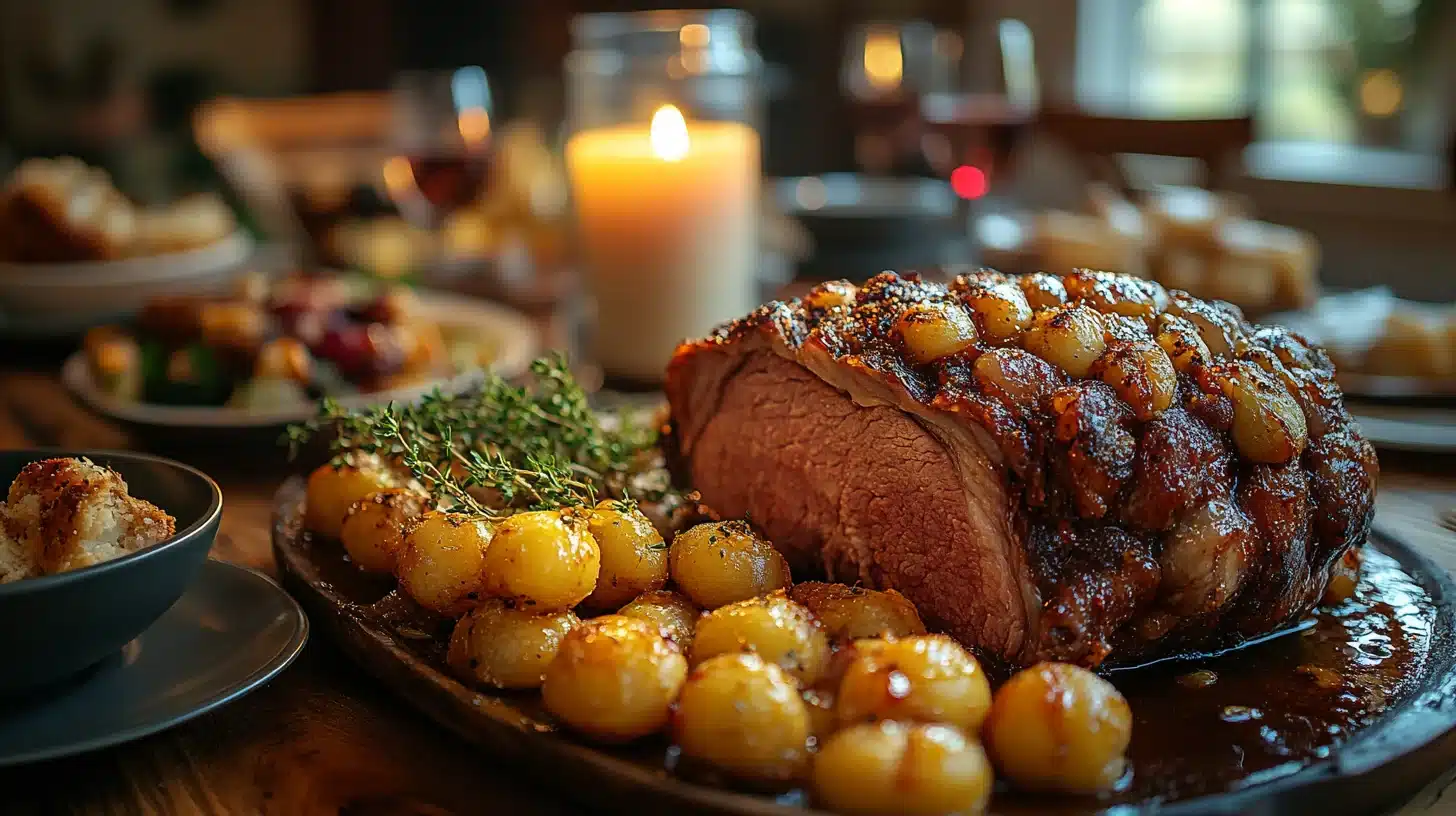
Classic roast lamb leg studded with garlic and rosemary, slow-roasted to perfection with rich pan gravy. The ultimate Sunday roast.
Ingredients
- 5–6 lbs Bone-in lamb leg
- 8–10 Garlic cloves
- 4 sprigs (leaves stripped) Fresh rosemary
- 4 sprigs Fresh thyme
- 3 tbsp Olive oil
- 2 tbsp Dijon mustard
- 2 tsp Salt
- 1 tsp Black pepper
- 1 large, quartered Onion
- 2, cut into chunks Carrots
- 1 cup Red wine
- 2 cups Beef or lamb stock
- 2 tbsp Flour
- 2 tbsp Butter
Instructions
- Prepare the Lamb (15 Minutes) — Remove lamb from fridge 45 minutes before cooking — room temperature meat cooks more evenly. Make 15-20 deep slits all over the surface with a sharp paring knife. Cut garlic cloves in half and push a piece into each slit along with a rosemary sprig or leaves. Mix remaining rosemary with olive oil, Dijon mustard, salt, and pepper to form a paste. Rub this all over the lamb, covering every surface.
- Sear the Lamb (8 Minutes) — Preheat oven to 325°F. Heat a large roasting pan or Dutch oven on the stovetop over high heat. Sear the lamb on all sides for 2 minutes per side until deeply browned. The sear creates a crust that locks in flavor and gives the finished roast its signature look. Remove lamb temporarily and scatter onion and carrots in the pan as a roasting bed.
- Roast Low and Slow (1.5-2 Hours) — Place the lamb on top of the vegetables. Insert a probe thermometer into the thickest part of the meat, away from the bone. Roast at 325°F for approximately 20 minutes per pound — a 6-pound leg takes about 2 hours. Baste with pan juices every 30 minutes. The kitchen will smell extraordinary after the first hour.
- Rest the Lamb (20 Minutes) — Remove lamb when internal temperature reaches 135°F for medium-rare (it will rise 5-10°F during resting). Transfer to a cutting board and tent loosely with foil. Rest for a minimum of 20 minutes — this is non-negotiable. Cutting too early releases all the juices onto the board instead of keeping them in the meat. Save the roasting pan with all the drippings for gravy.
- Make the Pan Gravy (10 Minutes) — Place the roasting pan on the stovetop over medium heat. Remove vegetables (or leave for rustic gravy). Pour in red wine and scrape up all the browned bits — the fond. Simmer 2 minutes until wine reduces by half. Whisk in flour and cook 1 minute, then gradually add stock while whisking constantly. Simmer 5-7 minutes until the gravy thickens enough to coat the back of a spoon. Finish with butter, season with salt and pepper. Strain for smooth gravy or leave chunky.
- Prep Time: 20 minutes
- Cook Time: 2 hours 30 minutes
- Category: Main Course
- Method: Roasting
- Cuisine: French, British
Nutrition
- Serving Size: 1 serving
- Calories: 380
- Fat: 22g
- Saturated Fat: 9g
- Carbohydrates: 0g
- Protein: 42g
Frequently Asked Questions
How long does it take to roast a lamb leg per pound?
At 325°F, plan approximately 20 minutes per pound for medium-rare. A 5-pound leg is about 1 hour 40 minutes; a 7-pound leg is about 2 hours 20 minutes. Always use a thermometer — time is a guide, temperature is the truth.
Should I cover the lamb while roasting?
No — roasting uncovered is essential for the crust to develop. Covering creates steam, which softens the crust and prevents browning. If the top browns too quickly before the interior is done, tent loosely with foil for the last 30 minutes only.
What sides go best with roast lamb?
Roasted potatoes, mint sauce, and green beans are the classic trio. Creamy mashed potatoes absorb the gravy beautifully. Roasted root vegetables (parsnips, carrots, turnips) are also excellent — they can roast alongside the lamb if added in the last 45 minutes.
Can I make the gravy ahead of time?
You can make a stock-based gravy ahead, but the best gravy uses the actual roast drippings. Make the gravy during the 20-minute rest period — it only takes 10 minutes and the fresh drippings give it incomparable flavor.
Why does my lamb taste gamey?
Gaminess comes from the fat, not the meat. Trim excess external fat to ¼ inch — enough for flavor and moisture but not so much that the gamey compounds dominate. Younger lamb (under 1 year) is also milder. The garlic and rosemary rub in this recipe also masks any residual gaminess.
Can I use this method for boneless lamb leg?
Yes — reduce the cooking time by about 25% since there’s no bone to conduct heat. A 5-pound boneless leg at 325°F takes about 1 hour 15 minutes. Tie it with kitchen string for even shape so it cooks uniformly.
Recipe by Anna — Le Cordon Bleu-trained chef and recipe developer at Chef Johns Gourmet. This roast lamb has been tested across eight roasts to perfect the temperature timing and gravy consistency.
Written by Chef Anna
I'm Anna - a Le Cordon Bleu-trained chef, recipe developer, and the voice behind Chef Johns Gourmet. After a decade in professional kitchens, I now spend my mornings testing recipes and my afternoons writing them down so you can make them perfectly in your own kitchen. Every one of the 1,100+ recipes on this site has been personally cooked, tasted, and refined. I write like I'm standing next to you, walking you through every step. Simple recipes. Bold flavors. Made for real kitchens.