
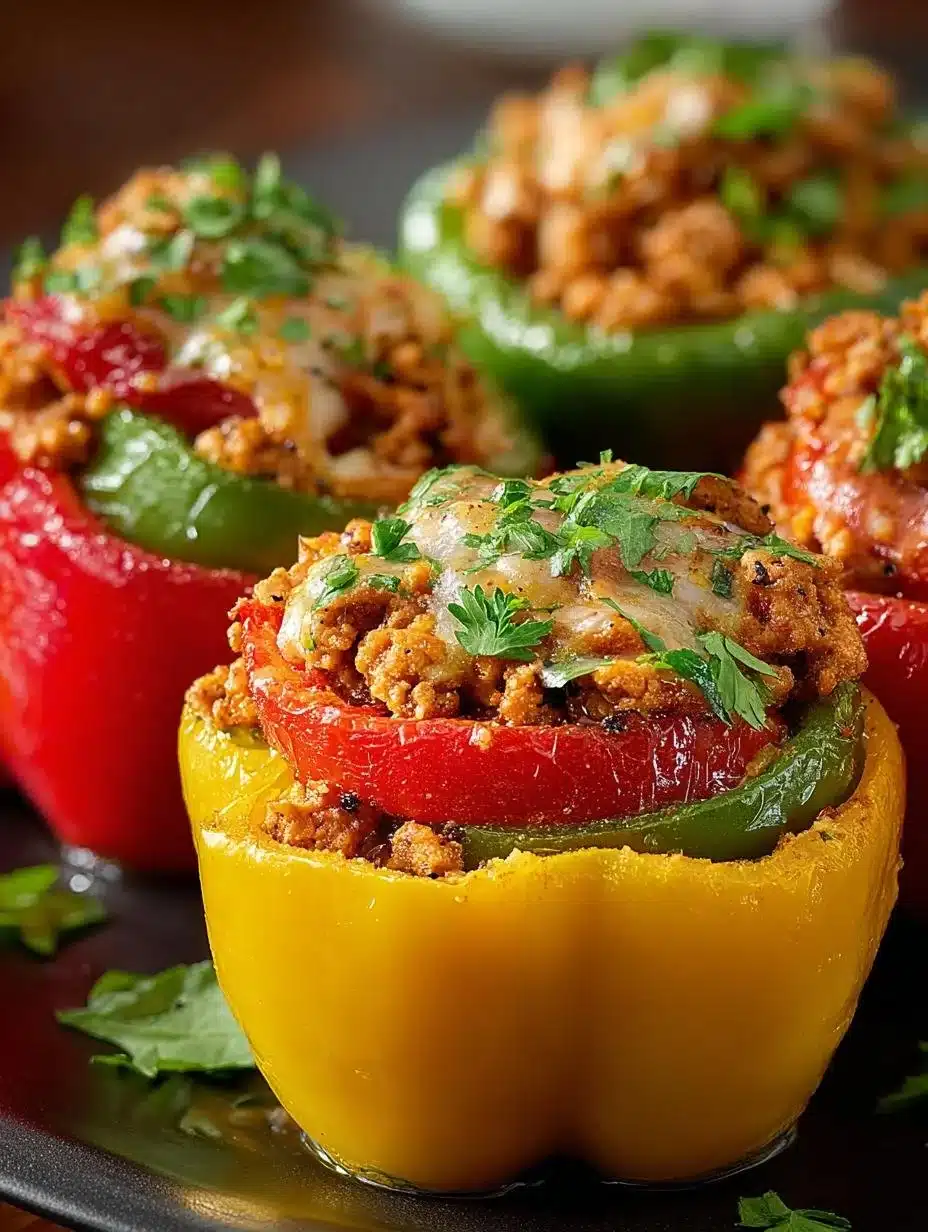
Traditional Savory Ground Turkey Peppers guide
A short hook: stuffed peppers are a humble weeknight champion — and when made with ground turkey, they become lean, versatile, and deeply comforting without losing any savory soul. This Traditional Savory Ground Turkey Peppers guide will take you from a basic understanding to confident, creative execution.
What you’ll gain: a clear history of the dish, the culinary logic behind each ingredient, a full beginner-to-advanced recipe progression, shopping and tool checklists, troubleshooting, useful variations, and a quick reference you can bookmark and return to. By the end you’ll know not only how to make Classic Savory Ground Turkey Peppers, but why each step matters and how to adapt the method to your pantry, skill level, and tastes.
For a related twist on ground turkey mains, consider trying a hearty pairing like this ground turkey meatloaf inspiration: ground turkey meatloaf and stuffing. It’s a useful cross-reference when you want to repurpose flavors.
Background & Context
Understanding where a recipe sits culturally and historically makes it easier to adapt and to appreciate subtle choices.
Traditional stuffed peppers are a cross-cultural concept: many cuisines have a version — peppers filled with grains, meats, cheeses, or vegetables. The specific filling of ground meat with rice or breadcrumbs, aromatic vegetables, and tomato sauce evolved as a practical, economical way to feed families while using seasonal vegetables.
If you’re tracing the Classic Savory Ground Turkey Peppers history, you’ll find parallels in Eastern European dolmas, Mediterranean gemista, and American home-cooking adaptations that used ground beef or pork. The shift to ground turkey is more modern: it aligns with health-conscious trends and wider availability of turkey ground meat.
Culturally, ground turkey peppers are practical. They use a single pan for filling, grill or bake the stuffed vegetables, and stretch a modest amount of meat to feed more people with the help of rice or breadcrumbs.
For seasonal inspiration — particularly around holidays when turkey is already on menus — try comparing techniques with other turkey dishes like this potato-forward dish: ground turkey and potatoes. Seeing how turkey behaves with starches and seasonings will inform your pepper filling choices.
Personal note: when I teach this to new cooks, the lightbulb moment is almost always the same — learning that the pepper cavity is a flavor vessel, not just a bowl. Once you treat the pepper as an active ingredient and not a passive container, the results become far better.
Why This Approach Works
This guide emphasizes structure, technique, and reasoning. Here’s why:
- Practicality: the method stretches ingredients while keeping texture balanced.
- Accessibility: it’s built around common pantry items and simple equipment.
- Flexibility: the core technique accepts swaps (grains, cheeses, herbs) without breaking.
- Predictability: consistent steps reduce the risk of watery peppers or dry fillings.
Common doubts addressed:
- “Won’t turkey be bland?” — Not if you build savory depth with aromatics, acid, and umami.
- “What about moisture?” — Controlling liquid from vegetables and using the right binder prevents sogginess.
- “Is turkey healthy but dry?” — Proper fat balance and timing keep the filling juicy.
This approach gives reliable results for weeknights and scales for dinner parties.
Core Concepts Explained
Break the recipe into parts so you can understand and tweak:
- The shell: bell peppers (any color) provide sweetness and structure. Smaller peppers are faster to cook; larger ones hold more filling.
- The protein: ground turkey is lean and mild. It absorbs flavors well but needs umami and fat to shine.
- The binder/grain: rice, quinoa, or breadcrumbs keep the texture cohesive and help retain moisture.
- The aromatics: onion, garlic, celery, and herbs build the savory backbone.
- The sauce: tomato-based sauces add moisture and a balancing acidity.
- The finish: cheese or fresh herbs add richness and freshness.
Examples and substitutions:
- Grain substitutes: cooked quinoa for higher protein, or quick-cook bulgur for chew and absorbency.
- Fat additions: a tablespoon of olive oil, a pat of butter, or some grated Parmesan will round out turkey’s lean edge.
- Vegetarian swap: replace turkey with lentils or crumbled tempeh, adjusting spices for depth.
A simple mental model: shell + savory core + binder + finishing sauce. Tweak each axis and you’ll control final texture and flavor.
Tools, Resources, or Foundations
Essentials
- Large sauté pan (10–12 inch) — for browning turkey and softening aromatics.
- Baking dish — to hold peppers snugly for oven finishing.
- Sharp knife and sturdy cutting board — for clean pepper tops and uniform filling.
- Measuring spoons and cups — especially for salt and binders.
Optional enhancements
- Food processor — to finely chop many aromatics quickly.
- Cast iron skillet — for excellent browning if you prefer finishing peppers on the stovetop.
- Instant-read thermometer — to check filling reaches 165°F (74°C) for safety.
Beginner/budget alternatives
- Use a non-stick pan and a simple glass baking dish if you don’t own cast iron.
- Swap a food processor for a good chef’s knife and extra time chopping.
Tool usefulness: the right pan improves browning and flavor, but technique is more important than expensive gear.
For inspiration on holiday turkey techniques and stuffing methods, this roundup of stuffed turkey variations is useful: Christmas stuffed turkey roast. It highlights how turkey absorbs seasonings in larger formats.
Step-by-Step Process
This section gives a practical, time-estimated workflow and pro tips. Time estimates assume a mid-size bell pepper and one standard batch (serves 4).
Total time: about 60–75 minutes (including 20–30 minutes prep and 30–40 minutes baking).
Ingredients (baseline)
- 4 large bell peppers, tops removed and seeds discarded
- 1 lb (450 g) ground turkey
- 1 cup cooked rice (or substitute)
- 1 small onion, finely diced
- 2 cloves garlic, minced
- 1 cup tomato sauce or crushed tomatoes
- 1/2 cup shredded cheese (optional)
- 1 tbsp olive oil
- 1 tsp dried oregano, 1 tsp salt, 1/2 tsp black pepper
- Fresh herbs for finish (parsley, basil)
High-level process
- Preheat oven to 375°F (190°C).
- Prep peppers (trim, hollow, blanch optional).
- Sauté aromatics and brown turkey.
- Combine turkey with rice, tomatoes, and seasonings.
- Stuff peppers, top with sauce and cheese, bake.
Common mistakes + how to avoid them
- Overfilling peppers: leave a small air gap at the top; filling expands during cooking.
- Too much liquid: drain any watery vegetables and use cooked rice rather than raw rice for controlled moisture.
- Undercooking turkey: brown in batches and finish in the oven to ensure safe temperature while preserving juices.
Pro tip: roast the peppers cut-side down for 10 minutes before stuffing to concentrate flavor and reduce baking time after stuffing.
H3: Preparing the peppers (10–15 minutes)
Trim the tops cleanly; reserve tops for lids if desired. For thick-walled peppers, parboil them 3–4 minutes to reduce oven time. Alternatively, roast them cut-side down on a sheet pan for 10 minutes to soften skins and add char.
H3: Building the filling (12–15 minutes)
Warm olive oil in a pan. Sweat onion and any diced celery until translucent, add garlic for 30 seconds. Crumble in turkey and brown until no pink remains. Stir in cooked rice, drained tomatoes, herbs, and adjust salt/pepper. Remove from heat and fold in 1/4 cup cheese if using.
Chef’s note: if you use raw rice, the oven needs to finish both the rice and the pepper; this is trickier to time. I recommend cooked rice for predictability.
H3: Stuffing and baking (30–40 minutes)
Stuff peppers evenly, place in a snug baking dish, pour a thin layer of tomato sauce in the bottom to steam them gently, and top each pepper with remaining sauce and cheese. Cover with foil for the first 20 minutes, then remove for a golden top in the last 10–15 minutes. Internal filling temperature should be 165°F (74°C).
Tip: If you want crispy cheese, broil for 1–2 minutes at the very end, watching carefully to prevent burning.
For another turkey-centric inspiration involving tenderloins with concentrated flavors, see this technique guide: Christmas stuffed turkey tenderloin.
Expert Techniques & Insights
Once you’ve mastered the basics, these techniques elevate the dish:
- Browning for depth: brown the turkey in small batches and deglaze the pan with a splash of stock or wine. The fond adds complexity.
- Umami boosters: add a teaspoon of miso paste, Worcestershire, or a few anchovy fillets (minced) for deep savoriness.
- Texture contrast: include toasted nuts (pine nuts or chopped walnuts) or seeds in the filling for crunch.
- Sauce stratagem: a thin layer of sauce beneath peppers prevents sticking and creates a steam bath; a thicker topping makes a gratin-like finish.
Lessons from experience:
- Don’t underestimate acidity. A splash of vinegar or lemon brightens the meat’s earthiness.
- Make-ahead: prepare the filling a day ahead, refrigerate, then stuff and bake when needed. Flavors meld beautifully.
- Freezing: stuffed peppers freeze well after baking. Thaw overnight and reheat covered at 350°F (175°C) until hot.
Variations & Adaptations
Different contexts call for different approaches.
Family-friendly weeknight (beginner):
- Use mild seasonings, extra cheese, and quick-cook rice.
- Bake covered to reduce splatter and speed cooking.
Meal-prep (intermediate):
- Make a larger batch of filling and portion into peppers or freezer containers.
- Use whole-grain rice and lower cheese for healthier lunches.
Entertaining (advanced):
- Use colorful mini sweet peppers as hors d’oeuvres with a spiced turkey filling and a dollop of herb yogurt.
- Swap rice for herbed couscous and finish with pomegranate seeds for a festive contrast.
Cultural flexibility:
- Mexican-style: add cumin, chili powder, cilantro, and top with salsa and cotija.
- Mediterranean-style: use oregano, feta, olives, and lemon zest.
- Comfort/Italian: lean into tomato, basil, and Parmesan.
If you want to explore cranberry or fruit-accented holiday sides that pair with turkey flavors, this cranberry stuffing variant provides ideas for sweet-savory balance: cranberry turkey stuffing balls.
Analysis & Benefits Breakdown
A concise comparative view helps choose the right method.
| Aspect | Lean Turkey Filling (no added fat) | Turkey + Cheese/Fat | Vegetarian/Lentil Swap |
|—|—:|—:|—:|
| Flavor Depth | Medium; needs umami | High; richer mouthfeel | High if seasoned well |
| Moisture Control | Risk of dryness | More forgiving | Can be moist if lentils cooked right |
| Health Profile | Lower calories/fat | Moderate | High fiber, plant protein |
| Ease for beginners | Moderate | Easier | Moderate |
| Make-ahead/freezing | Excellent | Excellent | Excellent |
Strengths: lean, versatile, and quick once you master browning and moisture control.
Limitations: requires deliberate flavor-building to avoid blandness.
Considerations: dietary needs (gluten, dairy) alter binder and finish choices.
Preparation, Retention & Long-Term Use
How to prepare effectively
- Mise en place: have rice cooked, aromatics diced, and peppers prepped before you start.
- Batch cook aromatics and strained tomatoes to speed multiple dishes.
Retention or reuse strategies
- Freeze leftovers in airtight containers. Reheat in a 350°F oven covered for 20–30 minutes.
- Use filling as a topping for baked potatoes, a pasta sauce, or folded into omelets.
Longevity of skills
- The technique (sauté, bind, roast) transfers to stuffed squash, mushrooms, or zucchini.
- Flavor-building skills (browning, deglazing, balancing acid) are foundational and lifelong cooking assets.
For using turkey techniques in other dishes, compare this roast method for stuffed turkey to understand how stuffing and heat dynamics scale: Christmas stuffed turkey roast.
Troubleshooting & Common Problems
Format: Problem → Cause → Solution
Problem: Soggy peppers
- Cause: Too much liquid in the filling or under-roasted peppers.
- Solution: Drain wet ingredients, use cooked rice, par-roast peppers, and bake covered initially then uncovered.
Problem: Bland filling
- Cause: Underseasoning and lack of acidic/umami components.
- Solution: Add salt gradually, finish with a teaspoon of vinegar or lemon juice, and consider umami boosters (soy, Worcestershire, miso).
Problem: Dry turkey filling
- Cause: Overcooking the turkey or using exclusively lean meat without any fat.
- Solution: Cook just until no pink, add a tablespoon of olive oil or a splash of stock, and fold in a moist binder like crushed tomatoes.
Problem: Uneven cooking (tops ready, filling cold)
- Cause: Oven too hot or peppers uneven size.
- Solution: Use uniform peppers or trim larger ones. Cover during first phase to heat through evenly.
Problem: Filling falls apart when scooped
- Cause: Not enough binder or wrong grain ratio.
- Solution: Add a beaten egg or more cheese as binder, or reduce rice in favor of breadcrumbs.
Troubleshooting reassurance: most problems have simple mechanical fixes; practice and quick adjustments solve them.
FAQ
Q: Can I use ground turkey breast only?
A: Yes, but add fat (olive oil, butter) or cheese to prevent dryness and to broaden flavor.
Q: Is it safe to stuff raw turkey into peppers and bake?
A: Yes, as long as the internal temperature reaches 165°F (74°C). Using cooked rice is recommended to avoid undercooked grains.
Q: Can I make this gluten-free?
A: Absolutely. Use gluten-free breadcrumbs or omit breadcrumbs and rely on cooked rice, quinoa, or a beaten egg as binder.
Q: How do I scale the recipe for a crowd?
A: Multiply ingredients and use multiple baking dishes. Par-baking peppers shortens final bake time when serving many.
Q: Best way to reheat leftovers?
A: Oven reheating at 350°F covered until warmed through maintains texture. Microwave will work for single servings but can make the pepper soggier.
Q: Can I prepare the filling ahead?
A: Yes — filling keeps 2–3 days refrigerated. Stuff and bake just before serving or freeze filled/fully baked peppers for longer storage.
Q: What cheese works best?
A: Parmesan, mozzarella, or a melting fontina are great. Use stronger cheeses sparingly to balance the turkey’s mild profile.
Q: Any vegetarian filling ideas?
A: Lentils with mushrooms, onions, and tomato, finished with herbs and cheese, mimic meat textures and flavors well.
Related Topics & Next Steps
These are natural extensions if you enjoyed learning this method:
- Mastering meat browning and fond development.
- Techniques for perfectly cooked rice and alternative grains.
- Building sauces: tomato-based vs. creamy vs. broth finishes.
- Exploring stuffed vegetables globally (dolmas, gemista, chiles en nogada).
If you want to expand into other turkey-centered dishes for seasonal menus, these recipes provide complementary techniques and inspiration: ground turkey meatloaf and stuffing.
Quick Reference Summary
- Preheat oven to 375°F; prep peppers and par-cook if thick-walled.
- Brown aromatics and turkey; use small batches and deglaze pan.
- Use cooked rice or a binder; adjust moisture with tomatoes and drain excess liquid.
- Stuff peppers leaving a small airgap, top with sauce and cheese.
- Bake covered 20–25 minutes, uncover 10–15 minutes until golden and 165°F internal.
- Variations: Mediterranean, Mexican, vegetarian swaps — swap grains, herbs, or add nuts.
- Storage: Refrigerate 3–4 days; freeze baked peppers for up to 3 months.
Conclusion
You’ve worked through a full Traditional Savory Ground Turkey Peppers guide that covers origins, practical technique, troubleshooting, and creative adaptations. If you want quick reference recipes or alternative takes to compare flavors and methods, this classic recipe is a useful comparison: Mom’s Ground Turkey and Peppers Recipe. For a slightly different home-cook adaptation with helpful photos and tips, see this approachable version: Ground Turkey and Peppers Recipe – Crazy for Crust.
If you’d like, I can convert this guide into a reusable system prompt, adapt it for a technical tutorial or food blog post, or create a content checklist so you can reproduce similar long-form guides reliably.
Print
Traditional Savory Ground Turkey Peppers
- Total Time: 70 minutes
- Yield: 4 servings 1x
- Diet: Gluten-Free
Description
A comforting dish of bell peppers stuffed with ground turkey, rice, and aromatic vegetables, perfect for a hearty weeknight meal.
Ingredients
- 4 large bell peppers, tops removed and seeds discarded
- 1 lb (450 g) ground turkey
- 1 cup cooked rice (or substitute)
- 1 small onion, finely diced
- 2 cloves garlic, minced
- 1 cup tomato sauce or crushed tomatoes
- 1/2 cup shredded cheese (optional)
- 1 tbsp olive oil
- 1 tsp dried oregano
- 1 tsp salt
- 1/2 tsp black pepper
- Fresh herbs for finish (parsley, basil)
Instructions
- Preheat oven to 375°F (190°C).
- Prep peppers by trimming tops, hollowing them out, and blanching if desired.
- Sauté onion and any diced celery in olive oil until translucent, then add garlic for 30 seconds.
- Crumble in ground turkey and brown until no pink remains.
- Stir in cooked rice, drained tomatoes, oregano, salt, and pepper. Remove from heat and fold in cheese if using.
- Stuff the peppers evenly with the turkey filling.
- Place stuffed peppers in a baking dish with a thin layer of tomato sauce at the bottom.
- Top each pepper with remaining sauce and cheese. Cover with foil for the first 20 minutes, then remove for a golden top in the last 10-15 minutes.
- Ensure the internal filling temperature reaches 165°F (74°C) before serving.
Notes
Pro tip: For crispy cheese, broil for 1–2 minutes at the very end, watching carefully to prevent burning.
- Prep Time: 30 minutes
- Cook Time: 40 minutes
- Category: Main Course
- Method: Baking
- Cuisine: American
Nutrition
- Serving Size: 1 pepper
- Calories: 350
- Sugar: 5g
- Sodium: 400mg
- Fat: 12g
- Saturated Fat: 4g
- Unsaturated Fat: 6g
- Trans Fat: 0g
- Carbohydrates: 45g
- Fiber: 3g
- Protein: 15g
- Cholesterol: 30mg