
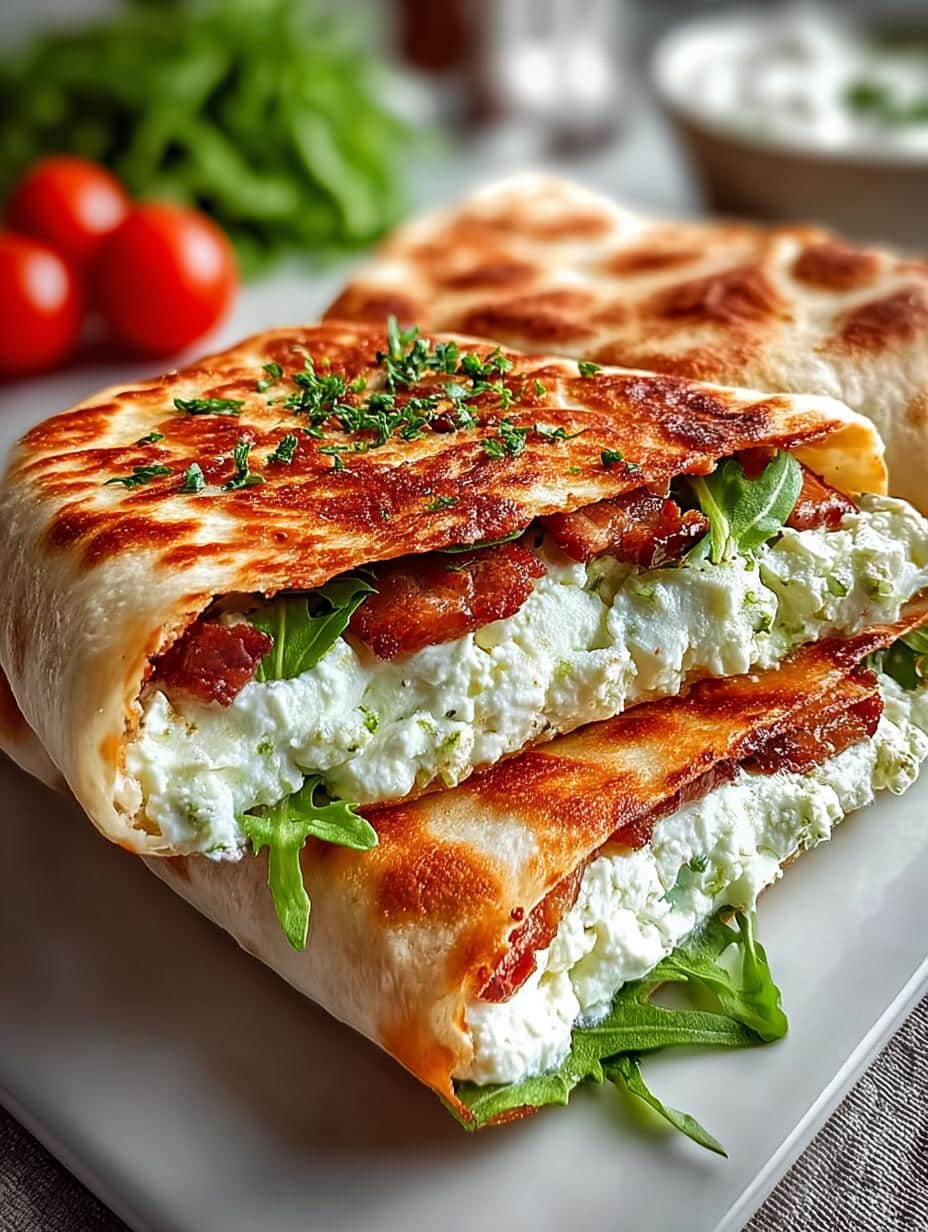
Key Takeaways
- Cottage cheese wraps are the viral 3-ingredient flatbread sensation that delivers 20 grams of protein per wrap using just cottage cheese, eggs, and seasonings — no flour, no carbs, no hassle.
- These wraps are naturally gluten-free, keto-friendly, and high-protein, making them perfect for virtually every modern dietary approach without sacrificing flavor or texture.
- The secret to a pliable wrap that doesn’t crack or tear is blending the cottage cheese completely smooth and baking at exactly 350°F for 30 minutes — no shortcuts on either step.
- Each wrap costs approximately $1.00 to make compared to $4-6 for commercial low-carb wraps, while delivering better nutrition and cleaner ingredients.
- The versatility is unmatched: use as a pizza base, quesadilla shell, breakfast burrito wrap, lunch sandwich wrap, or even thin-crust “bread” for open-faced sandwiches.
- Pair these protein-packed wraps with our garlic parmesan chicken as the filling for the ultimate high-protein dinner that hits 50+ grams of protein per meal.
Why Cottage Cheese Wraps Took Over Social Media
Cottage cheese wraps exploded onto TikTok, Instagram, and Pinterest in 2024 and haven’t slowed down since. What started as a simple high-protein hack from a single food creator quickly became a global phenomenon, with millions of home cooks trying the recipe and falling in love with the results. The reason for the obsession is simple: these wraps solve a real problem that millions of people face — how do you get a satisfying, flexible, low-carb wrap that actually tastes good and holds together?
The traditional low-carb wrap market is filled with compromise. Commercial low-carb tortillas are often gummy, rubbery, or filled with ingredients that don’t quite work together — xanthan gum, psyllium husk, resistant wheat starch, sometimes in such high amounts that they cause digestive distress. Home alternatives like almond flour tortillas or coconut flour flatbreads frequently crack when folded or develop strange textures. Cottage cheese wraps avoid all of these pitfalls by using real, whole-food ingredients that create a genuinely pleasant texture through pure protein chemistry.
The nutritional profile is what truly sets these wraps apart. A single wrap packs approximately 20 grams of protein — more than twice the protein of a traditional flour tortilla. Combined with zero added flour, minimal carbohydrates, and significant calcium, these wraps easily fit into keto, diabetic-friendly, muscle-building, weight-loss, and clean-eating approaches simultaneously. When something delivers this level of versatility and nutrition while tasting genuinely delicious, viral success becomes inevitable.
| Metric | Cottage Cheese Wrap | Mission Carb Balance | La Tortilla Factory Low-Carb | Traditional Flour Tortilla |
|---|---|---|---|---|
| Calories | 125 | 80 | 50 | 160 |
| Protein | 20g | 5g | 6g | 4g |
| Net carbs | 2g | 3g | 3g | 24g |
| Fiber | 0g | 8g | 7g | 1g |
| Cost per wrap | ~$1.00 | ~$0.50 | ~$0.75 | ~$0.25 |
| Ingredients count | 3 | 15+ | 14+ | 8+ |
| Gluten-free | Yes | No | No | No |
| Preservatives | None | Yes | Yes | Yes |
The 3 Ingredients You Need for Perfect Cottage Cheese Wraps
One of the most appealing aspects of cottage cheese wraps is the incredibly short ingredient list. Three ingredients is all it takes to produce wraps that rival commercial versions in both taste and texture. The simplicity makes this recipe accessible even for beginner cooks, and the ingredients are readily available at any grocery store.
Cottage cheese is the star of the show. Use full-fat (4%) cottage cheese for the best results — the higher fat content creates a more pliable, flexible wrap that doesn’t crack when folded. Low-fat or fat-free varieties work but produce slightly drier, more brittle wraps. For the smoothest texture, choose small-curd cottage cheese and look for brands without excessive additives or gums. Good Culture, Daisy, and Breakstone’s are reliable choices. You’ll use 1 cup (roughly 8 ounces) per batch, which yields 2 large wraps or 4 smaller ones.
Eggs provide the binding and lift that transforms cottage cheese into a cohesive, flexible wrap. Two large eggs per cup of cottage cheese is the magic ratio. The egg proteins coagulate as the wrap bakes, creating a stable structure that holds everything together while still remaining bendable. Room temperature eggs incorporate more smoothly into the cottage cheese, so pull them from the fridge about 20 minutes before starting. If you’re cooking for someone with an egg allergy, unfortunately this recipe requires eggs — there’s no proven substitute that delivers the same results.
Seasoning is the third component and where you get to customize. The basic version uses just 1/2 teaspoon of salt plus 1/4 teaspoon of black pepper. From there, the possibilities are endless: Italian herbs, garlic powder, everything bagel seasoning, taco seasoning, or ranch seasoning all work beautifully. The seasoning also helps cover any residual cottage cheese flavor, so don’t skimp on it. A similar high-protein, low-ingredient approach makes our Greek yogurt pizza crust another viral hit.
| Ingredient | Amount | Role | Substitution |
|---|---|---|---|
| Full-fat cottage cheese | 1 cup (8 oz) | Protein base, texture | Low-fat (slightly drier result) |
| Large eggs | 2, room temperature | Binder, structure, flexibility | None (eggs are essential) |
| Salt | 1/2 tsp | Flavor enhancement | Sea salt or kosher salt |
| Black pepper | 1/4 tsp | Gentle warmth | White pepper (milder) |
| Italian seasoning (optional) | 1 tsp | Herbal complexity | Oregano + basil + thyme |
| Garlic powder (optional) | 1/2 tsp | Savory depth | Fresh minced garlic (1 clove) |
| Everything bagel seasoning (optional) | 2 tsp | Texture + flavor boost | Sesame + poppy seeds + salt |
| Parchment paper | 1 large sheet | Non-stick baking surface | Silicone baking mat |
How to Make Cottage Cheese Wraps Step by Step
Step 1: Preheat and Prep the Pan
Preheat your oven to 350°F — this temperature is non-negotiable. Too low and the wraps won’t set properly; too high and they’ll become brittle and crack. Line a large baking sheet with parchment paper. Do not use wax paper (it will melt) or aluminum foil (the wraps will stick). A silicone baking mat also works if you have one. The parchment must be flat without wrinkles, as any bumps will transfer to your wraps.
Step 2: Blend Until Completely Smooth
Add the cottage cheese, eggs, salt, pepper, and any optional seasonings to a blender or food processor. This is the most important step: blend for a full 60-90 seconds until you achieve a completely smooth, uniform batter. Every single cottage cheese curd must be broken down — any remaining chunks will create weak spots in your wraps that cause tearing. The final batter should look like thick pancake batter with no visible lumps. If using an immersion blender, blend in a deep jar to prevent splatter.
Step 3: Pour and Spread
Pour the batter onto the parchment-lined baking sheet in a rectangular shape. For 2 large wraps, divide the batter into two 6×8-inch rectangles with space between them. For 4 smaller wraps, create four 4×5-inch rectangles. Use an offset spatula or the back of a spoon to spread the batter evenly — aim for approximately 1/8 inch thickness. Uneven thickness causes uneven cooking, with thin spots becoming brittle and thick spots staying undercooked.
Step 4: Bake for Exactly 30 Minutes
Place the baking sheet on the center rack and bake for exactly 30 minutes. Set a timer — don’t rely on visual cues alone. The wraps are done when the edges are golden brown, the surface is dry to the touch, and the center doesn’t wobble when the pan is shaken gently. If the wraps look too pale after 30 minutes, bake an additional 2-3 minutes, but watch carefully. Overbaking produces cracker-like crispy sheets rather than pliable wraps.
Step 5: Cool and Peel
Remove from the oven and let the wraps cool on the pan for 5 minutes. This cooling time is crucial — hot wraps are too fragile and will tear if handled. After 5 minutes, gently peel each wrap off the parchment paper, starting from one corner. The wraps should release cleanly. Use immediately as wraps or tortillas, or stack with parchment between each and store in an airtight container in the fridge for up to 5 days.
The Science of Why Cottage Cheese Makes Perfect Wraps
The magic of cottage cheese wraps isn’t random — it’s rooted in solid food science principles that make cottage cheese uniquely suited for this application. Understanding the science helps you troubleshoot when things go wrong and customize the recipe with confidence.
Cottage cheese is composed primarily of casein protein (about 80% of its protein content), along with moisture and fat. When blended, the casein proteins break down and disperse evenly throughout the mixture. As the wrap bakes, these proteins undergo denaturation and then coagulation — they unfold and then bond together to create a stable matrix. This protein network is what gives the wrap its characteristic flexibility and strength. The process is similar to how proteins work in traditional bread, but using cheese proteins instead of wheat gluten.
The eggs contribute additional proteins and emulsifying agents (particularly lecithin from the yolks) that help bind the fat and water phases together. Without the eggs, the cottage cheese would simply dry out and become crumbly rather than forming a cohesive sheet. The salt serves both flavor and structural purposes — it interacts with the protein molecules to strengthen their bonds, producing wraps that are more resilient to folding and filling. This protein-driven structure is what makes these wraps more durable than flour-based tortillas, which rely on gluten networks that can easily break. The same protein chemistry that powers these wraps also makes our cottage cheese pancakes fluffy and substantial.
| Nutrient | Amount | % Daily Value | Health Benefit |
|---|---|---|---|
| Calories | 125 | 6% | Low-calorie base |
| Protein | 20g | 40% | Muscle building, satiety |
| Net carbs | 2g | 1% | Keto-friendly |
| Fat | 5g | 6% | Satiety, flavor |
| Calcium | 180mg | 18% | Bone health |
| Sodium | 520mg | 23% | Use low-sodium cottage cheese to reduce |
| Vitamin B12 | 1.2mcg | 50% | Energy, red blood cells |
| Phosphorus | 280mg | 28% | Bone + cellular health |
Creative Ways to Use Cottage Cheese Wraps
The versatility of these wraps is arguably their greatest strength. Once you’ve made a few batches, you’ll find yourself reaching for them in every meal scenario. Here are the most delicious and practical applications to put them to work in your kitchen.
Breakfast burritos and wraps are perhaps the best use. Fill with scrambled eggs, crumbled bacon, cheddar cheese, and salsa for a high-protein breakfast that hits 40+ grams of protein. Add sauteed peppers and onions for a southwestern twist. For a sweet version, spread with Greek yogurt and top with fresh berries and a drizzle of honey — it’s like a healthy breakfast crepe.
Pizza crust is a viral variation that turns these wraps into one of the world’s healthiest pizzas. After baking the wrap, top with tomato sauce, mozzarella, and your favorite toppings, then return to the oven for 8-10 minutes. The result is a protein-packed pizza with a crispy-edged crust that tastes remarkably like the real thing. A slice delivers 25-30 grams of protein with just 4 grams of net carbs.
Lunch wraps and sandwiches shine with cottage cheese wraps. Fill with turkey, avocado, lettuce, tomato, and a smear of mustard or mayo for a satisfying lunch that beats any deli sandwich. The wrap is flexible enough to roll tightly and holds up without getting soggy. Pair with a side of our strawberry spinach salad for a restaurant-worthy lunch.
Troubleshooting Common Cottage Cheese Wrap Problems
Why Are My Wraps Cracking When I Fold Them?
Cracking usually means the wraps are too dry or overbaked. Check three things: 1) You used full-fat cottage cheese (low-fat causes cracking), 2) You baked exactly 30 minutes (not longer), and 3) You’re folding while still slightly warm, not fully cooled. If your wraps are already cool, warm them briefly in the microwave (10 seconds) or a dry skillet before folding — they become much more pliable.
Why Are My Wraps Sticking to the Parchment Paper?
Three common causes: generic parchment paper instead of actual parchment, wrinkles in the paper causing uneven contact, or insufficient blending leaving curds that create sticky spots. Use high-quality parchment paper (like Reynolds or If You Care), ensure it lies completely flat, and blend until totally smooth. A light spritz of cooking spray on the parchment provides extra insurance.
Can I Fix Wraps That Turned Out Too Thin or Too Thick?
Too thin and brittle? They’re not lost — use them as crackers or chips. Break into pieces and serve with dips. Too thick? They may still work as wraps but will be less flexible. Try warming them before folding. For next time, measure your batter carefully — roughly 1/2 cup per large wrap or 1/4 cup per small wrap, spread to about 1/8 inch thickness.
Why Do My Wraps Taste Eggy?
Eggy flavor usually comes from not enough seasoning or using particularly strong-flavored eggs. The fix is simple: increase the salt to 3/4 teaspoon, add 1/2 teaspoon of garlic powder and 1/2 teaspoon of onion powder. Italian seasoning or ranch seasoning also mask any residual egg flavor beautifully. The seasoning is what transforms these from “protein wraps” to “delicious wraps.”
| Brand | Fat % | Curd Size | Additives | Wrap Rating |
|---|---|---|---|---|
| Good Culture Classic | 4% | Small | Clean, no gums | Excellent |
| Good Culture Smooth | 4% | Pre-blended | Clean | Best (no blending) |
| Daisy Cottage Cheese | 4% | Small curd | Minimal | Excellent |
| Breakstone’s Small Curd | 4% | Small | Some gums | Very good |
| Hood Country Style | 4% | Large | Some gums | Good (blend longer) |
| Friendship Pot Style | 4% | Large | Minimal | Good (blend longer) |
| Kroger Cottage Cheese | 4% | Small | Some | Budget option |
| Low-fat cottage cheese (any brand) | 1-2% | Varies | Varies | Drier, more brittle |
Best Flavor Variations to Try
Once you’ve mastered the basic wraps, experiment with flavor variations to match different cuisines. Italian herb wraps use 1 teaspoon of Italian seasoning plus 1/4 cup of grated Parmesan folded into the batter — perfect for Mediterranean-inspired fillings. Everything bagel wraps incorporate 2 teaspoons of everything bagel seasoning for a bagel-like flavor that’s incredible with cream cheese and smoked salmon. Taco spice wraps add 1 tablespoon of taco seasoning and serve as the perfect base for taco fillings. Spicy jalapeno wraps feature 1 finely diced fresh jalapeno blended into the batter for wraps with visible pepper flecks and mild heat. Each variation transforms the same simple recipe into entirely different meals. For another protein-rich, flavor-customizable base, try our healthy cottage cheese pancakes.
| Style | Protein | Vegetables | Sauce | Cheese |
|---|---|---|---|---|
| Classic turkey club | Turkey, bacon | Lettuce, tomato | Mayo, mustard | Cheddar |
| Mediterranean | Grilled chicken | Cucumber, tomato, olives | Tzatziki | Feta |
| Buffalo chicken | Shredded chicken | Celery, carrot | Buffalo + ranch | Blue cheese |
| Breakfast | Scrambled eggs, bacon | Spinach, bell pepper | Salsa | Cheddar |
| Caprese | Prosciutto | Tomato, basil | Balsamic glaze | Fresh mozzarella |
| Southwestern | Ground beef or chicken | Lettuce, corn, black beans | Chipotle mayo | Pepper jack |
| Greek salad | Grilled chicken or shrimp | Cucumber, red onion, olives | Greek dressing | Feta |
| Veggie delight | Hummus | Avocado, sprouts, cucumber | Lemon tahini | Goat cheese |
Pair these wraps with our zesty honey garlic chicken as a filling, or use them as the base for a lighter take on our cheeseburger pizza — top with ground beef, cheese, and pickles for a wildly addictive low-carb dinner. For dessert, our creamy peanut butter cup mousse is the perfect high-protein sweet ending.
Frequently Asked Questions About Cottage Cheese Wraps
Can you taste the cottage cheese in the final wrap?
Not really — once blended and baked, cottage cheese loses its distinctive curdy texture and strong flavor. With proper seasoning, the wraps taste like a savory, slightly eggy flatbread. Most people who try them can’t identify the cottage cheese unless told. Even cottage cheese skeptics enjoy these wraps.
How long do cottage cheese wraps keep?
Store in an airtight container with parchment between each wrap for up to 5 days in the refrigerator. For longer storage, freeze with parchment layers for up to 2 months. Thaw in the fridge or warm directly from frozen in a dry skillet for 1-2 minutes per side.
Can I make these wraps dairy-free?
Unfortunately, no — cottage cheese is the essential ingredient that cannot be replaced. Other cheese-based alternatives don’t produce the same texture. Some people have had success with blended firm tofu plus nutritional yeast, but the flavor and texture are noticeably different. True dairy-free wraps require a completely different recipe.
Are cottage cheese wraps keto-friendly?
Absolutely — they’re among the best keto wrap options available. With only 2g net carbs and 20g protein per wrap, they fit perfectly into strict keto protocols. The fat content is moderate (5g per wrap), making them a balanced choice rather than overly fat-heavy like some keto alternatives.
Can I use blended cottage cheese from a brand like Good Culture?
Yes, blended cottage cheese (like Good Culture’s smooth variety) works perfectly and saves you the blending step. Just add it to a bowl with the eggs and seasonings, whisk until smooth, and proceed with the recipe. This is the easiest path to perfect wraps every time.
What’s the best way to reheat these wraps?
A dry skillet over medium heat for 30-60 seconds per side is the best method — it restores flexibility and adds slight char. Microwaving for 15-20 seconds works in a pinch but makes them slightly soft. The oven at 300°F for 5 minutes is perfect for multiple wraps at once.
Can kids eat cottage cheese wraps?
Yes, they’re excellent for kids. The mild flavor is kid-friendly, the high protein helps keep them full, and they’re a sneaky way to include dairy nutrition. Fill with their favorite ingredients — turkey and cheese, PB&J, or grilled cheese style. Most kids prefer these over traditional tortillas once they try them.
Can I add protein powder to boost the protein further?
You can add 1-2 tablespoons of unflavored whey protein isolate, but expect drier wraps that may crack easier. Add 1 extra tablespoon of cottage cheese to compensate for the extra dryness. Most people find 20g of protein per wrap is plenty without needing additional protein powder.
Why do my wraps have bubbles or holes?
Bubbles come from either over-mixing (incorporating too much air) or uneven batter distribution. Blend just until smooth — don’t continue blending for extended periods. After pouring, gently tap the pan on the counter 2-3 times to release any trapped air bubbles before baking.
Can I make sweet cottage cheese wraps?
Yes. Omit the savory seasonings and add 1 tablespoon of honey or monk fruit sweetener, plus 1/2 teaspoon of vanilla extract and a pinch of cinnamon. Use as crepe-style wraps with fruit, Greek yogurt, and a drizzle of nut butter. Sweet versions make incredible high-protein dessert wraps.

Written by Chef Anna
I'm Anna - a Le Cordon Bleu-trained chef, recipe developer, and the voice behind Chef Johns Gourmet. After a decade in professional kitchens, I now spend my mornings testing recipes and my afternoons writing them down so you can make them perfectly in your own kitchen. Every one of the 1,100+ recipes on this site has been personally cooked, tasted, and refined. I write like I'm standing next to you, walking you through every step. Simple recipes. Bold flavors. Made for real kitchens.