
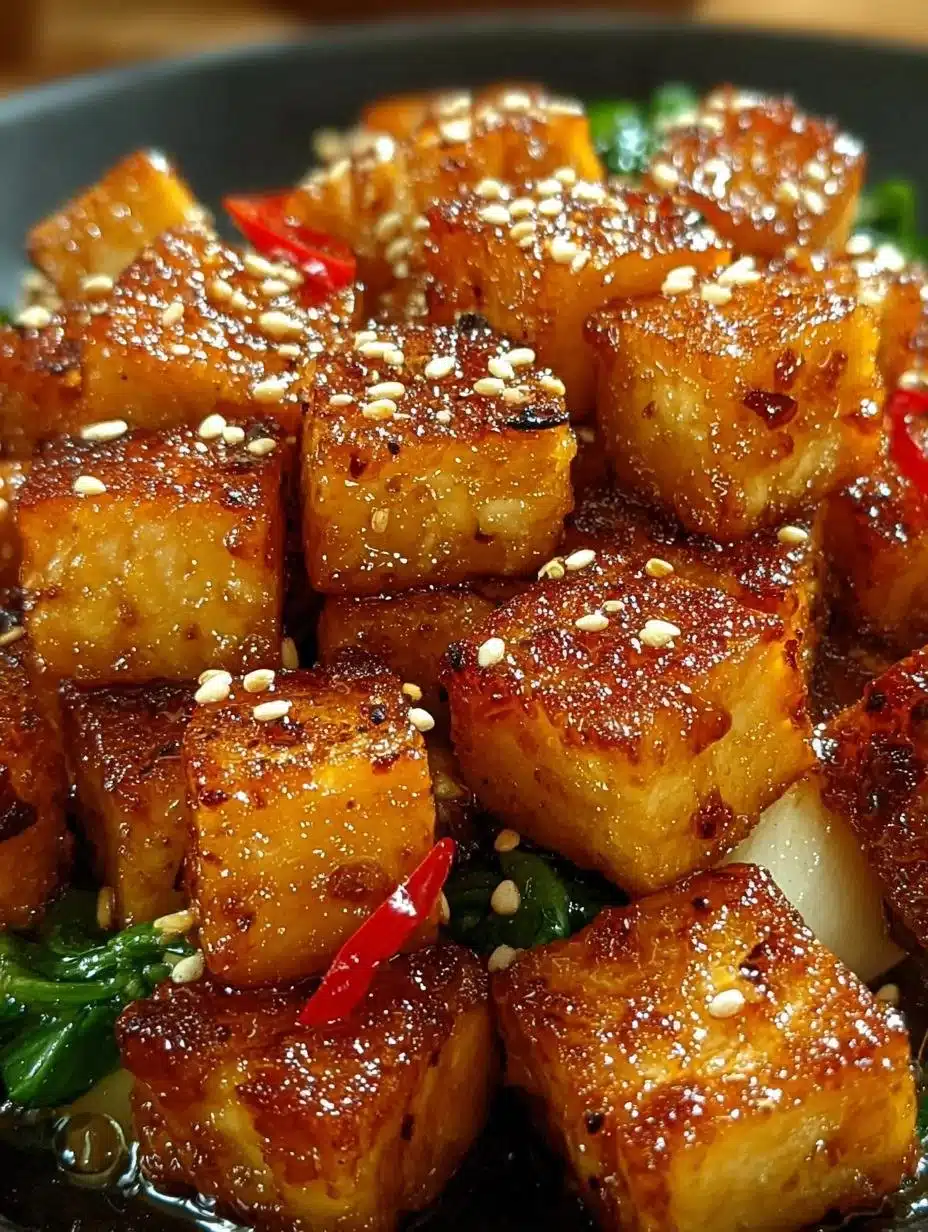
Traditional Crispy Tofu guide
Crispy tofu feels like magic: a humble slab of soy curd transformed into a golden, crunchy bite that contrasts with a tender interior. In this Traditional Crispy Tofu guide you’ll learn the how and why behind that transformation so you can reproduce it reliably at home.
Read on and you’ll gain a clear foundation, practical workflows for beginner → advanced cook levels, troubleshooting, and variations you can adapt to your pantry and schedule. Small changes make big differences — this guide will show you which ones matter and why.
For inspiration beyond tofu techniques, try looking at a related crunchy recipe like this bang-bang shrimp crispy recipe that demonstrates sauce-to-texture balance commonly used with crispy proteins.
Background & Context
Crispy tofu is not a single invention; it’s a family of techniques across East and Southeast Asia and beyond. The phrase "Authentic Crispy Tofu origin" points to several culinary lineages: Chinese pan-fried bean curd, Japanese agedashi tofu (lightly battered and fried), and Taiwanese stinky tofu stalls that deep-fry for bold texture and flavor.
Understanding the "Classic Crispy Tofu history" means appreciating both street-food practicality and home-cooking evolution. Early frying techniques used minimal batter and relied on naturally drier tofu varieties to get crispness. Over time, starches, coatings, and pressing became standard to increase surface dryness and Maillard reaction.
A simple, modern illustration: street vendors needed tofu that could hold sauce and travel time, which led to thicker coatings and stronger frying methods. Home cooks then adapted those methods to stovetops and ovens.
If you’re curious about coconut or tropical tofu interpretations that use similar frying logic, explore recipes like this coconut tofu with spicy glaze to see regional flavor adaptations.
Why This Approach Works
This guide focuses on three core goals: reliable crisp, balanced flavor, and flexible technique. Here’s why that combination matters.
- Reliability: By controlling moisture, coating adhesion, and heat, you minimize variability. Those three variables are the ones that most often produce disappointment.
- Flavor balance: A crispy exterior is only useful if it complements seasoning and texture contrasts. This approach pairs quick marinades and finishing sauces to keep the interior lively.
- Flexibility: Methods scale from beginner-friendly oven-baked versions to advanced double-frying. You can apply the same concepts to other ingredients (mushrooms, halloumi, shrimp).
Addressing common doubts:
- “Is frying unhealthy?” Crisp can be achieved with less oil using oven or air-fryer techniques while keeping chemistry-based tips for browning.
- “Do I need special tofu?” No—understanding pressing and tofu types matters more than exotic ingredients.
You’ll also find cross-technique inspiration in snacks like crispy enoki pancakes, where similar moisture control yields crunch.
Core Concepts Explained
Break the process into four logical components: tofu selection, moisture control, coating & adhesion, and heat application.
- Tofu selection
- Soft/silken tofu: great for soups and silken preparations, poor for crisping.
- Medium/firm tofu: workable for gentle pan-fry and baking.
- Extra-firm/tofu pressed for extended time: best for deep frying and holding shape.
Example: For pan-frying cubes that should keep shape in a stir-fry, choose extra-firm.
- Moisture control (pressing & draining)
- The enemy of crisp is water. Pressing removes free water and lets coatings adhere.
- Techniques: wrap in towel and weight for 15–60 minutes, or use a tofu press for consistent results.
- Simplification: slice into thinner pieces to reduce pressing time.
- Coating & adhesion
- Coatings range from light batter to dry starch. Cornstarch or potato starch gives a glassy, ultra-crisp shell.
- Binders: a light slurry of soy + water, or non-dairy milk and a pinch of flour, helps starch stick.
- Alternatives: use rice flour for gluten-free, or panko for extra fluffiness.
- Heat application (methods)
- Pan-fry: lower oil volume, good for quick single-serving crisp.
- Deep-fry: fastest, most uniform, best for high volume.
- Oven-bake / air-fry: lower oil, slightly less crisp but excellent for convenience.
For contrast-based recipes (sauces or toppings), the same coating logic applies to items like crispy fried oysters with tangy sauce.
Tools, Resources, or Foundations
Essentials
- Good nonstick or stainless pan and spatula.
- Kitchen towel or tofu press.
- Thermometer (helpful for oil temperature).
- Bowls for dredging (flour/starch) and batter.
- Wire rack for draining.
Optional enhancements
- Tofu press (saves time and gives consistent pressing).
- Deep-fryer or heavy-bottomed Dutch oven for large batches.
- Air fryer for lower-oil crisp.
- Stand mixer or whisk for consistent batters.
Budget-friendly alternatives
- Use heavy cans as weights instead of a tofu press.
- Oven baking on a convection setting can mimic air-fryer results.
- A simple mesh strainer and cooling rack substitute for an expensive wire rack.
For playful serving ideas that use tropical flavors alongside crisp textures, see this crispy fried pineapple rings tropical delight for inspiration on pairing contrasting textures.
Step-by-Step Process
The following progression covers three common home methods: pan-fry, oven/air-fry, and deep-fry. Times assume room-temperature tofu and standard kitchen equipment.
Overview timeline
- Pressing: 15–60 minutes (depends on desired dryness).
- Prepping coating and oil: 10 minutes.
- Cooking: 8–15 minutes per batch (varies by method).
- Resting & saucing: 2–5 minutes.
Beginner → Advanced flows are embedded.
Step 1 — Press & Prep (15–60 minutes)
- Slice tofu into desired shapes: cubes, slabs, or triangles. Thinner pieces crisp faster.
- Wrap tofu in a clean towel and place a weight on top for 15–30 minutes for medium results. For extra-firm crisp, press 45–60 minutes.
- Meanwhile, set up dredging stations: (1) binder (light soy + water), (2) starch bowl (cornstarch or potato starch), (3) aromatics for finishing.
Pro tip: For even faster pressing, cut tofu into slabs and press between stacked plates.
Step 2 — Coating (5–10 minutes)
- Lightly pat tofu dry; brush or dip in binder.
- Dredge evenly in starch, shaking off excess. For thicker crusts, repeat binder + starch for a double layer.
- For panko: after starch, press panko onto the surface to adhere; this creates a crunchy, flaky exterior.
Common mistake: Overloading with starch causes gummy edges. Avoid by tapping off excess.
Step 3a — Pan-Fry (Beginner/Quick) (8–12 minutes)
- Heat 2–3 tablespoons neutral oil in a nonstick skillet over medium-high heat until shimmering.
- Add tofu in a single layer without crowding. Cook 3–4 minutes per side until golden.
- Transfer to a rack to keep crisp. Finish with sauce or garnish.
Time estimate: 10 minutes active per batch.
Pro tip: Use a wide spatula and let tofu sit undisturbed to form a crust.
Step 3b — Oven / Air-Fry (Lower-oil option) (20–30 minutes)
- Preheat oven to 425°F (220°C) or air-fryer to 400°F (200°C).
- Toss coated tofu with 1–2 tablespoons oil to encourage browning.
- Spread on a parchment-lined sheet on a wire rack for even air flow.
- Bake 15–25 minutes, flipping halfway; air-fry 10–15 minutes shaking once.
Common mistake: Placing tofu directly on the tray prevents all-sides crisp. Use a rack or shake frequently.
Step 3c — Deep-Fry (Advanced/Crispiest) (6–10 minutes)
- Heat oil to 350–375°F (175–190°C). Use a thermometer.
- Fry in small batches to avoid temperature drop. Fry 2–4 minutes until golden and buoyant.
- Drain briefly on a rack, not paper towels, to maintain crisp.
Pro tip: For extra loft, double-fry: fry 1.5 minutes, rest 2–3 minutes, then fry to golden.
Step 4 — Sauce & Finish (2–5 minutes)
- Apply sauce just before serving to preserve texture: toss lightly, plate with sauce on the side, or glaze with a warm reduction.
- Finishes: sesame, scallions, lime, chili oil, or a creamy mayo-based sauce.
Common mistake: Saucing too early yields soggy tofu. Time your sauce application to just before eating.
Expert Techniques & Insights
These are tips I’ve refined over years of testing and teaching.
- Double-dry for double-crisp: press, freeze overnight (brief freeze dries water), thaw and press again before coating. This reduces internal moisture and yields a toothsome interior.
- Use mixed starches: a 50:50 mix of cornstarch and rice flour balances glassy crunch and lightness.
- Baking powder boost: a pinch of baking powder in the coating creates tiny air pockets and a blistered surface.
- Temperature control: the golden zone for frying creates Maillard without burning. Too hot → burnt surface, too cool → oily, pale crust.
- Rest on a wire rack: paper towels trap steam and soften the crust. A rack allows air circulation and keeps crisp.
Advanced flavoring
- Quick brine (5–10 minutes) with soy, mirin, and garlic adds depth without soaking.
- Inject flavor: for thicker slabs, make small slits and marinate briefly to get seasoning inside.
Lessons learned: small procedural changes (like drying method or shaking off excess starch) often have outsized effects on final crispness.
Variations & Adaptations
Crispy tofu adapts well to cuisines, dietary needs, and equipment.
Cultural variants
- Japanese: agedashi-style uses light potato starch and serves in dashi broth — keep the crisp by serving broth on the side.
- Chinese: dry-fried cubes tossed with bold sauces for dishes like mapo-style variations.
- Southeast Asian: coconut batter and a turmeric scent create island flavors.
Dietary & skill adaptations
- Gluten-free: use rice flour or cornstarch.
- Oil-conscious: oven-baked or air-fried with light oil spray.
- Beginner: pan-fry small batches; skip pressing if short on time but slice thinner.
Injection of novelty
- Crisped tofu in tacos, replacing or mixing with fried proteins.
- Crunch-topped salads for texture contrast.
- Sweet-salty versions: dust with powdered sugar or cinnamon and serve with fruit compote.
Analysis & Benefits Breakdown
A comparative look at methods to help you choose the best one for context.
| Method | Texture | Speed | Oil use | Best for |
|—|—:|—:|—:|—|
| Deep-fry | Ultra-crisp all-around | Fast per batch (6–10 min) | High | Street-food texture, large batches |
| Pan-fry | Crisp edges, tender interior | Quick (10–15 min) | Low | Weeknight meals, small portions |
| Oven-bake | Moderate crisp, drier interior | Longer (20–30 min) | Low | Healthier option, hands-off |
| Air-fry | Crisp surface, airy | Moderate (10–20 min) | Low | Small batches, consistent results |
Strengths, limitations, and considerations:
- Deep-fry: unmatched texture but uses oil and requires temperature control.
- Pan-fry: accessible and low-oil, but can be uneven for thick pieces.
- Oven/air-fry: healthier and convenient, but rarely matches deep-fry crispness.
Preparation, Retention & Long-Term Use
Preparing ahead increases convenience for weeknight dinners and batch cooking.
Make-ahead strategies
- Press and pre-coat tofu the day before; store coated tofu in the fridge on a tray covered with plastic to prevent humidity.
- Par-fry then refrigerate; re-fry quickly for service to regain crispness.
Storage & reheating
- Refrigerate cooked tofu in an airtight container for 2–3 days.
- Reheat in a hot oven (400°F/200°C) or air-fryer 5–10 minutes to restore crisp.
- Avoid microwave reheating — it softens the crust.
Freezing
- Freeze pre-fried tofu on a tray, then store in bags for up to 1 month. Reheat directly from frozen in a hot oven or fryer for best results.
Skill longevity
- Mastering moisture control and heat lets you transfer the skill to other proteins and vegetables.
- Keep a small notebook of tweaks — oven temp, starch ratio, and press time — for consistent replication.
Troubleshooting & Common Problems
Problem → Cause → Solution format for clarity.
Problem: Tofu is soggy after frying.
- Cause: Insufficient pressing or coated while wet.
- Solution: Increase pressing time; pat dry thoroughly; shake off excess starch.
Problem: Crust is gummy, not crunchy.
- Cause: Too much coating; oil temp too low.
- Solution: Tap off excess starch; heat oil to recommended temperature; fry in small batches.
Problem: Coating falls off during cooking.
- Cause: Poor adhesion (no binder) or crowding the pan.
- Solution: Use a light binder (soy slurry) and ensure single layer cooking without crowding.
Problem: Interior is dry and mealy.
- Cause: Overly long pressing or too thin pieces.
- Solution: Reduce pressing time for more moisture; cut thicker pieces; avoid overcooking.
Problem: Uneven browning in the oven.
- Cause: No airflow under tofu or uneven oil coverage.
- Solution: Use a rack for airflow; toss with a little oil before baking and flip halfway.
For a sense of how different crunchy techniques pair with various sauces and toppings, try exploring creative pairings modeled in dishes like crispy enoki pancakes which use similar texture strategies in a different ingredient context.
FAQ Section
Q1: What tofu is best for crisping?
- Extra-firm or firm tofu pressed until drier is best for maintaining shape and achieving crispness.
Q2: Can I skip pressing if I’m in a hurry?
- You can, by slicing thinner and using a hot pan, but pressing improves results significantly.
Q3: Is cornstarch or potato starch better?
- Cornstarch gives a glassy crunch; potato starch yields a slightly puffier crust. Use a 50:50 mix for balance.
Q4: How do I keep tofu crispy when saucing?
- Serve sauce on the side or toss lightly just before serving. For thick glazes, apply sparingly.
Q5: Can I air-fry frozen pre-coated tofu?
- Yes; increase time slightly and shake or flip once to ensure even browning.
Q6: How long can I store prepped tofu in the fridge?
- Pressed, pre-coated tofu stored on a tray covered in plastic should be used within 24 hours for best texture.
Q7: Will double-frying make it too oily?
- No, if done correctly: the first fry removes moisture, and the second at higher heat crisps without excessive oil absorption.
Q8: Any tips for gluten-free versions?
- Use rice flour or cornstarch and ensure any sauces or marinades are gluten-free.
Related Topics & Next Steps
- Learn sauce-making: master a sweet-spicy glaze and a tangy soy-citrus dressing to pair with crispy tofu.
- Explore tofu textures: delve into fermentation and pressed tofu varieties for deeper flavor.
- Try cross-application: apply crisping techniques to mushrooms, eggplant, or paneer.
If you want to level up, practice double-frying one batch each week and note the small differences. That repetition builds the muscle memory that produces repeatable results.
Quick Reference Summary
- Choose extra-firm tofu and press well.
- Use a light binder + cornstarch (or mix) for best crust.
- Pan-fry for quick results, deep-fry for maximum crisp, oven/air-fry for lower oil.
- Keep tofu on a wire rack after cooking for lasting crunch.
- Apply sauce just before serving to avoid sogginess.
Bookmark this summary for a fast checklist when you cook.
Conclusion & Engagement
You now have a complete Traditional Crispy Tofu guide: history, core science, practical steps, and advanced techniques. Use the step-by-step processes to practice, and rely on the troubleshooting section when things go sideways.
For detailed recipes and alternate methods to compare with what you’ve learned here, check these practical how-to guides: How to Make Crispy Baked Tofu – Cookie and Kate and Super Crispy Tofu (Air Fried or Oven Baked) – Healthful Blondie. Both articles offer recipe templates and photos that complement the principles covered in this guide.
If you want, I can convert this into a reusable system prompt, adapt it for a technical tutorial format, or create a content-evaluation checklist based on this framework. Which would you like next?
Print
Traditional Crispy Tofu
- Total Time: 90 minutes
- Yield: 4 servings
- Diet: Vegetarian
Description
A comprehensive guide to making crispy tofu with reliable techniques and variations for different cooking methods.
Ingredients
- Extra-firm tofu
- Cornstarch or potato starch
- Light soy sauce
- Water
- Neutral oil (for frying)
Instructions
- Press the tofu for 15–60 minutes to remove excess moisture.
- Slice the tofu into desired shapes.
- Prepare dredging stations with a binder (soy sauce + water) and starch.
- Lightly coat the tofu in the binder, then dredge in starch.
- For pan-frying, heat oil in a skillet and cook tofu until golden on each side.
- For oven/air-frying, toss tofu in oil, spread on a rack, and bake or air-fry until crispy.
- For deep-frying, heat oil and fry tofu until golden brown and buoyant.
- Rest on a wire rack and sauce just before serving.
Notes
For best results, avoid overcrowding the pan and ensure the tofu is well-pressed before coating.
- Prep Time: 60 minutes
- Cook Time: 30 minutes
- Category: Main Course
- Method: Frying
- Cuisine: Asian
Nutrition
- Serving Size: 1 serving
- Calories: 350
- Sugar: 2g
- Sodium: 400mg
- Fat: 20g
- Saturated Fat: 3g
- Unsaturated Fat: 10g
- Trans Fat: 0g
- Carbohydrates: 30g
- Fiber: 2g
- Protein: 15g
- Cholesterol: 0mg