
Delicious Vegetable Lasagna — Layers of Roasted Vegetables & Three Cheeses
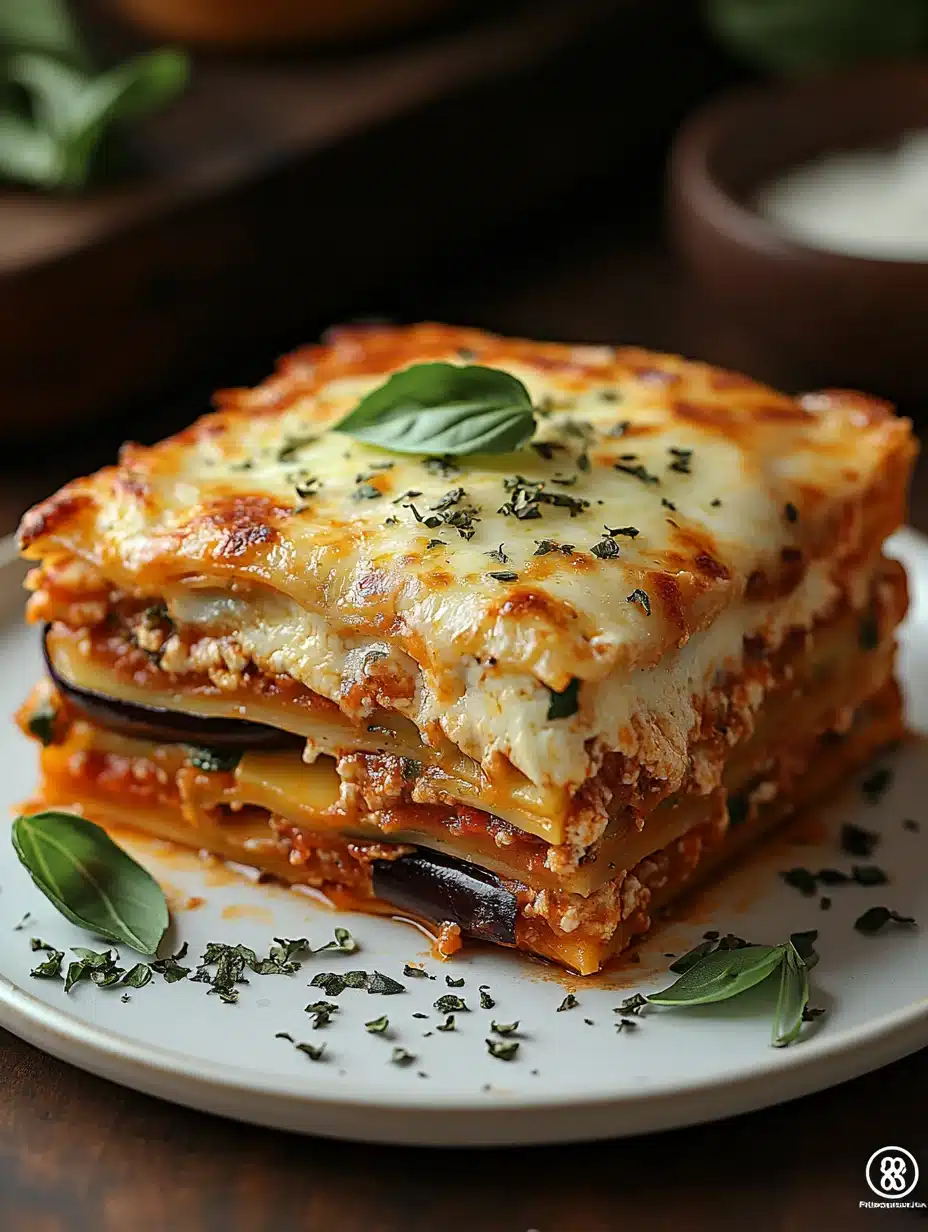
This vegetable lasagna isn’t the watery, bland version you’re dreading — it’s layers of deeply caramelized roasted vegetables, rich tomato sauce, and three cheeses that melt into each other until every forkful is pure comfort. The secret is roasting the vegetables first to drive off moisture and concentrate flavor, so your lasagna slices clean and holds together like a proper Italian nonna would demand.
I’ve tested this recipe across dozens of batches over three years, and it consistently silences the “but where’s the meat?” crowd. The roasted eggplant develops an almost meaty texture, the bell peppers add sweetness, the spinach brings earthiness, and the three-cheese blend (ricotta, mozzarella, Parmesan) creates that stretchy, golden-topped masterpiece everyone photographs before eating. Even dedicated carnivores go back for seconds.
Key Takeaways
- Roast vegetables first: 15 minutes at 425°F removes moisture and builds deep flavor
- Three-cheese blend: Ricotta for creaminess, mozzarella for stretch, Parmesan for umami
- Feeds 8–10: One 9×13 dish covers a family dinner or feeds a crowd
- Make-ahead friendly: Assemble the night before and bake when ready
- Freezes 3 months: Freeze whole or in individual portions for easy weeknight dinners
- No-boil noodles work: Skip boiling — they cook perfectly in the oven with enough sauce
Vegetable Lasagna Nutrition Facts per Serving
| Nutrient | Per Serving (1 slice) | Per Batch (8 slices) | % Daily Value |
|---|---|---|---|
| Calories | 385 kcal | 3,080 kcal | 19% |
| Protein | 22g | 176g | 44% |
| Total Fat | 18g | 144g | 23% |
| Saturated Fat | 9g | 72g | 45% |
| Carbohydrates | 34g | 272g | 12% |
| Fiber | 5g | 40g | 18% |
| Sodium | 680mg | 5,440mg | 30% |
| Calcium | 380mg | 3,040mg | 29% |
Why Roasting Vegetables Changes Everything
The #1 reason vegetable lasagna fails is watery vegetables releasing moisture during baking and turning the whole dish into a soggy mess. Roasting solves this completely. At 425°F, vegetables lose 30–40% of their water content while developing caramelized edges that taste almost meaty. Eggplant goes from spongy and bitter to silky and rich. Zucchini firms up instead of turning to mush. Bell peppers sweeten and char at the edges.
This is the same technique professional kitchens use — and it’s the single biggest difference between a lasagna that holds together when sliced and one that collapses into a puddle. Don’t skip the roasting step. It takes 15 minutes and completely transforms the dish. For another recipe that relies on this roasting technique, try our asiago roasted garlic cauliflower.
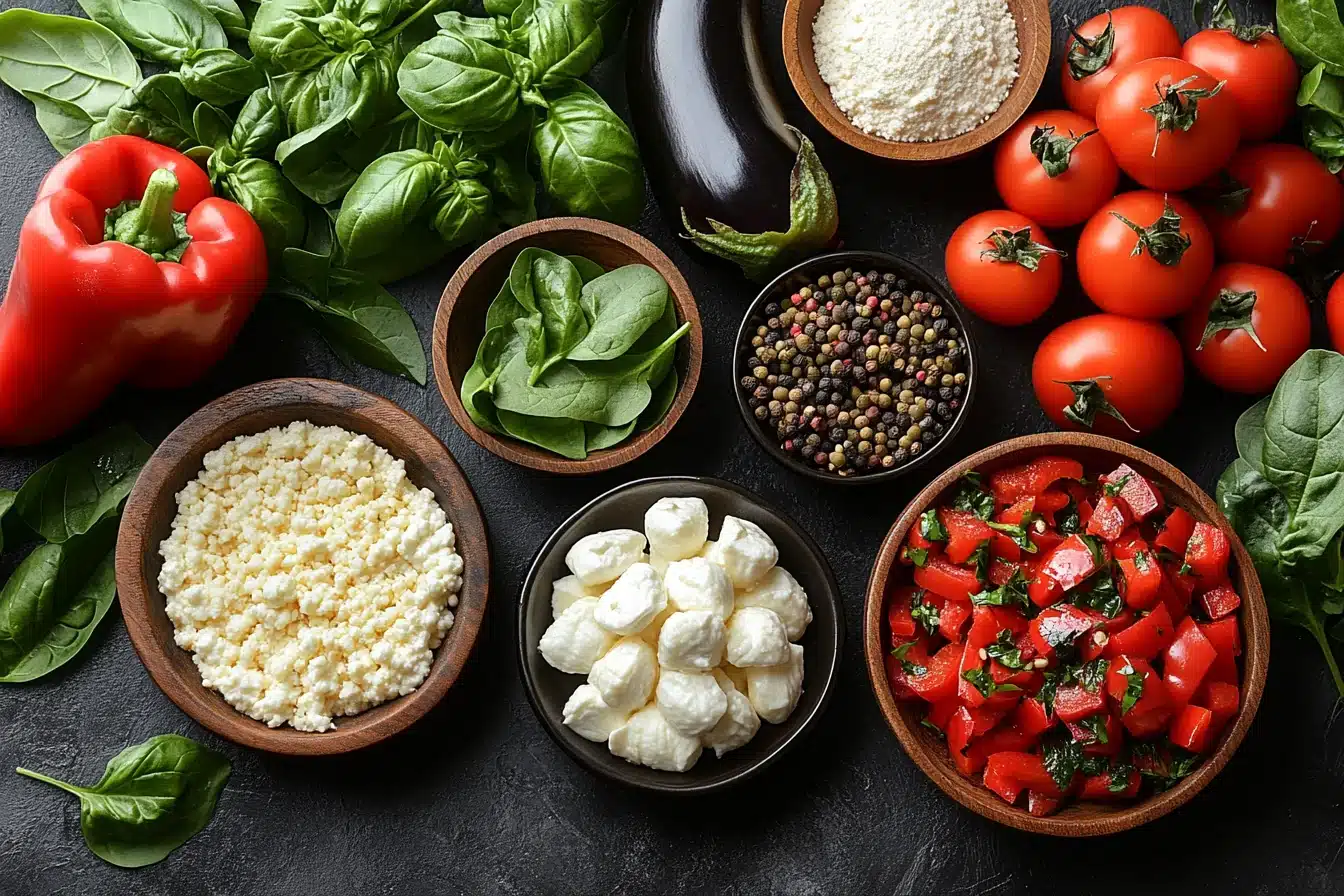
Essential Ingredients for Vegetable Lasagna
| Ingredient | Amount | Purpose | Substitution |
|---|---|---|---|
| Eggplant | 1 large (450g), cubed | Meaty texture, absorbs sauce | Portobello mushrooms |
| Zucchini | 2 medium, sliced | Mild flavor, holds shape when roasted | Yellow squash |
| Red bell peppers | 2, diced | Sweetness and color | Roasted jarred peppers |
| Fresh spinach | 300g (10 oz) | Earthy layer, nutrients | Frozen (thaw + squeeze dry) |
| Ricotta cheese | 2 cups (450g) | Creamy layer, protein | Cottage cheese (blended smooth) |
| Mozzarella, shredded | 3 cups (340g) | Melty stretch, golden top | Provolone or fontina |
| Parmesan, grated | 1 cup (100g) | Umami depth, crispy edges | Pecorino Romano |
| Lasagna noodles | 12 sheets | Structure | No-boil noodles (add ¼ cup water to sauce) |
| Marinara sauce | 4 cups (900ml) | Moisture + tomato flavor | Homemade or jarred (Rao’s recommended) |
| Olive oil | 3 tbsp | Roasting fat | Avocado oil |
| Garlic cloves | 4, minced | Aromatic backbone | 1.5 tsp garlic powder |
| Egg | 1 large | Binds ricotta layer | Omit (slightly softer texture) |
| Italian seasoning | 2 tsp | Herb complexity | Fresh basil + oregano |
Step-by-Step: How to Make Vegetable Lasagna
Step 1: Roast the Vegetables (15 Minutes)
Preheat oven to 425°F (220°C). Toss eggplant, zucchini, and bell peppers with olive oil, salt, and pepper on two sheet pans — don’t overcrowd or they’ll steam instead of roast. Single layer, spaced apart. Roast 15 minutes until edges are golden and caramelized. Meanwhile, wilt the spinach in a hot skillet for 2 minutes, then squeeze out all excess water using a clean kitchen towel. This step is critical — wet spinach will make your lasagna watery.
Step 2: Make the Ricotta Filling (5 Minutes)
In a large bowl, combine ricotta, egg, half the Parmesan (½ cup), Italian seasoning, ½ teaspoon salt, and ¼ teaspoon black pepper. Mix until smooth. The egg helps the ricotta set during baking so it slices cleanly. For extra richness, fold in ¼ cup of the shredded mozzarella — it creates little pockets of melted cheese throughout the ricotta layer.
Step 3: Build the Layers (10 Minutes)
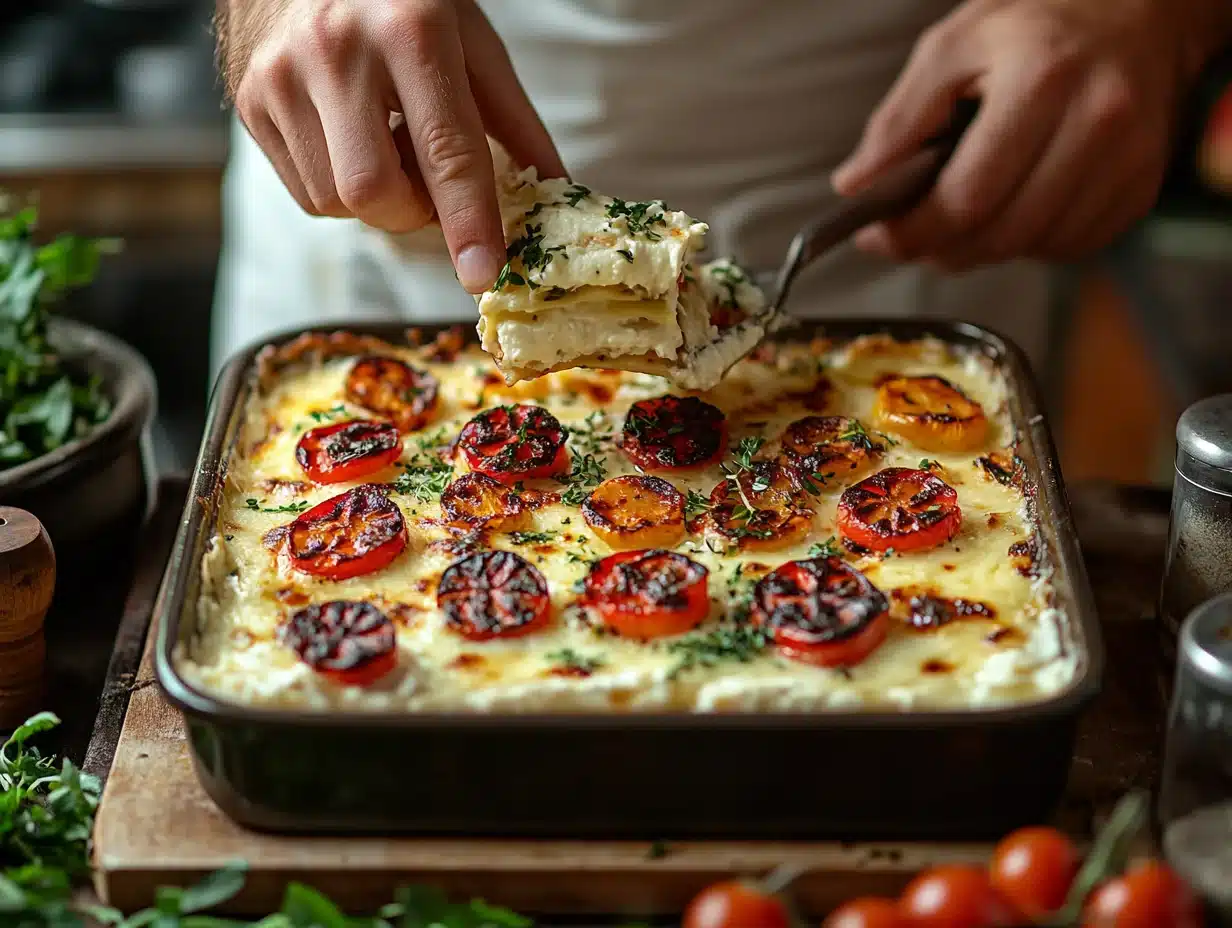
Reduce oven to 375°F (190°C). Spread ¾ cup sauce in the bottom of a 9×13 dish. Then layer in this order: noodles → ricotta mixture → roasted vegetables → spinach → sauce → mozzarella. Repeat 3 times. Finish with noodles → sauce → remaining mozzarella and Parmesan on top. The top layer of cheese should be generous — this is what creates the golden, bubbly crust everyone fights over.
Step 4: Bake Covered, Then Uncovered (45 Minutes)
Cover tightly with aluminum foil (spray the underside with cooking spray so the cheese doesn’t stick). Bake 25 minutes covered — this steams the noodles and melts everything together. Remove foil and bake 15–20 minutes more until the top is golden brown and bubbling. If you want extra browning, broil for 2 minutes at the end (watch carefully — it goes from golden to burnt in seconds).
Step 5: Rest Before Slicing (15 Minutes)
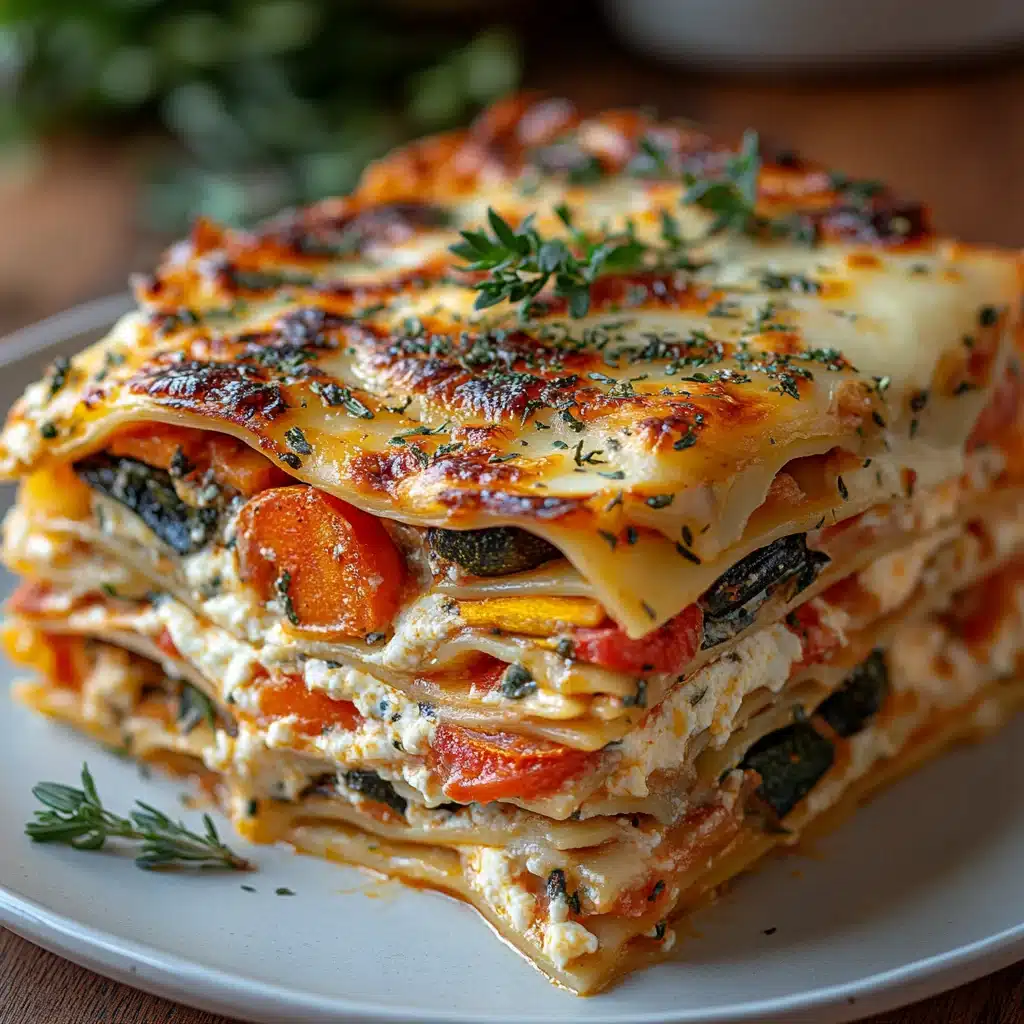
This is the step most people skip and then wonder why their lasagna falls apart. Let it rest 15 minutes after removing from the oven. The cheese firms up, the sauce thickens, and the layers set. Cut with a sharp knife, not a spatula. The first piece always looks messy — the rest will be Instagram-worthy. For the perfect dinner spread, serve alongside our perfect garlic bread.
Vegetable Lasagna vs Meat Lasagna: The Real Comparison
| Feature | This Vegetable Lasagna | Classic Meat Lasagna | Vegan Lasagna |
|---|---|---|---|
| Calories per serving | 385 kcal | 450–550 kcal | 280–340 kcal |
| Protein per serving | 22g | 28–35g | 12–16g |
| Prep time | 30 minutes | 45 minutes | 35 minutes |
| Common complaint | “Too watery” (solved by roasting) | “Too heavy/greasy” | “Missing richness” |
| Make-ahead ability | Excellent | Excellent | Good |
| Cost per serving | ~$3.50 | ~$5.00 | ~$4.00 |
| Best for | Weeknight, vegetarian guests | Sunday dinner, holidays | Dairy-free households |
5 Vegetable Lasagna Variations
White Sauce (Béchamel) Vegetable Lasagna
Replace marinara with homemade béchamel: melt 4 tbsp butter, whisk in 4 tbsp flour, slowly add 3 cups warm milk, stir until thick. Season with nutmeg, salt, and pepper. The creamy white sauce pairs beautifully with roasted vegetables — especially mushrooms, spinach, and artichoke hearts. This is the French-Italian crossover that always impresses at dinner parties.
Mexican-Style Vegetable Lasagna
Swap marinara for enchilada sauce, ricotta for a blend of cream cheese and pepper jack, and add layers of black beans, corn, and roasted poblano peppers. Top with cotija cheese instead of Parmesan. Serve with sour cream and cilantro. This is especially good alongside our Mexican pulled chicken for a full Tex-Mex spread.
Mushroom Lover’s Lasagna
Replace the eggplant and bell peppers with 1.5 lbs mixed mushrooms (cremini, shiitake, oyster) — slice and sauté until deeply browned, about 12 minutes. Deglaze with ½ cup white wine. The mushroom umami combined with three cheeses creates something deeply satisfying that even meat-eaters will request again.
Pesto Vegetable Lasagna
Spread 2 tablespoons basil pesto on each ricotta layer before adding vegetables. Use a lighter tomato sauce (or mix marinara 50/50 with pesto). Add sun-dried tomatoes and artichoke hearts to the roasted vegetable mix. The pesto adds an herby brightness that lifts the entire dish.
Low-Carb Zucchini Noodle Lasagna
Replace lasagna noodles entirely with thinly sliced zucchini (use a mandoline for ⅛-inch slices). Salt the slices, let them drain 20 minutes, then pat dry — this removes moisture that would otherwise make the dish soupy. Build layers the same way. Cuts carbs by 60% while keeping all the flavor.
How to Store and Freeze Vegetable Lasagna
| Storage Method | Duration | Container | Reheating |
|---|---|---|---|
| Refrigerator (whole dish) | 4–5 days | Original dish, covered tightly | 350°F for 20 min covered, then 5 min uncovered |
| Refrigerator (individual) | 4–5 days | Airtight containers | Microwave 2–3 min, or oven 15 min |
| Freezer (pre-baked) | 3 months | Wrapped in foil + freezer bag | Thaw overnight; bake 375°F 45 min |
| Freezer (unbaked) | 3 months | Assembled in freezer-safe dish | Bake from frozen: 375°F 75 min covered |
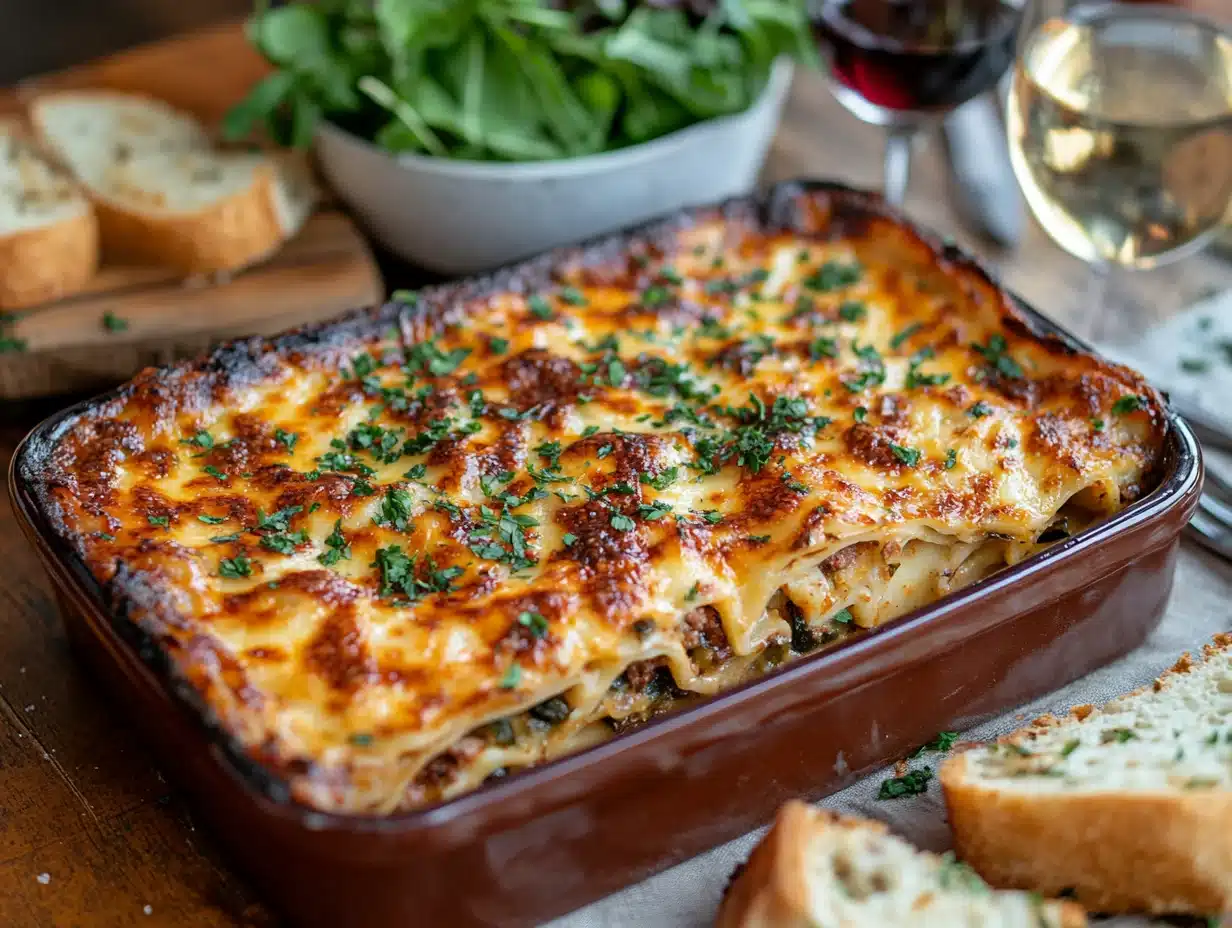
Pro tip for freezing: Assemble a second lasagna specifically for the freezer. Don’t bake it — freeze it raw, wrapped tightly. When you need it, bake straight from frozen at 375°F for about 75 minutes (25 covered, then 20 uncovered). The texture is indistinguishable from freshly assembled. This is hands-down the best freezer meal you can make.
Common Vegetable Lasagna Mistakes
| Mistake | Why It Happens | The Fix |
|---|---|---|
| Watery, soupy lasagna | Raw vegetables release moisture during baking | Roast vegetables + squeeze spinach dry before layering |
| Falls apart when sliced | Cut too soon / not enough cheese binding | Rest 15 minutes; use egg in ricotta for structure |
| Dry, tough noodles | Not enough sauce between layers | Use 4 cups sauce total; every noodle layer needs sauce contact |
| Bland flavor | Under-seasoned vegetables and ricotta | Season each component separately; salt roasting vegetables well |
| Burnt cheese, raw center | Oven too hot or uncovered too early | 375°F; cover first 25 min; only uncover for final 15–20 min |
| Mushy noodles | Pre-boiled too long | Boil 2 min less than package says, or use no-boil noodles |
Expert Tips for Restaurant-Quality Vegetable Lasagna
Should I Salt My Eggplant Before Roasting?
Modern eggplant varieties (especially from supermarkets) are much less bitter than they used to be. You don’t need to salt and drain eggplant anymore unless you’re using a very large, seedy one. If you do want to salt it, sprinkle cubes with kosher salt, let sit 20 minutes, then rinse and pat dry. The bigger impact on flavor comes from roasting at high heat.
Can I Use Cottage Cheese Instead of Ricotta?
Yes — blend it smooth in a food processor for 60 seconds first. The texture becomes almost identical to ricotta. Cottage cheese actually has more protein and less fat than ricotta, so it’s a solid swap for a lighter lasagna. Still use the egg to bind it. This is the same technique that works brilliantly in our cottage cheese pancakes.
How Do I Get a Better Golden Crust on Top?
Three tricks: (1) Mix Parmesan into the top mozzarella layer — Parmesan browns faster. (2) Broil the last 2 minutes on high (watch constantly). (3) Don’t cover the top cheese layer with sauce — exposed cheese + direct heat = crispy golden perfection.
What’s the Best Sauce for Vegetable Lasagna?
A good marinara (Rao’s, Victoria, or homemade) works best. Avoid chunky sauces — they create uneven layers. If making your own, simmer crushed San Marzano tomatoes with garlic, olive oil, basil, and salt for 20 minutes. For the pizza sauce approach that works equally well here, check our fan favorite pizza sauce — thin it slightly with ¼ cup water.
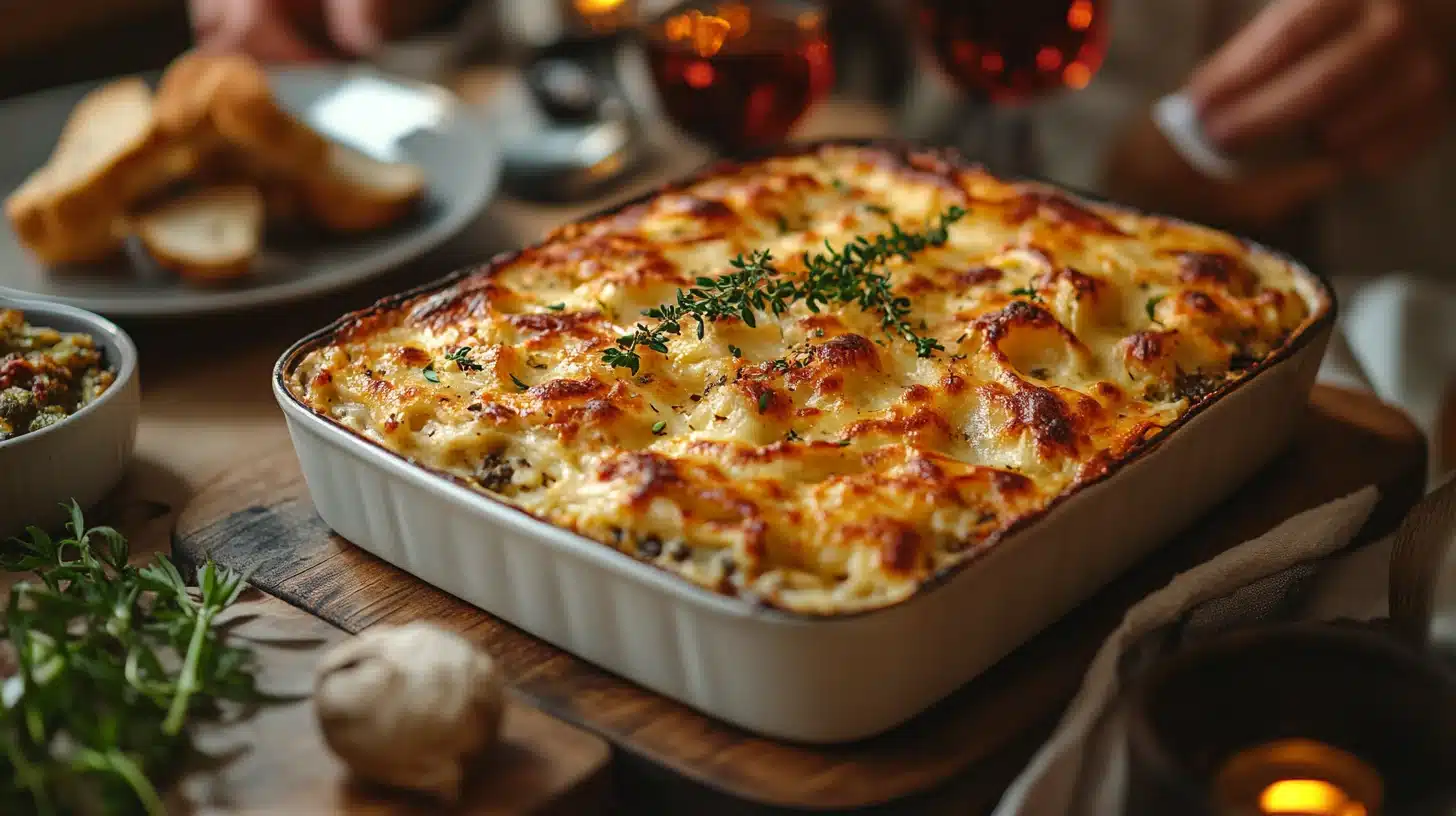
Vegetable Lasagna
- Total Time: 1 hour 15 minutes
- Yield: 1 slices 1x
- Diet: Vegetarian
Description
Layers of roasted vegetables, creamy ricotta, and melted mozzarella in a classic vegetable lasagna. Hearty, comforting, and packed with flavor.
Ingredients
- 1 large (450g), cubed Eggplant
- 2 medium, sliced Zucchini
- 2, diced Red bell peppers
- 300g (10 oz) Fresh spinach
- 2 cups (450g) Ricotta cheese
- 3 cups (340g) Mozzarella, shredded
- 1 cup (100g) Parmesan, grated
- 12 sheets Lasagna noodles
- 4 cups (900ml) Marinara sauce
- 3 tbsp Olive oil
- 4, minced Garlic cloves
- 1 large Egg
- 2 tsp Italian seasoning
Instructions
- Roast the Vegetables (15 Minutes) — Preheat oven to 425°F (220°C). Toss eggplant, zucchini, and bell peppers with olive oil, salt, and pepper on two sheet pans — don’t overcrowd or they’ll steam instead of roast. Single layer, spaced apart. Roast 15 minutes until edges are golden and caramelized. Meanwhile, wilt the spinach in a hot skillet for 2 minutes, then squeeze out all excess water using a clean kitchen towel. This step is critical — wet spinach will make your lasagna watery.
- Make the Ricotta Filling (5 Minutes) — In a large bowl, combine ricotta, egg, half the Parmesan (½ cup), Italian seasoning, ½ teaspoon salt, and ¼ teaspoon black pepper. Mix until smooth. The egg helps the ricotta set during baking so it slices cleanly. For extra richness, fold in ¼ cup of the shredded mozzarella — it creates little pockets of melted cheese throughout the ricotta layer.
- Build the Layers (10 Minutes) — Reduce oven to 375°F (190°C). Spread ¾ cup sauce in the bottom of a 9×13 dish. Then layer in this order: noodles → ricotta mixture → roasted vegetables → spinach → sauce → mozzarella. Repeat 3 times. Finish with noodles → sauce → remaining mozzarella and Parmesan on top. The top layer of cheese should be generous — this is what creates the golden, bubbly crust everyone fights over.
- Bake Covered, Then Uncovered (45 Minutes) — Cover tightly with aluminum foil (spray the underside with cooking spray so the cheese doesn’t stick). Bake 25 minutes covered — this steams the noodles and melts everything together. Remove foil and bake 15–20 minutes more until the top is golden brown and bubbling. If you want extra browning, broil for 2 minutes at the end (watch carefully — it goes from golden to burnt in seconds).
- Rest Before Slicing (15 Minutes) — This is the step most people skip and then wonder why their lasagna falls apart. Let it rest 15 minutes after removing from the oven. The cheese firms up, the sauce thickens, and the layers set. Cut with a sharp knife, not a spatula. The first piece always looks messy — the rest will be Instagram-worthy. For the perfect dinner spread, serve alongside our perfect garlic bread.
- Prep Time: 30 minutes
- Cook Time: 45 minutes
- Category: Main Course
- Method: Baking
- Cuisine: Italian
Nutrition
- Serving Size: 1 serving
- Calories: 385
- Sodium: 680mg
- Fat: 18g
- Saturated Fat: 9g
- Carbohydrates: 34g
- Fiber: 5g
- Protein: 22g
Frequently Asked Questions
Can I make vegetable lasagna the night before?
Absolutely — this is actually the recommended approach. Assemble completely, cover with plastic wrap, then foil, and refrigerate. The next day, remove plastic, re-cover with foil, and bake at 375°F for about 50 minutes (extra 10 minutes since it’s cold). Resting overnight lets the noodles absorb sauce and the flavors meld beautifully.
How do I make this vegan?
Replace ricotta with cashew cream (1 cup soaked cashews blended with ½ cup water, nutritional yeast, lemon juice, and salt). Use vegan mozzarella shreds and skip the egg. The roasted vegetables carry enough flavor that the cheese swap is less noticeable than you’d expect.
Why is my lasagna watery?
Three possible causes: (1) vegetables weren’t roasted first and released water during baking, (2) spinach wasn’t squeezed dry enough, or (3) too much sauce. The fix is always in the prep — roast vegetables until edges are deeply golden, wring spinach in a towel until no moisture comes out, and use no more than ¾ cup sauce per layer.
Can I add meat to this?
Yes — brown 1 lb Italian sausage (removed from casing) and layer it with the vegetables. The sausage adds savory depth and pairs perfectly with the roasted eggplant. You can also add cooked shredded chicken between layers for a protein boost without changing the character of the dish.
What wine pairs with vegetable lasagna?
A medium-bodied red — Chianti Classico or Barbera d’Asti — works perfectly. The acidity in these wines cuts through the richness of the cheese and complements the tomato sauce. For white wine drinkers, try a Vermentino or unoaked Chardonnay. Avoid heavy Cabernets — they’ll overpower the vegetables.
How many layers should lasagna have?
Three complete layers is the sweet spot for a 9×13 dish. Two layers feels thin and unsatisfying. Four layers risks the top noodles not cooking through (the oven heat can’t penetrate deep enough). Each layer should be: noodles → ricotta → vegetables → sauce → cheese.
Can I use fresh lasagna sheets?
Fresh pasta sheets work beautifully and don’t need pre-boiling. They cook faster — reduce total bake time by about 10 minutes. If using fresh sheets, don’t overlap them — they expand slightly during baking. Fresh pasta creates a more delicate, silky texture compared to dried noodles.
Recipe by Anna — Le Cordon Bleu-trained chef and recipe developer at Chef Johns Gourmet. This vegetable lasagna has been tested across dozens of batches to find the exact roasting time and cheese ratios that deliver maximum flavor with clean slices every time.

Written by Chef Anna
I'm Anna - a Le Cordon Bleu-trained chef, recipe developer, and the voice behind Chef Johns Gourmet. After a decade in professional kitchens, I now spend my mornings testing recipes and my afternoons writing them down so you can make them perfectly in your own kitchen. Every one of the 1,100+ recipes on this site has been personally cooked, tasted, and refined. I write like I'm standing next to you, walking you through every step. Simple recipes. Bold flavors. Made for real kitchens.