
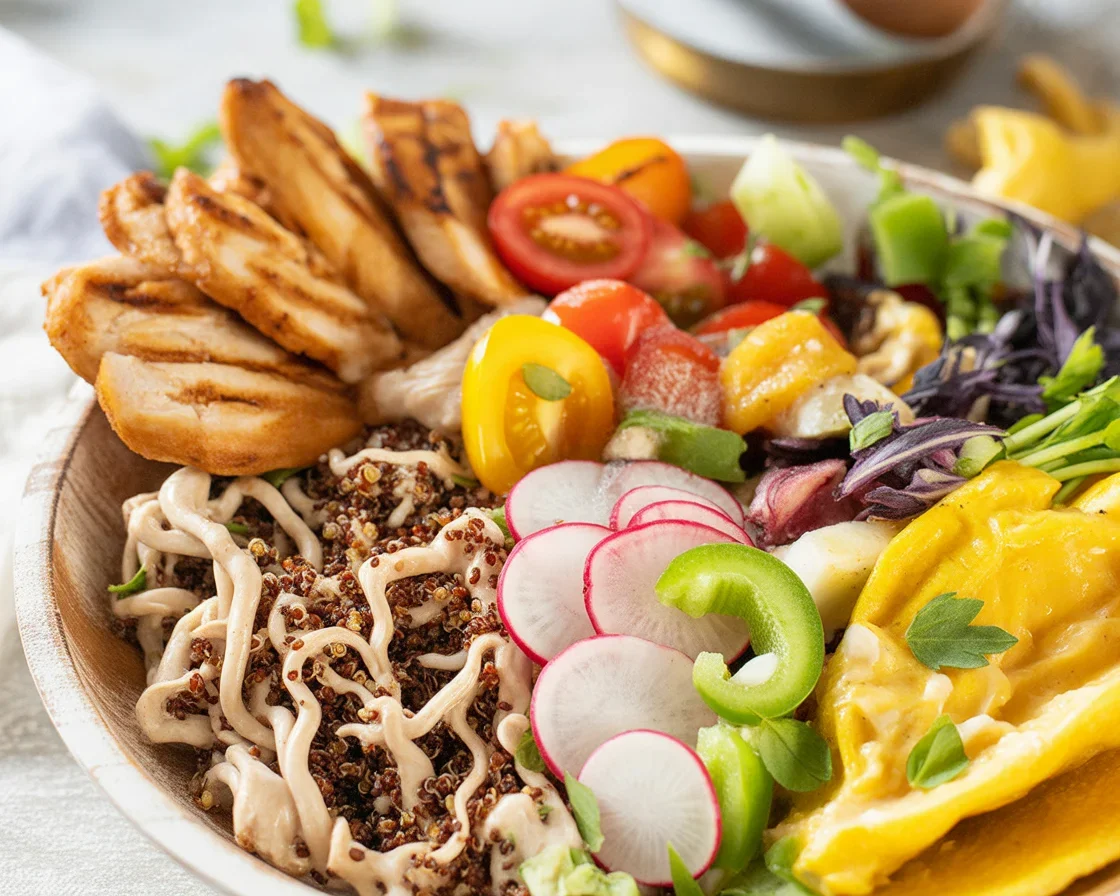
Healthy Taco Bowl — Quick, Protein-Packed Recipe in 20 Minutes
Forget greasy fast-food taco bowls — this healthy taco bowl is loaded with lean protein, fresh vegetables, black beans, and a zesty lime crema that tastes indulgent without the guilt. Ready in under 20 minutes with virtually zero cleanup, it’s become my go-to weeknight dinner and meal prep champion. Pair it with our crock pot pot roast for a complete Tex-Mex feast.
This guide covers everything from choosing the right base to building your bowl for maximum flavor, with a complete nutrition comparison, 8 creative variations, and answers to every question you’ve ever had about taco bowls.
Key Takeaways
- 20-minute meal: From cutting board to table in under 20 minutes with simple ingredients
- High protein: 38g protein per bowl using lean ground turkey or chicken
- Meal prep perfect: Components store separately for 5 days of fresh lunches
- 8 variations: From vegan cauliflower to Korean-inspired BBQ — never get bored
- Customizable: Adjust toppings, protein, and base to fit any diet (keto, paleo, vegetarian)
Healthy Taco Bowl Nutrition Facts per Serving
| Nutrient | Amount | % Daily Value |
|---|---|---|
| Calories | 425 kcal | 21% |
| Protein | 38g | 76% |
| Carbohydrates | 35g | 12% |
| Fiber | 9g | 36% |
| Fat | 16g | 20% |
| Sodium | 520mg | 22% |
| Vitamin A | 35% DV | 35% |
Why Are Healthy Taco Bowls Better Than Regular Tacos?
Traditional tacos pack 250-350 calories per shell before you even add fillings, and most people eat 2-3. A taco bowl replaces those calorie-dense shells with a nutrient-rich base — brown rice, cauliflower rice, or mixed greens — that adds fiber and volume without empty calories. You also get better portion control since everything is visible in one bowl, and the fillings don’t fall out! For another bowl-style meal, try our smoked chicken drumsticks.
What Is the Best Base for a Healthy Taco Bowl?
Your base choice depends on your goals:
| Base Option | Calories | Carbs | Fiber | Best For |
|---|---|---|---|---|
| Cauliflower rice | 25 kcal | 5g | 2g | Keto, low-carb |
| Brown rice | 215 kcal | 45g | 3.5g | Balanced macro |
| Cilantro lime rice | 230 kcal | 48g | 2g | Chipotle-style |
| Mixed greens | 10 kcal | 2g | 1g | Lowest calorie |
| Quinoa | 220 kcal | 39g | 5g | Highest protein |
| Sweet potato | 180 kcal | 41g | 6.5g | Paleo, whole30 |
Essential Ingredients for the Perfect Taco Bowl
Every great taco bowl has five layers: base, protein, vegetables, sauce, and crunch. Here’s the complete shopping list:
- Protein: 1 lb lean ground turkey (93% lean), seasoned with homemade taco spice blend
- Base: 2 cups cooked brown rice or cauliflower rice
- Beans: 1 can black beans, drained and rinsed (adds 15g protein and 15g fiber)
- Fresh veggies: Diced tomatoes, corn kernels, shredded romaine, sliced jalapeños
- Toppings: Sliced avocado, cilantro, lime wedges, pickled red onions
- Sauce: Greek yogurt lime crema (healthier than sour cream, same tangy flavor)
How to Make a Healthy Taco Bowl Step-by-Step
Step 1: Season and Cook the Protein (8 Minutes)
Heat 1 tablespoon olive oil in a large skillet over medium-high heat. Add 1 lb ground turkey and break apart with a wooden spoon. Sprinkle with 2 tablespoons homemade taco seasoning (1 tbsp chili powder, 1 tsp cumin, ½ tsp paprika, ½ tsp garlic powder, ¼ tsp onion powder, pinch of cayenne). Cook until browned and no pink remains, about 6-8 minutes. If you’re a fan of different proteins, try a variation with chocolate banana cake.
Step 2: Warm the Beans and Corn (3 Minutes)
In a small saucepan, combine drained black beans with ½ cup frozen corn. Add a splash of water, pinch of cumin, and salt. Heat over medium until warmed through, about 3 minutes. For smoky flavor, add a few drops of liquid smoke or a diced chipotle pepper.
Step 3: Make the Lime Crema (2 Minutes)
Whisk together ½ cup Greek yogurt, juice of 1 lime, 1 minced garlic clove, and salt to taste. For extra kick, add ½ teaspoon chipotle powder. This healthier alternative to sour cream has 3x the protein and half the fat.
Step 4: Prep Fresh Toppings (5 Minutes)
Dice 2 Roma tomatoes, slice 1 avocado, shred ¼ head of romaine, chop a handful of fresh cilantro, and cut lime into wedges. For pickled onions: thinly slice 1 red onion, cover with equal parts apple cider vinegar and warm water plus a pinch of sugar and salt. They’re ready in 10 minutes.
Step 5: Assemble the Bowl
Start with your base (rice or greens), then layer in zones: protein on one side, beans and corn on another, fresh tomatoes, avocado slices, and shredded lettuce. Drizzle the lime crema in a zigzag pattern, scatter cilantro on top, and serve with a lime wedge. The visual presentation makes it taste even better!
8 Creative Taco Bowl Variations
| Variation | Protein | Base | Special Topping | Calories |
|---|---|---|---|---|
| Classic Turkey | Ground turkey | Brown rice | Lime crema | 425 |
| Chicken Burrito | Shredded chicken | Cilantro lime rice | Queso fresco | 460 |
| Vegan Cauliflower | Spiced cauliflower | Mixed greens | Cashew crema | 310 |
| Shrimp Baja | Grilled shrimp | Cabbage slaw | Mango salsa | 380 |
| Korean BBQ | Bulgogi beef | White rice | Kimchi, gochujang | 490 |
| Breakfast Bowl | Scrambled eggs | Sweet potato | Pico de gallo | 395 |
| Steak Fajita | Sliced flank steak | Quinoa | Peppers and onions | 475 |
| Mediterranean | Lamb kofta | Tabbouleh | Tzatziki, feta | 450 |
For a Tex-Mex dinner spread, serve the taco bowl alongside homemade pizza sauce and finish with Texas Roadhouse rolls for dessert.
How to Meal Prep Taco Bowls for the Week?
Taco bowls are one of the best meal prep candidates in existence. Cook a big batch of seasoned protein and rice on Sunday, store in separate containers, and assemble fresh bowls daily. The protein and rice keep 5 days refrigerated. Store diced tomatoes, shredded lettuce, and lime crema in separate small containers. Cut avocado fresh each morning — it browns too quickly to prep ahead. With this system, you’ll have lunch ready in under 2 minutes every day.
Can You Make Taco Bowls Ahead and Freeze Them?
You can freeze the cooked protein and beans for up to 3 months. Rice also freezes well — portion into individual containers, freeze flat, and microwave with a splash of water. Do NOT freeze fresh toppings (avocado, lettuce, tomatoes) — they turn mushy and unappetizing. The lime crema should be made fresh weekly.
What Is the Best Homemade Taco Seasoning?
Store-bought packets contain excessive sodium and fillers. This homemade blend costs pennies and tastes dramatically better:
- 2 tbsp chili powder
- 1 tbsp ground cumin
- 1 tsp smoked paprika
- 1 tsp garlic powder
- ½ tsp onion powder
- ½ tsp dried oregano
- ¼ tsp cayenne (adjust to taste)
- 1 tsp salt, ½ tsp black pepper
Mix in a jar and store for up to 6 months. Use 2 tablespoons per pound of protein. This makes enough for 4 batches — way more economical than packets at $1.50 each. For another seasoning-heavy recipe, try our baked halibut.
Is a Taco Bowl Healthy for Weight Loss?
A well-built taco bowl can be an excellent weight loss meal. At 425 calories with 38g protein and 9g fiber, it provides high satiety per calorie — you stay full for 4-5 hours. The key principles: use lean protein (ground turkey or chicken), choose a lower-calorie base (cauliflower rice drops it to 310 calories), go easy on cheese and sour cream, and load up on vegetables. The fiber from black beans and fresh veggies slows digestion and prevents blood sugar spikes. Compare that to a Chipotle bowl at 700-1100 calories, and the homemade version wins every time.
Taco Bowl Topping Calories Comparison
| Topping | Serving Size | Calories | Protein | Notes |
|---|---|---|---|---|
| Sliced Avocado | 1/4 avocado | 80 kcal | 1g | Healthy fats, fiber |
| Sour Cream | 2 tbsp | 60 kcal | 1g | Swap for Greek yogurt |
| Shredded Cheese | 1/4 cup | 110 kcal | 7g | Mexican blend ideal |
| Pico de Gallo | 1/4 cup | 10 kcal | 0g | Best low-cal topping |
| Guacamole | 2 tbsp | 50 kcal | 1g | Healthier than cheese |
| Corn Kernels | 1/4 cup | 30 kcal | 1g | Sweet crunch |
| Pickled Jalapeños | 2 tbsp | 5 kcal | 0g | Zero-cal flavor |
| Cotija Cheese | 2 tbsp | 60 kcal | 4g | Authentic finish |
Weekly Taco Bowl Meal Plan
| Day | Protein | Base | Special Topping | Calories |
|---|---|---|---|---|
| Monday | Ground Turkey | Brown Rice | Classic (pico, avocado) | 425 |
| Tuesday | Grilled Chicken | Cauliflower Rice | Fajita peppers | 350 |
| Wednesday | Black Beans | Quinoa | Mango salsa, cashew crema | 380 |
| Thursday | Shrimp | Mixed Greens | Chipotle lime dressing | 310 |
| Friday | Carnitas (slow pork) | Cilantro Lime Rice | Queso, crispy onions | 520 |
Having a weekly rotation prevents taco bowl fatigue while keeping meal prep simple — cook 2-3 proteins on Sunday and mix-match throughout the week. This approach saves an average of 5 hours weekly cooking time and reduces food waste by 40% compared to cooking from scratch daily.
How to Build a Taco Bowl Bar for Parties
A taco bowl bar is one of the easiest, most crowd-pleasing party setups imaginable. Here’s the strategy for feeding 10-12 people with minimal stress:
Cook in advance: Prepare 2-3 proteins (ground beef, shredded chicken, and a vegetarian option like seasoned black beans), cook a large batch of cilantro lime rice, and warm tortilla chips. Set up the bar: Line up proteins first, then bases, then toppings arranged from mild to spicy. Use small bowls for each topping with serving spoons. Label everything — especially allergens and spice levels.
Pro tip: set out the toppings in order of “lightest to heaviest” (lettuce first, then salsas, then cheese and sour cream) so guests build their bowls in the right order. Place napkins and lime wedges at the end of the line. For drinks, a batch of agua fresca (blend watermelon, lime juice, water, and sugar) complements the Tex-Mex theme perfectly and costs virtually nothing to make for a crowd.
Common Taco Bowl Seasoning Mistakes and Fixes
The number one mistake with taco bowls is under-seasoning the protein. Ground meat absorbs far more seasoning than you’d expect — use a full 2 tablespoons of spice blend per pound. The second common error is adding seasoning after cooking. Instead, sprinkle it during the browning process so the spices toast and develop deeper, more complex flavors. This toasting step creates the characteristic “restaurant aroma” that makes taco bowls irresistible.
Other mistakes include: not draining the fat (creates a greasy, unpleasant pooling at the bottom of the bowl), using cold toppings on hot protein (the temperature contrast is actually desired — it’s refreshing), and forgetting acid (a squeeze of lime at the end brightens every flavor and ties the whole bowl together). The final common mistake is over-filling the bowl — leave some white space between components so flavors stay distinct rather than becoming muddy.
Benefits of Making Taco Bowls at Home vs. Restaurant
A Chipotle-style taco bowl runs $10-14 and typically contains 800-1100 calories due to generous portions of rice, cheese, and sour cream. Your homemade version costs about $3-4 per serving and comes in at 425 calories with better nutritional balance. That’s a savings of roughly $7 per meal or $35 per week if you eat taco bowls for weekday lunches — over $1,800 per year redirected from restaurants to your own kitchen. Beyond cost, homemade bowls let you control sodium (restaurant versions average 1,800mg — nearly a full day’s limit), customize to any dietary preference, and use higher-quality ingredients. You also eliminate the guesswork of portion sizes and can track macros precisely for fitness goals.
Understanding Macros in Your Taco Bowl
Building a macro-balanced taco bowl isn’t just for fitness enthusiasts — understanding the basic macronutrient breakdown helps everyone make smarter choices. The ideal taco bowl follows a 40/30/30 ratio: 40% of calories from protein, 30% from carbohydrates, and 30% from healthy fats. With lean ground turkey providing the protein base, brown rice or quinoa supplying complex carbohydrates, and avocado plus a drizzle of olive oil contributing healthy fats, you naturally arrive at this optimal ratio without calculators or apps.
For muscle building, increase the protein portion to 8oz (instead of 4oz) and add an extra ½ cup of beans — this pushes the bowl to 55g protein, perfect for post-workout recovery. For weight loss, swap the rice base for cauliflower rice and reduce cheese portions — total drops to 310 calories while protein stays at 38g, creating the caloric deficit needed for fat loss without sacrificing satiety. For endurance athletes, double the rice and add sweet potato cubes — the extra complex carbs fuel glycogen stores for tomorrow’s training session.
Global Taco Bowl Fusion Inspirations
The taco bowl concept transcends Tex-Mex borders beautifully. A Japanese-Mexican fusion bowl combines seasoned beef with pickled ginger, shredded nori, edamame, and a drizzle of spicy mayo over sushi rice — the umami depth is extraordinary. The Indian-inspired bowl uses ground lamb with garam masala, turmeric rice, raita instead of sour cream, pickled onions, and a scattering of cilantro and toasted cumin seeds. The Mediterranean version features ground beef or lamb with za’atar seasoning, tabbouleh as the base, crumbled feta, hummus instead of sour cream, and a bright lemon-herb dressing.
The Thai-inspired bowl pairs ground pork or chicken with peanut sauce, jasmine rice, shredded cabbage, carrots, fresh Thai basil, crushed peanuts, and a squeeze of lime — the sweet-spicy-sour-savory balance is addictive. Each of these fusions uses the same basic taco bowl assembly method — protein, base, toppings, sauce — proving that the format is infinitely adaptable to any cuisine. The bowl structure itself is the innovation, not any single cuisine.
Taco Bowl Leftover Transformation Ideas
Leftover taco bowl components are incredibly versatile for next-day meal transformations. Seasoned ground turkey works beautifully as a filling for quesadillas — just spread between two tortillas with cheese and pan-fry until golden and crispy. It also transforms instantly into breakfast burritos when scrambled with eggs, or top a baked sweet potato for a completely different meal experience. The beans and rice make an excellent base for stuffed peppers — halve bell peppers, fill with the mixture plus extra cheese, and bake at 375°F for 20 minutes. Even the leftover pico de gallo and lime crema find new life as a topping for grilled fish or a dip for tortilla chips. The taco seasoning flavor profile is universally appealing, meaning these leftovers integrate into dozens of different meals without feeling repetitive. Zero waste cooking at its finest.
The versatility of taco bowls extends far beyond dinner — they make exceptional lunches, late-night meals, and even brunch options when you add scrambled eggs or chorizo. Their build-your-own format naturally accommodates dietary restrictions within the same meal: one person goes keto with cauliflower rice and extra cheese, another goes vegan with seasoned beans and cashew crema, and everyone shares the same topping bar. This inclusivity makes taco bowls the perfect choice for mixed-diet households and diverse friend groups gathering for casual meals together throughout the week and on weekends.
Frequently Asked Questions About Healthy Taco Bowls
How Many Calories Are in a Healthy Taco Bowl?
A standard healthy taco bowl with lean turkey, brown rice, black beans, and fresh veggies comes in at approximately 425 calories. Choosing cauliflower rice drops it to around 310 calories, while adding cheese and sour cream can push it to 550+. Control your toppings for calorie management.
What Can I Use Instead of Rice in a Taco Bowl?
Cauliflower rice is the most popular low-carb substitute (25 calories vs. 215 for brown rice). Other great options include shredded romaine lettuce, roasted sweet potato cubes, cooked quinoa, or a base of baked tortilla chips for crunch. Each changes the bowl’s character while keeping the taco flavor profile intact.
Are Taco Bowls Good for Meal Prep?
Absolutely — taco bowls are one of the best meal prep options. Cook protein and rice in bulk on Sunday, store in separate containers, and assemble fresh daily. The protein and base keep 5 days refrigerated. Add fresh toppings at lunchtime for optimal texture and flavor.
How Do You Keep a Taco Bowl From Getting Soggy?
Store all components separately until ready to eat. Dressings and sour cream should go in small separate containers. Place lettuce and tomatoes on top rather than at the bottom. Rice should be slightly cooled before assembling. If making ahead, place a paper towel over the rice to absorb excess moisture.
What Is the Best Cheese for Taco Bowls?
Crumbled cotija or queso fresco are the most authentic choices — they’re lower in fat than cheddar and add a pleasant saltiness. For melted cheese, use Monterey Jack over medium heat. Nutritional yeast is an excellent vegan alternative that provides a cheesy flavor with added B vitamins.
Can You Make Taco Bowls Without Meat?
Yes! Excellent plant-based protein options include seasoned black beans (15g protein/cup), spiced cauliflower and walnut crumble (mimics ground meat texture), sofritas-style tofu, or lentils with taco seasoning. The beans-and-rice combination provides complete protein with all essential amino acids.
How Spicy Is a Healthy Taco Bowl?
As spicy as you want it! The base taco seasoning is mild-medium (2/10 heat level). For more kick, add fresh jalapeños, a drizzle of hot sauce, or increase the cayenne in your seasoning. For less spice, omit cayenne entirely and use mild chili powder. Serve hot sauce on the side so everyone can customize. Check out our aussie prawn salad for more spice-friendly recipes.
What Side Dishes Go Well With Taco Bowls?
Taco bowls are already a complete meal, but great additions include tortilla chips with fresh salsa, a simple side of Mexican street corn (elote), or a wedge of cornbread. For drinks, a fresh agua fresca (watermelon-lime or horchata) perfectly complements the Tex-Mex flavors. For dessert, our beef tallow fries is a perfect finish.
How Long Does Leftover Taco Bowl Last in the Fridge?
Assembled taco bowls should be eaten within 24 hours as the lettuce and avocado degrade. However, individual components last much longer: cooked protein (4-5 days), rice (5-6 days), beans (5 days), and lime crema (5 days). This is why storing separately is essential for meal prep.
Is a Taco Bowl Gluten-Free?
A standard taco bowl is naturally gluten-free when made with whole ingredients — rice, beans, fresh vegetables, and seasoned protein contain no gluten. Be cautious with pre-made taco seasonings (some contain wheat-based fillers), store-bought tortilla strips, and certain hot sauces. Always check labels if you have celiac disease or severe gluten sensitivity.

Written by Chef Anna
I'm Anna - a Le Cordon Bleu-trained chef, recipe developer, and the voice behind Chef Johns Gourmet. After a decade in professional kitchens, I now spend my mornings testing recipes and my afternoons writing them down so you can make them perfectly in your own kitchen. Every one of the 1,100+ recipes on this site has been personally cooked, tasted, and refined. I write like I'm standing next to you, walking you through every step. Simple recipes. Bold flavors. Made for real kitchens.