
Key Takeaways
- 5-minute prep, 4-hour set: Mix tonight, eat tomorrow morning. Zero cooking required.
- Just 5 base ingredients: Chia seeds, plant milk, maple syrup, vanilla, and salt — pantry staples only.
- Nutrition powerhouse: 8g protein, 11g fiber, 5g omega-3 ALA, 18% RDA calcium per serving.
- Endlessly customizable: Three master flavor templates (vanilla, chocolate, berry) with dozens of toppings.
- Meal-prep champion: Keeps 5 days refrigerated, perfect for busy week breakfasts.
Why Chia Seed Pudding Became a Wellness Phenomenon
Chia seed pudding exploded into mainstream wellness culture around 2015 and has only grown more popular since, appearing on cafe menus worldwide and in millions of meal-prep Instagram posts. The reasons are obvious once you understand the unique properties of chia seeds: they absorb liquid up to 12 times their weight, transforming into a tapioca-like pudding texture without any cooking, blending, or special equipment. The result is a breakfast or snack that delivers serious nutritional benefits while satisfying cravings for creamy, slightly sweet, dessert-adjacent foods.
What makes chia pudding genuinely revolutionary as a wellness food rather than just trendy is the combination of macronutrients in each serving. A standard portion provides roughly 8 grams of complete plant protein, 11 grams of fiber (most of it soluble), 5 grams of omega-3 fatty acids in the form of ALA, plus significant amounts of calcium, magnesium, phosphorus, and antioxidants. Few foods deliver this density of nutrition in such a satisfying, easy-to-prepare format. The ancient Aztecs and Mayans cultivated chia as a survival food precisely because of this nutritional density.
Chia Pudding vs Other Healthy Breakfasts
| Breakfast | Prep Time | Protein | Fiber | Make-Ahead |
|---|---|---|---|---|
| Chia Pudding (this) | 5 min + 4hr set | 8g | 11g | 5 days |
| Overnight Oats | 5 min + overnight | 10g | 5g | 4 days |
| Greek Yogurt Parfait | 2 min | 15g | 3g | 2 days |
| Avocado Toast | 5 min | 5g | 10g | 0 days (fresh only) |
| Smoothie Bowl | 10 min | 12g | 8g | 0 days (fresh only) |
| Cottage Cheese Bowl | 2 min | 20g | 2g | 3 days |
| Granola + Milk | 1 min | 6g | 4g | N/A |
Ingredient Guide & Substitutions
| Ingredient | Amount (4 servings) | Substitute | Notes |
|---|---|---|---|
| Chia seeds | 1/2 cup | None — essential | Black or white work equally |
| Plant milk | 2 cups | Any dairy or non-dairy | Full-fat coconut for richest |
| Maple syrup | 3-4 tbsp | Agave, honey (non-vegan) | Adjust to taste |
| Vanilla extract | 1 tsp | Vanilla bean paste | Pure not imitation |
| Salt | Pinch | None | Critical flavor enhancer |
| Cocoa powder (chocolate) | 2 tbsp | Cacao powder | For chocolate version |
| Berry puree (berry) | 1/2 cup | Mashed banana | For berry version |
| Cinnamon (optional) | 1/2 tsp | Pumpkin spice | Adds warmth |
The Best Plant Milks for Chia Pudding
Different plant milks produce dramatically different chia pudding textures and flavors. Full-fat coconut milk creates the richest, creamiest pudding that most closely resembles traditional dairy puddings — perfect for dessert-style preparations or tropical flavor combinations. Cashew milk offers a neutral, slightly sweet base that works beautifully with any flavor variation and produces silky-smooth texture. Almond milk is the most common choice but can produce slightly thinner pudding; choose unsweetened versions to control sugar content yourself.
Oat milk delivers natural sweetness and creamy mouthfeel that many find pleasantly reminiscent of cereal milk. Soy milk provides the highest protein content (about 7-9g per cup) and produces sturdy, well-set pudding. Avoid rice milk for chia pudding because it lacks the protein and fat needed to suspend chia seeds properly, resulting in watery separated texture. For ultimate creamy results, try a blend like half coconut milk and half cashew milk — the combination delivers complex flavor and luxurious texture that elevates the basic recipe significantly.
Step-by-Step Method
In a medium bowl or large mason jar, whisk together the plant milk, maple syrup, vanilla extract, and pinch of salt until the syrup fully dissolves. This initial mixing matters because syrup added later won’t distribute evenly through the thickened pudding. Add the chia seeds and whisk vigorously for 30-60 seconds, breaking up any clumps that form. Chia seeds tend to stick together initially and create lumpy texture if not properly broken apart at this stage.
Let the mixture sit for 10 minutes, then whisk again vigorously to break up any clumping that occurred. This second whisking is the secret most recipes skip — it ensures perfectly smooth pudding without the lumpy texture that ruins many homemade versions. Cover and refrigerate for at least 4 hours, ideally overnight (8+ hours), to allow the chia seeds to fully expand and create the signature gel-like pudding texture. The transformation is dramatic: liquid mixture becomes thick, creamy pudding completely without any cooking.
Before serving, give the pudding a final stir to ensure even consistency throughout. If the texture seems too thick, stir in 2-3 tablespoons additional plant milk. If too thin (rare with proper ratio), let sit longer or add 1 tablespoon more chia seeds and wait another hour. Layer in glasses or jars with toppings of choice, or serve directly from the bowl with toppings sprinkled on top. Enjoy immediately or refrigerate up to 5 days.
3 Master Flavor Variations
1. Vanilla Bean Classic: Use base recipe with extra vanilla (2 tsp) and scrape in seeds from one vanilla bean pod. Top with fresh berries, sliced banana, and granola. The most versatile foundation that pairs with virtually any topping combination.
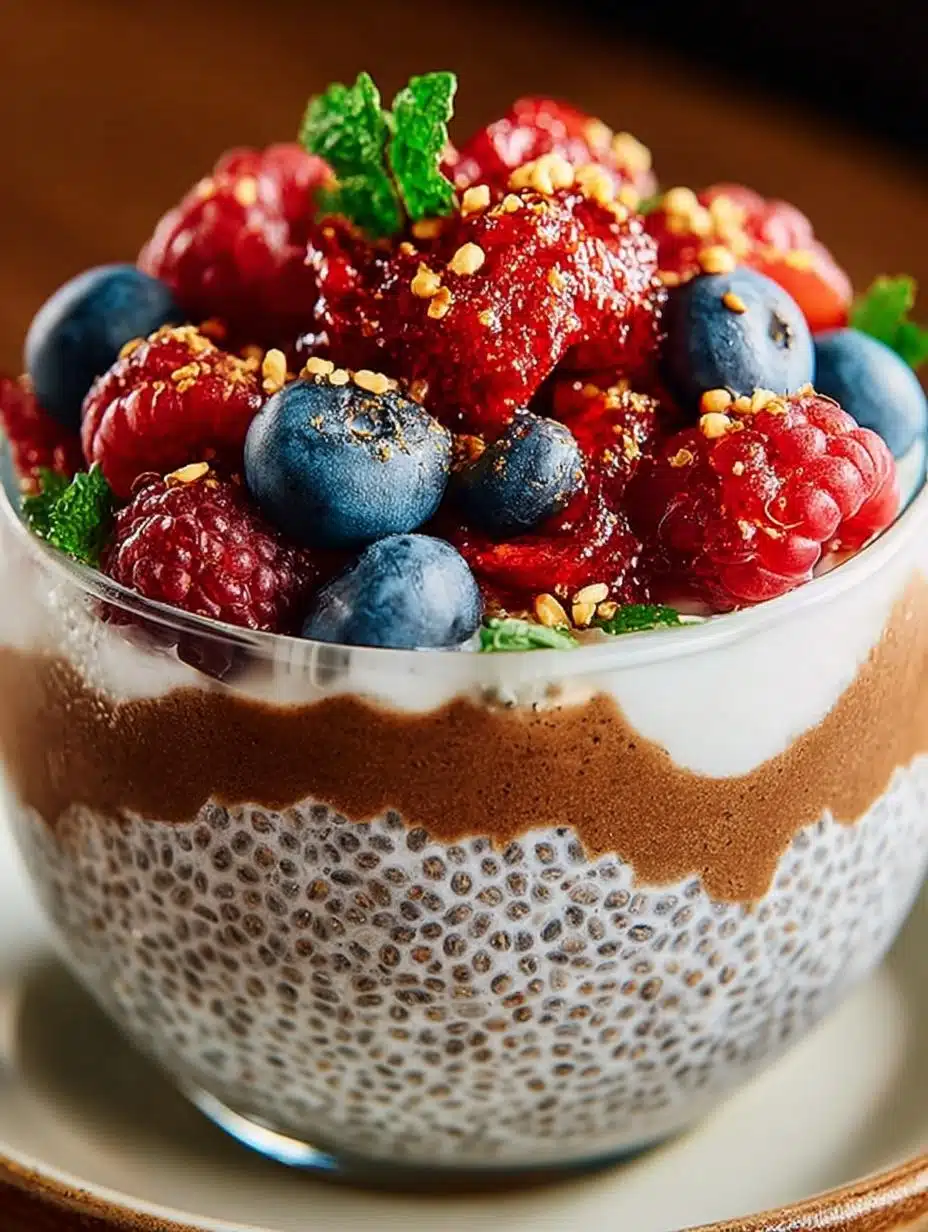
2. Chocolate Indulgence: Whisk 2 tablespoons unsweetened cocoa powder into the milk before adding chia. Increase maple syrup to 4 tablespoons. Top with raspberries, dark chocolate shavings, and chopped almonds. Tastes like healthy chocolate mousse.
3. Berry Bliss: Blend 1/2 cup mixed berries (strawberries, blueberries, raspberries) into the milk before adding chia. Naturally beautiful pink-purple color. Top with whole berries, coconut flakes, and slivered almonds.
Topping Bar: 12 Game-Changing Combinations
| Topping | Adds | Best Pairing |
|---|---|---|
| Fresh berries | Antioxidants, brightness | Vanilla or chocolate base |
| Sliced banana | Natural sweetness, potassium | Chocolate or PB |
| Granola | Crunch, complex carbs | All variations |
| Coconut flakes | Tropical flavor, healthy fat | Tropical fruits |
| Cacao nibs | Bitter chocolate crunch | Chocolate version |
| Almond butter swirl | Richness, protein | Banana additions |
| Toasted nuts | Crunch, omega-3s | All variations |
| Pomegranate seeds | Burst of flavor, color | Vanilla base |
| Hemp hearts | Protein boost, mild nutty | Health-focused |
| Dark chocolate chips | Indulgent dessert vibe | Special occasions |
| Mango chunks | Tropical sweetness | Coconut milk base |
| Maple syrup drizzle | Extra sweetness | Plain breakfast prep |
Equipment Recommendations
| Tool | Why It Helps | Budget Pick |
|---|---|---|
| Mason jars (16 oz) | Single serving, portable | Ball wide-mouth pints |
| Whisk | Prevents chia clumping | Any small whisk |
| Mixing bowl | Initial mixing | Pyrex 4-cup measuring |
| Measuring cups/spoons | Accurate ratios | Standard set |
| High-speed blender | For berry/chocolate versions | NutriBullet, Vitamix |
| Glass storage containers | Meal prep portions | Pyrex with lids |
| Small spatula | Easy serving | Mini silicone scraper |
Troubleshooting Common Problems
| Problem | Cause | Solution |
|---|---|---|
| Lumpy/clumpy texture | Insufficient initial whisking | Whisk hard, then again at 10 min |
| Too watery | Wrong ratio or rice milk | 1:4 chia to milk; use proper plant milk |
| Too thick/dense | Too many seeds | Stir in extra milk to thin |
| Chia seeds at bottom only | Settled before gelling | Whisk again at 10 and 30 min |
| Gritty texture | Old chia seeds | Use fresh seeds within 6 months |
| Bland flavor | Forgot salt or vanilla | Always add pinch of salt |
| Bitter taste | Too much cocoa, no sweetener | Increase maple syrup to balance |
| Won’t set up | Insufficient time or expired chia | Wait 8+ hours; verify chia freshness |
Storage, Meal Prep & Freezing
Chia pudding is one of the absolute best meal-prep breakfasts because it actively improves over the first 24-48 hours as flavors meld and texture stabilizes. Store in airtight containers (mason jars work brilliantly) in the refrigerator for up to 5 days. The texture remains beautifully consistent throughout this entire window without separation, oxidation, or quality degradation that affects most prepared foods. Make a triple batch on Sunday for an entire week of effortless breakfasts.
For longer storage, chia pudding freezes acceptably for up to 1 month. Freeze in individual portions in freezer-safe containers, leaving 1/2 inch headspace for expansion. Thaw overnight in the refrigerator before eating. The texture won’t be quite as silky as fresh — slightly more watery — but flavor remains excellent. For best results, freeze plain pudding without toppings, then add fresh toppings just before serving. The freezer option works well for rotating breakfast variety without committing to weekly batches.
Pairing Chia Pudding With Other Healthy Foods
Chia pudding pairs beautifully with other healthy breakfast and snack options for satisfying meals. Serve alongside cottage cheese pancakes or 3-ingredient banana pancakes for variety. Pair with strawberry peach smoothie or protein strawberry shake for complete breakfasts. Other complementary recipes include healthy cottage cheese pancakes and peanut butter coffee smoothie for variety.
For dessert variations or post-workout fuel, combine chia pudding ideas with chocolate protein bars, dark chocolate almond bark, chocolate PB bites, or cottage cheese chocolate mousse. The chia pudding base provides excellent foundation for layered desserts using these recipes as toppings or accompaniments. The combinations are endless and consistently delicious for healthy eating throughout the week.
The Science of Chia Seed Gelling
Understanding what happens chemically when chia seeds meet liquid explains why this simple recipe works so reliably and how to troubleshoot when it doesn’t. Chia seeds have an outer layer of soluble fiber that absorbs water on contact, forming a gel coating around each individual seed. This gelatinous substance is composed primarily of mucilage — a type of polysaccharide that creates the signature pudding-like texture without any need for cooking, blending, or chemical thickeners. The seeds themselves remain intact and slightly crunchy in the center, providing pleasant textural contrast.
This same mucilaginous property is what makes chia seeds so beneficial for digestive health and blood sugar management. The soluble fiber forms a gel in your digestive system that slows glucose absorption, supports beneficial gut bacteria, and creates lasting feelings of fullness. The expansion ratio means a small portion of dry chia seeds (just 2 tablespoons per serving) creates a satisfying meal-sized portion of pudding. This nutritional density combined with effortless preparation explains why chia pudding has earned permanent placement in wellness culture rather than fading as a trend.
The gelling process is temperature-sensitive: cold liquids gel more slowly than room temperature liquids. Use refrigerator-cold milk and you’ll need the full overnight setting time. Use room-temperature milk and pudding sets in 2-3 hours. Some recipes call for warming the milk slightly to speed gelling, but this isn’t necessary if you simply plan ahead and prep the night before. The chemistry rewards patience with the most consistent texture results.
Health Benefits & Nutritional Deep Dive
| Health Benefit | Mechanism | Evidence Level |
|---|---|---|
| Heart health | Omega-3 ALA reduces inflammation | Strong |
| Blood sugar control | Soluble fiber slows glucose absorption | Strong |
| Digestive health | Prebiotic fiber feeds gut bacteria | Strong |
| Bone strength | High calcium, magnesium, phosphorus | Strong |
| Weight management | Satiety from fiber + protein | Moderate |
| Skin health | Omega-3s, antioxidants | Moderate |
| Brain function | ALA conversion to DHA | Moderate |
| Anti-inflammatory | Omega-3s, polyphenols | Moderate |
Chia seeds contain all nine essential amino acids, making them a complete plant protein source — relatively rare among plant foods. They also contain quercetin, kaempferol, chlorogenic acid, and caffeic acid — antioxidant compounds linked to reduced inflammation and chronic disease risk. The combination of complete protein, complete spectrum of antioxidants, healthy fats, and substantial fiber makes chia among the most nutritionally complete foods available, particularly for plant-based eaters seeking dense nutrition from minimal volume.
Chia Pudding for Different Dietary Needs
Chia pudding adapts beautifully to nearly every dietary restriction and preference. For vegan and plant-based eaters, the recipe is naturally vegan as written when made with plant milk and maple syrup. For those following gluten-free diets, chia seeds are naturally gluten-free, making this an excellent breakfast option compared to traditional gluten-containing breakfasts. For paleo or Whole30 followers, replace maple syrup with mashed banana or date paste for compliant sweetening.
For diabetic-friendly versions, use unsweetened plant milk and reduce or omit added sweeteners — the natural texture and chia nutrition deliver satisfaction without spiking blood sugar. The high fiber content actually helps stabilize blood glucose response. For ketogenic dieters, use full-fat coconut milk and replace maple syrup with monk fruit or stevia drops. The macronutrient profile becomes 3g net carbs, 5g protein, 18g fat per serving — comfortably within keto parameters while providing satisfying breakfast.
For pregnancy and breastfeeding, chia pudding provides exceptional nutrition: folate, iron, calcium, omega-3s, and complete protein in concentrated form. The mild flavor often appeals during pregnancy nausea when other foods feel overwhelming. For elderly nutrition needs, the soft texture aids those with chewing difficulties, while the dense nutrition supports bone health, cognitive function, and digestive regularity that often becomes more challenging with age. Few single recipes serve so many different nutritional populations equally well.
Make-Ahead Strategies for Busy Weeks
Chia pudding ranks among the absolute best meal-prep breakfasts available, period. The recipe scales linearly without modification, requires zero cooking attention beyond initial mixing, holds quality for 5 full days, and creates portable single servings perfect for grabbing on busy mornings. Sunday meal prep sessions can produce an entire week of breakfasts in under 15 minutes of active work — including time to portion into individual jars and clean up.
The optimal meal-prep approach involves making one large batch of plain vanilla base pudding, then customizing each daily portion with different toppings and mix-ins for variety throughout the week. Monday might feature berries and granola, Tuesday almond butter and banana, Wednesday cocoa powder and dark chocolate chips, Thursday tropical mango and coconut, Friday whatever fresh fruits remain. This approach prevents flavor fatigue while maintaining the simplicity of single-batch meal prep.
For ultimate efficiency, set up a “chia pudding station” in your kitchen with everything needed always at hand: chia seeds, your preferred plant milk, maple syrup, vanilla, salt, mason jars, and a small whisk. Taking 5 minutes Sunday evening to prep four jars sets you up for the entire workweek with breakfasts that require zero morning thought. The ROI on this small investment of weekend time pays dividends every busy weekday morning when you simply grab a jar and go without any decision fatigue or preparation stress whatsoever.
Final Tips for Chia Pudding Mastery
After making chia pudding hundreds of times across countless variations, certain refinements emerge that consistently elevate the basic recipe. Always use fresh chia seeds — they should look glossy and feel slightly oily, not dried out or dusty. Store seeds in airtight containers in a cool dark place or refrigerator to extend shelf life beyond the typical 6-month window. Old seeds produce gritty, less satisfying pudding texture and reduced gelling performance that frustrates even careful preparation.
Never skip the pinch of salt regardless of which flavor variation you make. Salt amplifies sweetness perception (allowing you to use less added sugar) and enhances every other flavor in the pudding dramatically. Without salt, chia pudding tastes flat and one-dimensional even with quality ingredients. With salt, the same exact recipe transforms into something genuinely craveable. This single ingredient costs essentially nothing but makes outsized difference in final flavor quality and overall satisfaction with the dish.
Build texture variety into every serving through strategic toppings. The pudding base provides creamy soft texture, so add crunchy elements like granola or toasted nuts, juicy elements like fresh berries or stone fruit, and rich elements like nut butters or coconut flakes. This intentional textural contrast makes each bite more interesting and satisfying than chia pudding alone. The combination should provide at least three distinct textures and flavors per serving for the most enjoyable eating experience that genuinely satisfies cravings.
Master this single recipe and you have a healthy breakfast template that handles meal prep, weeknight breakfasts, post-workout fuel, and even healthy desserts equally well throughout the year.
The combination of effortless preparation, exceptional nutrition, endless flavor versatility, and outstanding meal-prep capability makes vegan chia seed pudding one of the single most valuable additions any home kitchen can adopt. It works for weight loss journeys, athletic performance fueling, post-workout recovery, busy weekday mornings, lazy weekend brunches, and even healthy dessert cravings with equal consistency. Make it once and you will understand exactly why it has earned permanent placement in wellness culture worldwide.
This recipe rewards minimal effort with maximum returns through reliable consistency, satisfying texture, and genuinely impressive nutritional density that few other simple recipes can possibly match anywhere.
Start tonight with one mason jar and tomorrow morning experience the difference that proper meal preparation makes for healthy daily eating habits.
Frequently Asked Questions About Chia Seed Pudding
What’s the perfect ratio of chia to liquid?
1:4 ratio works perfectly — 1/4 cup chia seeds to 1 cup liquid creates ideal pudding consistency. Adjust by 1 tablespoon either direction based on preference.
How long does chia pudding need to set?
Minimum 4 hours, ideally overnight (8+ hours). The longer it sits (up to 24 hours), the thicker and creamier the texture becomes.
Why is my chia pudding lumpy?
Insufficient whisking. Whisk vigorously when first combining, then whisk again at the 10-minute mark to break up clumps before they set permanently.
Can I use whole milk instead of plant milk?
Yes — any milk works. Whole dairy milk produces richer pudding. Skim milk produces lighter version. Recipe is forgiving about milk type.
How long does chia pudding last?
5 days refrigerated in airtight containers. Quality remains excellent throughout — actually improves over first 24-48 hours as flavors meld.
Is chia pudding good for weight loss?
Yes — high fiber and protein create lasting satiety, helping prevent mid-morning hunger. About 200-250 calories per serving with substantial nutrition.
Can I sweeten with honey instead?
Yes for non-vegan version. Honey, agave, date syrup, or even mashed banana all work well. Avoid artificial sweeteners which often taste bitter.
Can children eat chia pudding?
Absolutely — it’s a healthy kid breakfast. Use creamy versions and fun toppings like berries and chocolate chips to encourage acceptance.
Why doesn’t my pudding thicken?
Either insufficient time (need 4+ hours), expired chia seeds (replace if older than 6 months), or used rice milk which lacks needed fat content.
Can I make this without sweetener?
Yes — naturally sweet plant milks (oat, sweetened almond) work without added sugar. Or use 1 mashed ripe banana for natural sweetening.

Written by Chef Anna
I'm Anna - a Le Cordon Bleu-trained chef, recipe developer, and the voice behind Chef Johns Gourmet. After a decade in professional kitchens, I now spend my mornings testing recipes and my afternoons writing them down so you can make them perfectly in your own kitchen. Every one of the 1,100+ recipes on this site has been personally cooked, tasted, and refined. I write like I'm standing next to you, walking you through every step. Simple recipes. Bold flavors. Made for real kitchens.