
Key Takeaways
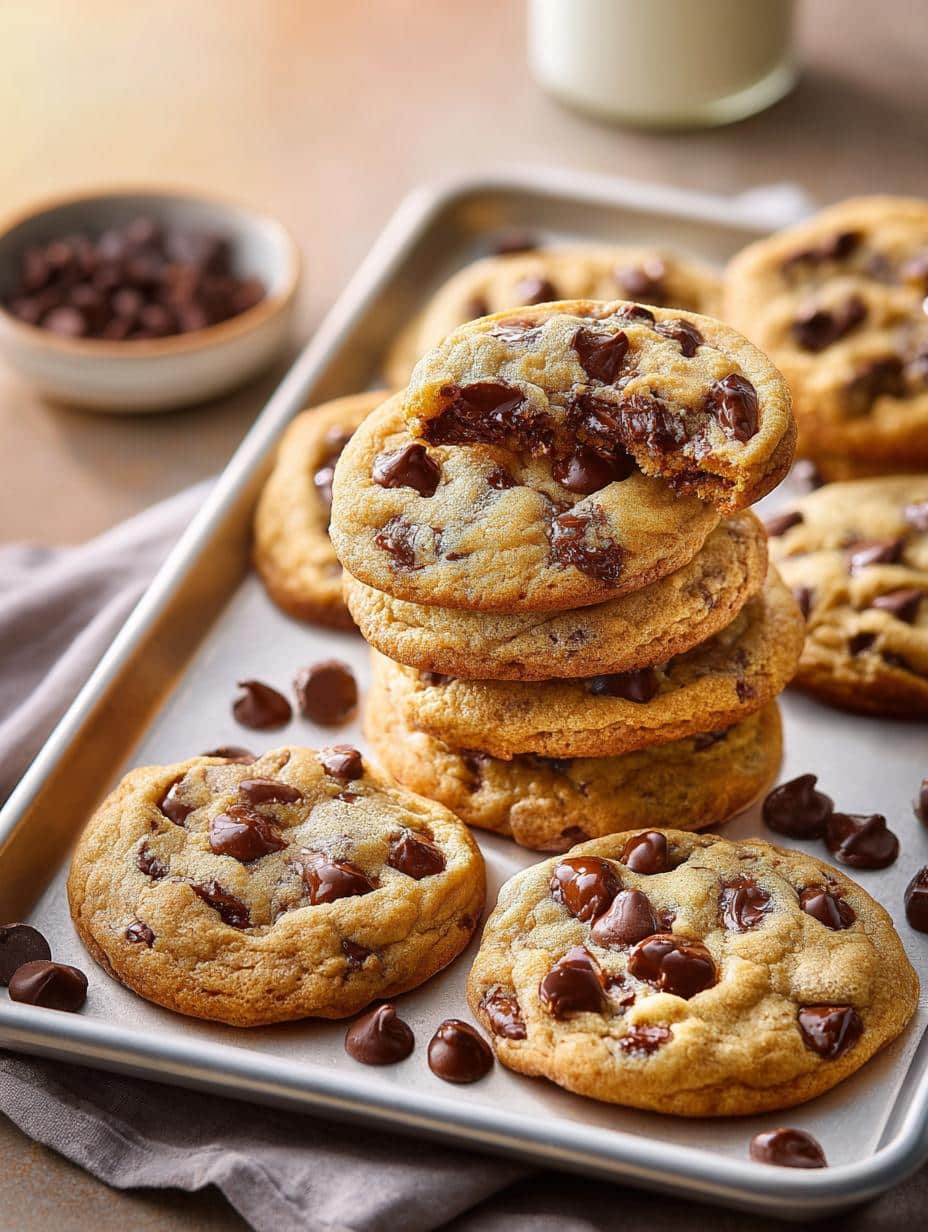
- Bakery style chocolate chip cookies are thicker (3/4 inch tall), wider (4-inch diameter), and gooier in the center than home-style cookies — achieved through specific butter, flour, and chilling techniques.
- The secret to that signature bakery thickness is cold butter plus bread flour (not all-purpose) combined with overnight dough chilling to prevent excessive spreading during baking.
- Using a combination of chocolate chips and hand-chopped chocolate bars creates the puddles, shards, and varied pockets of melted chocolate that make bakery cookies visually stunning and texturally complex.
- The pro technique of pulling cookies out slightly underbaked (edges golden, centers still pale) delivers that genuine gooey-middle experience — they firm up as they cool.
- A two-temperature bake (400°F for 5 minutes, then 350°F for 7-9 minutes) creates the contrast of crispy edges and soft, pillowy centers that defines the bakery style.
- These cookies pair perfectly with our creamy banana pudding or peanut butter coffee smoothie for a truly indulgent dessert experience.
What Actually Makes a Cookie “Bakery Style”
Walk into any quality bakery and the chocolate chip cookie on display looks different from what comes out of a home oven. It’s visually dramatic — standing tall at three-quarters of an inch rather than the flat, sprawled disks most home recipes produce. The edges are crisp and golden, while the center is soft, pale, and visibly underdone. Fat pools of melted chocolate create dark spots amid irregular shards of chocolate that look hand-placed rather than uniformly distributed. Pick one up and it’s substantial, about twice the weight of a homemade cookie, with craggy surface texture and a pull-apart tenderness that evokes something between a brownie and a cake.
This isn’t an accident or a commercial secret. Every difference between bakery and home-style cookies comes down to deliberate technique choices that anyone can replicate with the right knowledge. The first difference is dough temperature. Bakeries use dough that’s been refrigerated for at least 24 hours, often 48-72. During this rest, the flour fully hydrates, the fats firm up completely, and flavor compounds develop through slow enzymatic action. The result is a cookie that spreads less, tastes more complex, and browns more evenly.
The second difference is ingredient choice. Professional bakers typically use bread flour or a mix of bread and all-purpose for higher protein content, which creates stronger structure and chewier texture. They use more brown sugar than white for moisture and chew. They often use cold, cubed butter rather than softened, which creates flaky, layered pockets as it melts. And crucially, they use much more chocolate than most home recipes suggest — often 1.5 to 2 times the amount, and in varied forms including chips, chunks, and chopped bars for visual and textural variety.
| Attribute | Bakery Style | Classic Home Style | Tollhouse Original | Crumbl/Levain Style |
|---|---|---|---|---|
| Diameter | 4-5 inches | 2.5-3 inches | 2.5 inches | 5-6 inches |
| Height | 3/4 inch | 1/4 inch | 1/4 inch | 1.5-2 inches |
| Weight per cookie | 3-4 oz | 1-1.5 oz | 1 oz | 5-6 oz |
| Dough chill time | 24-48 hours | None to 30 min | None | Several hours |
| Primary flour | Bread or mix | All-purpose | All-purpose | Mostly bread flour |
| Butter state | Cold, cubed | Softened | Softened | Cold, cubed |
| Chocolate variety | Mix of forms | Just chips | Just chips | Large chunks |
| Bake method | Two-temp | Single temp | 375°F one bake | 410°F short bake |
Essential Ingredients for Authentic Bakery Style
Building a bakery-quality cookie requires rethinking the standard ingredient list. Small changes in type and quantity produce dramatic differences in the final cookie. Here’s exactly what you need and why.
Bread flour replaces (or supplements) all-purpose flour. Bread flour has 12-14% protein compared to all-purpose at 10-11%. The extra protein creates more gluten development, which translates to chewier texture and less spread during baking. If bread flour isn’t available, use 2 cups all-purpose plus 2 tablespoons of vital wheat gluten. Or use 100% all-purpose and accept slightly flatter, less chewy cookies. King Arthur and Bob’s Red Mill both make excellent bread flour.
Cold, cubed butter — not softened — is a game-changing technique. The cold butter creates small pockets within the dough that melt during baking, producing flaky layers and preventing excessive spread. Cut cold butter into 1/2-inch cubes directly from the fridge. Mixing time increases slightly (3-4 minutes with sugars versus 2 for softened), but the texture reward is substantial.
Higher brown sugar ratio (2:1 brown to white) produces chewier, more caramelized cookies. Brown sugar contains molasses, which adds moisture, complex flavor, and that distinctive chewy texture. Light brown works fine, but dark brown creates even deeper flavor notes reminiscent of butterscotch. The same caramelization principle makes our favorite carrot cake recipe so satisfying.
Mixed chocolate forms transform ordinary cookies into extraordinary ones. Use 1 cup of semi-sweet chocolate chips for familiar bites, 1/2 cup of dark chocolate chunks (60-70% cacao) for depth, and 1/2 cup of chopped chocolate bar for those stunning shards and puddles that define bakery style. Ghirardelli, Callebaut, and Guittard bars all work beautifully when chopped. The variety in size and shape creates visual drama and flavor complexity no single-form version can match.
| Ingredient | Amount | Role | Substitution |
|---|---|---|---|
| Bread flour | 2 1/4 cups | Structure, chewiness | AP + 2 tbsp vital wheat gluten |
| Baking soda | 1 tsp | Spread + browning | None (essential) |
| Fine sea salt | 1 tsp | Flavor enhancer | Kosher salt (use 1.5 tsp) |
| Cold unsalted butter (cubed) | 1 cup (2 sticks) | Structure, flakiness | European-style butter |
| Dark brown sugar | 1 cup packed | Moisture, chew, flavor | Light brown sugar |
| Granulated sugar | 1/2 cup | Crisp edges | Turbinado for crunch |
| Large eggs | 2 | Binding, richness | None (essential) |
| Pure vanilla extract | 2 tsp | Aromatic complexity | Vanilla bean paste |
| Semi-sweet chocolate chips | 1 cup | Familiar bite | Milk chocolate chips |
| Dark chocolate chunks | 1/2 cup | Depth, complexity | 70% bittersweet |
| Chopped chocolate bar | 1/2 cup | Shards, puddles | Any quality bar |
| Flaky sea salt (finishing) | For topping | Flavor + visual | Maldon, fleur de sel |
Step-by-Step Bakery Style Cookie Method
Step 1: Whisk the Dry Ingredients
In a medium bowl, whisk together the bread flour, baking soda, and salt until uniformly combined. This separate mixing ensures even distribution — baking soda concentrated in one part of dough creates bitter spots and uneven rise. Set aside.
Step 2: Beat the Cold Butter and Sugars
In a stand mixer fitted with the paddle attachment (or large bowl with hand mixer), beat the cold cubed butter with both sugars on medium speed for 3-4 minutes. The mixture will look chunky at first but gradually becomes creamy and lightened in color with visible air incorporation. Unlike traditional creaming with soft butter, this takes longer and the texture will be slightly more rustic — that’s correct. Scrape down the sides of the bowl midway through.
Step 3: Add Eggs and Vanilla
Add eggs one at a time, beating 30 seconds after each to incorporate fully. Scrape the bowl. Add vanilla and beat 15 seconds more. The mixture should look smooth, fluffy, and pale. If it looks curdled, keep beating — usually resolves in another minute.
Step 4: Mix in the Dry Ingredients
With the mixer on low speed, gradually add the flour mixture in three additions, mixing just until barely combined after each. Do not overmix. The dough should look like shaggy pieces with a few streaks of flour visible. Overmixed dough produces tough cookies.
Step 5: Fold in the Chocolate
Remove the bowl from the mixer. Using a rubber spatula, fold in the chocolate chips, chunks, and chopped chocolate bar until evenly distributed. Don’t stir aggressively — gentle folds preserve the distinct chocolate forms. The dough should be visibly loaded with chocolate.
Step 6: Portion and Chill
Use a large cookie scoop (3 tablespoons) or 1/4 measuring cup to portion dough into balls. Each ball should weigh 3-3.5 ounces. Place on a parchment-lined tray. Press extra chocolate chunks on the tops for that bakery-showcase appearance. Cover with plastic wrap and refrigerate for at least 24 hours, ideally 48. This is non-negotiable for authentic bakery style.
Step 7: Two-Temperature Bake
When ready to bake, preheat oven to 400°F. Arrange chilled dough balls on a parchment-lined sheet with at least 3 inches between cookies (they spread significantly). Bake at 400°F for 5 minutes. Without opening the oven, reduce temperature to 350°F and continue baking for 7-9 minutes more. Edges should be golden, centers still pale and slightly underdone-looking. Immediately sprinkle with flaky sea salt. Let cool on pan for 10 minutes before transferring.
The Science Behind Gooey Centers
Understanding why bakery cookies achieve that perfect gooey-center texture transforms you from recipe-follower to intuitive baker. Several scientific principles converge to create this effect, and knowing them helps you troubleshoot and adapt any recipe.
Residual heat cooking is the most important principle. Cookies continue cooking after they leave the oven due to carryover heat. A cookie that looks perfect coming out of the oven will be overcooked by the time it cools. Pulling cookies out when the centers still look pale and slightly wet means they finish setting to the ideal gooey texture on the pan — identical to cooking steak to 130°F and letting it rest to 135°F for medium-rare. This temperature-management concept also elevates our balsamic baked chicken breast.
Sugar crystallization affects texture dramatically. Brown sugar absorbs more moisture during baking, so cookies with high brown sugar ratios stay softer longer. White sugar crystallizes and creates crisp edges. The 2:1 brown-to-white ratio gives ideal soft center, crisp edge contrast.
Chilling creates better flavor through enzymatic action. Given 24 hours, enzymes in the flour break down proteins into amino acids, which caramelize more dramatically during baking. The result is deeper, richer, more complex flavor — the exact difference between good cookies and bakery-quality ones.
Make-Ahead, Freezing, and Storage
How Long Does the Dough Keep?
Refrigerated dough keeps for 5 days in an airtight container. Pre-portioned dough balls can go directly into a zip-top bag for frozen storage — up to 3 months. Bake frozen dough balls without thawing; add 2-3 minutes to bake time.
Best Way to Store Baked Cookies?
Store cooled cookies in an airtight container at room temperature for up to 5 days. Place a slice of bread in the container — the bread dries out while your cookies stay soft and chewy. Never refrigerate baked cookies; the cold dries them out rapidly.
Can I Freeze Baked Cookies?
Yes, beautifully. Cool completely, then layer with parchment between cookies in a freezer-safe container. Freeze up to 3 months. Thaw at room temperature for 30 minutes, or warm at 300°F for 4 minutes for fresh-from-oven feel.
How Do I Restore Day-Old Cookies?
Microwave one cookie for 12-15 seconds — this brings back the just-baked warm, slightly gooey quality. For multiple cookies, reheat at 300°F for 4-5 minutes. Works magic on cookies up to 4-5 days old.
Pro Tips That Elevate Every Batch
These advanced techniques separate good home bakers from truly exceptional ones. Incorporating even one of these tips noticeably improves results. Master all of them and your cookies will rival any professional bakery. Similar attention to detail turns our indulgent chocolate waffles into restaurant-quality breakfast.
Brown the butter first for next-level flavor. Melt butter over medium heat until it turns golden amber and smells nutty — 5-7 minutes. Cool completely (refrigerate 45 minutes) until solidified before using. The browned milk solids add caramelized, toffee-like complexity.
Press extra chocolate on top of each dough ball before baking. This creates the Instagram-worthy chocolate-puddle appearance of professional cookies and ensures every single cookie has visible chocolate.
Slam the pan halfway through baking. After 5 minutes at 400°F, when cookies have begun spreading, lift the pan 4 inches and drop firmly on the oven rack. This technique (popularized by food writer Sarah Kieffer) creates those dramatic ripply edges and denser centers of viral cookie fame.
Use a cookie scoop roll for perfect rounds. Scoop dough with a large cookie scoop, then gently roll between palms to form uniform spheres. This helps cookies bake into consistent round shapes rather than rustic ovals.
Chocolate Selection Guide for Cookies
The single biggest flavor upgrade for any chocolate chip cookie is using better chocolate. Mass-market chocolate chips contain stabilizers that prevent melting (which is why they keep their teardrop shape), but they also mute flavor. Professional bakers use real chocolate bars chopped by hand for the mix of puddles, shards, and irregular pieces that create visual drama and flavor complexity. The same chocolate elevation transforms our dark chocolate almond bark into something memorable.
| Chocolate Type | Flavor Profile | Melts Into Puddles | Best Use |
|---|---|---|---|
| Semi-sweet chips (Nestle) | Classic, familiar | No (holds shape) | Traditional cookies, kids |
| Dark chocolate chunks (Ghirardelli) | Deep, rich | Partial | Adult-friendly bakery style |
| Chopped bittersweet bar (70%) | Intense, complex | Yes, dramatic | Bakery puddles and shards |
| Callebaut callets | Professional, balanced | Partial | High-end home baking |
| Guittard Extra Dark chips | Bold, less sweet | No (holds shape) | Dark chocolate lovers |
| Valrhona Féves (66%) | French, sophisticated | Yes, beautiful | Luxury showpiece cookies |
| Milk chocolate chunks | Creamy, sweet | Yes | Nostalgic, extra sweet |
| White chocolate chips | Vanilla-forward | No (dense) | Mix with dark for contrast |
Troubleshooting Every Cookie Problem
Even experienced bakers encounter the occasional problem batch. The good news: every cookie issue has a clear cause and a specific fix. Use this guide to diagnose what went wrong and prevent it next time. The same troubleshooting mindset helps perfect our healthy oat cookies and any other baked goods where texture matters.
| Problem | Most Likely Cause | Fix for Next Time |
|---|---|---|
| Cookies spread into flat disks | Dough too warm, butter melted | Chill 24+ hours, use cold butter, cool pan |
| Dense, tough texture | Overmixed dough after adding flour | Mix flour just until combined, stop there |
| Centers stay raw-looking after baking | Underbaked or oven running cool | Verify oven with thermometer, add 1-2 min |
| Cookies brown too fast on bottom | Dark pan or rack too low | Use light-colored pan, middle rack, parchment |
| Salty or metallic taste | Too much baking soda | Measure carefully, level with knife |
| Cookies crack on top | Oven too hot (set rose too fast) | Drop temperature 15°F, extend bake time |
| Cookies too uniform, no texture | Same-size chocolate throughout | Mix chips, chunks, and chopped bars |
| Chocolate sinks to bottom | Dough too liquid | Chill dough, add 2 tbsp extra flour |
| Cookies stale within a day | Stored uncovered or over-baked | Airtight container + bread slice, pull earlier |
| Bland, one-note flavor | Salt forgotten or low-quality vanilla | Never skip salt, use pure vanilla extract |
Pairing Bakery Cookies Into a Dessert Experience
A single warm bakery-style cookie is already special, but pairing them into a larger dessert experience multiplies the impact. Ice cream sandwiches are the obvious play — stack a scoop of quality vanilla bean ice cream between two warm cookies and you’ve elevated a simple cookie into something restaurant-worthy. Serve them alongside our creamy banana pudding for textural contrast that surprises guests. Crumble over our peanut butter cup mousse for an over-the-top indulgence. For brunch, pair warm cookies with our peanut butter coffee smoothie or a simple hot coffee.
For dessert charcuterie boards, arrange warm cookies alongside fresh berries, chocolate truffles, and small bowls of salted caramel dipping sauce. This pairing strategy transforms simple cookies into sharable centerpieces. The same board thinking works with our cottage cheese chocolate mousse for a truly varied dessert spread. And if you want to go all-in on cookies, bake several doughs on the same day — bakery style, oat, and peanut butter — for a cookie tasting flight that lets guests compare different styles.
| Occasion | Serving Style | Pairing | Drink |
|---|---|---|---|
| Afterschool snack | Warm, fresh from oven | Cold glass of milk | Chocolate or regular milk |
| Dinner party dessert | Plated with ice cream | Vanilla bean or salted caramel | Espresso or port |
| Ice cream sandwiches | Stacked while slightly warm | Any ice cream flavor | Cold milk or coffee |
| Brunch spread | Platter, room temp | Fresh fruit, yogurt | Coffee or tea |
| Cookie delivery gift | Boxed with parchment | Include reheating instructions | Recipient’s choice |
| Holiday tray | Mixed with other cookies | Variety pack presentation | Mulled cider, coffee |
| Wedding/event dessert | Individually plated | Seasonal berry compote | Champagne or coffee |
| Cozy night in | Warm from reheat | Ice cream + warmed chocolate sauce | Hot chocolate |
Frequently Asked Questions About Bakery Style Chocolate Chip Cookies
Do I really need to chill the dough overnight?
For authentic bakery style, yes. Shorter chilling (2-4 hours) produces decent cookies. Overnight chilling produces great cookies. 48-72 hours produces legendary cookies. The difference is genuinely noticeable — chilled dough bakes into thicker, chewier, more flavorful cookies.
Can I use all-purpose flour instead of bread flour?
Yes, but add 2 tablespoons vital wheat gluten per 2.25 cups AP flour. Without it, cookies will be slightly flatter and less chewy. If you don’t have vital wheat gluten, use the recipe as-is — they’ll still be great, just not quite as thick.
Why did my cookies spread too much?
Most likely causes: dough not chilled enough, butter too warm when mixed, or pan was still warm from previous batch. Always use a completely cool baking sheet and chilled dough. For a rescue fix, chill dough 30 more minutes before baking.
Can I make these without a stand mixer?
Absolutely. Use a hand mixer — just plan for slightly longer beating times. Or mix entirely by hand with a sturdy wooden spoon and some elbow grease. The results are the same; the mixer just makes it easier.
What if my cookies come out flat?
Flat cookies mean the dough was too warm or had too much spread happening. Next time: chill dough longer, use cold butter from the start, and ensure baking soda is fresh (old soda loses rise power). Also verify oven temperature with a thermometer.
How do I get that Instagram-worthy appearance?
Press extra chocolate chunks onto cookie tops before baking. Sprinkle with flaky sea salt immediately after baking. Use parchment paper for even browning. And always undercook slightly — pale centers photograph better than overdone brown centers.
Can I reduce the sugar?
You can reduce by up to 1/4 cup without dramatically affecting texture. More reduction will change the caramelization and structure. For lower-sugar cookies, consider our healthy oat cookies recipe instead.
Why add flaky salt on top?
Flaky salt creates tiny bursts of saltiness that dramatically enhance chocolate flavor perception. It’s the same principle as why salted caramel tastes more caramel-y. Don’t skip this finishing touch — it genuinely elevates the cookie.
Can I add nuts or other mix-ins?
Yes — fold in 1 cup total of chopped toasted walnuts, pecans, toffee bits, or peanut butter chips along with the chocolate. Reduce chocolate by same amount to keep total mix-ins balanced, or add without reduction for loaded cookies.
What size should I make them?
For authentic bakery style, 3-3.5 oz dough balls (about 1/4 cup each). This yields dramatic 4-inch cookies. For tea-time cookies, use 2 oz balls for 3-inch cookies. For ginormous Levain-style, use 5-6 oz balls and bake 12-15 minutes.

Written by Chef Anna
I'm Anna - a Le Cordon Bleu-trained chef, recipe developer, and the voice behind Chef Johns Gourmet. After a decade in professional kitchens, I now spend my mornings testing recipes and my afternoons writing them down so you can make them perfectly in your own kitchen. Every one of the 1,100+ recipes on this site has been personally cooked, tasted, and refined. I write like I'm standing next to you, walking you through every step. Simple recipes. Bold flavors. Made for real kitchens.