
Baked Halibut — Perfectly Flaky 20-Minute Oven Recipe
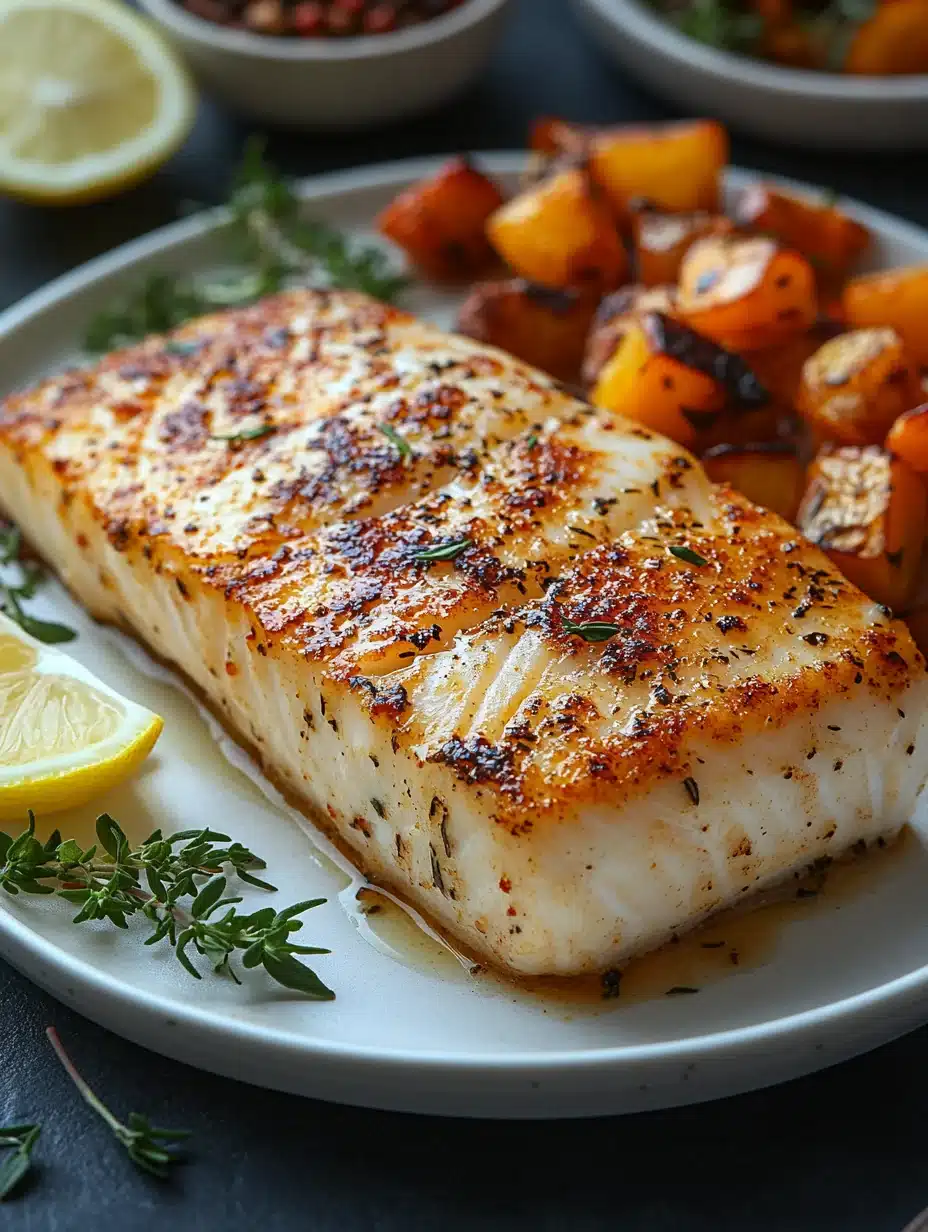
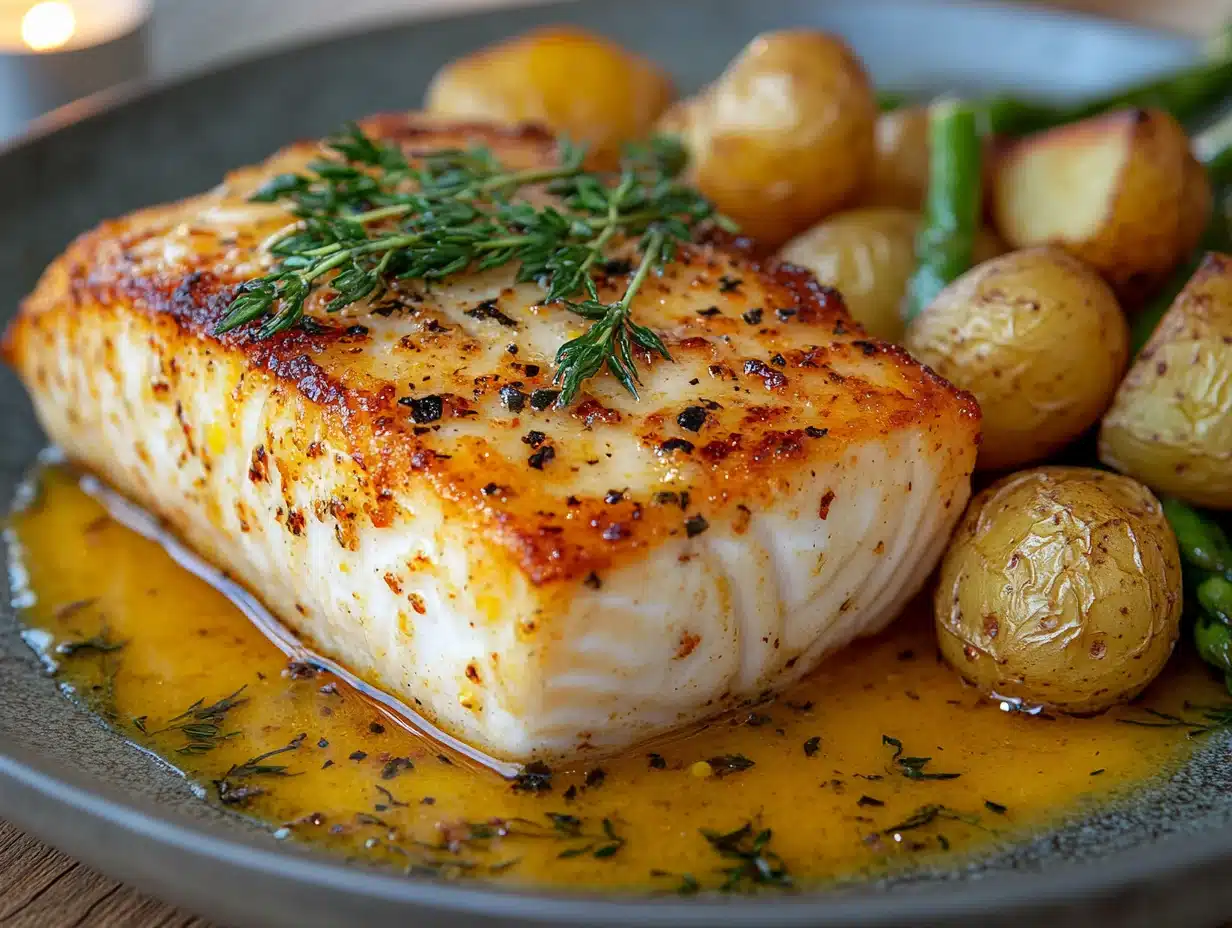
Halibut is the king of white fish — thick, meaty, pristinely mild, and luxuriously flaky when cooked right. This baked halibut recipe takes just 20 minutes from oven to table and produces restaurant-quality results every single time. The lemon herb butter baste keeps the fish impossibly moist while adding bright, aromatic flavor that lets the halibut’s natural sweetness shine.
Halibut’s firm texture and mild taste make it the perfect canvas for both simple preparations and bold toppings. Whether you’re a confident cook or making fish for the first time, this comprehensive guide covers exact temperatures, timing for every thickness, 6 topping variations, and the answers to every question you might have about baking this premium fish.
Key Takeaways
- 20-minute recipe: 5 minutes prep + 12–15 minutes baking at 400°F
- Internal temp target: 130°F for perfectly flaky, moist halibut
- 10-minute rule: Bake 10 minutes per inch of thickness at 400°F
- Lemon herb butter: Baste once during cooking for maximum flavor and moisture
- Don’t overcook: Halibut goes from perfect to dry in just 2–3 minutes — watch carefully
- 6 variations: From Parmesan crusted to miso glazed for endless variety
Baked Halibut Nutrition Facts per Serving
| Nutrient | Per Fillet (6 oz) | With Lemon Butter | % Daily Value |
|---|---|---|---|
| Calories | 186 kcal | 265 kcal | 13% |
| Protein | 36g | 36g | 72% |
| Total Fat | 4g | 12g | 15% |
| Carbohydrates | 0g | 1g | 0% |
| Omega-3 fatty acids | 0.5g | 0.5g | — |
| Sodium | 90mg | 180mg | 8% |
| Selenium | 65mcg | 65mcg | 118% |
| Vitamin D | 600 IU | 600 IU | 100% |
Why Is Halibut Such a Premium Fish?
Halibut commands premium prices ($20–$35/lb) for good reason: it’s the largest flatfish in the world (up to 500 lbs), with firm, dense flesh that holds together beautifully during cooking. The flavor is clean, mild, and slightly sweet — far less “fishy” than salmon or mackerel, making it the best gateway fish for people who think they don’t like seafood.
Pacific vs. Atlantic Halibut — What’s the Difference?
Pacific halibut (from Alaska and the Pacific Northwest) is the gold standard — sustainably managed, firm texture, and the best flavor. Atlantic halibut is endangered and rarely sold commercially. When buying, look for Pacific halibut (Hippoglossus stenolepis) or the more affordable alternate: California halibut (actually a flounder, but similar texture and flavor for half the price).
Essential Ingredients for Baked Halibut
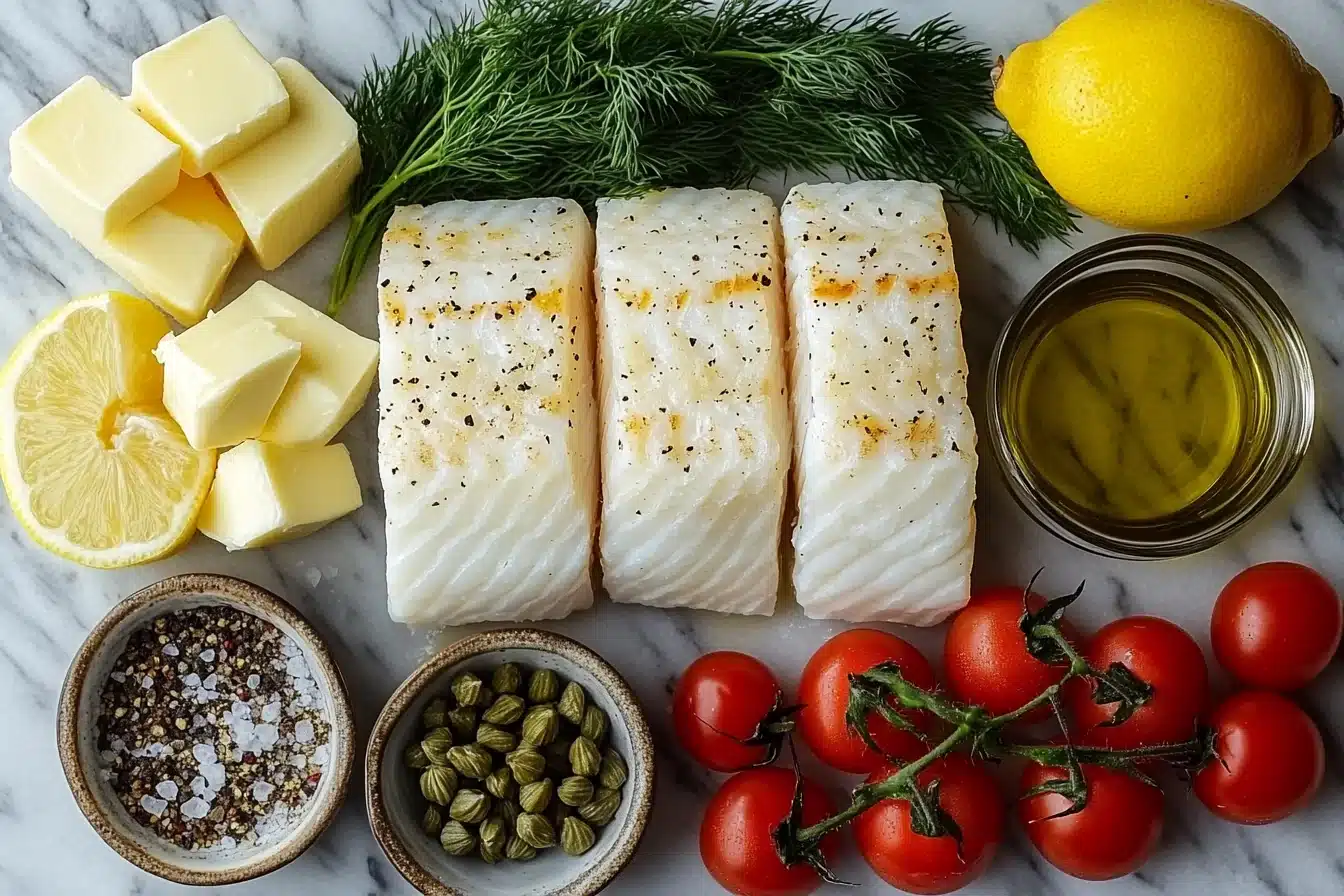
| Ingredient | Amount | Purpose | Notes |
|---|---|---|---|
| Halibut fillets | 4 fillets (6 oz each, 1 inch thick) | Main protein | Skin-on or skinless both work |
| Unsalted butter | 3 tbsp | Richness, browning | Melted for basting |
| Lemon juice | 2 tbsp (1 lemon) | Brightness, acid balance | Fresh only, not bottled |
| Garlic | 3 cloves, minced | Aromatic depth | Add to butter, not directly on fish |
| Fresh herbs | 2 tbsp chopped (dill, parsley, chives) | Fresh flavor | Mix or use one; add half before, half after |
| Olive oil | 1 tbsp | Prevents sticking | For the baking dish |
| Salt | ½ tsp | Flavor | Season 15 min before baking for better absorption |
| Black pepper | ¼ tsp | Subtle warmth | Freshly ground |
| Smoked paprika | ¼ tsp (optional) | Color, subtle smoke | Beautiful golden finish |
Step-by-Step: How to Bake Halibut Perfectly
Step 1: Prep the Fish (5 Minutes)
Pat halibut fillets completely dry with paper towels — this is the single most important step for browning. Wet fish steams instead of bakes. Season both sides with salt and pepper. Let rest at room temperature for 15 minutes while you preheat the oven to 400°F and prepare the butter.
Step 2: Make the Lemon Herb Butter (3 Minutes)
Melt butter in a small saucepan or microwave. Add minced garlic, lemon juice, half the fresh herbs, smoked paprika, and a pinch of salt. Stir to combine. Set aside — this is your basting sauce.
Step 3: Arrange in Baking Dish
Lightly oil a baking dish or line a sheet pan with parchment paper. Place fillets skin-side down (or flat-side down if skinless) with at least 1 inch between each piece for even heat circulation. Spoon half the lemon herb butter over each fillet.
Step 4: Bake at 400°F (12–15 Minutes)
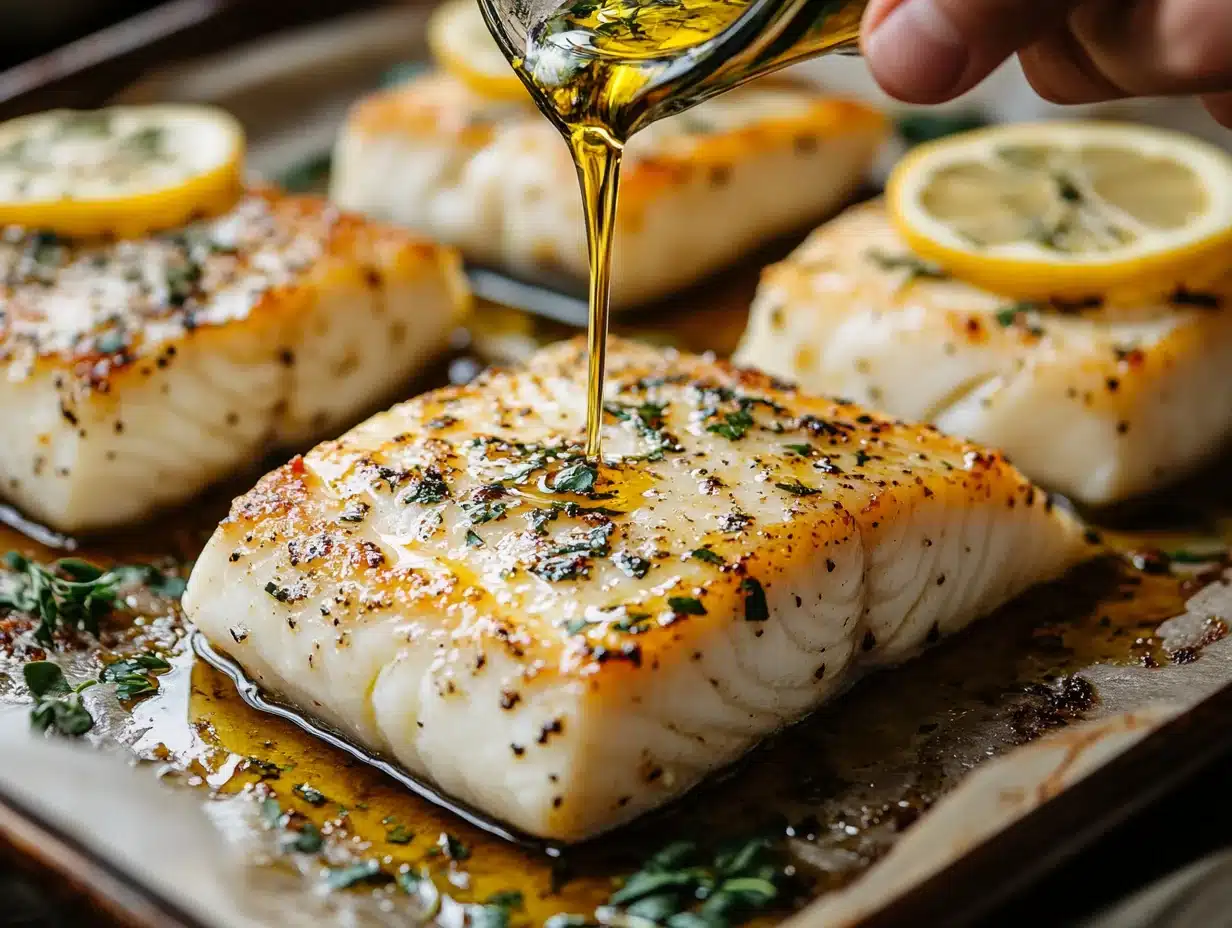
Bake until the fish reaches 130°F internal temperature — typically 12–15 minutes for 1-inch thick fillets. At the halfway point (7 minutes), spoon the remaining butter over the fish. The fish is done when it flakes easily with a fork but still has a slightly translucent center (carryover cooking finishes it).
Step 5: Rest and Serve (3 Minutes)
Remove from oven and let rest 3 minutes — the temperature will rise 5–10°F during resting, reaching the perfect 135–140°F. Garnish with remaining fresh herbs and a squeeze of lemon. Serve immediately on warm plates alongside aussie prawn salad for a stunning seafood dinner.
Baking Time and Temperature Guide for Halibut
| Fillet Thickness | Oven Temp | Bake Time | Internal Temp Target | Doneness |
|---|---|---|---|---|
| ½ inch | 400°F | 6–8 minutes | 130°F | Flaky, moist |
| ¾ inch | 400°F | 10–12 minutes | 130°F | Flaky, moist |
| 1 inch (standard) | 400°F | 12–15 minutes | 130°F | Flaky, moist |
| 1¼ inches | 400°F | 15–18 minutes | 130°F | Flaky, moist |
| 1½ inches (steaks) | 400°F | 18–22 minutes | 130°F | Flaky, moist |
| 2 inches (thick steaks) | 375°F | 22–28 minutes | 130°F | Reduce temp for even cooking |
6 Best Halibut Topping Variations
Is Parmesan Crusted Halibut Better Than Plain?
For entertaining, absolutely. Mix ¼ cup grated Parmesan, 2 tbsp panko breadcrumbs, 1 tbsp melted butter, and a pinch of garlic powder. Press onto the top of each fillet before baking. The crust turns golden and crispy while the fish stays moist underneath. Bake at 400°F for the same time.
How Do You Make Miso Glazed Halibut?
Whisk together 2 tbsp white miso paste, 1 tbsp mirin, 1 tbsp honey, and 1 tsp sesame oil. Spread over halibut and bake as directed. The miso creates a beautiful caramelized crust with complex umami flavor. Finish with sesame seeds and thinly sliced scallions.
Mediterranean Tomato-Olive Topping
Combine ½ cup cherry tomatoes (halved), ¼ cup Kalamata olives (sliced), 2 tbsp capers, fresh basil, and olive oil. Spoon over halibut before baking. The tomatoes burst in the oven, creating a natural sauce. Serve with crusty bread to soak up the juices — our Texas Roadhouse rolls work beautifully here.
Cajun Blackened Halibut
Mix paprika, garlic powder, onion powder, cayenne, thyme, and oregano. Rub generously on halibut, then sear 2 minutes per side in a cast iron skillet with butter before transferring to oven for 8–10 minutes. The spice crust is bold and smoky.
Pistachio-Herb Crusted
Pulse ⅓ cup pistachios with fresh mint, parsley, lemon zest, and a drizzle of olive oil. Press on top of fillets and bake. The pistachios add beautiful color, crunch, and a nutty sweetness that pairs surprisingly well with the mild halibut.
Prosciutto-Wrapped Halibut
Wrap each fillet in 2 thin slices of prosciutto, tucking fresh sage leaves between the ham and fish. The prosciutto bastes the fish in salty, porky fat while turning crispy on the outside. Use toothpicks to secure if needed. Bake at 400°F — the prosciutto takes 12–15 minutes to crisp.
What Are the Best Side Dishes for Baked Halibut?
Halibut’s mild flavor pairs with nearly everything. Here are the best combinations:
- Roasted asparagus: Classic pairing — the slight bitterness contrasts the sweet fish
- Mashed potatoes: Creamy base for the flaky fish and lemon butter
- Sautéed spinach: Quick, nutritious, and doesn’t compete with the halibut
- Rice pilaf: Absorbs the lemon herb butter beautifully
- Crusty bread: Essential for sopping up every drop of that lemon garlic butter
- Mixed green salad: Light and refreshing alongside the rich protein
- Roasted cherry tomatoes: Burst of acidity and sweetness
For a complete upscale dinner, start with aussie prawn salad, serve baked halibut as the main course with roasted vegetables, and finish with mini pecan pies for dessert.
Common Baked Halibut Mistakes and Fixes
| Mistake | Result | Prevention |
|---|---|---|
| Not patting fish dry | Fish steams, doesn’t brown | Paper towel both sides until completely dry |
| Overcooking (most common) | Dry, chalky texture | Pull at 130°F; use instant-read thermometer |
| Oven too low (350°F) | Fish poaches in own liquid | Use 400°F for proper browning |
| Fillets too close together | Uneven cooking, steaming | Leave 1-inch gap between pieces |
| Skipping salt rest | Seasoning only on surface | Salt 15 minutes before baking |
| Using frozen without thawing | Outside overcooked, center raw | Thaw overnight in fridge first |
| No basting | Dry top surface | Baste with butter at halfway point |
How to Buy and Store Fresh Halibut?
What to Look for When Buying Halibut
Fresh halibut should smell like the ocean — clean and briny, never fishy. The flesh should be translucent white to pale pink, firm to the touch (press it — it should spring back), and glistening with moisture. Avoid any pieces that look opaque white (already past prime), have brown edges, or smell ammonia-like. Ask the fishmonger when it came in — halibut is best within 1–2 days of catch.
Frozen vs. Fresh Halibut — Which Is Better?
Much of the “fresh” halibut at the grocery store was previously frozen anyway. Flash-frozen-at-sea halibut is often superior to “fresh” that’s been sitting on ice for days. Look for IQF (individually quick frozen) fillets with no ice crystals or freezer burn. Thaw overnight in the refrigerator, never at room temperature or in the microwave. For a weeknight protein rotation, alternate between halibut and dishes like our crock pot pot roast or smoked chicken drumsticks.
Can You Bake Halibut From Frozen?
Yes, but with adjustments. Rinse frozen fillets under cold water to remove ice glaze. Pat completely dry. Season as normal. Bake at 375°F for 20–25 minutes (about 50% longer than thawed). The results aren’t quite as good as properly thawed (less browning, slightly uneven texture), but it’s a respectable weeknight solution when you forgot to thaw.
Halibut Cooking Methods Compared
| Method | Best For | Temp / Time | Pros | Cons |
|---|---|---|---|---|
| Baking (this recipe) | Weeknight ease, even cooking | 400°F / 12-15 min | Hands-off, consistent results | Less crust than pan-searing |
| Pan-searing | Crispy exterior | Medium-high / 3-4 min per side | Beautiful golden crust | Easy to overcook thin parts |
| Broiling | Caramelized toppings | 500°F / 8-10 min | Intense top browning | Must watch carefully, burns fast |
| Grilling | Smoky flavor | Direct heat / 4-5 min per side | Gorgeous grill marks | Can stick; use oiled foil or basket |
| Poaching | Ultra-moist, delicate | 160°F liquid / 8-12 min | Impossible to dry out | No browning or crust |
| En papillote (parchment) | Steaming with aromatics | 400°F / 15-18 min | Infused flavors, easy cleanup | No visible browning |
Halibut Season and Sustainability Guide
When Is Halibut in Season?
Pacific halibut season runs from mid-March through mid-November, with peak availability from May through September. During these months, fresh halibut is most abundant and often at its best price. Outside of season, flash-frozen halibut is your best bet — look for the Marine Stewardship Council (MSC) blue label, which certifies sustainable fishing practices.
Is Halibut Sustainable?
Pacific halibut from Alaska is one of the best-managed fisheries in the world, earning a “Best Choice” rating from Monterey Bay Aquarium’s Seafood Watch program. The International Pacific Halibut Commission sets strict annual catch limits based on scientific stock assessments. Atlantic halibut, however, is overfished and should be avoided — always choose Pacific. If sustainability is a priority in your kitchen, halibut pairs well with other responsibly-sourced proteins like the free-range chicken in our smoked chicken drumsticks recipe.
Leftover Halibut Recipe Ideas
Leftover baked halibut is incredibly versatile — don’t let it go to waste. Here are tested ideas:
- Fish tacos: Flake into warm tortillas with shredded cabbage, avocado, and lime crema
- Halibut salad: Toss flaked fish with arugula, cherry tomatoes, cucumber, and lemon vinaigrette
- Fish cakes: Mix with mashed potato, herbs, and breadcrumbs; pan-fry until golden
- Pasta: Fold into garlic butter linguine with capers and cherry tomatoes
- Halibut chowder: Add to a creamy potato-corn chowder for a luxurious soup
- Grain bowl: Over quinoa or farro with roasted vegetables and tahini dressing
For a complete meal planning strategy, cook halibut on Monday, use leftovers for tacos on Tuesday, and round out the week with heartier dishes like crock pot pot roast or TikTok taco quesadillas on busier nights.
Baked Halibut
- Total Time: 25 minutes
- Yield: 4 servings 1x
- Diet: Gluten-Free
Description
Flaky baked halibut with a creamy Parmesan topping that creates a golden crust. Restaurant-quality fish in 25 minutes.
Ingredients
- Main protein 4 fillets (6 oz each, 1 inch thick)
- Richness, browning 3 tbsp
- Brightness, acid balance 2 tbsp (1 lemon)
- Aromatic depth 3 cloves, minced
- Fresh flavor 2 tbsp chopped (dill, parsley, chives)
- Prevents sticking 1 tbsp
- Flavor ½ tsp
- Subtle warmth ¼ tsp
- Color, subtle smoke ¼ tsp (optional)
Instructions
- Prep the Fish (5 Minutes) — Pat halibut fillets completely dry with paper towels — this is the single most important step for browning. Wet fish steams instead of bakes. Season both sides with salt and pepper. Let rest at room temperature for 15 minutes while you preheat the oven to 400°F and prepare the butter.
- Make the Lemon Herb Butter (3 Minutes) — Melt butter in a small saucepan or microwave. Add minced garlic, lemon juice, half the fresh herbs, smoked paprika, and a pinch of salt. Stir to combine. Set aside — this is your basting sauce.
- Arrange in Baking Dish — Lightly oil a baking dish or line a sheet pan with parchment paper. Place fillets skin-side down (or flat-side down if skinless) with at least 1 inch between each piece for even heat circulation. Spoon half the lemon herb butter over each fillet.
- Bake at 400°F (12–15 Minutes) — Bake until the fish reaches 130°F internal temperature — typically 12–15 minutes for 1-inch thick fillets. At the halfway point (7 minutes), spoon the remaining butter over the fish. The fish is done when it flakes easily with a fork but still has a slightly translucent center (carryover cooking finishes it).
- Rest and Serve (3 Minutes) — Remove from oven and let rest 3 minutes — the temperature will rise 5–10°F during resting, reaching the perfect 135–140°F. Garnish with remaining fresh herbs and a squeeze of lemon. Serve immediately on warm plates alongside aussie prawn salad for a stunning seafood dinner.
- Prep Time: 10 minutes
- Cook Time: 15 minutes
- Category: Main Course
- Method: Baking
- Cuisine: American
Nutrition
- Serving Size: 1 serving
- Calories: 186
- Sodium: 90mg
- Fat: 0.5g
- Carbohydrates: 0g
- Protein: 36g
Frequently Asked Questions About Baked Halibut
What Temperature Is Halibut Done?
The FDA recommends 145°F, but most chefs pull halibut at 130°F internal temperature (carryover cooking brings it to 135–140°F during resting). At 145°F, halibut is overcooked and dry. The 130°F sweet spot produces flaky yet moist fish.
How Long Does It Take to Bake Halibut at 400°F?
12–15 minutes for a standard 1-inch thick fillet. Use the 10-minute rule: 10 minutes per inch of thickness at 400°F, then check. Start checking 2 minutes early — it’s easier to add time than to fix overcooked fish.
Should You Bake Halibut Covered or Uncovered?
Uncovered for the best browning and texture. Covering creates steam, which poaches the fish rather than bakes it. The only exception: if topping with vegetables (like the Mediterranean variation), you can tent with foil for the first 10 minutes to soften the vegetables, then uncover for the final 5 minutes.
Can You Bake Halibut With Skin On?
Yes — the skin helps hold the fillet together and can be removed after baking (it peels off easily). For crispy skin, bake skin-side down on a preheated baking sheet — the hot surface helps crisp the skin while the flesh stays moist from above.
What Can You Substitute for Halibut?
For similar texture and flavor, use cod, sea bass, mahi-mahi, or swordfish. Cod is the closest in texture and the most affordable. Sea bass has a similarly buttery flavor. Mahi-mahi is firmer and slightly sweeter. Swordfish is meatier and can handle bolder seasoning.
How Do You Prevent Halibut From Drying Out?
Five strategies: (1) Don’t overcook — use an instant-read thermometer, (2) Baste with butter at the halfway point, (3) Use fillets at least 1 inch thick (thin pieces dry out fast), (4) Let the fish rest 3 minutes after baking, (5) Bake at 400°F (not lower — faster cooking = less moisture loss).
Is Halibut a Healthy Fish?
Extremely. Halibut provides 36g protein per 6 oz serving with only 4g fat. It’s rich in selenium (118% DV), vitamin D (100% DV), B vitamins, and omega-3 fatty acids. It’s one of the lowest-mercury white fish options and is considered a heart-healthy protein choice by the American Heart Association.
How Much Halibut Per Person?
6–8 ounces of raw halibut per person (it shrinks about 20% during cooking). For a dinner party, buy slightly more — 8 oz per person ensures generous portions. A 2-lb piece serves 4 people comfortably.
Can You Reheat Baked Halibut?
Yes, but gently. Place leftovers in a 275°F oven for 10–12 minutes, covered loosely with foil, with a splash of water or broth in the dish to prevent drying. Microwave reheating works in 30-second intervals at 50% power. Leftover halibut is also excellent cold — flake it over salads or into tacos. Try flaked halibut over a bed of greens similar to our aussie prawn salad approach.
What Wine Pairs Best With Baked Halibut?
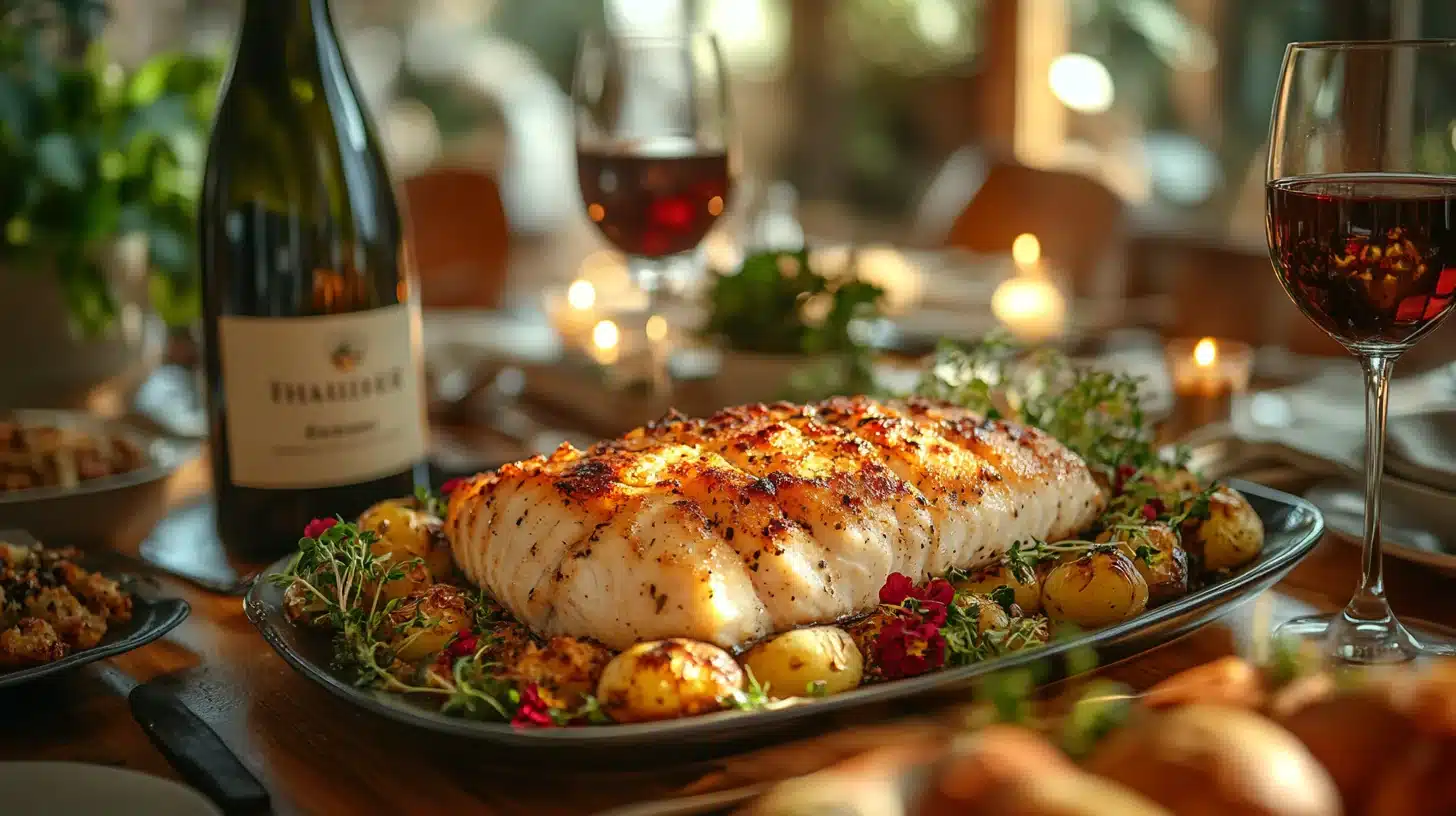
Crisp white wines are the classic pairing: Sauvignon Blanc, Pinot Grigio, Chablis, or unoaked Chardonnay. The acidity in these wines mirrors the lemon in the butter sauce. For the miso-glazed variation, try an off-dry Riesling — the slight sweetness complements the miso’s umami.
How Long Does Cooked Halibut Last in the Fridge?
3–4 days in an airtight container. Cool to room temperature within 2 hours of cooking before refrigerating. Do not leave fish at room temperature longer than 2 hours (1 hour if above 90°F). For longer storage, flake and freeze for up to 2 months — frozen cooked halibut works well in fish chowder, pot pies, or fish cakes.

Written by Chef Anna
I'm Anna - a Le Cordon Bleu-trained chef, recipe developer, and the voice behind Chef Johns Gourmet. After a decade in professional kitchens, I now spend my mornings testing recipes and my afternoons writing them down so you can make them perfectly in your own kitchen. Every one of the 1,100+ recipes on this site has been personally cooked, tasted, and refined. I write like I'm standing next to you, walking you through every step. Simple recipes. Bold flavors. Made for real kitchens.