
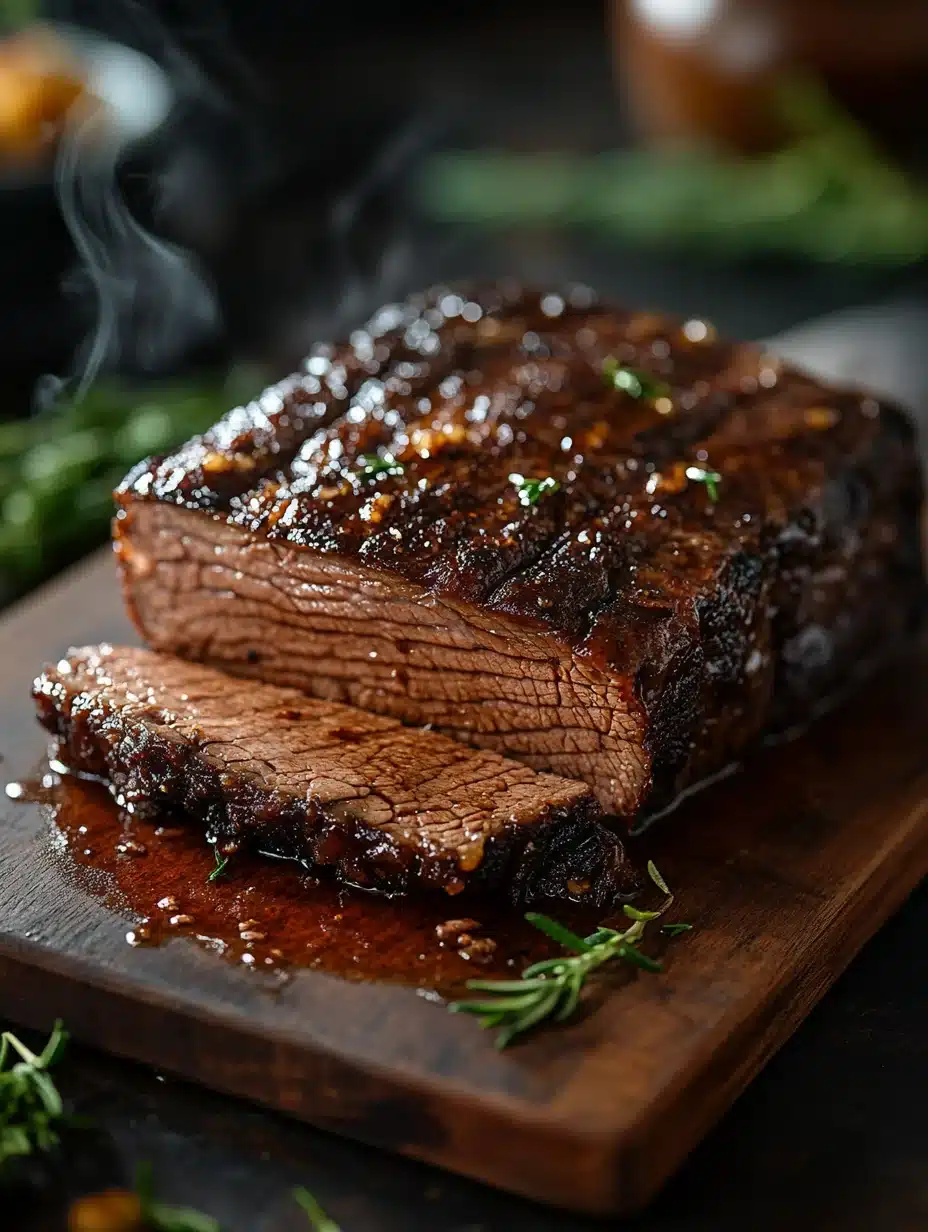
Key Takeaways
- Slow cooked beef brisket transforms a tough, affordable cut into melt-in-your-mouth perfection through 8-10 hours of low and slow cooking.
- The secret is a flavorful dry rub applied the night before to create a deep, seasoned bark on the exterior.
- Cooking at 225°F to 250°F breaks down collagen into gelatin, producing fork-tender meat with rich, beefy flavor.
- Always slice against the grain for the most tender bites — this single step makes or breaks your brisket.
- A proper rest period of 30-60 minutes allows juices to redistribute evenly throughout the meat.
- Pair your brisket with classic sides like creamy garlic butter pasta or a fresh strawberry spinach salad.
Why Slow Cooked Beef Brisket Is the King of Comfort Food
Beef brisket is one of the most rewarding cuts of meat you can cook at home. This large, tough muscle from the chest of the cow is loaded with connective tissue that, when cooked low and slow for hours, transforms into silky gelatin that makes every bite incredibly tender and juicy. There is a reason brisket sits at the top of every pitmaster’s repertoire and every holiday dinner table.
🎯 Key Takeaways
- Cook low and slow: 225°F oven or smoker for 1-1.5 hours per pound.
- Target internal temperature: 203°F for true fork-tender texture.
- Wrap in butcher paper or foil at the stall (around 160°F) to push through.
- Rest wrapped in a cooler for 1 hour before slicing against the grain.
- Dry brine 24 hours ahead with kosher salt + pepper for maximum bark.
The beauty of slow cooking brisket is that the technique does most of the work for you. Once you season the meat and set your oven or slow cooker, the gentle heat works its magic over 8 to 10 hours, breaking down tough fibers while building layers of deep, savory, smoky flavor. The result is a centerpiece dish that looks and tastes like you spent days in the kitchen.
According to the USDA, beef brisket is an excellent source of protein, zinc, iron, and B vitamins. A 3-ounce serving of cooked brisket provides about 28 grams of protein, making it a nutrient-dense option for family meals. When trimmed of excess fat, it fits perfectly into a balanced diet alongside your favorite sides.
Whether you are hosting a Sunday dinner, preparing holiday meals, or meal prepping for the week, slow cooked beef brisket delivers consistent results that impress every time. Let’s walk through everything you need to know to achieve barbecue-restaurant quality brisket in your own kitchen.
| Nutrient | Amount | % Daily Value |
|---|---|---|
| Calories | 185 | 9% |
| Protein | 28g | 56% |
| Total Fat | 7g | 9% |
| Iron | 2.4mg | 13% |
| Zinc | 5.5mg | 50% |
| Vitamin B12 | 2.1mcg | 88% |
| Niacin (B3) | 4.8mg | 30% |
| Selenium | 24mcg | 44% |
How to Choose the Best Brisket Cut for Slow Cooking
Selecting the right brisket is the first and perhaps most important step in your cooking journey. A whole packer brisket consists of two muscles: the flat and the point. The flat is leaner and slices beautifully for sandwiches and plated dinners. The point, also called the deckle, is fattier and more flavorful, perfect for chopped brisket or burnt ends.
For home slow cooking, a 4 to 6 pound flat cut is the most practical size. It fits comfortably in most Dutch ovens, roasting pans, and slow cookers. Look for brisket with a uniform thickness across the entire piece, as this ensures even cooking. A thin fat cap of about 1/4 inch on one side is ideal — enough to baste the meat during cooking but not so much that it renders and makes gravy greasy.
Choose USDA Choice grade or higher for the best marbling. The white streaks of intramuscular fat melt during slow cooking and keep the meat juicy even after hours in the oven. Prime grade brisket has even more marbling but comes at a premium price — for slow cooking in liquid, Choice grade performs beautifully.
| Feature | Flat Cut | Point Cut | Whole Packer |
|---|---|---|---|
| Weight | 4-8 lbs | 3-5 lbs | 10-16 lbs |
| Fat Content | Lean | Fatty, marbled | Both |
| Best For | Slicing, sandwiches | Pulled/chopped, burnt ends | BBQ competitions |
| Cook Time (slow) | 8-10 hrs | 8-10 hrs | 12-16 hrs |
| Tenderness | Excellent when sliced thin | Extremely tender | Both textures |
| Price (avg/lb) | $6-8 | $5-7 | $4-6 |
| Difficulty | Beginner-friendly | Intermediate | Advanced |
The Ultimate Brisket Dry Rub Recipe
A great dry rub transforms good brisket into extraordinary brisket. The combination of salt, pepper, garlic, and warm spices creates a flavorful crust — called the bark — that seals in juices and adds incredible depth to every bite. Apply the rub at least 8 hours before cooking, preferably overnight, so the salt can penetrate deep into the meat through osmosis.
The foundation of any Texas-style rub is simple: coarse black pepper and kosher salt in equal parts. From there, you build layers of flavor with garlic powder, onion powder, smoked paprika, and a touch of brown sugar for caramelization. The brown sugar does not make the brisket sweet — it helps create that prized mahogany crust that barbecue lovers crave.
Dry Rub Ingredients and Proportions
Mix 2 tablespoons each of coarse black pepper and kosher salt with 1 tablespoon each of garlic powder, onion powder, and smoked paprika. Add 1 teaspoon each of brown sugar, chili powder, and dried thyme. Combine thoroughly and store extras in an airtight jar for up to 3 months. This makes enough rub for a 5-pound brisket.
| Ingredient | Amount | Purpose |
|---|---|---|
| Coarse black pepper | 2 tbsp | Heat, bark texture |
| Kosher salt | 2 tbsp | Seasoning, moisture extraction |
| Garlic powder | 1 tbsp | Savory depth |
| Onion powder | 1 tbsp | Sweet undertone |
| Smoked paprika | 1 tbsp | Color, smokiness |
| Brown sugar | 1 tsp | Caramelization, bark |
| Chili powder | 1 tsp | Mild heat |
| Dried thyme | 1 tsp | Herbal aroma |
Step-by-Step Slow Cooked Beef Brisket Method
Step 1: Season and Rest Overnight
Pat the brisket completely dry with paper towels. Apply a thin coat of yellow mustard all over the meat — the mustard acts as a binder for the rub and cooks off completely during the slow cook, leaving no mustard flavor behind. Generously coat every surface with the dry rub, pressing it into the meat. Wrap tightly in plastic wrap and refrigerate for 8 to 24 hours. The longer the rub sits, the deeper the flavor penetrates.
Step 2: Prepare the Braising Liquid
Combine 2 cups of low-sodium beef broth, 1 cup of strong black coffee, 2 tablespoons of Worcestershire sauce, and 1 tablespoon of apple cider vinegar in a bowl. The coffee adds deep, earthy bitterness that complements beef perfectly while the vinegar tenderizes the meat. For an extra flavor dimension, add 1 diced onion, 4 crushed garlic cloves, and 2 bay leaves to the liquid.
Step 3: Sear the Brisket
Remove the brisket from the refrigerator 1 hour before cooking to take the chill off. Heat a large cast iron skillet or Dutch oven over high heat with 2 tablespoons of vegetable oil. Sear the brisket for 3 to 4 minutes per side until a deep brown crust forms. This Maillard reaction creates hundreds of new flavor compounds that infuse the meat throughout the long cook. Transfer to your roasting pan or slow cooker.
Step 4: Slow Cook to Perfection
Pour the braising liquid around (not over) the brisket. Place fat cap up so the melting fat naturally bastes the meat. For oven cooking, set to 250°F and cook covered for 8 to 10 hours. For a slow cooker, set on LOW for 10 to 12 hours. The brisket is done when an instant-read thermometer inserted into the thickest part reads 200°F to 205°F and a probe slides in with zero resistance — like pushing into warm butter.
Step 5: Rest and Slice
Remove the brisket from the cooking liquid and tent loosely with foil. Rest for 30 to 60 minutes — this crucial step allows the muscle fibers to relax and reabsorb up to 10% of their lost moisture. Always slice against the grain in pencil-thin slices for maximum tenderness. The grain runs lengthwise through the flat; cut perpendicular to it.
What Temperature Should Slow Cooked Brisket Reach?
The ideal internal temperature for slow cooked beef brisket is between 200°F and 205°F. At this temperature, the tough collagen has fully rendered into gelatin, creating that signature melt-in-your-mouth texture. Pulling the brisket at 190°F will result in meat that is cooked through but still somewhat chewy — the last 10 degrees make an enormous difference.
Use an instant-read digital thermometer for accuracy. Insert the probe into the thickest part of the flat, avoiding any fat pockets which read hotter than the meat. The “probe test” is even more reliable than temperature alone: when a thermometer or skewer slides into the brisket with virtually no resistance, it is ready regardless of the exact temperature reading.
The phenomenon known as “the stall” occurs between 150°F and 170°F when evaporative cooling from the meat’s surface moisture slows the temperature rise. This can last several hours and is completely normal. Patience during the stall is what separates good brisket from great brisket. If you are short on time, wrap the brisket tightly in foil (the “Texas crutch”) to push through the stall faster.
| Internal Temp | State | Texture | Action |
|---|---|---|---|
| 140°F | Medium rare (unsafe for brisket) | Tough, chewy | Keep cooking |
| 150-170°F | The Stall | Firming up | Be patient or wrap in foil |
| 180°F | Getting close | Starting to soften | Almost there |
| 195°F | Nearly done | Tender but holds shape | Test with probe |
| 200-205°F | Perfect | Melt-in-your-mouth | Pull and rest |
| 210°F+ | Overcooked | Falling apart, dry edges | Salvage with sauce |
Best Side Dishes to Serve with Beef Brisket
Slow cooked beef brisket is a rich, savory main course that pairs beautifully with both classic and creative sides. The key is balance — pair the heavy, meaty brisket with lighter, brighter accompaniments that cut through the richness and refresh your palate between bites.
Classic barbecue sides like coleslaw, cornbread, and baked beans are timeless for a reason. The crisp acidity of coleslaw provides a refreshing contrast, while the sweetness of cornbread complements the savory bark. For a more elevated dinner, try serving brisket with crispy smashed potatoes with herbs or perfectly crispy garlic bread.
For lighter options, a vibrant green salad with a tangy vinaigrette helps balance the plate. Korean cucumber salad brings a spicy-cool element that works surprisingly well with Texas-style brisket. During warmer months, grilled corn on the cob and watermelon wedges round out the quintessential summer barbecue spread.
| Side Dish | Flavor Profile | Why It Works | Prep Time |
|---|---|---|---|
| Classic Coleslaw | Tangy, crunchy | Cuts richness with acidity | 15 min |
| Cornbread | Sweet, buttery | Complements savory bark | 30 min |
| Baked Beans | Sweet, smoky | Echoes the smokiness | 45 min |
| Mac and Cheese | Creamy, cheesy | Ultimate comfort combo | 35 min |
| Smashed Potatoes | Crispy, herby | Texture contrast | 40 min |
| Garlic Bread | Garlicky, crispy | Soaks up brisket juices | 15 min |
| Cucumber Salad | Cool, spicy | Refreshes the palate | 10 min |
| Grilled Corn | Sweet, charred | Seasonal and fun | 15 min |
How to Store and Reheat Leftover Brisket
Properly stored, leftover brisket lasts 4 to 5 days in the refrigerator and up to 3 months in the freezer. The key to maintaining moisture during storage is keeping the brisket in its braising liquid. Slice only what you need and store the uncut portion whole — this minimizes surface area exposure and prevents drying.
For refrigerator storage, place sliced or whole brisket in an airtight container and pour some of the cooking liquid over the top. The liquid creates a protective barrier that keeps the meat moist. For freezing, vacuum seal portions with braising liquid for the best results. Label each package with the date and use within 3 months for optimal flavor.
The best reheating method is low and slow, mirroring the original cooking process. Preheat your oven to 300°F, place the brisket in a baking dish with 1/4 cup of braising liquid, cover tightly with foil, and heat for 20 to 30 minutes until warmed through. Never microwave brisket — the uneven heat turns the edges rubbery while the center stays cold. For quick weeknight meals, brisket makes incredible tacos, sandwiches, or can be tossed with Korean fried noodles for a fusion dinner.
What Are Common Mistakes When Cooking Brisket?
Not Cooking Long Enough
The most common brisket mistake is pulling it too early. Brisket requires patience — there is no shortcut to breaking down collagen. If your brisket is tough and chewy, it needed more time. Even at 190°F internal temperature, the meat may not yet be tender enough. Push to 200°F to 205°F and use the probe test for confirmation.
Slicing With the Grain
Slicing with the grain instead of against it results in stringy, chewy brisket no matter how well it was cooked. The grain is the direction of the muscle fibers — you can see the lines running across the surface. Always slice perpendicular to these lines. On a whole packer brisket, note that the grain direction changes between the flat and the point, so adjust your cutting angle accordingly.
Skipping the Rest Period
Cutting into brisket immediately after cooking causes all the internal juices to flood out onto your cutting board. During the rest period, the protein fibers relax and reabsorb moisture. A minimum 30-minute rest is essential; many competition pitmasters rest their briskets for up to 2 hours wrapped in foil inside an insulated cooler.
Using Too Much Liquid
While braising liquid is essential for slow cooker brisket, too much liquid results in boiled meat rather than braised meat. Use just enough to come about one-third of the way up the brisket. The meat renders its own juices as it cooks, adding to the liquid level naturally. Keep the top of the brisket exposed to develop that coveted crusty bark.
Can You Make Slow Cooked Brisket in a Dutch Oven?
A Dutch oven is one of the best vessels for slow cooking brisket. The heavy cast iron distributes heat evenly and retains temperature exceptionally well, creating the perfect low-and-slow environment. The tight-fitting lid traps steam and flavor inside, essentially creating a mini oven within your oven.
To use a Dutch oven, sear the brisket directly in the pot on the stovetop over high heat. Add aromatics — onions, garlic, carrots, celery — and let them caramelize in the beef drippings. Deglaze with beef broth, scraping up all the browned bits from the bottom. These fond bits are concentrated flavor gold. Return the brisket fat-side up, add remaining braising liquid, cover, and transfer to a 250°F oven for 8 to 10 hours.
The advantage of the Dutch oven over a slow cooker is that you can sear and braise in the same pot, capturing every bit of flavor without transferring the meat. The heavy lid also creates a tighter seal than most slow cooker lids, resulting in less evaporation and more concentrated braising liquid that becomes an incredible natural gravy.
How Does Brisket Compare to Other Slow-Cook Cuts?
Brisket is not the only cut that benefits from long, slow cooking, but it is arguably the most rewarding. Other popular slow-cook cuts include chuck roast, short ribs, pork shoulder, and lamb shanks. Each has its own character and cooking profile. Understanding the differences helps you choose the right cut for your occasion and timeline.
Chuck roast is the most similar to brisket in flavor but has more intramuscular fat, making it more forgiving for beginners. Short ribs deliver incredibly rich, beefy flavor in less time but work better for braises than for slicing. Pork shoulder is the barbecue counterpart to brisket — equally revered in pulled pork preparations. For a special occasion roast, consider pairing your brisket dinner with roast lamb leg with gravy for a truly impressive spread.
| Cut | Weight | Cook Time | Best Method | Cost/lb | Difficulty |
|---|---|---|---|---|---|
| Beef Brisket | 4-16 lbs | 8-16 hrs | Smoke, braise, slow cook | $4-8 | Intermediate |
| Chuck Roast | 3-5 lbs | 6-8 hrs | Braise, slow cook | $5-8 | Beginner |
| Short Ribs | 2-4 lbs | 4-6 hrs | Braise | $8-12 | Beginner |
| Pork Shoulder | 6-10 lbs | 10-14 hrs | Smoke, slow cook | $3-5 | Intermediate |
| Lamb Shanks | 1-2 lbs each | 3-4 hrs | Braise | $10-14 | Easy |
| Oxtail | 2-3 lbs | 4-6 hrs | Braise, stew | $8-12 | Intermediate |
Expert Tips for Competition-Level Beef Brisket at Home
How Do You Keep Brisket Moist During Long Cooks?
Moisture retention starts with selecting a well-marbled brisket and cooking fat-side up so the melting fat continuously bastes the meat. Maintain a consistent low temperature — fluctuations cause the meat to contract and squeeze out juices. Spritzing with a mixture of apple cider vinegar and water every 2 hours helps keep the surface moist and builds layers of flavor on the bark.
Should You Wrap Brisket in Foil or Butcher Paper?
Foil wrapping, known as the Texas crutch, pushes the brisket through the temperature stall faster and retains maximum moisture. The trade-off is a softer bark. Butcher paper, preferred by many competition pitmasters, breathes slightly, allowing excess moisture to escape while still protecting the meat. This creates a firmer bark with a more pronounced smoky flavor. For oven slow cooking, foil is the practical choice since bark development is minimal without direct smoke exposure.
What Wood Chips Pair Best with Beef Brisket?
If you are adding smoke flavor via a stovetop smoker or adding wood chips to a grill, oak and hickory are the classic choices for beef brisket. Oak provides a medium-intensity smoke that complements beef without overpowering it. Hickory is stronger and pairs beautifully with the bold dry rub flavors. Post oak is the standard in Central Texas barbecue. Fruit woods like cherry and apple work well blended with oak for a slightly sweeter smoke profile.
Frequently Asked Questions About Slow Cooked Beef Brisket
How long does it take to slow cook a beef brisket?
A 4 to 6 pound beef brisket takes 8 to 10 hours in a 250°F oven or 10 to 12 hours on the LOW setting of a slow cooker. The exact time depends on the thickness of the meat, your oven’s accuracy, and whether you wrap the brisket in foil. Always cook to an internal temperature of 200°F to 205°F rather than strictly by time.
Can I slow cook a frozen brisket?
It is not recommended to slow cook a frozen brisket. The exterior will spend too long in the temperature danger zone (40°F to 140°F) while the interior thaws, creating a food safety risk. Always thaw brisket completely in the refrigerator for 24 to 48 hours before cooking. A 5-pound brisket needs approximately 24 hours to thaw in the fridge.
Why is my slow cooked brisket dry?
Dry brisket is almost always caused by cooking at too high a temperature or not cooking long enough. Paradoxically, undercooking brisket makes it seem dry because the collagen has not yet converted to gelatin. Try cooking 1 to 2 hours longer next time. Also ensure your cooking vessel is properly sealed to prevent steam from escaping, and always include adequate braising liquid.
Should I trim the fat cap off the brisket before cooking?
Trim the fat cap to approximately 1/4 inch thickness. This allows the rub to penetrate the meat underneath while still providing enough fat to baste the brisket during cooking. Leaving too much fat prevents seasoning from reaching the meat, while removing it entirely risks drying out the surface. Save the trimmings to render into beef tallow for cooking.
What is the best liquid for braising brisket?
Beef broth is the foundation, but the best results come from layering flavors. Combine beef broth with a splash of red wine, Worcestershire sauce, and a small amount of tomato paste. Some cooks add dark beer, black coffee, or cola for added depth. The acidity from wine or vinegar helps tenderize the meat. Avoid using water alone as it dilutes flavor.
Can I make brisket in an Instant Pot or pressure cooker?
Yes, a pressure cooker reduces brisket cooking time to about 60 to 90 minutes. However, the rapid cooking does not develop the same depth of flavor or bark texture as slow cooking. Pressure cooker brisket is great for weeknight meals when time is short. For best results, sear the brisket first, pressure cook for 60 minutes per pound at high pressure, and allow natural pressure release.
How do I make brisket gravy from the drippings?
After removing the brisket, strain the braising liquid through a fine-mesh sieve into a saucepan. Skim off excess fat from the surface. Bring to a simmer and reduce by half for a concentrated jus. For a thicker gravy, whisk in a slurry of 2 tablespoons cornstarch mixed with 2 tablespoons cold water. Season with salt, pepper, and a dash of Worcestershire sauce.
What is the difference between corned beef brisket and regular brisket?
Corned beef brisket has been cured in a salt brine with pickling spices for 5 to 7 days. This process gives it a distinctive pink color, salty flavor, and firmer texture. Regular brisket is fresh, uncured meat with a pure beefy flavor. They require different cooking approaches — corned beef is simmered in water, while regular brisket is dry-rubbed and slow roasted or smoked.
How many people does a 5-pound brisket serve?
A 5-pound raw brisket serves approximately 8 to 10 people. Brisket loses about 40% of its weight during cooking due to fat rendering and moisture evaporation, yielding roughly 3 pounds of cooked meat. Plan on about 5 to 6 ounces of cooked brisket per person for a main course. If serving with hearty sides, you may stretch servings further.
Is beef brisket an affordable cut of meat?
Brisket is one of the most economical beef cuts per serving. At $4 to $8 per pound for Choice grade, a 5-pound brisket costs $20 to $40 and feeds 8 to 10 people — that is just $2 to $5 per serving. Compare this to ribeye at $15 to $20 per pound and you can see why brisket has been a working-class staple for generations. The value becomes even better when you factor in leftovers for sandwiches, tacos, and meal prep.
Frequently Asked Questions
What is the best temperature for slow-cooked brisket?
225°F is the sweet spot—low enough to break down collagen, high enough to develop bark. Higher (250°F) cuts time but may dry edges; lower (200°F) extends cook by hours.
How long does a 5-pound brisket take to cook?
At 225°F, plan 6-8 hours (1-1.5 hours per pound), plus 1 hour rest. Total door-to-serve: about 9 hours for a 5-pound flat.
Should I wrap brisket in foil or butcher paper?
Butcher paper breathes—bark stays firm. Foil (the ‘Texas crutch’) cooks faster but softens the crust. For competition-style bark, use butcher paper at the stall.
How do you know when brisket is done?
Probe tenderness, not just temperature. Stick a thermometer in the thickest part—it should slide in like warm butter. Internal temp 200-205°F confirms. Don’t rely on time alone.
What do you serve with slow-cooked brisket?
Classic pairings: coleslaw, baked beans, cornbread, mac and cheese, potato salad, pickles, and white bread. Sauce is optional—great brisket stands on its own.

Written by Chef Anna
I'm Anna - a Le Cordon Bleu-trained chef, recipe developer, and the voice behind Chef Johns Gourmet. After a decade in professional kitchens, I now spend my mornings testing recipes and my afternoons writing them down so you can make them perfectly in your own kitchen. Every one of the 1,100+ recipes on this site has been personally cooked, tasted, and refined. I write like I'm standing next to you, walking you through every step. Simple recipes. Bold flavors. Made for real kitchens.