
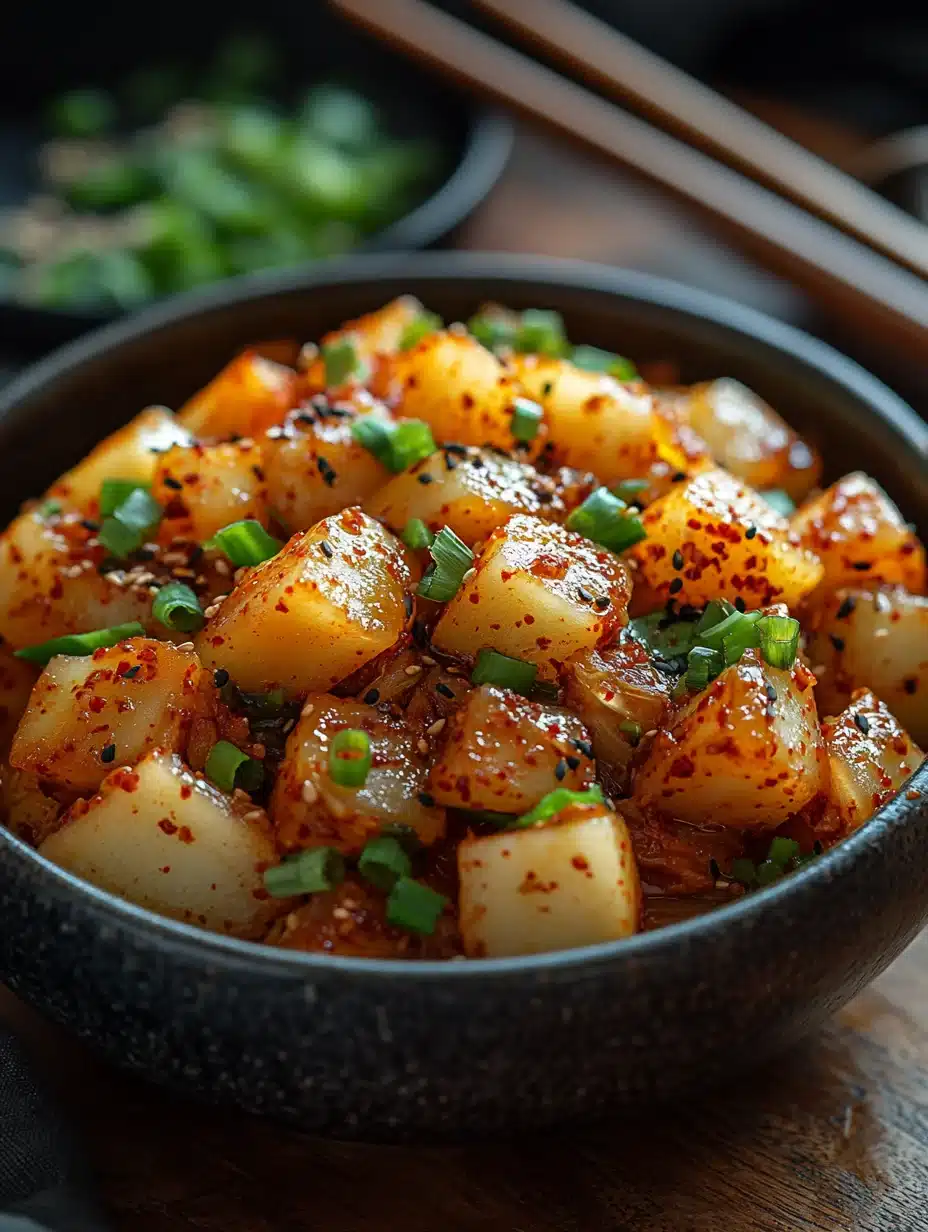
Key Takeaways
- Apple kimchi is a refreshing Korean side dish that combines crisp fresh apples with traditional kimchi seasonings for a sweet, spicy, and tangy flavor.
- This recipe takes just 20 minutes to prepare and requires no fermentation, making it perfect for kimchi beginners.
- Gochugaru (Korean red pepper flakes) provides authentic heat while the natural sweetness of apples creates a perfect flavor balance.
- Apple kimchi is rich in probiotics, vitamin C, and fiber when allowed to ferment for 1-2 days at room temperature.
- Serve it as a banchan (side dish) alongside Korean fried noodles or grilled meats for an authentic Korean meal.
- This fruit kimchi stores for up to 2 weeks in the refrigerator and actually improves in flavor over the first few days.
Why Apple Kimchi Is the Perfect Introduction to Korean Fermented Foods
Apple kimchi, known as sagwa kimchi in Korean, is a brilliant gateway into the world of Korean fermented vegetables. Unlike traditional napa cabbage kimchi that requires salting, draining, and days of fermentation, apple kimchi comes together in about 20 minutes and can be enjoyed immediately or lightly fermented for deeper flavor. The natural sweetness and crunch of fresh apples pair beautifully with the bold, spicy gochugaru paste that defines authentic kimchi.
🎯 Key Takeaways
- Fresh kimchi style—ready in 20 minutes, no fermentation needed.
- Crisp apples (Honeycrisp, Fuji, Granny Smith) hold texture against the spice paste.
- Traditional gochugaru gives mild heat; adjust to ¼-1 tbsp based on preference.
- Pair with Korean BBQ, grilled pork, fried rice, or as a tangy salad topper.
- Refrigerates 5 days—texture softens slightly each day, flavor deepens.
This fruit-based kimchi has been gaining popularity in Korean home kitchens and restaurants alike because it bridges the gap between familiar Western flavors and traditional Korean cuisine. Apples are an ingredient most people already love, which makes the transition to kimchi seasonings feel natural and approachable. The result is a side dish that is simultaneously sweet, spicy, garlicky, and refreshing — hitting every taste bud in a single bite.
Korean food culture places enormous importance on banchan, the array of small side dishes that accompany every meal. Apple kimchi fills a unique role among banchan because its fruity brightness cuts through rich, heavy main dishes. It brings balance to barbecue platters, fried foods, and rice bowls in a way that traditional cabbage kimchi cannot. According to the Korean Food Research Institute, fruit-based kimchi varieties have grown 35% in popularity over the past decade as younger generations explore creative adaptations of classic recipes.
| Feature | Apple Kimchi | Napa Cabbage Kimchi |
|---|---|---|
| Prep Time | 20 minutes | 2-4 hours |
| Fermentation Needed | Optional (0-2 days) | Required (3-7 days) |
| Flavor Profile | Sweet, spicy, fruity | Sour, spicy, umami |
| Texture | Crisp, juicy | Crunchy, chewy |
| Difficulty | Beginner | Intermediate |
| Shelf Life | 2 weeks | Months to years |
| Probiotic Content | Moderate (if fermented) | High |
| Calories (1 cup) | ~95 | ~23 |
Essential Ingredients for Authentic Apple Kimchi
The beauty of apple kimchi lies in how few ingredients you need to create such an explosion of flavor. Every component plays a specific role — from the crispy base fruit to the fiery paste that coats it. Understanding each ingredient helps you make smart substitutions when needed and customize the heat level to your preference.
Fresh apples are the star. Choose firm, crisp varieties like Fuji, Honeycrisp, or Granny Smith. Fuji apples are the traditional Korean choice because they hold their crunch and offer balanced sweetness. Avoid soft or mealy varieties like Red Delicious, which break down too quickly and turn mushy.
Gochugaru (Korean red pepper flakes) is non-negotiable for authentic flavor. These coarsely ground sun-dried chili flakes have a unique sweet, smoky heat that regular crushed red pepper cannot replicate. Look for gochugaru at Korean grocery stores or online — a bag lasts for months stored in the freezer.
Fish sauce adds the deep umami backbone that makes kimchi so addictive. Use Korean fish sauce (aekjeot) for the most authentic flavor, or substitute with Vietnamese fish sauce. For a vegan version, replace with soy sauce plus a pinch of kelp powder for that oceanic depth.
| Ingredient | Amount | Purpose | Substitution |
|---|---|---|---|
| Firm apples (Fuji/Honeycrisp) | 3 medium | Crispy base | Asian pear, firm pear |
| Gochugaru | 3 tbsp | Heat + color + smokiness | 1 tbsp gochujang (less authentic) |
| Fish sauce | 2 tbsp | Umami depth | Soy sauce + kelp powder |
| Garlic, minced | 4 cloves | Aromatic punch | 1 tsp garlic paste |
| Fresh ginger, grated | 1 tbsp | Warm spice, aids digestion | 1/2 tsp ginger powder |
| Green onions, sliced | 4 stalks | Color, mild allium flavor | Chives, spring onions |
| Rice vinegar | 2 tbsp | Tanginess, preservative | Apple cider vinegar |
| Sesame seeds | 1 tbsp | Nutty finish, garnish | Toasted hemp seeds |
| Sugar or honey | 1 tbsp | Balances heat | Maple syrup, agave |
How to Make Apple Kimchi Step by Step
Step 1: Prepare the Apples
Wash 3 medium Fuji apples thoroughly. You can peel them or leave the skin on — the skin adds extra fiber and a beautiful pop of red color. Core the apples and cut them into thin matchstick-sized pieces, about 2 inches long and 1/4 inch wide. Drop the cut apples into a bowl of cold water with a squeeze of lemon juice to prevent browning while you prepare the kimchi paste.
Step 2: Make the Kimchi Paste
In a mixing bowl, combine 3 tablespoons of gochugaru, 2 tablespoons of fish sauce, 4 minced garlic cloves, 1 tablespoon of grated fresh ginger, 2 tablespoons of rice vinegar, and 1 tablespoon of sugar or honey. Stir vigorously until a smooth, vibrant red paste forms. Let this sit for 5 minutes so the gochugaru can hydrate and bloom, which releases its full flavor and color.
Step 3: Combine and Toss
Drain the apple matchsticks thoroughly and pat dry with a clean kitchen towel — excess water dilutes the kimchi paste. Add the apples to the paste along with 4 sliced green onions. Using your hands (wear food-safe gloves to avoid chili burns), gently toss everything together until every apple piece is evenly coated in the vibrant red paste. Sprinkle 1 tablespoon of sesame seeds over the top.
Step 4: Serve or Ferment
Apple kimchi can be enjoyed immediately as a fresh, crunchy side dish. For a more complex flavir with probiotic benefits, transfer to a clean glass jar, press down to remove air pockets, seal loosely, and leave at room temperature for 24 to 48 hours. The natural sugars in the apples will kickstart fermentation. Once bubbly, refrigerate to slow the fermentation. The flavor peaks at about day 3 in the fridge.
What Makes Apple Kimchi Different from Traditional Kimchi?
While both share the signature gochugaru-based paste and fermentation principles, apple kimchi and traditional napa cabbage kimchi are quite different in character. Apple kimchi is inherently sweeter due to the natural fructose in the fruit, creating a more candy-like heat rather than the sharp, sour punch of well-fermented cabbage kimchi. The texture is also radically different — apple kimchi retains a juicy, snappy crunch even after several days of fermentation.
The fermentation timeline is compressed with fruit kimchi. Apples contain more natural sugar than cabbage, which means the lactic acid bacteria have more to feed on and produce results faster. While cabbage kimchi needs 3 to 7 days of room-temperature fermentation before it develops proper flavor, apple kimchi can reach a pleasant tanginess in just 24 hours. However, it also has a shorter shelf life because the sugars continue converting, eventually making the fruit too soft and too sour.
Nutritionally, apple kimchi offers higher vitamin C and dietary fiber than cabbage kimchi, while cabbage kimchi provides more vitamin K and folate. Both varieties deliver beneficial Lactobacillus probiotics that support gut health, immune function, and nutrient absorption. The ideal approach is to enjoy both types as part of a varied diet alongside other fermented foods.
| Nutrient | Apple Kimchi | Cabbage Kimchi | % DV (Apple) |
|---|---|---|---|
| Calories | 95 | 23 | 5% |
| Fiber | 4.5g | 2.4g | 16% |
| Vitamin C | 14mg | 18mg | 16% |
| Vitamin K | 5mcg | 55mcg | 4% |
| Potassium | 210mg | 151mg | 5% |
| Probiotics (CFU) | ~1 billion* | ~10 billion* | N/A |
| Sugar | 18g | 1.6g | — |
| Sodium | 580mg | 670mg | 25% |
*Probiotic counts vary based on fermentation time and conditions.
Best Apple Varieties for Making Kimchi
Not all apples are created equal when it comes to kimchi making. The ideal apple holds its structure during tossing and storage, has balanced sweetness, and offers a satisfying crunch that persists even after absorbing the kimchi paste. Here is how the most popular varieties stack up for this specific application:
Fuji apples are the gold standard for Korean fruit kimchi. Developed in Japan in the 1930s and now widely grown in Korea and Washington state, Fujis have an exceptionally firm flesh that resists softening. Their sweetness level is the highest among common varieties, which helps counterbalance the spicy gochugaru paste beautifully.
Honeycrisp apples come in a close second, offering explosive crunch and balanced sweet-tart flavor. Their cellular structure is unusually large, which makes each bite satisfyingly juicy. The slight tartness of Honeycrisp adds another dimension to the kimchi that Fuji lacks.
| Apple | Sweetness | Crunch | Holds Up? | Best For |
|---|---|---|---|---|
| Fuji | ★★★★★ | ★★★★★ | Excellent | Traditional Korean style |
| Honeycrisp | ★★★★ | ★★★★★ | Excellent | Sweet-tart balance |
| Granny Smith | ★★ | ★★★★★ | Excellent | Extra tangy kimchi |
| Gala | ★★★★ | ★★★ | Good | Mild, kid-friendly |
| Pink Lady | ★★★ | ★★★★ | Good | Balanced all-rounder |
| Red Delicious | ★★★ | ★★ | Poor | Not recommended (too soft) |
How to Serve Apple Kimchi for Maximum Flavor Impact
Apple kimchi is incredibly versatile as a side dish and condiment. Traditionally served as one of many banchan at a Korean meal, it pairs naturally with grilled meats, fried foods, and rice dishes. The sweet heat cuts through fatty proteins like pork belly, galbi (Korean short ribs), and fried chicken in a way that refreshes your palate and keeps you reaching for more.
Beyond traditional Korean pairings, apple kimchi works surprisingly well in fusion applications. Toss it into grain bowls with quinoa and avocado for a modern health bowl. Use it as a taco topping in place of regular salsa for Korean-Mexican fusion tacos. Fold it into sheet pan shrimp fajitas for an unexpected twist that guests will love. It also pairs brilliantly with cheese platters — the sweet-spicy fruit next to creamy brie or sharp cheddar creates an addictive combination. It also works beautifully as a side for honey garlic chicken breast. It also works beautifully as a side for honey garlic chicken breast. It also works beautifully as a side for honey garlic chicken breast.
For weeknight dinners, spoon apple kimchi over a simple bowl of steamed rice with a fried egg on top. The warm rice, runny yolk, and chilly spicy-sweet kimchi create one of the most satisfying simple meals imaginable. Add a few slices of teriyaki salmon and you have a restaurant-quality dinner in under 15 minutes.
Health Benefits of Apple Kimchi and Fermented Foods
Apple kimchi delivers a powerful nutritional punch that combines the benefits of fresh fruit with the probiotic advantages of fermentation. The lactic acid bacteria produced during fermentation — primarily Lactobacillus and Leuconostoc species — support digestive health by maintaining a balanced gut microbiome. Research published in the Journal of Medicinal Food has shown that regular kimchi consumption is associated with reduced inflammation, improved cholesterol levels, and enhanced immune function.
The apples themselves contribute soluble fiber in the form of pectin, which feeds beneficial gut bacteria and supports regular digestion. A single serving of apple kimchi provides approximately 4.5 grams of dietary fiber, covering 16% of the daily recommended intake. Combined with the probiotics from fermentation, this makes apple kimchi a true gut health powerhouse.
The gochugaru in the recipe adds its own health benefits. Capsaicin, the compound responsible for chili heat, has been extensively studied for its metabolism-boosting, anti-inflammatory, and pain-relieving properties. Garlic and ginger in the paste contribute allicin and gingerol, both of which have documented antimicrobial and antioxidant effects. Together, these ingredients create a dish that is as medicinal as it is delicious. For more gut-friendly recipes, try shakshuka with fermented vegetables.
| Time | Stage | Flavor | Texture | Action |
|---|---|---|---|---|
| 0 hours | Fresh | Sharp, bright spice | Very crispy | Ready to eat or ferment |
| 12 hours | Early ferment | Slight tanginess | Crispy | Check and taste |
| 24 hours | Light ferment | Pleasantly tangy | Firm with slight give | Good stopping point |
| 36 hours | Medium ferment | Sour-sweet balance | Softer but crunchy | Refrigerate for best balance |
| 48 hours | Full ferment | Distinctly sour | Softening | Must refrigerate now |
| Time | Stage | Flavor | Texture | Action |
|---|---|---|---|---|
| 0 hours | Fresh | Sharp, bright spice | Very crispy | Ready to eat or ferment |
| 12 hours | Early ferment | Slight tanginess | Crispy | Check and taste |
| 24 hours | Light ferment | Pleasantly tangy | Firm with slight give | Good stopping point |
| 36 hours | Medium ferment | Sour-sweet balance | Softer but crunchy | Refrigerate for best balance |
| 48 hours | Full ferment | Distinctly sour | Softening | Must refrigerate now |
| Time | Stage | Flavor | Texture | Action |
|---|---|---|---|---|
| 0 hours | Fresh | Sharp, bright spice | Very crispy | Ready to eat or ferment |
| 12 hours | Early ferment | Slight tanginess | Crispy | Check and taste |
| 24 hours | Light ferment | Pleasantly tangy | Firm with slight give | Good stopping point |
| 36 hours | Medium ferment | Sour-sweet balance | Softer but crunchy | Refrigerate for best balance |
| 48 hours | Full ferment | Distinctly sour | Softening | Must refrigerate now |
Common Mistakes When Making Apple Kimchi
Using Soft or Mealy Apples
The biggest mistake is choosing the wrong apple variety. Soft apples like Red Delicious or overripe Galas will turn to mush when mixed with the salty, acidic kimchi paste. Always use firm, crisp varieties and check that the apple is not past its prime. Press near the stem — if it gives easily, it is too soft for kimchi.
Not Draining the Apples Properly
Excess moisture from the lemon water bath dilutes the kimchi paste, resulting in a watery, bland coating. Pat the apple matchsticks thoroughly with paper towels or a clean kitchen towel before tossing with the paste. Dry apples absorb the seasoning much better and develop more intense flavor.
Using Regular Chili Flakes Instead of Gochugaru
Standard Italian-style crushed red pepper flakes are much hotter and sharper than gochugaru, lacking the sweet, smoky dimension that makes kimchi taste authentic. Gochugaru is specifically designed for kimchi making — its coarser texture, milder heat, and natural sweetness are irreplaceable. If you absolutely cannot find gochugaru, use a mix of sweet paprika and a small amount of cayenne as a rough approximation.
Fermenting Too Long
Because apples contain significantly more sugar than vegetables, fermentation happens faster and the window between perfectly tangy and unpleasantly sour is shorter. Check your fermenting apple kimchi every 12 hours. Once you see small bubbles forming and the paste tastes pleasantly tangy, immediately refrigerate to halt fermentation. In warm kitchens, this can happen in as little as 18 hours.
| Dish | How to Use | Cuisine Fusion |
|---|---|---|
| Kimchi Fried Rice | Chop and stir-fry with day-old rice | Korean classic |
| Tacos | Top instead of salsa | Korean-Mexican |
| Grilled Cheese | Layer inside with cheddar | Korean-American |
| Grain Bowl | Toss with quinoa and avocado | Modern health |
| Burger Topping | Replace pickles with kimchi | Korean-American |
| Cheese Board | Pair with brie or gouda | Korean-French |
| Dish | How to Use | Cuisine Fusion |
|---|---|---|
| Kimchi Fried Rice | Chop and stir-fry with day-old rice | Korean classic |
| Tacos | Top instead of salsa | Korean-Mexican |
| Grilled Cheese | Layer inside with cheddar | Korean-American |
| Grain Bowl | Toss with quinoa and avocado | Modern health |
| Burger Topping | Replace pickles with kimchi | Korean-American |
| Cheese Board | Pair with brie or gouda | Korean-French |
| Dish | How to Use | Cuisine Fusion |
|---|---|---|
| Kimchi Fried Rice | Chop and stir-fry with day-old rice | Korean classic |
| Tacos | Top instead of salsa | Korean-Mexican |
| Grilled Cheese | Layer inside with cheddar | Korean-American |
| Grain Bowl | Toss with quinoa and avocado | Modern health |
| Burger Topping | Replace pickles with kimchi | Korean-American |
| Cheese Board | Pair with brie or gouda | Korean-French |
Can You Use Apple Kimchi in Cooked Dishes?
Apple kimchi shines fresh as a raw condiment, but it can also transform cooked dishes in surprising ways. Kimchi fried rice made with apple kimchi instead of traditional cabbage kimchi has a sweeter, more aromatic character that pairs wonderfully with a crispy fried egg on top. Simply chop the apple kimchi roughly and stir-fry with day-old rice, a splash of sesame oil, and soy sauce for a 10-minute meal.
Apple kimchi also makes an outstanding glaze for roasted proteins. Blend it smooth and brush over chicken thighs, pork chops, or a baked chicken breast during the last 10 minutes of roasting. The sugars caramelize under high heat while the chili and garlic create an irresistible savory-sweet crust. For grilled applications, fold diced apple kimchi into burger patties for a Korean-American fusion burger that will become your new favorite.
Soups and stews benefit from apple kimchi as well. Add a few tablespoons to white chicken chili for a Korean twist, or simmer it into a simple broth with tofu and mushrooms for a light, probiotic-rich soup. The natural pectin in the apples even helps thicken broths slightly, adding body without cream or starch.
How to Store Apple Kimchi for Maximum Freshness
Proper storage is the key to enjoying apple kimchi at its best over the course of two weeks. Always use a clean glass jar with a tight-fitting lid — avoid plastic containers, which can absorb odors and stain permanently from the gochugaru. Press the kimchi down firmly to eliminate air pockets, as oxygen promotes unwanted mold growth on the surface.
In the refrigerator, apple kimchi evolves beautifully over its lifespan. Days 1 to 2 it tastes fresh and crunchy with bright, sharp heat. Days 3 to 7 the flavors meld and deepen — this is the sweet spot where most people enjoy it most. Days 8 to 14 the apples begin softening and the sourness increases, making it better suited for cooked applications like fried rice or glazes rather than raw consumption.
Never store kimchi near dairy products or delicate foods, as the pungent garlic and fish sauce aromas will transfer. A sealed glass jar minimizes this but does not eliminate it entirely. Some dedicated kimchi lovers invest in a separate mini-fridge specifically for fermented foods — a practice so common in Korea that kimchi refrigerators are standard appliances in most households.
Frequently Asked Questions About Apple Kimchi
How spicy is apple kimchi compared to regular kimchi?
Apple kimchi is generally milder than traditional cabbage kimchi because the natural sweetness of the apples counterbalances the gochugaru heat. The sugar in apples triggers sweetness receptors on your tongue that partially block heat perception. You can easily adjust the spice level by reducing gochugaru to 1 tablespoon for mild or increasing to 4 to 5 tablespoons for extra hot.
Can I make apple kimchi without fish sauce for a vegan version?
Yes absolutely. Replace the fish sauce with an equal amount of soy sauce or tamari plus 1/4 teaspoon of kelp powder or a small strip of dried kombu seaweed blended into the paste. Some vegan kimchi makers also use miso paste thinned with rice vinegar for umami depth. The result is delicious, though slightly different in complexity from the traditional version.
Do I need to peel the apples before making kimchi?
Peeling is optional. Apple skin adds beautiful color, extra fiber, and a slightly chewy texture contrast. However, if you prefer a more uniform, silky texture or if you are using non-organic apples and are concerned about wax coatings, peeling is perfectly fine. Organic apples with thin, tender skin are ideal for leaving unpeeled.
How long does apple kimchi last in the refrigerator?
Properly stored in a clean sealed glass jar, apple kimchi lasts about 2 weeks in the refrigerator. The texture and flavor change over time — fresh and crunchy in the first week, softer and more sour in the second week. After 2 weeks, the apples become too soft for most people’s preferences, though the kimchi is still safe to eat if it smells normal and shows no mold.
What dishes pair best with apple kimchi?
Apple kimchi pairs exceptionally well with grilled meats (especially pork belly and short ribs), fried chicken, rice bowls, ramen, and grain salads. It also makes a fantastic topping for tacos, burgers, grilled cheese sandwiches, and cheese boards. The sweet-spicy profile complements rich, fatty foods by cutting through heaviness and refreshing the palate.
Can I use Asian pear instead of apples?
Asian pear is an excellent substitute and is actually the traditional fruit used in many Korean households for fruit kimchi. Asian pears have a similar crisp texture, high water content, and mild sweetness. The main difference is that Asian pears are juicier and less sweet than Fuji apples, producing a lighter, more refreshing kimchi.
Is apple kimchi good for gut health?
When fermented for at least 24 hours, apple kimchi contains beneficial Lactobacillus probiotics that support gut microbiome diversity and digestive health. Combined with the prebiotic fiber from the apples (pectin), it creates a synbiotic food that both introduces good bacteria and feeds them. Even unfermented apple kimchi provides fiber, vitamins, and the antimicrobial compounds from garlic and ginger.
Why did my apple kimchi turn brown?
Browning is caused by enzymatic oxidation when cut apple flesh is exposed to air. This is purely cosmetic and does not affect flavor or safety. To prevent browning, toss the cut apples in lemon water immediately after slicing, drain thoroughly, and coat with the red kimchi paste quickly. The gochugaru paste also helps mask any browning with its vibrant red color.
Can I ferment apple kimchi at room temperature?
Yes, ferment at room temperature (65 to 75°F) for 24 to 48 hours. Check every 12 hours for bubbling and taste. Apple kimchi ferments faster than cabbage kimchi due to higher sugar content. Once it reaches your desired tanginess, immediately transfer to the refrigerator to slow fermentation. In warm kitchens above 75°F, check even more frequently to avoid over-fermentation.
How do I adjust the sweetness of apple kimchi?
The sweetness comes primarily from the apples themselves, so your apple variety choice is the biggest factor. For less sweet kimchi, use Granny Smith apples and omit the added sugar or honey. For sweeter kimchi, use Fuji apples plus 1 to 2 tablespoons of honey. You can also add 1 tablespoon of rice vinegar to boost tanginess, which makes the sweetness less prominent to your palate.
Frequently Asked Questions
What apples work best for kimchi?
Honeycrisp, Fuji, and Granny Smith are top picks—they stay crunchy after salting. Avoid soft varieties like Red Delicious or Gala, which turn mushy in the paste.
Does apple kimchi need to ferment?
No—this is a fresh (geotjeori) style kimchi. It’s ready after 20 minutes of marinating and best eaten within 5 days. For fermented kimchi, leave at room temp 24-48 hours first.
Can I make apple kimchi less spicy?
Use ¼ tablespoon gochugaru and skip the chili crisp. Or sub half with paprika for color without heat. Balance with extra apple sweetness and a splash of rice vinegar.
What does apple kimchi taste like?
Sweet-tangy from apples, warm heat from gochugaru, umami from fish sauce, freshness from ginger and garlic. It’s crisper and fruitier than traditional cabbage kimchi.
How long does apple kimchi last in the fridge?
5 days for peak texture. After that, apples soften and release water. Drain before serving on day 4-5. Not suitable for freezing—apples turn to mush.

Written by Chef Anna
I'm Anna - a Le Cordon Bleu-trained chef, recipe developer, and the voice behind Chef Johns Gourmet. After a decade in professional kitchens, I now spend my mornings testing recipes and my afternoons writing them down so you can make them perfectly in your own kitchen. Every one of the 1,100+ recipes on this site has been personally cooked, tasted, and refined. I write like I'm standing next to you, walking you through every step. Simple recipes. Bold flavors. Made for real kitchens.