
Key Takeaways
- Store-Bought Cinnamon Rolls: Use refrigerated cinnamon rolls as the base — no bread-baking required.
- Rich Custard Soak: Eggs, cream, vanilla, and cinnamon create a decadent custard that saturates every bite.
- 35-Minute Bake: Golden, puffed, and bubbling in just over half an hour at 350 degrees F.
- Built-In Frosting: The icing packet from the cinnamon rolls becomes the warm glaze drizzled on top.
- Make Ahead Overnight: Assemble the night before, refrigerate, and bake fresh in the morning.
- Feeds a Crowd: One 9×13 pan serves 8-10 people generously for brunch or dessert.
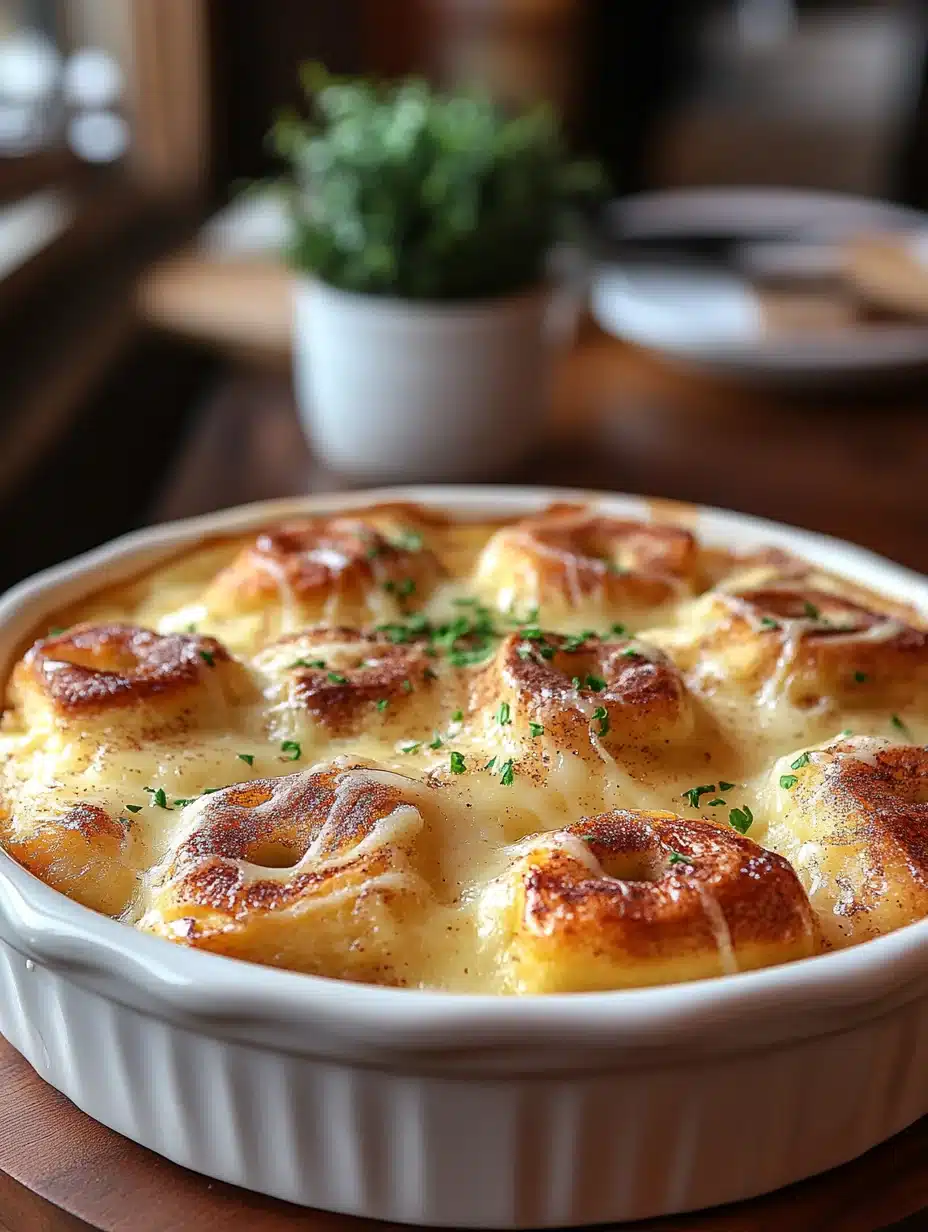
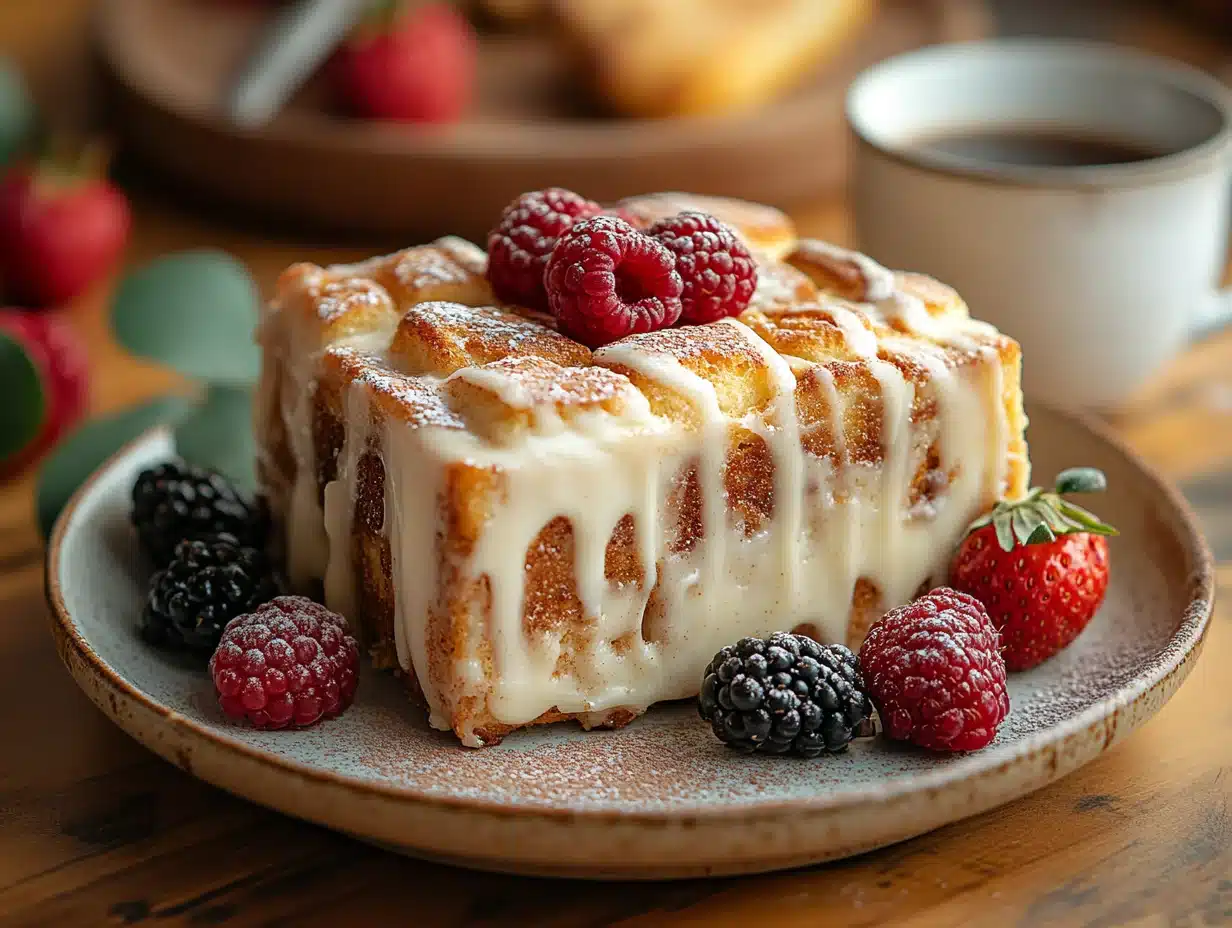
Cinnamon roll bread pudding takes two beloved comfort foods and combines them into something even better than either one alone. Refrigerated cinnamon rolls are torn into chunks, soaked in a rich egg-and-cream custard seasoned with vanilla and extra cinnamon, baked until puffed and golden, and then drizzled with the warm cream cheese frosting that comes right in the cinnamon roll package. The result is a custardy, cinnamon-swirled, frosting-glazed pan of pure indulgence that happens to be astonishingly easy to make.
This recipe is the brunch hero that wins every holiday morning, potluck, and family gathering. It requires minimal skill, uses affordable ingredients that are available at any grocery store, and can be assembled the night before so all you do in the morning is slide the pan into the oven. By the time the coffee is ready, the kitchen smells like a bakery and breakfast is served.
Cinnamon Roll Bread Pudding Nutrition Facts
| Nutrient | Per Serving | % Daily Value |
|---|---|---|
| Calories | 380 kcal | 19% |
| Protein | 8 g | 16% |
| Total Fat | 18 g | 23% |
| Saturated Fat | 10 g | 50% |
| Carbohydrates | 48 g | 17% |
| Fiber | 1 g | 4% |
| Sugar | 28 g | — |
| Cholesterol | 120 mg | 40% |
Why Cinnamon Rolls Make the Best Bread Pudding Base
Traditional bread pudding uses stale bread, which is fine but uninspiring. Replacing the bread with cinnamon rolls transforms the dish entirely. Cinnamon rolls bring built-in sweetness, cinnamon swirls throughout the dough, a soft and pillowy texture that absorbs custard beautifully, and a packet of cream cheese frosting that serves as the perfect finishing glaze. Every advantage is built right in.
Bread Pudding Base Comparison
| Base | Flavor Complexity | Custard Absorption | Built-In Sweetness | Effort Level |
|---|---|---|---|---|
| Cinnamon rolls (this recipe) | Excellent (cinnamon swirl) | Excellent | Yes + frosting | Very easy |
| Day-old brioche | Good (butter, egg) | Excellent | Mild | Easy |
| Challah | Good (rich, eggy) | Very good | Mild | Easy |
| French bread | Neutral | Good | No | Easy |
| Croissants | Very good (buttery) | Good (flaky) | Mild | Easy but pricey |
| Plain white bread | Minimal | Very good | No | Easiest, least flavor |
Essential Ingredients
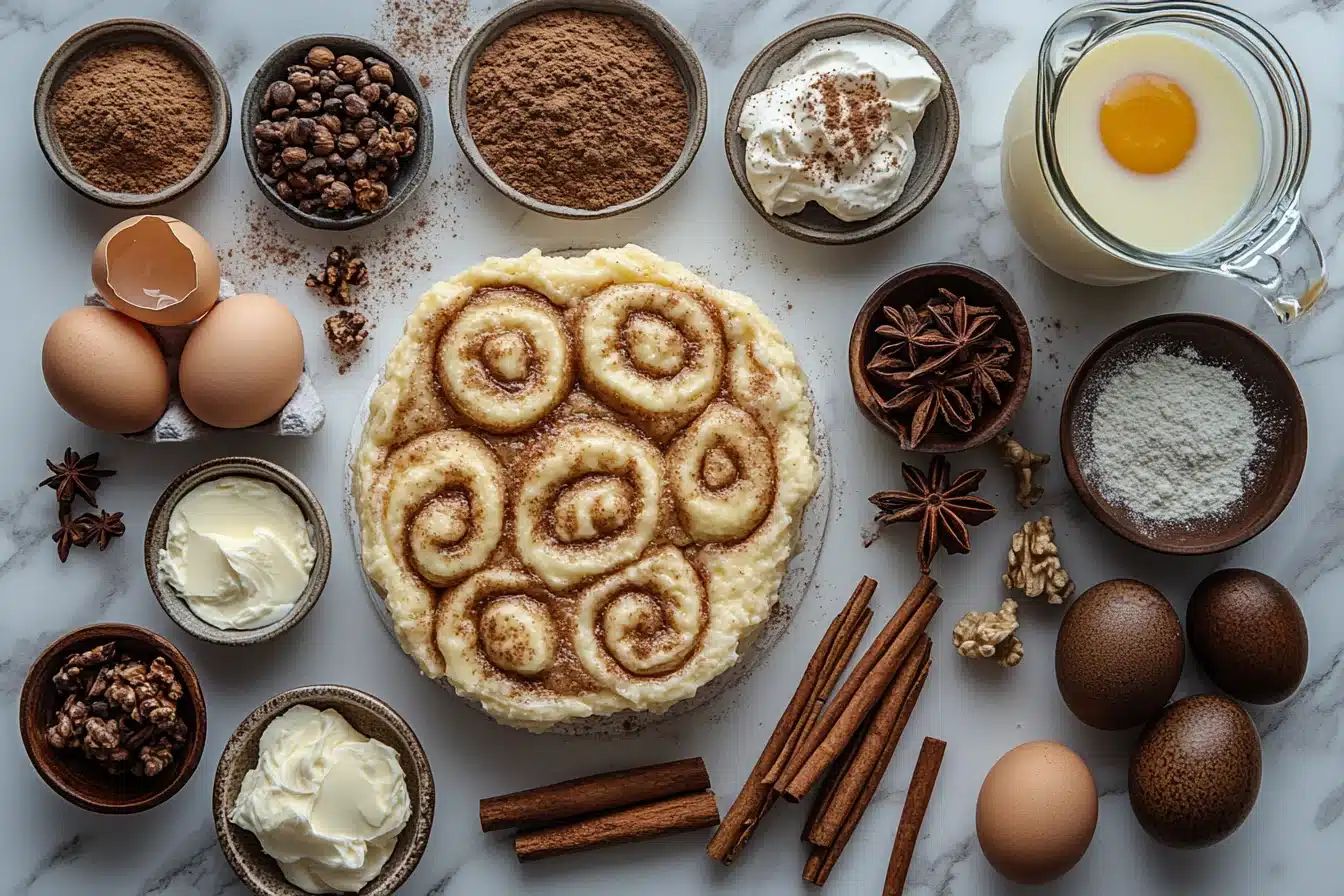
| Component | Ingredient | Amount | Purpose |
|---|---|---|---|
| Base | Refrigerated cinnamon rolls | 2 cans (8 rolls each) | Cinnamon-swirled dough + frosting packets |
| Butter for greasing | 1 tbsp | Prevents sticking | |
| Custard | Large eggs | 4 | Binds and sets the custard |
| Heavy cream | 1 cup | Rich, luxurious custard base | |
| Whole milk | 1/2 cup | Lightens the custard slightly | |
| Vanilla extract | 2 tsp | Warm, sweet aroma | |
| Spices | Ground cinnamon | 1 tsp | Extra cinnamon punch |
| Nutmeg | 1/4 tsp | Warm background spice | |
| Brown sugar | 2 tbsp | Caramel notes on top |
How to Make Cinnamon Roll Bread Pudding Step-by-Step
Step 1: Cut Cinnamon Rolls Into Bite-Size Pieces
Open both cans of cinnamon rolls and set aside the frosting packets. Cut each cinnamon roll into 6 pieces using kitchen scissors or a sharp knife. The pieces should be roughly 1-inch chunks that will soak up the custard while maintaining some structure. Scatter the pieces evenly in a buttered 9×13-inch baking dish.
Step 2: Whisk Together the Egg Custard
In a large bowl, whisk 4 eggs until fully beaten. Add heavy cream, milk, vanilla extract, ground cinnamon, nutmeg, and brown sugar. Whisk vigorously until completely combined with no streaks of egg visible. The custard should be smooth, fragrant, and a warm golden color from the cinnamon and brown sugar.
Step 3: Pour Custard Over the Cinnamon Roll Pieces
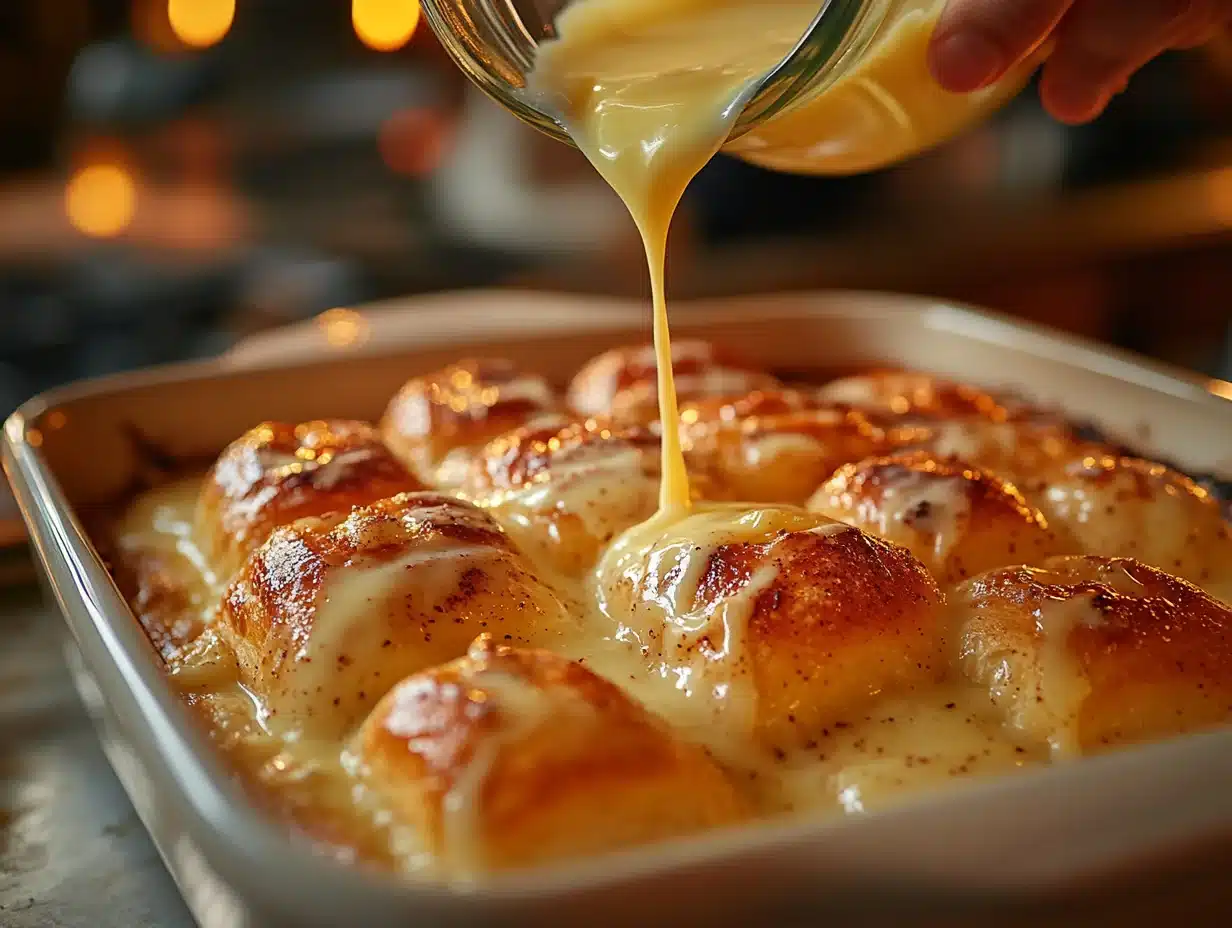
Pour the custard mixture evenly over the cinnamon roll pieces in the baking dish. Use a spatula to gently press the rolls down so they are submerged in the custard. Let the dish sit for 15 minutes at room temperature, or cover and refrigerate overnight. This soaking time allows the dough to absorb the custard fully, creating a rich, tender interior.
Step 4: Bake at 350 Degrees F for 35 Minutes
Bake in a preheated 350 degree Fahrenheit oven for 33 to 38 minutes until the top is golden brown, the pudding is puffed, and the center is set but still slightly jiggly. A toothpick inserted in the center should come out clean or with just a few moist crumbs. Overbaking produces dry bread pudding, so err on the side of slightly underdone.
Step 5: Drizzle With Warm Frosting and Serve
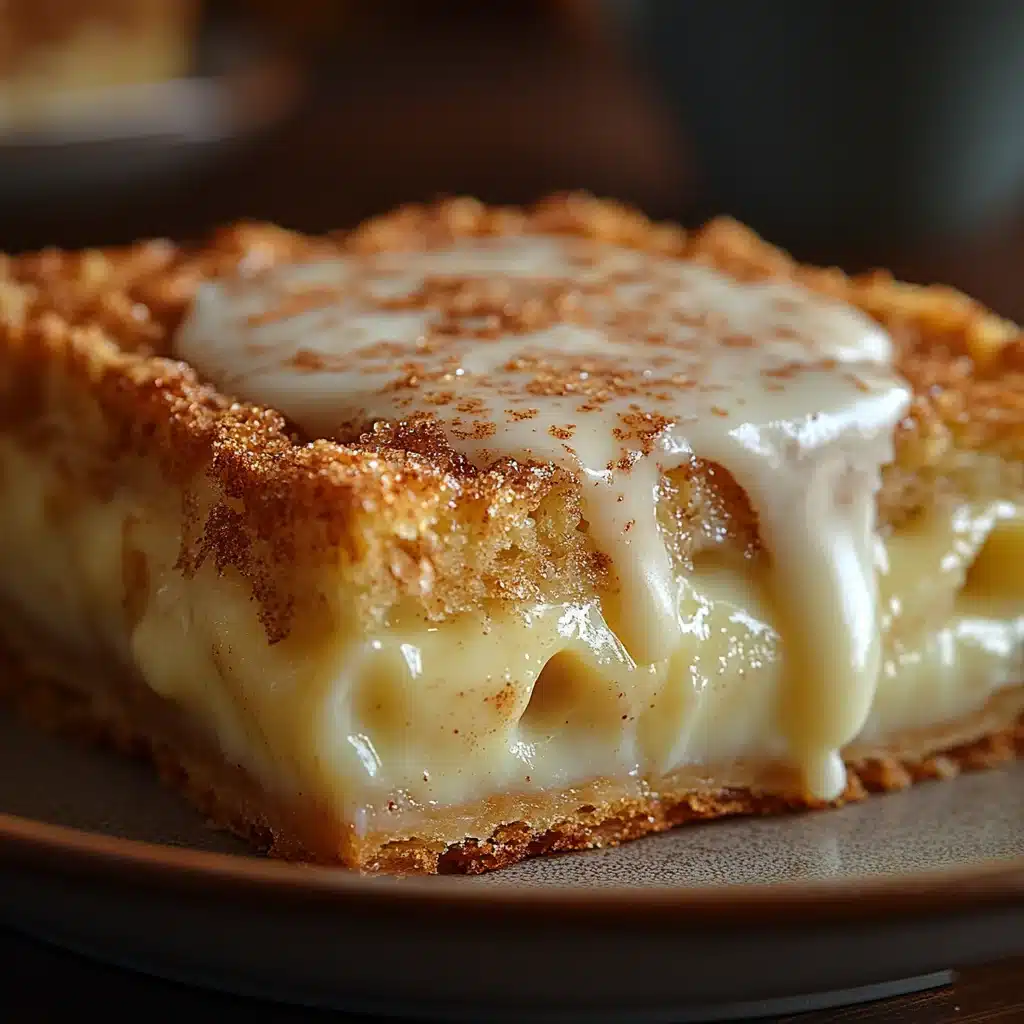
While the bread pudding bakes, microwave the reserved frosting packets for 10 to 15 seconds until they are warm and pourable. As soon as the bread pudding comes out of the oven, drizzle the warm frosting in a zigzag pattern over the top. The frosting melts into the hot pudding, creating rivers of cream cheese glaze. Serve warm, scooped directly from the pan.
Make-Ahead Instructions for Overnight Prep
Cinnamon roll bread pudding is one of the best make-ahead breakfast dishes because the overnight soak actually improves the final result. The extended custard absorption creates a more uniform, custardy texture throughout the dish rather than the slightly uneven soak you get with a short 15-minute rest. Assemble the dish completely through Step 3, cover tightly with plastic wrap, and refrigerate for 8 to 12 hours. In the morning, remove the dish from the refrigerator, let it sit on the counter for 15 minutes while the oven preheats, and bake as directed. Add 3 to 5 extra minutes of baking time since the dish starts cold.
Perfecting the Custard-to-Bread Ratio
Why the Ratio Matters
The defining characteristic of great bread pudding is the custard-to-bread ratio. Too much custard and the pudding becomes a soggy, egg-heavy mess. Too little custard and the cinnamon roll pieces remain dry and bready without the silky, custardy interior that defines the dish. The golden ratio for bread pudding is approximately 1 cup of liquid (combined eggs, cream, and milk) per 2 cups of loosely packed bread cubes. This recipe follows this ratio precisely, delivering a texture that is creamy and moist throughout while still maintaining enough structure to hold its shape when scooped.
The Importance of Soaking Time
Soaking time directly affects the final texture. A minimum 15-minute soak at room temperature produces bread pudding with a pleasant contrast between the custardy interior and slightly bready, chewy edges. An overnight soak in the refrigerator (8 to 12 hours) produces the most uniform, ultra-custardy result because the cultured dough has maximum time to absorb every drop of the egg-cream mixture. Both versions are delicious but offer distinctly different textures, so choose based on whether you prefer some textural contrast or complete custard saturation.
Toppings and Sauce Variations
Classic Cream Cheese Glaze
The frosting packets that come with refrigerated cinnamon rolls make the easiest and most fitting glaze. Microwave the packets for 10 to 15 seconds to warm them to a pourable consistency, then drizzle in a zigzag pattern over the hot bread pudding fresh from the oven. The heat of the pudding melts the frosting further, creating rivers of cream cheese glaze that seep into every crack and crevice. For extra richness, stir a tablespoon of softened butter into the warmed frosting before drizzling.
Bourbon Caramel Sauce
For an adults-only version, replace the cream cheese frosting with a quick bourbon caramel sauce. Melt 1/2 cup of butter in a saucepan, add 1 cup of brown sugar and 1/4 cup of heavy cream, and stir over medium heat until the sugar dissolves and the mixture is smooth. Remove from heat and stir in 2 tablespoons of bourbon and 1 teaspoon of vanilla extract. The bourbon’s oak and vanilla notes deepen the cinnamon flavor in the pudding, while the caramel’s buttery sweetness creates an impossibly decadent dessert that rivals any high-end restaurant offering.
Maple Pecan Topping
For a fall brunch variation, drizzle the bread pudding with warm pure maple syrup (not pancake syrup) and scatter toasted pecan halves across the top. The maple syrup adds a distinctly North American flavor that pairs naturally with cinnamon, while the pecans provide crunch that contrasts beautifully with the soft, custardy interior. Toast the pecans in a dry skillet for 3 to 4 minutes until fragrant before scattering them over the pudding. This combination turns the bread pudding into a dish that tastes like autumn morning in Vermont.
Serving Cinnamon Roll Bread Pudding for Brunch Events
Setting Up a Self-Serve Brunch Station
Cinnamon roll bread pudding is the anchor dish of any successful brunch buffet. Bake it in the 9×13 dish and set it directly on the table on a trivet or heat-safe mat. Place a serving spoon alongside and let guests scoop their own portions. Around the bread pudding, arrange complementary items: a bowl of fresh mixed berries for color and freshness, a small pitcher of warm maple syrup, a bowl of whipped cream, and a dish of toasted pecans. This self-serve approach eliminates the stress of individual plating and lets guests customize their portions.
Pairing With Coffee and Beverages
The rich, sweet, cinnamon-heavy flavor profile of this bread pudding calls for beverages that either complement or contrast. A medium-roast pour-over coffee with notes of chocolate and caramel mirrors the warm flavors of the pudding. For contrast, a bright, acidic cold brew or a tangy fresh-squeezed orange juice cuts through the richness and cleanses the palate between bites. For holiday brunches, a mimosa bar adds celebration, and the orange juice in the champagne provides the same palate-cleansing acidity while feeling festive and indulgent.
What to Serve With Cinnamon Roll Bread Pudding
- Strawberry banana smoothie — fruity, refreshing contrast to the rich pudding
- Candy cane hot chocolate — warm drink pairing for holiday brunch
- Gingerbread trifle — build a dessert buffet table
- Pear hazelnut crumble — fruity contrast to the indulgent pudding
- Chocolate fondue — dessert party dream team
- Ricotta pistachio bites — light appetizer before brunch dessert
- Hot honey chicken sliders — savory brunch counterpart
- Buffalo chicken sliders — hearty savory alongside sweet
- Charcuterie wreath — elegant brunch spread
The History of Bread Pudding
Bread pudding is one of the oldest desserts in the English-speaking world, dating back to at least the 11th century when frugal cooks in England soaked stale bread in a mixture of eggs and milk, sweetened it, and baked it. The dish was originally called “poor man’s pudding” because it transformed ingredients that would otherwise be wasted into a filling, satisfying dessert. By the 13th century, bread pudding appeared in medieval cookbooks under various names.
The dish evolved dramatically in the American South, particularly in New Orleans, where it became a restaurant staple elevated with rich custards, bourbon sauces, and creative bread choices. Restaurants like Commander’s Palace and Brennan’s transformed humble bread pudding into a luxury dessert that commands premium menu prices. The cinnamon roll variation represents the latest evolution, combining the nostalgic appeal of childhood cinnamon rolls with the custardy richness of classic bread pudding.
Cinnamon Roll Bread Pudding

Irresistible Cinnamon Roll Bread Pudding Recipe
Total Time: 55 minutes
Yield: Serves 6
Diet: Vegetarian
Description
A simple and delicious bread pudding made with cinnamon rolls for a sweet and comforting dessert.
Ingredients
Scale
- 6 stale cinnamon rolls, cubed
- 2 cups milk
- 3 large eggs
- 1/4 cup sugar
- 1 tsp vanilla extract
- 1/2 tsp cinnamon
- 1/4 tsp nutmeg
- 2 tbsp butter, melted
Instructions
- Preheat oven to 350°F (175°C). Grease a baking dish.
- Place cubed cinnamon rolls in the dish.
- In a bowl, whisk milk, eggs, sugar, vanilla, cinnamon, and nutmeg.
- Pour mixture over the cinnamon rolls. Let sit for 10 minutes.
- Drizzle melted butter on top.
- Bake for 35-40 minutes until set and golden.
- Cool slightly before serving.
Notes
- Prep Time: 15 minutes
- Cook Time: 40 minutes
- Category: Dessert
- Method: Baking
- Cuisine: American
Nutrition
- Serving Size: 1 serving
- Calories: 320
- Sugar: 10g
- Sodium: 200mg
- Fat: 12g
- Saturated Fat: 7g
- Unsaturated Fat: 3g
- Trans Fat: 0g
- Carbohydrates: 45g
- Fiber: 1g
- Protein: 7g
- Cholesterol: 150mg
Cinnamon Roll Selection Guide
Refrigerated vs. Frozen vs. Bakery Cinnamon Rolls
The type of cinnamon roll you start with affects the final bread pudding in meaningful ways. Refrigerated canned cinnamon rolls like Pillsbury Grands are the most popular choice because they are widely available, affordable, and pre-made with the cinnamon sugar filling already swirled inside. Bake them according to package directions the night before, let them cool completely, and cut them into cubes for the bread pudding. Frozen cinnamon rolls from brands like Rhodes or Sister Schubert’s are typically larger and yeastier, producing a bread pudding with more of a traditional yeast-bread flavor and denser texture. Bakery cinnamon rolls from grocery store bakeries or shops like Cinnabon create the most luxurious bread pudding but at a significantly higher cost.
Day-Old vs. Fresh Cinnamon Rolls
Slightly stale cinnamon rolls actually make better bread pudding than fresh ones. Day-old cinnamon rolls have lost some moisture, which means they absorb the custard more efficiently and evenly. Fresh, soft cinnamon rolls are already saturated with their own moisture and may absorb less custard, resulting in a bread pudding that is slightly less cohesive. If you must use freshly baked cinnamon rolls, cut them into cubes and spread them on a baking sheet at room temperature for 2 to 3 hours before building the bread pudding, or place them in a 200-degree oven for 15 minutes to gently dry the surfaces.
Making Bread Pudding in Different Baking Vessels
Cast Iron Skillet Method
Baking cinnamon roll bread pudding in a 12-inch cast-iron skillet creates a dramatically different result than a 9×13 baking dish. The skillet’s superior heat conduction produces a deeply caramelized, almost crunchy bottom crust while the center remains soft and custardy. The round shape also makes a more visually striking presentation, especially when you drizzle the frosting over the top and bring the whole skillet to the table. Reduce the baking time by about 5 minutes compared to the baking dish version because the cast iron heats faster and retains heat better.
Individual Ramekin Portions
For an elegant brunch presentation, divide the cinnamon roll cubes and custard among 8 to 10 individual ramekins or oven-safe coffee mugs. Individual portions cook faster (about 20 to 25 minutes at 350 degrees), make serving effortless, create built-in portion control, and give each guest their own personal dish with maximum ratio of crispy edges to custardy center. Top each ramekin with frosting immediately after removing from the oven. The personal-size presentation transforms a casual brunch dish into something that feels special and intentional.
Cinnamon Roll Brand Comparison for Bread Pudding
| Brand | Size | Frosting Included | Flavor | Best For |
|---|---|---|---|---|
| Pillsbury Grands | 5 rolls/can | Yes (cream cheese) | Classic, sweet | Best overall choice |
| Pillsbury Original | 8 rolls/can | Yes (vanilla) | Lighter, smaller | Budget option |
| Annie’s Organic | 5 rolls/can | Yes (cream cheese) | Less sweet, cleaner | Organic preference |
| Rhodes Frozen | 12 per bag | No | Yeasty, bakery-style | Denser bread pudding |
| Bakery/homemade | Varies | Separate | Rich, buttery | Premium version |
Bread Pudding Baking Temperature Guide
| Temperature | Bake Time | Texture Result | Top Browning | Best For |
|---|---|---|---|---|
| 325°F / 163°C | 40-45 min | Very custardy, soft | Light golden | Silky, dessert-style |
| 350°F / 177°C | 30-35 min | Balanced custard and structure | Golden brown | Standard (recommended) |
| 375°F / 190°C | 25-30 min | Firmer, more set | Deep golden | Crispier top preferred |

Frequently Asked Questions About Cinnamon Roll Bread Pudding
Can I use any brand of cinnamon rolls?
Yes, any refrigerated cinnamon roll brand works. Pillsbury Grands produce the thickest, most dough-heavy result because of their large size and generous cinnamon filling. Store-brand rolls are slightly smaller but work just fine. For a truly premium version, buy fresh cinnamon rolls from a local bakery, cut them into chunks, and reduce the added sugar in the custard since bakery rolls are typically sweeter.
Can I make this the night before?
Absolutely, and overnight assembly actually produces a better result. The extended 8 to 12 hour custard soak allows the egg-and-cream mixture to penetrate every layer of the cinnamon roll dough, creating a more uniformly custardy texture throughout. Cover the assembled dish tightly with plastic wrap and refrigerate. In the morning, remove it from the fridge 15 minutes before baking and add 3 to 5 extra minutes of oven time since the dish starts cold.
How do I know when it is done baking?
Look for three signs: the top surface should be deep golden brown, not pale; the pudding should be visibly puffed up like a souffle; and the center should be just set with the slightest wobble when you gently shake the pan. A toothpick test should come back clean or with just a few moist crumbs attached. Overbaked bread pudding becomes dry and loses its custardy magic.
Can I add fruit?
Fresh fruit additions work beautifully. Fold 1 cup of blueberries, sliced strawberries, diced apples, or sliced bananas into the dish before pouring the custard over. The fruit adds moisture, tartness, and color that complements the cinnamon and cream cheese frosting. Raspberries are particularly excellent because their tartness cuts through the richness.
How do I store and reheat leftovers?
Cover the baking dish tightly with foil or transfer individual portions to airtight containers. Refrigerate for up to 3 days. For the best reheating, use a 325 degree oven for 10 minutes, which re-crisps the top while warming the interior. Microwave works for individual portions at 30 to 45 seconds. Drizzle with any remaining frosting after reheating.
Can I freeze this?
Yes. Cool the baked bread pudding completely, then wrap the entire dish tightly in plastic wrap followed by a layer of aluminum foil. It freezes well for up to 2 months. Thaw overnight in the refrigerator, then reheat at 325 degrees for 15 to 20 minutes. The texture holds up remarkably well through the freezing process.
What pan works best?
A standard 9×13-inch baking dish is the ideal size for two cans (16 rolls) of cinnamon rolls. Glass, ceramic, or metal all work, though glass and ceramic retain heat longer and keep the pudding warm at the table. For a single can (half batch), use an 8×8-inch square dish and halve the custard ingredients.
Can I make homemade cream cheese frosting instead?
Homemade cream cheese frosting is a significant upgrade. Beat 4 ounces of softened cream cheese with 1 cup of powdered sugar and 2 tablespoons of milk until completely smooth. This version is richer, more tangy, and more luxurious than the packet frosting. Make it while the bread pudding bakes and drizzle it warm over the hot pudding.

Written by Chef Anna
I'm Anna - a Le Cordon Bleu-trained chef, recipe developer, and the voice behind Chef Johns Gourmet. After a decade in professional kitchens, I now spend my mornings testing recipes and my afternoons writing them down so you can make them perfectly in your own kitchen. Every one of the 1,100+ recipes on this site has been personally cooked, tasted, and refined. I write like I'm standing next to you, walking you through every step. Simple recipes. Bold flavors. Made for real kitchens.