
Key Takeaways
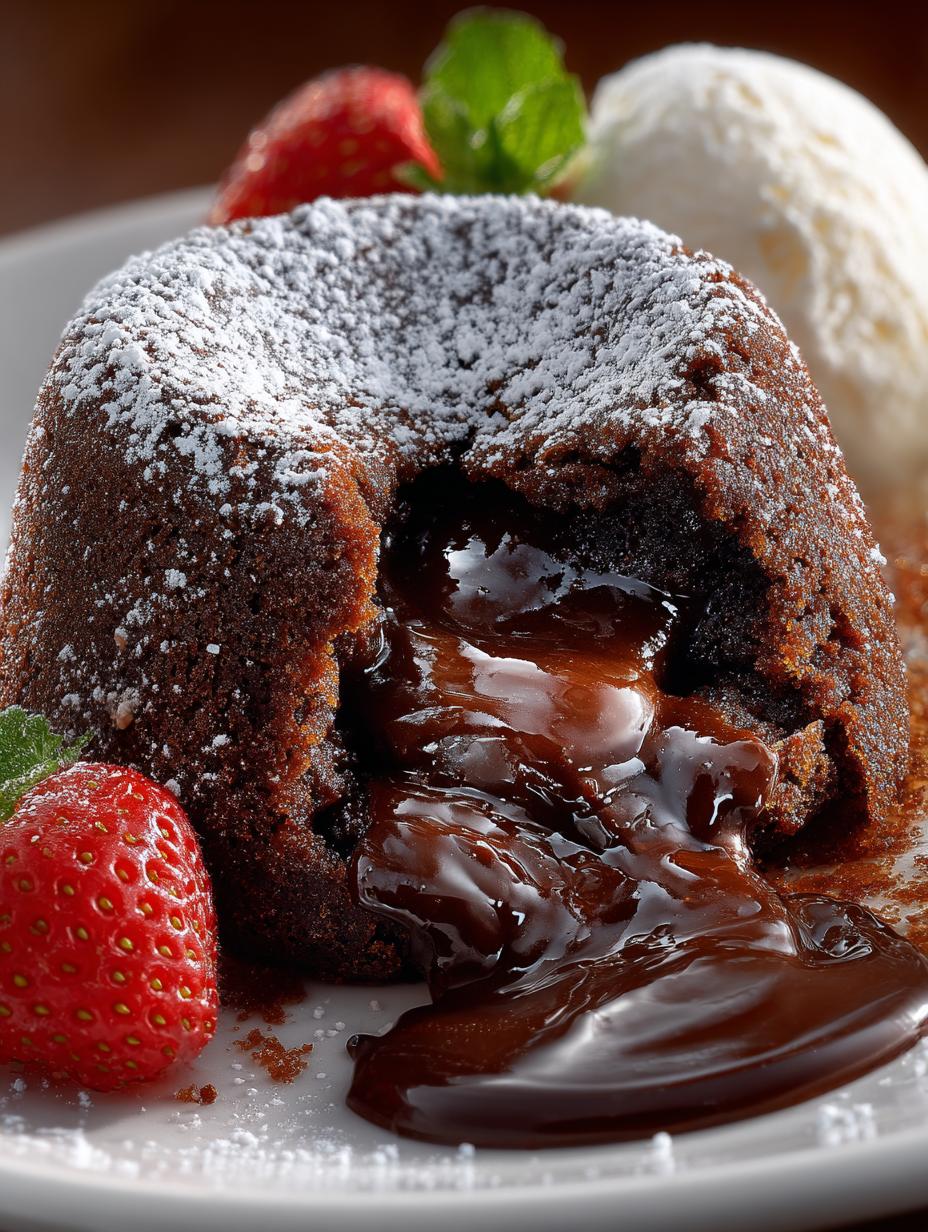
- Chocolate molten lava cake is an individual dessert with a fully baked exterior and a flowing, molten chocolate center — accomplished through deliberate underbaking, not a separate sauce.
- The single most important variable is baking time — 12 minutes at 425°F (218°C) creates the perfect lava center; 14 minutes makes a chocolate cupcake.
- Use high-quality chocolate (60-70% cacao) — the chocolate IS the flavor; cheap chocolate produces a dull cake.
- Ramekins must be thoroughly buttered and cocoa-dusted for clean release — this step cannot be skipped.
- Batter can be made up to 24 hours ahead and refrigerated; bake straight from fridge with 1-2 extra minutes.
Chocolate molten lava cake — also called chocolate fondant, lava cake, or moelleux au chocolat — is the dessert that built reputations. Invented in 1987 by French chef Jean-Georges Vongerichten (allegedly by accident, when he pulled chocolate sponge cakes from the oven too early), it became the signature dessert of an entire generation of restaurants. The magic isn’t a hidden chocolate ganache buried inside — it’s pure baking science: chocolate batter cooked just long enough to set the exterior while leaving the center liquid.
🎯 Key Takeaways
- Restaurant-quality dessert ready in 12 minutes total.
- Four ingredients: dark chocolate, butter, eggs, flour.
- Bake 10-12 minutes at 425°F—pull when edges are set but center jiggles.
- Invert onto plate immediately for the signature molten center flow.
- Serve with vanilla ice cream, raspberries, or powdered sugar dust.
For home cooks, lava cake represents the perfect intersection of simplicity and showstopper appeal. The batter takes 8 minutes to mix, requires no special equipment beyond ramekins, and bakes in 12 minutes flat. It’s faster than baking chocolate chip cookies and infinitely more impressive. The same precision-baking mindset works wonders in our individual apple crumbles and our favorite carrot cake recipe.
The Science Behind the Molten Center
Understanding why molten lava cake works changes everything. The center isn’t undercooked batter that tastes raw — it’s batter heated to the precise temperature where chocolate liquefies and butter remains fluid, but the proteins haven’t yet fully coagulated. The exterior, exposed directly to the hot ramekin walls and oven air, sets first into a delicate cake structure. The interior, insulated by that exterior, never reaches setting temperature within the brief baking window.
Why Temperature Matters More Than Time
Most lava cake failures come from oven temperature inaccuracy, not bad recipes. An oven that runs 25°F low will fully bake your “molten” centers; one that runs 25°F high will burn the exteriors before the centers even warm. Invest in an oven thermometer ($8 at any grocery store) and verify your oven’s true temperature before attempting lava cakes. This single change solves more lava cake disasters than any other intervention.
The Role of Each Ingredient
Every ingredient in a lava cake serves a structural purpose. Chocolate provides flavor and the molten center. Butter contributes richness and helps the center stay fluid. Eggs supply structure (whole eggs) and lift (extra yolks for richness, plus an extra yolk per cake for that satin texture). Flour — surprisingly little, just 2 tablespoons per cake — provides just enough structure to hold the exterior shape. Sugar balances the bittersweet chocolate. Salt amplifies all flavors.
Choosing the Right Chocolate
Chocolate is the entire flavor of this dessert, so quality matters enormously. Use a chocolate you genuinely enjoy eating plain. The 60-70% cacao range produces the best balance — bittersweet enough for adult sophistication, sweet enough for universal appeal.
| Chocolate Type | Cacao % | Result | Best For |
|---|---|---|---|
| Valrhona Manjari | 64% | Bright, fruity, complex | Sophisticated dinner parties |
| Guittard Bittersweet | 70% | Deep, intense, classic | Chocolate purists |
| Callebaut Semi-Sweet | 54% | Smooth, balanced, sweet | Family-friendly servings |
| Ghirardelli 60% Bittersweet | 60% | Reliable, widely available | Beginners |
| Trader Joe’s Pound Plus | 72% | Excellent budget option | Everyday baking |
| Lindt Excellence 70% | 70% | Bold, slightly bitter | Dark chocolate lovers |
| Scharffen Berger 70% | 70% | Wine-like complexity | Special occasions |
| Hershey’s Special Dark | 45% | Sweet, mild, accessible | Kids’ birthdays |
Chocolate to Avoid
Skip “baking chocolate” (unsweetened — too bitter), chocolate chips (contain stabilizers that prevent smooth melting), and chocolate-flavored compound coatings (no real cocoa butter). These all produce inferior lava cakes with grainy textures and dull flavor.
Equipment You Actually Need
Lava cakes require minimal special equipment, but the few essentials make the difference between bakery-quality and disappointment. None of these are expensive, and all serve other baking purposes too.
| Tool | Why You Need It | Price Range |
|---|---|---|
| 4-oz ramekins (set of 6) | Perfect single-serving size | $15-25 |
| Oven thermometer | Verify true temp (most ovens lie) | $8-15 |
| Digital kitchen scale | Chocolate baking demands precision | $15-30 |
| Heatproof spatula | Folding chocolate gently | $10 |
| Microwave-safe bowl | Easy chocolate melting | $10 |
| Small offset spatula | Loosening edges before unmolding | $8 |
| Wire whisk | Combining eggs and chocolate | $10 |
| Sieve / fine strainer | Sifting flour for smooth batter | $10 |
The Foolproof Step-by-Step Method
This is the recipe-of-record. Follow it exactly the first time; once you understand the rhythm, you can scale, flavor, and adapt. Total active time is 8 minutes; total time including baking is 20 minutes.
Step 1: Prep the Ramekins (2 minutes)
Heat oven to 425°F (218°C) with a rack in the center position. Using softened butter and a pastry brush, butter 6 four-ounce ramekins thoroughly — get into every corner. Add 1 teaspoon cocoa powder to each ramekin, rotate to coat the buttered surface completely, then tap out excess. This non-stick coating is non-negotiable; flour produces a chalky exterior.
Step 2: Melt Chocolate and Butter (3 minutes)
In a microwave-safe bowl, combine 6 ounces (170g) good bittersweet chocolate (chopped) and 10 tablespoons (140g) unsalted butter. Microwave in 30-second bursts at 70% power, stirring between each, until 90% melted. Stir until completely smooth — residual heat finishes the job without scorching.
Step 3: Whisk Eggs (2 minutes)
In a separate bowl, whisk 3 whole large eggs, 3 large egg yolks, and 1/2 cup (100g) granulated sugar until pale and slightly thickened — about 90 seconds of vigorous whisking. The mixture should ribbon when you lift the whisk.
Step 4: Combine and Bake (1 minute prep, 12 minutes bake)
Pour the warm chocolate-butter mixture into the eggs while whisking constantly (don’t scramble!). Sift in 1/4 cup (30g) all-purpose flour and a pinch of fine salt; fold gently until just combined. Divide batter evenly among ramekins (each will be about 3/4 full). Place ramekins on a baking sheet. Bake at 425°F for exactly 12 minutes — set a timer.
Step 5: Unmold and Serve Immediately
The cakes are done when the edges are firm but the centers still jiggle slightly. Remove from oven, let rest 60 seconds (no longer!). Run a small offset spatula around each ramekin edge. Invert onto serving plates with a sharp downward shake. Lift the ramekin away. Serve within 2 minutes — the lava center waits for no one.
Doneness Visual Guide
Recognizing perfect doneness comes with practice, but visual and tactile cues help. The cake should look just-set on top with a slight sheen, the edges should pull away from the ramekin slightly, and a gentle touch at the center should feel soft but not raw-wet.
| Bake Time (425°F) | Center Texture | Result |
|---|---|---|
| 9 minutes | Fully liquid, runny | Underbaked, may collapse |
| 10 minutes | Mostly liquid, soft edges | Very soft, hard to unmold |
| 11 minutes | Liquid center, set rim | Soft but unmoldable |
| 12 minutes | Molten flowing center | PERFECT — classic lava |
| 13 minutes | Thick fudgy center | Pudding-like, less dramatic |
| 14 minutes | Fully set, slightly fudgy | Chocolate cupcake |
| 15+ minutes | Fully cooked | Dry chocolate cake |
Troubleshooting Common Problems
Even with a tested recipe, lava cakes can frustrate. The vast majority of problems trace back to oven temperature inaccuracy or unmolding errors. Here’s how to diagnose and fix what went wrong.
| Problem | Cause | Solution |
|---|---|---|
| No molten center | Overbaked or oven runs hot | Check oven with thermometer; reduce 1-2 min |
| Cake collapses on plate | Underbaked exterior | Add 30-60 seconds bake time |
| Stuck in ramekin | Insufficient prep | Butter twice, then cocoa coat thoroughly |
| Chocolate seized | Water in chocolate or overheated | Use dry tools; melt at 70% power, stir often |
| Grainy texture | Used chocolate chips or low quality | Use bar chocolate, 60-70% cacao |
| Bitter flavor | Cacao % too high or burned | Use 60% chocolate; verify oven temp |
| Cake split on top | Overbeat eggs or too much flour | Whisk until just combined; measure precisely |
| Unmold breaks apart | Waited too long after baking | Unmold within 60-90 seconds of removing from oven |
Make-Ahead and Serving Strategies
The genius of lava cakes for entertaining is that the batter can be prepped up to 24 hours ahead. Mix the batter, divide among prepared ramekins, cover with plastic wrap, and refrigerate. When ready to serve, bake straight from the refrigerator — add 1-2 minutes to bake time (about 13-14 minutes total). This means you can pre-portion individual cakes and bake on demand throughout dinner service.
Classic Accompaniments
Vanilla bean ice cream is the textbook pairing — its cold creaminess contrasts perfectly with hot, intense chocolate. Whipped cream lightly sweetened with vanilla is more elegant. Fresh raspberries cut the richness with bright acidity. A dusting of powdered sugar adds visual appeal. For special occasions, pour a teaspoon of warm raspberry coulis around the plate before placing the cake.
| Pairing | How It Complements | Skill Level |
|---|---|---|
| Vanilla bean ice cream | Cold/hot temperature contrast | Beginner |
| Salted caramel sauce | Salt amplifies chocolate | Beginner |
| Fresh raspberries | Acidity cuts richness | Beginner |
| Cinnamon ice cream | Warm spice depth | Beginner |
| Espresso shot on side | Coffee enhances chocolate | Beginner |
| Crème anglaise | Silky vanilla sauce | Intermediate |
| Raspberry coulis | Bright fruit contrast | Intermediate |
| Tawny port wine | Sweet, nutty pairing | Wine drinkers |
Flavor Variations and Riffs
Once you’ve mastered the classic, the variations are endless. Each preserves the core technique while adding personality. Try these proven flavor pairings — all use the master recipe with simple additions or swaps.
Salted Caramel Lava Cakes
Press a frozen disc of salted caramel into the center of each filled ramekin before baking. Use 1 teaspoon of caramel sauce frozen on a parchment-lined plate for 30 minutes. The frozen caramel becomes a flowing salted caramel center inside the chocolate.
Espresso Lava Cakes
Add 1 tablespoon instant espresso powder to the chocolate-butter mixture while melting. The espresso amplifies chocolate flavor and adds sophisticated bitterness. Pair with coffee ice cream for full effect.
Orange-Cardamom Lava Cakes
Add 1 teaspoon orange zest and 1/4 teaspoon ground cardamom to the eggs before whisking. Top with candied orange peel. Inspired by Middle Eastern flavors, this version pairs beautifully with mint tea.
Peanut Butter Lava Cakes
Press a frozen ball of sweetened peanut butter (1 teaspoon) into each ramekin’s center before baking. Like our peanut butter cup mousse, this combines two ideal flavors.
For more chocolate adventures, explore our cottage cheese chocolate mousse, our dark chocolate almond bark, our no-bake chocolate protein bars, or pair with our indulgent chocolate waffles for the ultimate chocolate brunch.
Storage and Reheating
Lava cakes are at their absolute best within 2 minutes of baking, but leftovers (or pre-baked cakes) can be revived. Refrigerate cooled cakes in airtight containers up to 3 days. To reheat, microwave at 50% power for 20-30 seconds — this re-melts the center without overcooking. The texture won’t be quite as dramatic as fresh, but still excellent.
The History of Molten Lava Cake
The story of molten chocolate cake begins in 1987 in New York City at chef Jean-Georges Vongerichten’s restaurant. According to legend, Vongerichten pulled a tray of chocolate sponge cakes from the oven too early during a busy service, intending to discard them. He cut into one to confirm they were ruined and discovered that while the centers were still liquid, the texture was extraordinary. He started serving them deliberately underbaked, called the dish “warm chocolate cake,” and inadvertently created one of the most influential restaurant desserts of the late 20th century.
Within five years, lava cakes appeared on virtually every upscale restaurant menu in America. By the late 1990s, casual chains like Chili’s and Olive Garden had added their own versions, often using a different (and inferior) technique: a frozen ganache disc inserted into a regular chocolate cake batter. The two methods produce visually similar results but vastly different flavors — true lava cake (Vongerichten method) tastes like one ingredient throughout; the chain version tastes like cake plus filling. Connoisseurs can spot the difference instantly.
Meanwhile, French pastry chefs argued (and continue to argue) that the dish is simply their classic moelleux au chocolat or fondant au chocolat, both of which predate Vongerichten by decades. The truth is probably that Vongerichten’s accidental discovery was a happy convergence — independently arriving at a technique already known in French pastry tradition, then popularizing it for American audiences. Today, the dish belongs to no single chef or country; it’s part of global dessert vocabulary.
Lava Cake at Restaurants Around the World
Different restaurant traditions have put their stamp on lava cake. In Paris, expect a dense, almost flourless version with intense bitter chocolate, served with crème anglaise. In Tokyo, lava cakes are often smaller and more refined, frequently flavored with matcha or yuzu. In Mumbai, you’ll find versions infused with cardamom or saffron, served with kulfi. In São Paulo, dulce de leche lava cakes are popular. Every regional adaptation respects the underbaking technique while expressing local flavor preferences.
American restaurant lava cakes tend toward larger portions (8-ounce ramekins versus the standard 4-ounce), sweeter chocolate, and elaborate plating with multiple sauces and ice creams. European versions favor smaller portions, higher cacao percentages, and minimalist presentation that lets the cake itself star. Both approaches have merit; both demonstrate the dessert’s versatility.
The Best Wines and Drinks to Serve with Lava Cake
Pairing wine with chocolate is notoriously difficult, but lava cake is one of the most wine-friendly chocolate desserts because of its rich texture and intense flavor that can stand up to bold wines. The classic pairing rule applies: the wine should be sweeter than the dessert. Otherwise, the wine tastes thin and acidic by comparison.
Tawny Port (10 or 20 year) is the gold standard pairing — its caramel and nut notes complement chocolate while the sweetness matches the cake. Banyuls, a fortified wine from southern France, is the connoisseur’s choice with similar properties. For a non-fortified option, late-harvest Zinfandel offers ripe berry flavors that work beautifully. Avoid dry red wines (even Cabernet Sauvignon), which clash with chocolate’s sweetness.
Non-wine pairings include espresso (coffee enhances chocolate), aged rum (especially Demerara or dark spiced rums), single malt whisky with sherry cask finish, or simply more hot chocolate. For non-alcoholic pairings, try cold-brew coffee, matcha latte, or mint tea.
Final Tips from a Pastry Chef Perspective
After years of making lava cakes professionally, three habits separate consistently great results from occasional disasters. First, weigh your ingredients with a kitchen scale rather than measuring cups — chocolate baking is unforgiving, and 5 grams of extra flour transforms texture noticeably. Second, melt chocolate at 70 percent microwave power rather than full power, stirring every 30 seconds; this prevents the seizing and graininess that ruins so many cakes before they even reach the oven. Third, never skip the cocoa-dusting step on buttered ramekins; flour creates a chalky exterior layer, while cocoa creates a seamless dark crust that releases cleanly and looks professional.
The most underrated lava cake hack is keeping pre-portioned ramekins ready in the refrigerator at all times during entertaining season. Mix a triple batch of batter on Saturday morning, divide among 18 prepared ramekins, cover individually with plastic wrap, and store on a tray. Throughout the week, you can produce restaurant-quality dessert in 13 minutes for unexpected guests, family movie nights, or post-dinner indulgences. The batter holds its quality for 48 hours; after that, the leavening power degrades and the cakes become slightly denser.
Frequently Asked Questions
What is a chocolate molten lava cake?
A chocolate molten lava cake is an individual chocolate dessert with a fully baked exterior and a flowing, molten chocolate center. The center is not a separate sauce or ganache — it’s the same batter as the exterior, deliberately underbaked to remain liquid.
How do I know when lava cakes are done?
The cakes are done when the edges look set and slightly pull away from the ramekin, the top has a slight sheen, and the center jiggles softly when the pan is shaken gently. At 425°F in a properly calibrated oven, this is exactly 12 minutes for 4-oz ramekins.
Can I make lava cake batter ahead of time?
Yes — prepare the batter, divide among ramekins, cover with plastic wrap, and refrigerate up to 24 hours. Bake straight from the refrigerator and add 1-2 minutes to the baking time (13-14 minutes total).
Why didn’t my lava cake have a molten center?
The most common cause is an oven that runs hotter than the temperature setting indicates. Buy an oven thermometer to verify the true temperature. The second most common cause is overbaking — even 1 extra minute eliminates the lava effect.
What chocolate is best for lava cakes?
Use bar chocolate (not chips) in the 60-70% cacao range. Avoid chocolate chips, which contain stabilizers that prevent smooth melting. Recommended brands include Valrhona, Guittard, Callebaut, Ghirardelli, and Trader Joe’s Pound Plus.
Can I bake lava cakes without ramekins?
You can use a muffin tin lined with cocoa-dusted parchment paper rounds, or oven-safe coffee cups. Reduce baking time to 10-11 minutes for muffin tins (smaller volume). Avoid silicone — it doesn’t conduct heat properly for the lava effect.
How do I unmold lava cakes without breaking them?
Wait exactly 60 seconds after removing from oven. Run a small offset spatula around the inside edge. Place the serving plate upside down on top of the ramekin, hold both, then flip with a sharp downward motion. The cake should release with a satisfying drop.
Can lava cake batter be frozen?
Yes — freeze filled ramekins (covered with plastic wrap) up to 1 month. Bake straight from frozen at 425°F for 18-20 minutes. The center may be slightly less fluid than fresh, but still impressive. Don’t thaw first; the cakes will lose their structure.
Are lava cakes safe to eat with their molten center?
Yes, when made correctly. The interior reaches over 160°F (71°C) — well above the 145°F threshold for egg safety in a standing dish. The eggs are sufficiently cooked even though the texture is liquid. Use fresh eggs from a reliable source.
What’s the difference between lava cake and chocolate fondant?
Chocolate fondant is the original French name (moelleux au chocolat or fondant au chocolat). “Lava cake” is the Americanized name popularized by chain restaurants. The dish is identical — same technique, same recipe, same flowing center. Names vary by region and restaurant tradition.
Frequently Asked Questions
How do you know when lava cake is done?
Edges should look set and slightly puffed, center still jiggles slightly. 10-12 minutes at 425°F for standard 6-oz ramekins. Pull one minute early for more flow.
Can I make lava cakes ahead of time?
Yes—fill ramekins, cover, and refrigerate up to 24 hours. Bake straight from cold, add 1-2 minutes. Frozen: up to 1 month—bake 3-4 extra minutes.
What chocolate is best for lava cake?
70% dark chocolate gives the richest flavor and best flow. Bittersweet also works. Avoid milk chocolate (too sweet) or chocolate chips (stabilizers affect melt).
Why did my lava cake not have a molten center?
Overbaked. Next time, reduce oven time by 1-2 minutes. Also check oven calibration—many run hot. A thin set shell with liquid center takes practice and a precise timer.
Can I use ramekins for lava cake?
Yes—6-ounce ceramic ramekins are standard. Butter and cocoa-powder dust them first for clean release. Muffin tins work but produce smaller, thinner versions.

Written by Chef Anna
I'm Anna - a Le Cordon Bleu-trained chef, recipe developer, and the voice behind Chef Johns Gourmet. After a decade in professional kitchens, I now spend my mornings testing recipes and my afternoons writing them down so you can make them perfectly in your own kitchen. Every one of the 1,100+ recipes on this site has been personally cooked, tasted, and refined. I write like I'm standing next to you, walking you through every step. Simple recipes. Bold flavors. Made for real kitchens.