
Key Takeaways
- 20-Minute Assembly: No cooking required — arrange meats, cheeses, and garnishes on a round board.
- Serves 12–16: One wreath feeds a full holiday party as the centerpiece appetizer.
- Fully Customizable: Swap any meat or cheese to match your budget or dietary preferences.
- Make Ahead: Assemble up to 4 hours before guests arrive — cover tightly with plastic wrap and refrigerate.
- Budget-Friendly: Costs $25–35 to build versus $60+ from a specialty shop or caterer.
- Zero Waste Design: Every ingredient is edible — no foam forms or non-food fillers needed.
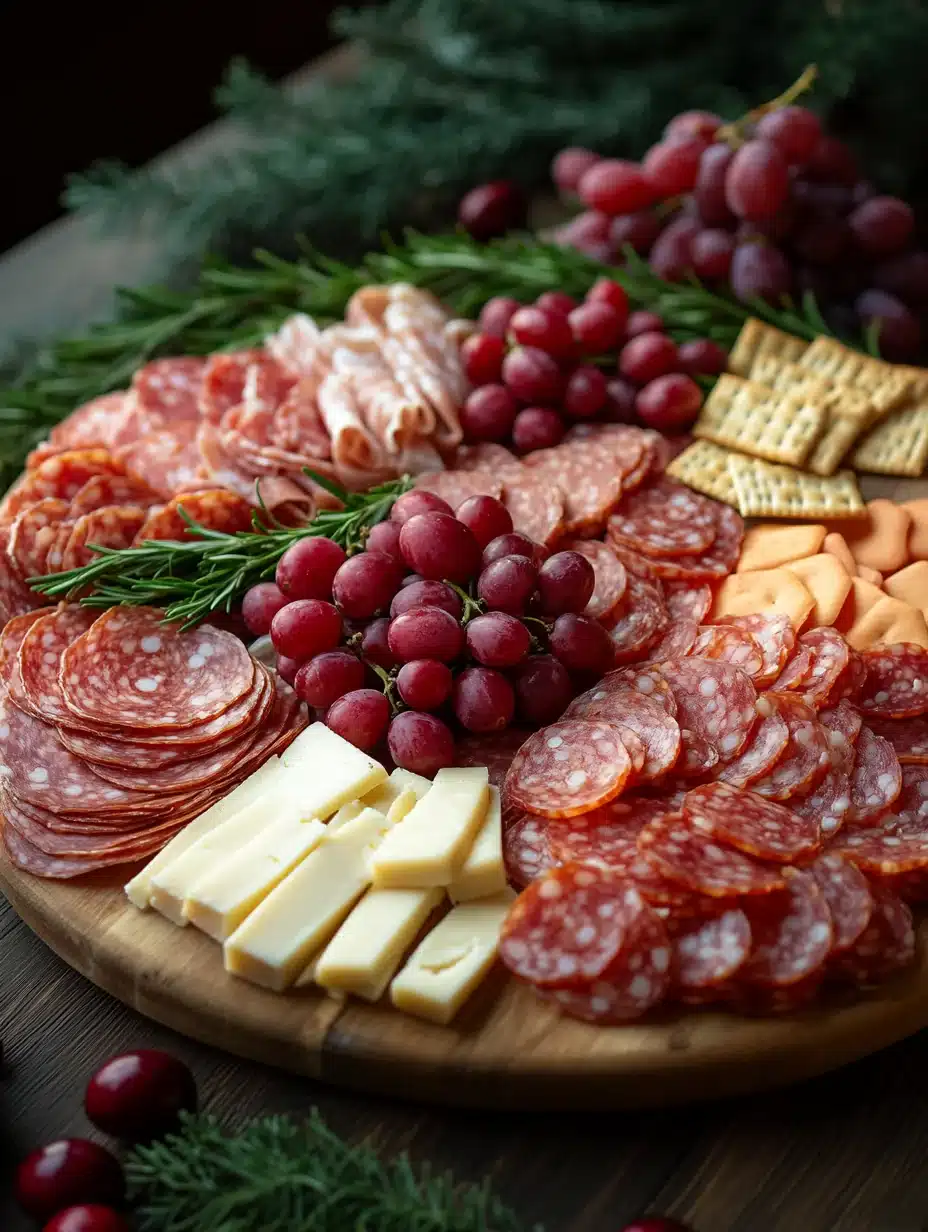
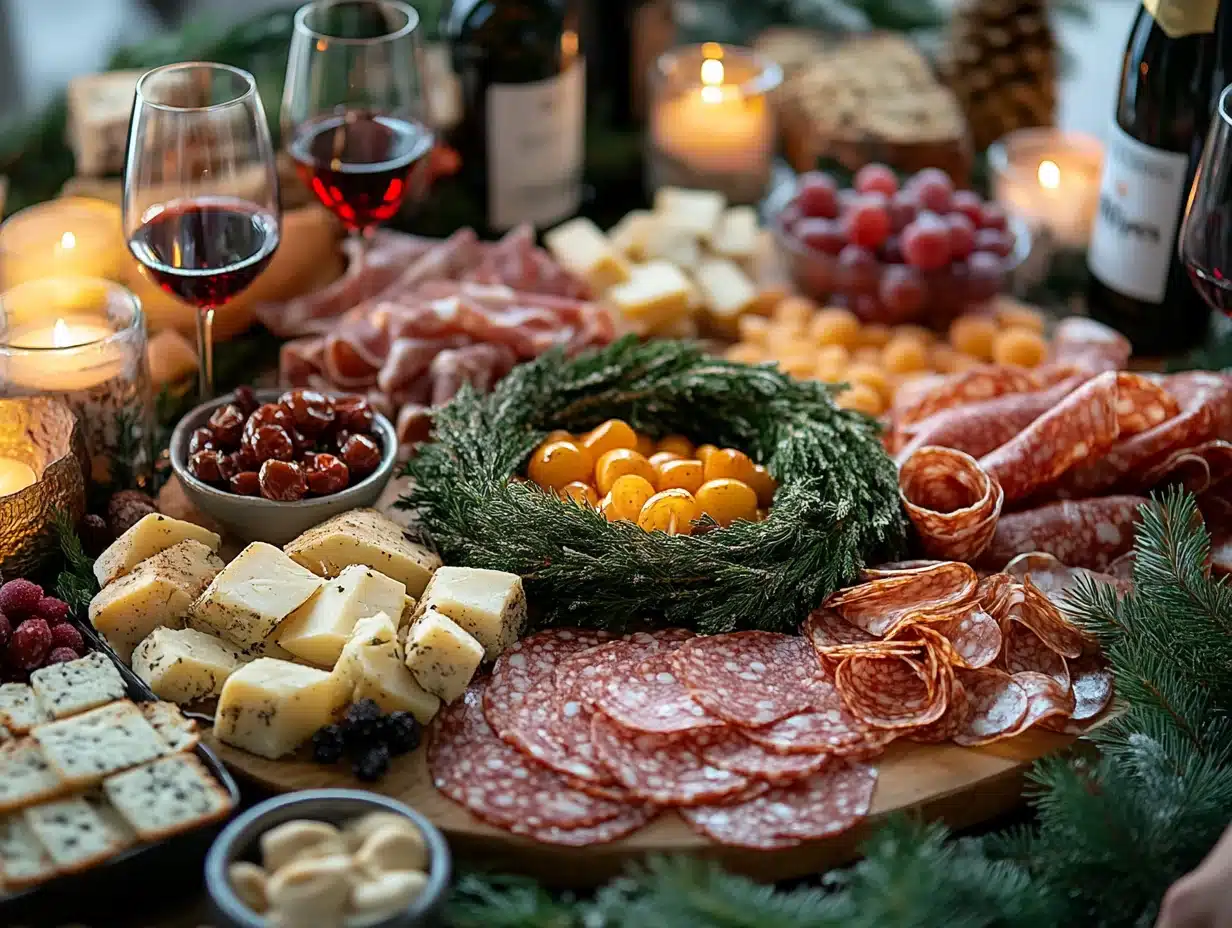
A festive charcuterie wreath transforms a standard meat-and-cheese platter into a holiday showpiece that guests will photograph before eating a single bite. Arranged in a circular wreath shape on a large round board, it combines cured meats, artisan cheeses, crackers, fresh and dried fruits, nuts, olives, and fresh rosemary sprigs that double as both garnish and edible herb. The result looks like it came from a professional caterer but assembles in 20 minutes flat.
The secret to a stunning charcuterie wreath is strategic placement and color contrast. Fold and roll the meats into roses and ribbons, alternate light and dark cheeses, scatter bright red cranberries and green rosemary for Christmas colors, and fill every visible gap with nuts and dried fruit. This recipe walks you through the exact arrangement technique professional food stylists use to create wreaths that look incredible in photos and on the table.
Charcuterie Wreath Nutrition Facts
| Nutrient | Per Serving (1/12 wreath) | % Daily Value |
|---|---|---|
| Calories | 310 kcal | 16% |
| Protein | 16 g | 32% |
| Total Fat | 22 g | 28% |
| Saturated Fat | 10 g | 50% |
| Carbohydrates | 12 g | 4% |
| Fiber | 2 g | 8% |
| Sodium | 820 mg | 36% |
Why a Charcuterie Wreath Beats a Traditional Cheese Board
The standard rectangular cheese board is functional but forgettable. A wreath-shaped arrangement demands attention, creates a natural centerpiece for your table, and encourages guests to gather around it from all sides. The circular format also portions more naturally — guests serve themselves from different sections without crowding one end of a rectangular board.
Charcuterie Wreath vs. Traditional Cheese Board
| Feature | Charcuterie Wreath | Traditional Board | Winner |
|---|---|---|---|
| Visual impact | Stunning, Instagram-worthy | Standard, expected | Wreath |
| Assembly time | 20 min | 15 min | Tie |
| Cost | $25–35 | $25–35 | Tie |
| Guest access | 360-degree access | Front and sides only | Wreath |
| Photo potential | Extreme | Moderate | Wreath |
| Seasonal adaptability | Any holiday theme | Limited | Wreath |
Essential Components for a Charcuterie Wreath
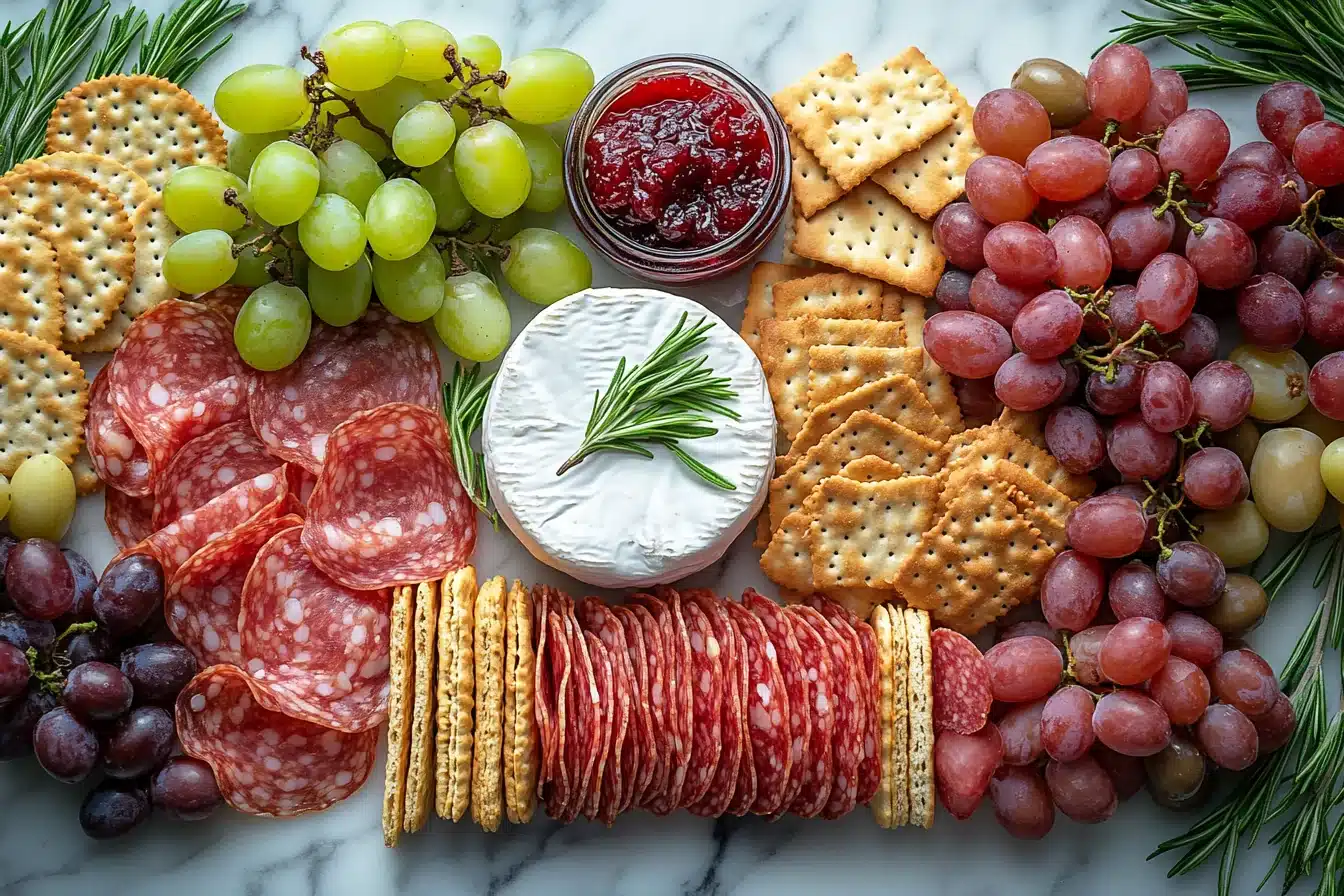
| Category | Items | Amount | Placement & Notes |
|---|---|---|---|
| Meats | Prosciutto | 6 oz | Fold into roses — anchors the wreath visually |
| Salami (genoa + sopressata) | 6 oz each | Fold in half, fan out — creates volume | |
| Coppa or capicola | 4 oz | Roll into tight tubes — fills gaps between cheeses | |
| Cheeses | Brie wheel (small) | 8 oz | Place whole as a focal point — cut a wedge out to invite serving |
| Sharp white cheddar | 8 oz | Cut into cubes and triangles — alternate shapes | |
| Gouda or manchego | 6 oz | Slice into thin wedges — fan out between meat sections | |
| Garnish | Fresh rosemary sprigs | 8–10 sprigs | Tuck between items — creates the “greenery” of the wreath |
| Fresh cranberries | 1 cup | Scatter in gaps — bright red pops visually | |
| Dried apricots, nuts, olives | 1/2 cup each | Fill every remaining gap — no bare board showing |
Premium Meat Selection Guide
| Meat | Flavor Profile | Texture | Price per oz | Best Pairing |
|---|---|---|---|---|
| Prosciutto di Parma | Sweet, delicate, nutty | Silky, melt-in-mouth | $1.50–$2.50 | Brie, melon, fig jam |
| Genoa salami | Garlicky, mild, peppery | Firm, chewy | $0.80–$1.20 | Sharp cheddar, mustard |
| Sopressata | Bold, spicy, smoky | Dense, snappy | $1.00–$1.50 | Manchego, olives |
| Capicola (hot) | Peppery, rich, slightly sweet | Moist, tender | $1.20–$1.80 | Gouda, pickled peppers |
| Mortadella | Mild, pistachio-studded | Soft, smooth | $0.60–$1.00 | Mozzarella, cornichons |
How to Assemble a Charcuterie Wreath Step-by-Step
Step 1: Place a Bowl in the Center to Create the Wreath Shape
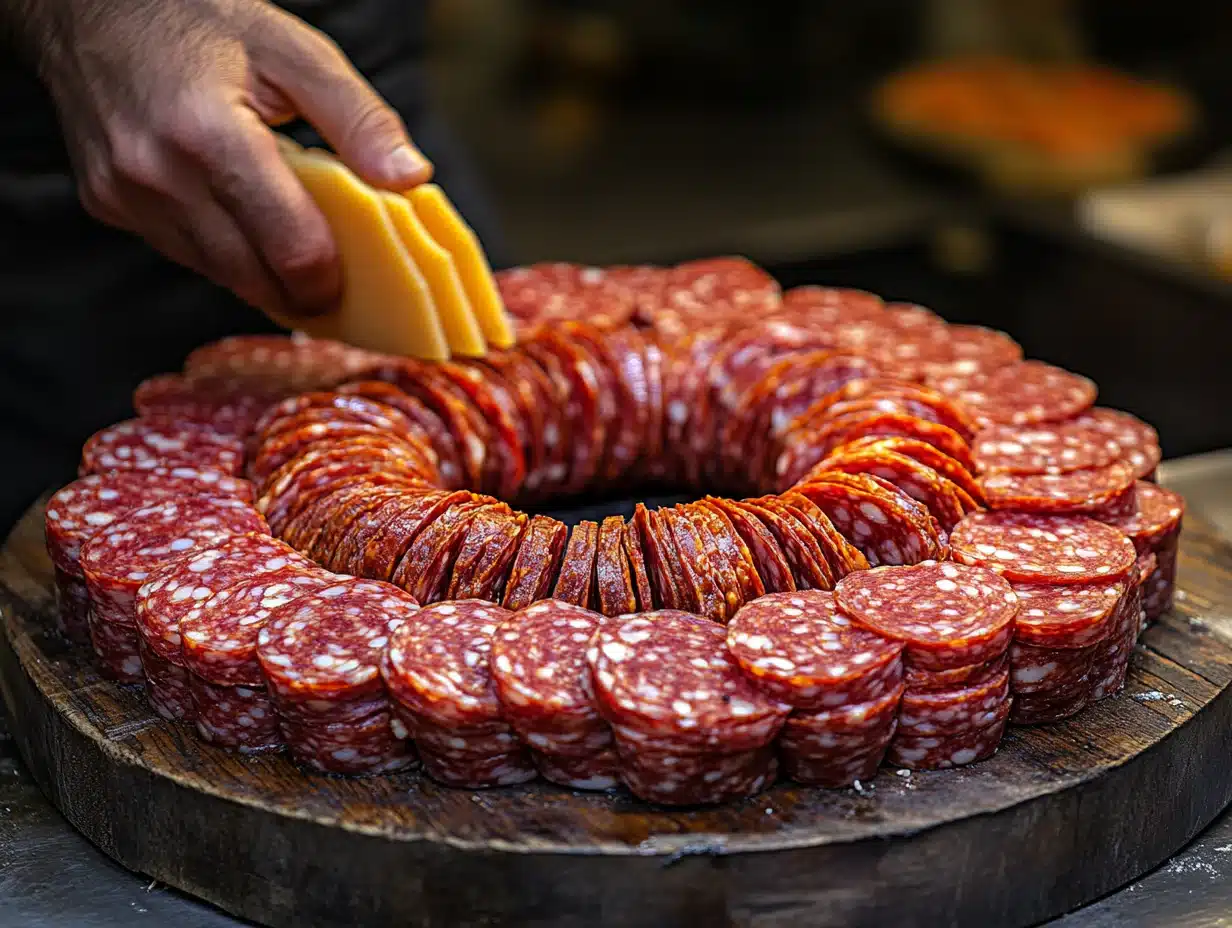
Set a small bowl or ramekin in the center of a large round cutting board or serving platter (minimum 16 inches diameter). This creates the open center of the wreath. You will remove the bowl once the wreath is assembled and fill the center with a dipping sauce, honey, or a small jar of fig jam.
Step 2: Position Cheeses at 12, 4, and 8 O’Clock Positions
Place the Brie wheel at the 12 o’clock position, the cheddar block at 4 o’clock, and the Gouda wedge at 8 o’clock. These three cheese anchors create the structural foundation of the wreath and divide it into three equal sections that you will fill with meats, crackers, and garnishes.
Step 3: Fan Meats Between the Cheese Anchors
Fold prosciutto slices into loose roses by gathering one end and letting the other end fan open. Place 3 to 4 roses in one section. Fan folded salami in overlapping layers in the second section. Roll capicola into tight tubes for the third section. Alternate colors — the pink prosciutto, dark sopressata, and coral capicola create beautiful contrast.
Step 4: Tuck Crackers and Breadsticks Into Gaps
Slide assorted crackers vertically between the meats and cheeses. Lay breadsticks or grissini across sections where they can bridge two items. The crackers add height, texture variety, and make the wreath immediately ready to eat without guests needing to search for bread.
Step 5: Fill Every Gap With Garnishes
Tuck fresh rosemary sprigs between items for greenery. Scatter fresh cranberries, dried apricots, Marcona almonds, and olives into every remaining gap. No bare board should be visible. Remove the center bowl and fill the opening with honey, fig jam, or whole-grain mustard in a small ramekin. Stand back and adjust any sparse areas.
Pro Tips for an Instagram-Worthy Charcuterie Wreath
Work From the Outside In
Start placing items along the outer edge of the wreath ring first, then build inward toward the center bowl. This ensures the wreath maintains a clean, defined circular shape rather than becoming a blob. The outer ring should be your tallest items (standing crackers, cheese blocks) and the inner items can be flatter (folded meats, scattered garnishes).
Use Odd Numbers
Professional food stylists always arrange items in odd numbers — 3 prosciutto roses, 5 cheese wedges, 7 rosemary sprigs. Odd groupings look more natural and visually appealing than even, symmetrical arrangements. This principle comes from floral design and translates perfectly to food styling.
Temperature Matters
Remove the wreath from the refrigerator 15 to 20 minutes before guests arrive. Cold meats are harder and less flavorful. Cheeses develop their full flavor profile at around 65 to 70 degrees Fahrenheit. The wreath will stay food-safe at room temperature for up to 2 hours.
How to Store a Charcuterie Wreath
Before the Party
Assemble up to 4 hours ahead. Cover tightly with plastic wrap and refrigerate. Add crackers just before serving since they soften in the fridge. Garnish with fresh rosemary and cranberries after unwrapping.
Leftover Storage
Store leftover meats and cheeses in separate airtight containers in the refrigerator for up to 5 days. Do not wrap different cheeses together as flavors transfer. Leftover charcuterie makes excellent sandwiches, omelets, and pasta additions throughout the week.
Best Pairings for a Charcuterie Wreath
- Gingerbread trifle — sweet ending after the savory wreath appetizer
- Spicy buffalo chicken sliders — hot finger food alongside the cold wreath
- Hot honey chicken sliders — trending party appetizer pairing
- Chocolate fondue — transition from savory to sweet dessert station
- Ricotta pistachio honey bites — elegant, light bites alongside the rich charcuterie
- Pear hazelnut crumble — seasonal dessert to round out the holiday spread
- Slow cooker candy cane hot chocolate — festive warm drink pairing
- Cinnamon roll bread pudding — indulgent dessert finale
- Mulled wine or sparkling cider — the classic holiday drink pairing
Charcuterie Wreath Seasonal Variations
Thanksgiving Wreath
Swap cranberries for candied pecans, add dried figs and honey, use smoked turkey and cranberry goat cheese. Garnish with fresh sage leaves instead of rosemary.
Valentine’s Day Wreath
Heart-shaped cheese cuts, strawberries, dark chocolate pieces, prosciutto roses, and pink peppercorns. Use a red serving board for maximum effect.
Summer BBQ Wreath
Grilled halloumi, summer sausage, watermelon cubes, fresh basil, cherry tomatoes, and mozzarella pearls. Replace crackers with grilled pita wedges.
Charcuterie Board Food Safety
Food safety is critical when serving meats and cheeses at room temperature. Follow these guidelines from the USDA: cured meats and cheeses can safely remain at room temperature for up to 2 hours (1 hour if the room is above 90 degrees Fahrenheit). After 2 hours, discard any remaining wreath components that have been sitting out. To extend the window for a long party, place the wreath board on a larger tray filled with ice, which keeps the surface temperature below the 40-degree danger zone while still allowing the flavors to develop.

Festive Charcuterie Wreath to Delight Your Holiday Guests
Total Time: 60 minutes
Yield: Serves 8
Diet: Vegetarian
Description
Create a striking Charcuterie Wreath that impresses guests with vibrant colors and flavors for holiday gatherings.
Ingredients
Scale
- 8 slices Salami
- 1 cup Mozzarella Pearls
- 1 cup Fontina
- 1 cup Havarti
- 1 cup Green Olives
- 1 cup Black Olives
- 1 cup Marinated Artichokes
- 1 cup Roasted Red Peppers
- 1 cup Mini Pickles
- 1 cup Cherry Tomatoes
- 4 sprigs Rosemary
- 1 cup Micro Greens
Instructions
- Gather all antipasto ingredients, prepping as needed—slice salami, cube cheese, and halve cherry tomatoes.
- Assemble the skewers by alternating colors and textures, aiming for 8-10 skewers.
- Arrange skewers in a circular wreath shape on a large platter.
- Decorate the wreath with rosemary sprigs to enhance aroma and appearance.
- Chill the assembled wreath in the refrigerator for at least 30 minutes before serving.
Notes
- Prep Time: 30 minutes
- Cook Time: 30 minutes
- Category: Appetizer
- Method: Assembly
- Cuisine: Mediterranean
Nutrition
- Serving Size: 1 serving
- Calories: 250 kcal
- Sugar: 2 g
- Sodium: 600 mg
- Fat: 18 g
- Saturated Fat: 7 g
- Unsaturated Fat: 8 g
- Trans Fat: 0 g
- Carbohydrates: 12 g
- Fiber: 2 g
- Protein: 15 g
- Cholesterol: 30 mg
Charcuterie Wreath Assembly Techniques
The Foundation Layer Method
Building a charcuterie wreath that looks as spectacular as a magazine cover requires a systematic layered approach. Start with the structural base: place a small bowl or ramekin upside down in the center of a round board or platter to create the wreath hole. Begin by laying folded salami slices around the outer edge in an overlapping circular pattern, creating a meaty border that defines the wreath shape. This foundation layer provides the color contrast and structural backbone that everything else builds upon.
Creating Visual Depth With Cheese Placement
After the meat foundation, add cheese in three different formats for visual variety: cubes of sharp cheddar, slices of brie or gouda fanned into rosettes, and crumbles of blue cheese or goat cheese scattered for texture contrast. Place the larger cheese pieces first as anchor points spaced evenly around the wreath, then fill in gaps with smaller pieces. The key to a professional-looking wreath is varying the heights, textures, and colors so the eye has something interesting to find at every point.
The Greenery and Garnish Layer
Fresh herbs and greenery transform a good charcuterie wreath into a breathtaking one. Tuck sprigs of fresh rosemary throughout the wreath to create the “evergreen” effect that makes it look like a holiday wreath. Small clusters of fresh thyme, sage leaves, and bay leaves add variety to the greenery. This fresh herb layer provides color, aroma, and an organic, garden-fresh quality that makes the entire presentation feel elevated and intentional.
The Final Festive Details
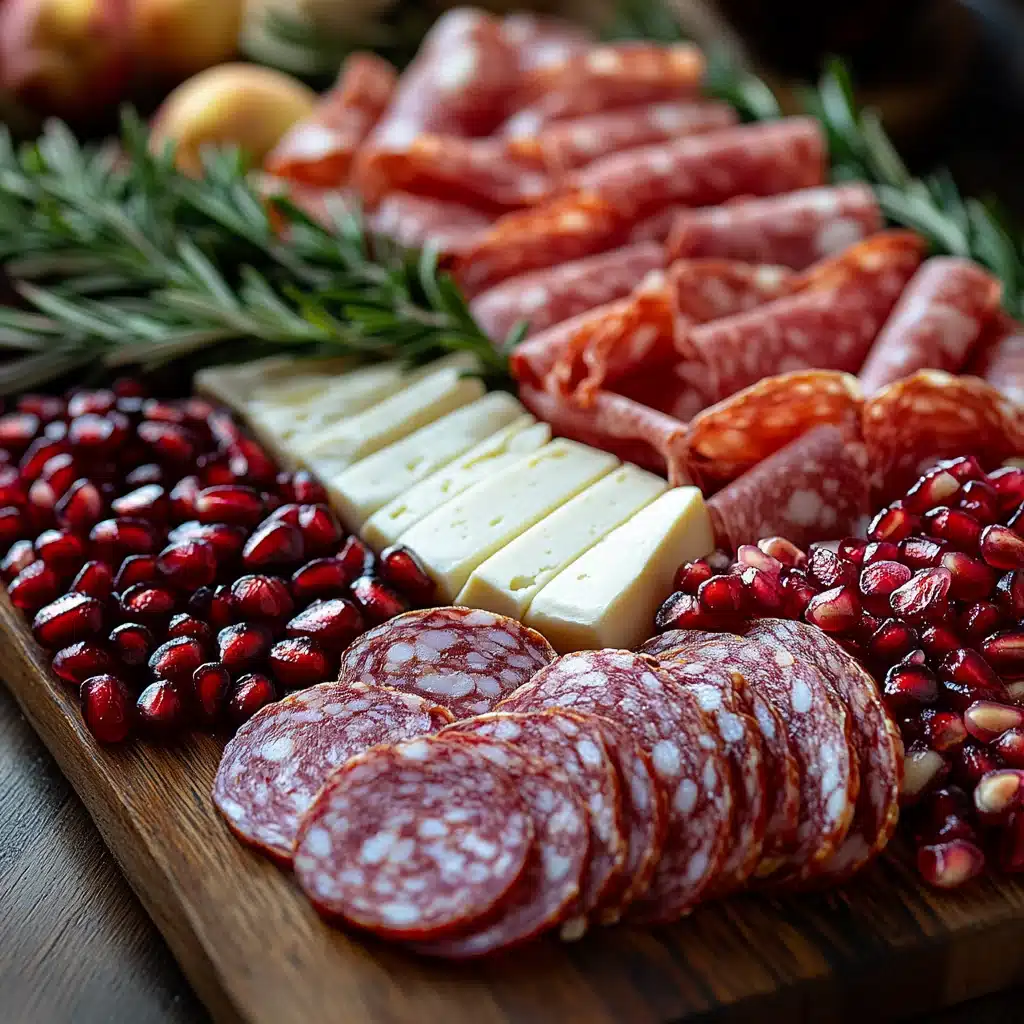
The finishing touches are what separate an ordinary board from a showstopper. Fill remaining gaps with small clusters of red grapes for jewel-like pops of color, dried cranberries for tartness, whole walnuts or pecans for crunch, cornichon pickles for acidity, and honey in a small jar with a dipper for sweetness. Scatter pomegranate seeds across the top for a sparkling ruby effect. These small elements provide color contrast, flavor variety, and the look of abundant generosity that defines great entertaining.
Charcuterie Wreath Timing and Food Safety
How Far Ahead Can You Assemble?
A charcuterie wreath can be partially assembled up to 4 hours before serving if refrigerated on its board. Place the meats, cheeses, and non-perishable items, then cover loosely with plastic wrap and refrigerate. Add crackers, fresh herbs, and any items that could wilt or get soggy within 30 minutes of serving. The ideal assembly timeline is to build the meat and cheese base the morning of your event, refrigerate, and add finishing touches just before guests arrive.
The Two-Hour Room Temperature Rule
According to USDA food safety guidelines, perishable foods like meat and cheese should not sit at room temperature for more than 2 hours. For holiday parties lasting longer, use the rotation method: prepare a backup tray of meats and cheeses in the refrigerator and swap out items on the wreath every 90 minutes. Alternatively, place the wreath board on a bed of ice in a larger tray to extend the safe serving window. In any case, items like crackers, nuts, dried fruit, and honey are shelf-stable and do not need rotation.
Budget-Friendly Charcuterie Wreath Options
A charcuterie wreath does not require expensive imported meats and artisan cheeses to look spectacular. Store-brand salami, pepperoni, and deli ham fold and arrange just as beautifully as their premium counterparts. Block cheese cut into cubes at home costs half the price of pre-cubed varieties. Supplement expensive items with budget-friendly volume builders like grapes, crackers, olives, and nuts. A stunning charcuterie wreath for 12 guests can be built for under 30 dollars using strategic shopping at warehouse stores.
The visual impact of a charcuterie wreath comes primarily from arrangement and variety, not from the cost of individual ingredients. Ten different cheap items arranged artfully on a board looks far more impressive than four expensive items placed carelessly. Focus your budget on two or three standout items — perhaps a good brie, a quality cured meat, and a gourmet jam — and fill the rest with affordable staples that provide color, crunch, and variety.
Charcuterie Wreath Assembly Techniques
The Foundation Layer Method
Building a charcuterie wreath that looks as spectacular as a magazine cover requires a systematic layered approach. Start with the structural base: place a small bowl or ramekin upside down in the center of a round board or platter to create the wreath hole. Begin by laying folded salami slices around the outer edge in an overlapping circular pattern, creating a meaty border that defines the wreath shape. This foundation layer provides the color contrast and structural backbone that everything else builds upon.
Creating Visual Depth With Cheese Placement
After the meat foundation, add cheese in three different formats for visual variety: cubes of sharp cheddar, slices of brie or gouda fanned into rosettes, and crumbles of blue cheese or goat cheese scattered for texture contrast. Place the larger cheese pieces first as anchor points spaced evenly around the wreath, then fill in gaps with smaller pieces. The key to a professional-looking wreath is varying the heights, textures, and colors so the eye has something interesting to find at every point.
The Greenery and Garnish Layer
Fresh herbs and greenery transform a good charcuterie wreath into a breathtaking one. Tuck sprigs of fresh rosemary throughout the wreath to create the “evergreen” effect that makes it look like a holiday wreath. Small clusters of fresh thyme, sage leaves, and bay leaves add variety to the greenery. This fresh herb layer provides color, aroma, and an organic, garden-fresh quality that makes the entire presentation feel elevated and intentional.
The Final Festive Details
The finishing touches are what separate an ordinary board from a showstopper. Fill remaining gaps with small clusters of red grapes for jewel-like pops of color, dried cranberries for tartness, whole walnuts or pecans for crunch, cornichon pickles for acidity, and honey in a small jar with a dipper for sweetness. Scatter pomegranate seeds across the top for a sparkling ruby effect. These small elements provide color contrast, flavor variety, and the look of abundant generosity that defines great entertaining.
Charcuterie Wreath Timing and Food Safety
How Far Ahead Can You Assemble?
A charcuterie wreath can be partially assembled up to 4 hours before serving if refrigerated on its board. Place the meats, cheeses, and non-perishable items, then cover loosely with plastic wrap and refrigerate. Add crackers, fresh herbs, and any items that could wilt or get soggy within 30 minutes of serving. The ideal assembly timeline is to build the meat and cheese base the morning of your event, refrigerate, and add finishing touches just before guests arrive.
The Two-Hour Room Temperature Rule
According to USDA food safety guidelines, perishable foods like meat and cheese should not sit at room temperature for more than 2 hours. For holiday parties lasting longer, use the rotation method: prepare a backup tray of meats and cheeses in the refrigerator and swap out items on the wreath every 90 minutes. Alternatively, place the wreath board on a bed of ice in a larger tray to extend the safe serving window. In any case, items like crackers, nuts, dried fruit, and honey are shelf-stable and do not need rotation.
Budget-Friendly Charcuterie Wreath Options
A charcuterie wreath does not require expensive imported meats and artisan cheeses to look spectacular. Store-brand salami, pepperoni, and deli ham fold and arrange just as beautifully as their premium counterparts. Block cheese cut into cubes at home costs half the price of pre-cubed varieties. Supplement expensive items with budget-friendly volume builders like grapes, crackers, olives, and nuts. A stunning charcuterie wreath for 12 guests can be built for under 30 dollars using strategic shopping at warehouse stores.
The visual impact of a charcuterie wreath comes primarily from arrangement and variety, not from the cost of individual ingredients. Ten different cheap items arranged artfully on a board looks far more impressive than four expensive items placed carelessly. Focus your budget on two or three standout items — perhaps a good brie, a quality cured meat, and a gourmet jam — and fill the rest with affordable staples that provide color, crunch, and variety.
Charcuterie Wreath Meat and Cheese Pairing Guide
| Meat | Best Cheese Pair | Add-On | Flavor Profile |
|---|---|---|---|
| Genoa salami | Aged provolone | Cornichons | Classic Italian |
| Prosciutto | Fresh mozzarella | Fig jam | Sweet and salty |
| Sopressata | Manchego | Marcona almonds | Spicy and nutty |
| Capocollo | Brie | Honey | Rich and creamy |
| Turkey breast | Havarti | Cranberry sauce | Light and festive |
| Pepperoni | Sharp cheddar | Pickled peppers | Bold and tangy |

Frequently Asked Questions About Charcuterie Wreaths
How big should a charcuterie wreath be?
Use a board at least 16 inches in diameter for 12 guests. For larger parties of 16 to 20 guests, use a 20-inch board. The center opening should be about 6 inches across.
How much meat and cheese do I need per person?
Plan 2 to 3 ounces of meat and 2 to 3 ounces of cheese per person for an appetizer board. For 12 guests, that means about 24 to 36 ounces of meat and 24 to 36 ounces of cheese total.
Can I make a charcuterie wreath the night before?
Partially. Pre-slice meats and cheeses and store them separately. Assemble the wreath up to 4 hours before serving. Never add crackers until just before serving as they soften quickly.
What can I put in the center of a charcuterie wreath?
A small bowl of honey, fig jam, whole-grain mustard, or a warm baked brie dip works beautifully. The center is also perfect for a candle during the initial presentation before guests start eating.
How do I fold prosciutto into roses?
Lay 3 to 4 prosciutto slices overlapping in a line. Starting from one end, roll loosely into a cylinder, then stand it up and gently pull the outer layers open like petals. It takes 30 seconds per rose.
What crackers work best for a charcuterie wreath?
A mix of plain water crackers, whole wheat rounds, and seeded crisps provides variety. Avoid overly flavored crackers that compete with the meats and cheeses. Include breadsticks for height.
Is charcuterie safe for pregnant women?
The CDC recommends pregnant women avoid deli meats unless heated to 165 degrees Fahrenheit due to listeria risk. Offer a companion board with hard cheeses, fruits, crackers, and hummus as an alternative.
How long can a charcuterie wreath sit out?
Up to 2 hours at room temperature per USDA guidelines. After 2 hours, discard all perishable items. Place the board on ice to extend the safe window for longer parties.
What is the cheapest way to build a charcuterie wreath?
Buy pre-sliced deli meats and block cheese from warehouse stores like Costco. Use seasonal sale items. Fill gaps generously with inexpensive nuts, grapes, and crackers to create volume without premium cost.
Can I make a vegetarian charcuterie wreath?
Absolutely. Replace meats with marinated vegetables, hummus, stuffed grape leaves, and extra cheese varieties. Add edamame and roasted chickpeas for protein. The wreath format works equally well without meat.

Written by Chef Anna
I'm Anna - a Le Cordon Bleu-trained chef, recipe developer, and the voice behind Chef Johns Gourmet. After a decade in professional kitchens, I now spend my mornings testing recipes and my afternoons writing them down so you can make them perfectly in your own kitchen. Every one of the 1,100+ recipes on this site has been personally cooked, tasted, and refined. I write like I'm standing next to you, walking you through every step. Simple recipes. Bold flavors. Made for real kitchens.