
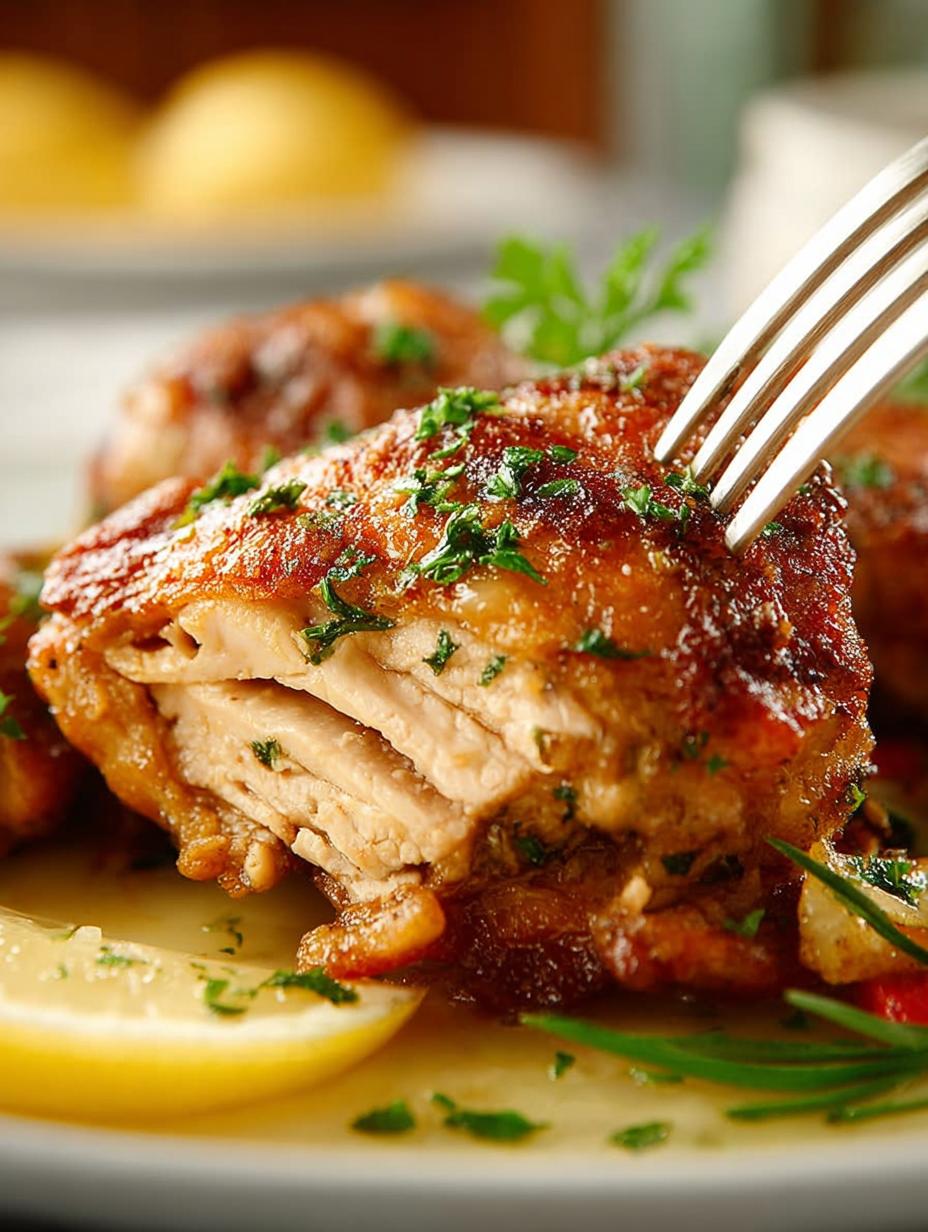
Key Takeaways
- Crispy skin every time: Cast iron and proper drying technique deliver shatter-crisp skin without deep frying.
- One-pan dinner magic: Sear chicken, build pan sauce, finish in oven — fewer dishes, more flavor.
- 35-minute weeknight wonder: Faster than ordering delivery and infinitely better.
- Forgiving cut of meat: Bone-in skin-on thighs stay juicy even when slightly overcooked.
- Endlessly versatile base: Master the technique, then vary with lemon, garlic, herbs, mustard, or wine.
Why Bone-In Chicken Thighs Win Every Time
Boneless skinless chicken breasts dominated American home cooking for decades, but the tide has turned. Professional chefs and home cooks alike have rediscovered what previous generations knew: bone-in skin-on chicken thighs are the superior cut. They cost about half as much as boneless breasts, taste dramatically more flavorful, stay juicy without precise temperature control, and develop crispy skin that breasts simply can’t match. For weeknight dinners, special occasions, or feeding picky kids, chicken thighs are the answer.
🎯 Key Takeaways
- Ready in 20 minutes total—saute, pressure cook, crisp.
- Bone-in thighs stay juicier and more flavorful than boneless.
- Pressure cook 10 minutes at high + 5-minute natural release.
- Finish under broiler for extra-crispy skin if desired.
- Pan sauce: deglaze with broth, reduce, whisk in butter.
The bone keeps the meat moist while contributing flavor through marrow and connective tissue. The skin protects the meat from drying out during high-heat cooking and develops into one of food’s universally beloved textures: crispy chicken skin. The dark thigh meat contains more myoglobin than breast meat, giving it deeper, beefier flavor and natural fat that makes the meat self-baste during cooking. Once you cook chicken thighs this way, going back to bland chicken breasts feels like a downgrade.
Pot Chicken Thighs vs Other Cooking Methods
| Method | Cook Time | Skin Crispness | Hands-On Time | Best For |
|---|---|---|---|---|
| One-Pot (this) | 35 min | Excellent | 15 min | Weeknight + sauce |
| Sheet Pan Roasted | 40 min | Very good | 5 min | Hands-off dinners |
| Slow Cooker | 4-8 hours | None | 5 min | Set-and-forget meals |
| Instant Pot | 15 min | None | 10 min | Frozen-to-cooked speed |
| Air Fryer | 25 min | Excellent | 5 min | Small batches |
| Grilled | 30 min | Good (charred) | 20 min | Summer cookouts |
| Braised | 1 hour | Soft, fall-off-bone | 15 min | Comfort food classics |
| Deep-Fried | 20 min | Maximum crisp | 30 min | Fried chicken cravings |
Ingredient Guide & Substitutions
| Ingredient | Amount | Substitute | Notes |
|---|---|---|---|
| Bone-in skin-on chicken thighs | 6-8 pieces (~3 lbs) | Drumsticks, whole legs | Skin-on essential |
| Olive oil | 2 tbsp | Avocado oil | For initial sear |
| Kosher salt | 1.5 tsp | Sea salt | Salt 30 min before cooking |
| Black pepper | 1 tsp | White pepper | Fresh-cracked best |
| Garlic, minced | 5-6 cloves | 2 tsp garlic powder | Fresh = transformative |
| Fresh thyme + rosemary | 4 sprigs each | 2 tsp dried herbs | Fresh = recommended |
| Chicken broth | 1 cup | White wine + broth | Low-sodium preferred |
| Dijon mustard | 2 tbsp | Whole grain mustard | Adds tang to sauce |
| Cold butter | 3 tbsp | Olive oil | Finishes the sauce |
| Fresh lemon juice | 1 tbsp | White wine vinegar | Brightens at end |
The Crispy Skin Technique That Changes Everything
Crispy chicken skin requires three things: dry surface, hot pan, and undisturbed cooking time. Pat the chicken thighs completely dry with paper towels — wet skin steams instead of crisping. For maximum results, salt the chicken 30 minutes to overnight before cooking. The salt draws moisture from the skin, then reabsorbs as a flavorful brine, leaving the skin extra dry and ready to crisp.
Heat a 12-inch cast iron skillet (or oven-safe heavy skillet) over medium-high heat with 2 tablespoons of oil until shimmering. Place chicken thighs skin-side down in the hot pan and don’t touch them for 8-10 full minutes. The temptation to move them is immense; resist it. The skin needs sustained contact with the hot metal to render its fat and crisp the surface. When the skin releases easily from the pan, it’s ready to flip. If it sticks, give it another 1-2 minutes.
Flip the chicken and cook 2-3 minutes on the meat side just to seal. Then add aromatics, build the pan sauce, and transfer the entire skillet to a 425°F oven for 15-20 minutes to finish cooking through. The skin stays crispy because it’s elevated above the sauce. Internal temperature should reach 175°F at the thickest part — thighs benefit from slightly higher temperatures than breasts because they contain connective tissue that needs to break down.
Building the Perfect Pan Sauce
| Step | What Happens | Critical Detail |
|---|---|---|
| 1. Saute garlic + herbs | Aromatic foundation | 30-60 sec — don’t burn |
| 2. Deglaze with broth | Lifts fond from pan | Scrape browned bits |
| 3. Whisk in mustard | Adds tang + body | Off heat to prevent splitting |
| 4. Reduce 2-3 minutes | Concentrates flavor | Sauce should coat spoon |
| 5. Return chicken | Skin stays above sauce | Skin-side up, never down |
| 6. Roast in oven | Cooks through evenly | 425F for 15-20 min |
| 7. Mount with butter | Glossy, rich finish | Off heat, swirl don’t stir |
| 8. Finish with lemon | Brightens flavor | Add at very end |
Side Dishes That Complete the Meal
| Side | Why It Works | Prep Time |
|---|---|---|
| Mashed potatoes | Soaks up pan sauce | 25 min |
| Crusty bread | Sauce-mopping perfection | 0 min (bakery) |
| Buttered egg noodles | Comforting starch base | 10 min |
| Roasted vegetables | Same-pan timing works | 25 min |
| Wild rice pilaf | Earthy contrast to chicken | 30 min |
| Garlic green beans | Fresh, light contrast | 10 min |
| Cauliflower mash | Low-carb alternative | 20 min |
| Side salad | Fresh acidic counterpoint | 5 min |
5 Variations to Master
1. Lemon Garlic Herb: Add 4 tbsp fresh lemon juice and zest of 1 lemon to the sauce; double the garlic and herbs for bright Mediterranean flavor.
2. White Wine Tarragon: Replace 1/2 cup of broth with dry white wine; add 2 tbsp chopped fresh tarragon at the end for elegant French bistro vibes.
3. Honey Mustard Glazed: Whisk 3 tbsp honey into the mustard for a sweet-tangy glaze that caramelizes beautifully under broiler at the end.
4. Coconut Curry: Replace broth with full-fat coconut milk; add 2 tbsp red curry paste and finish with cilantro and lime for Thai-inspired version.
5. Mushroom Cream: Saute 8 oz sliced mushrooms with garlic; add 1/2 cup heavy cream to the sauce for rich, restaurant-style mushroom chicken.
Essential Equipment for Best Results
| Tool | Why It Helps | Budget Pick |
|---|---|---|
| 12-inch cast iron skillet | Best heat retention + browning | Lodge Pre-Seasoned |
| Oven-safe handle | Goes from stove to oven | Avoid plastic handles |
| Instant thermometer | Perfect doneness guaranteed | Thermapen Mini |
| Heavy tongs | Safe chicken handling | OXO 12-inch tongs |
| Splatter screen | Reduces stovetop mess | Frywall or universal screen |
| Microplane | Garlic, lemon zest | OXO microplane |
| Wooden spoon | Scrapes fond gently | Any wooden spoon |
| Paper towels | Drying chicken thoroughly | Bounty or generic |
Troubleshooting Common Problems
| Problem | Cause | Solution |
|---|---|---|
| Skin not crispy | Wet skin or moved too soon | Pat completely dry; sear 8-10 min undisturbed |
| Skin sticks to pan | Pan not hot enough | Heat pan longer; add more oil |
| Chicken burned outside, raw inside | Heat too high or thighs too thick | Use medium-high; finish in oven |
| Sauce too thin | Not reduced enough | Simmer 3-5 more minutes |
| Sauce too salty | Reduced too much or salty broth | Add 1/2 cup water + lemon to balance |
| Mustard split sauce | Added to boiling liquid | Whisk in off heat; warm gently after |
| Bland flavor | Underseasoned chicken | Salt 30 min before cooking; salt sauce too |
| Chicken dry | Overcooked or skinless cut | Use bone-in skin-on; pull at 175F |
Storage, Reheating & Meal Prep
Cool leftover chicken thighs completely before storing. Refrigerate in an airtight container for up to 4 days. The skin will lose its crispness in the fridge — that’s unavoidable. To revive it, reheat in a 400°F oven for 10-15 minutes uncovered, or in an air fryer for 5-7 minutes at 375°F. The skin re-crisps beautifully under dry heat. Avoid microwaving; it produces rubbery, sad skin.
For meal prep, sear and roast the thighs Sunday afternoon, then portion with sides into 4-5 glass containers for the week. The pan sauce keeps separately and reheats easily. Each container provides a complete 500-calorie meal with 35g of protein. Frozen leftovers keep 3 months; thaw overnight in the refrigerator before reheating in the oven.
Pairing With the Best Sides & Starters
Pair these chicken thighs with perfect garlic bread for classic comfort, or strawberry spinach salad for fresh contrast. Other excellent pairings include garlic parmesan chicken skillet for variety, teriyaki salmon noodles for surf-and-turf nights, and honey garlic chicken breast for sweet-savory dinner contrast.
For Sunday-dinner ambiance, serve alongside vegetable lasagna or creamy garlic butter steak pasta. Dessert pairings include classic lemon bars, favorite carrot cake, individual apple crumbles, or cottage cheese chocolate mousse for satisfying meal completion.
Why This Recipe Belongs in Your Weekly Rotation
Few recipes offer the combination of speed, simplicity, economy, and genuine impressiveness that one-pot chicken thighs deliver. Total cost: roughly $8-10 to feed four hungry adults. Total time: 35 minutes from cold pan to plated dinner. Total dishes: one skillet plus serving plates. Total skill required: minimal — if you can dry chicken with a paper towel and use a cast iron pan, you can make this recipe successfully on the first try.
The technique scales effortlessly. Need to feed 8 people? Use two skillets simultaneously. Need to feed 12? Brown in batches and finish on a sheet pan in the oven. Cooking for picky kids? Plate the chicken without sauce and serve sauce on the side. Hosting a dinner party? Plate elegantly with the sauce drizzled over each piece, garnish with fresh herbs, and watch guests think you spent hours when you actually spent 35 minutes.
The Cast Iron Advantage Explained
Cast iron skillets transform good chicken thigh recipes into great ones. The thick metal absorbs and holds enormous amounts of heat — far more than thin stainless steel or aluminum pans. When you place chicken thighs into a properly preheated cast iron skillet, the thermal mass overwhelms the cold meat, creating instant searing instead of the temperature drop that causes steaming in lighter pans. This sustained high heat is exactly what crispy skin needs.
Cast iron also transitions seamlessly from stovetop to oven, eliminating the need to transfer hot food between pans (which loses heat and breaks crispy crusts). The same skillet that seared the chicken finishes cooking it in the oven, and the same skillet builds the pan sauce, and the same skillet serves at the table with rustic charm. One pan does everything from start to finish, which is the entire point of “one-pot” cooking.
Modern enameled cast iron (Le Creuset, Staub, Lodge enameled) works equally well as traditional bare cast iron. The enamel makes cleaning easier and prevents reactions with acidic ingredients like wine, lemon, or tomatoes. For this recipe specifically, either type works perfectly. If you don’t own cast iron, a heavy carbon steel skillet is the closest substitute. Stainless steel works in a pinch but produces slightly less impressive results due to its lower heat retention.
Salt: The Most Important Step Most People Skip
Salting chicken 30 minutes to 24 hours before cooking is the single most impactful technique for transforming home-cooked chicken from average to restaurant-quality. The science is simple but powerful: salt initially draws moisture from the chicken’s surface, creating a brine. Over time, this brine reabsorbs back into the meat, carrying salt deep into the muscle fibers. The result is chicken that tastes seasoned all the way through rather than just on the surface, with skin that’s pre-dried and ready to crisp dramatically.
The technique is called “dry brining” and it requires no special ingredients beyond kosher salt. For 6-8 chicken thighs, use 1.5 teaspoons of kosher salt total, sprinkled evenly over both sides and especially heavily on the skin. Place the salted chicken uncovered in the refrigerator on a wire rack over a sheet pan. The cold dry air of the fridge further dries the skin while the salt works its magic on the meat. Even just 30 minutes makes a noticeable difference; 24 hours produces the best possible results.
Avoid using table salt for dry brining — its fine grains over-salt the meat. Stick with kosher salt (Diamond Crystal or Morton brand) or coarse sea salt. The larger crystal size distributes more evenly and dissolves at the right rate for proper brine formation. Once you experience the difference, you’ll never cook chicken without dry brining first. It’s a five-minute hands-on step that takes ordinary chicken to genuinely special territory.
Wine Pairings & Beverage Suggestions
One-pot chicken thighs pair beautifully with a wide range of wines because the dish itself is fundamentally adaptable. For the classic Dijon mustard and herb version, a medium-bodied Chardonnay (preferably French Burgundy or unoaked California) creates the most harmonious match. The wine’s acidity cuts through the rich pan sauce while its body matches the chicken’s substantial mouthfeel. A bottle in the $15-25 range is plenty.
For the lemon-garlic-herb variation, choose a crisp Sauvignon Blanc from the Loire Valley or New Zealand. The bright citrus notes echo the lemon in the dish while the wine’s herbaceous quality complements fresh thyme and rosemary. For the white wine tarragon variation, drink the same wine you used in cooking — pairing rule of thumb that always works. For the honey mustard glazed version, an off-dry Riesling from Germany or Washington State balances the sweet glaze beautifully.
Red wine drinkers should reach for Pinot Noir from Oregon’s Willamette Valley or Burgundy. The wine’s bright cherry notes, modest tannins, and earthy undertones complement chicken thighs without overwhelming the dish. Avoid heavy California Cabernets or Napa Merlots — they’re built for steaks, not chicken. For non-alcoholic pairings, sparkling water with lemon, fresh-squeezed lemonade, or a light iced tea all work beautifully and let the food’s flavors shine.
Serving Strategies for Different Occasions
For casual weeknight dinners with family, plate the chicken thighs simply over mashed potatoes or buttered noodles, spooning generous pan sauce over everything. Add a quick green vegetable on the side and dinner is served. The whole meal takes 35 minutes from cold pan to plated, which makes it realistic for school nights when homework, sports practice, and bedtime routines compete for attention.
For Sunday family dinners, scale up to a larger batch by using two skillets simultaneously or a single oversized braiser like a 5-quart Dutch oven. Add 1.5-2 lbs of small new potatoes and a pound of carrots to roast in the same pan during the oven phase. Set the table with cloth napkins, light candles, and turn dinner into an event. The dish’s flexibility supports both casual and elegant presentations equally well.
For dinner parties, plate individually with the chicken thigh placed atop a small mound of creamy polenta or risotto, drizzle pan sauce in artful ribbons across the plate, and garnish with a small bouquet of fresh herbs (thyme sprigs, rosemary, parsley). Add a wine glass, a bread plate, and pre-plated salad starter, and you’ve created a restaurant-quality course at home for a fraction of restaurant cost. Guests consistently rate this presentation as the highlight of dinner parties.
Final Tips for Crispy Chicken Mastery
The single most important habit successful chicken-thigh cooks share is patience during the initial sear. The 8-10 minutes of undisturbed skin-side cooking feels like an eternity when you are hungry, but every second counts toward developing that legendary crispy skin. Set a timer, walk away from the stove, prep your sides during this window, and resist the urge to peek or adjust the chicken even once.
The second habit is using a thermometer rather than guessing doneness. Visual cues lie consistently — chicken can look done outside while remaining undercooked inside, or look pink while being perfectly cooked. A 25 dollar instant-read thermometer pays for itself in confidence and food safety within a single week of use. Pull thighs at exactly 175F for tender, juicy results every single time you make this recipe.
Master this single recipe and you have unlocked a flexible weeknight template that handles dozens of variations using the exact same technique every time. From basic Tuesday-night family dinners to elegant Saturday dinner parties, one-pot chicken thighs deliver consistent crowd-pleasing results that earn permanent rotation status in serious home cooks weekly meal plans worldwide forever.
The recipe rewards patience and proper technique with consistently spectacular crispy-skin results.
Frequently Asked Questions About One-Pot Chicken Thighs
Can I use boneless skinless thighs instead?
You can but the result is less impressive. Bone-in skin-on thighs deliver superior flavor and crispy skin. If using boneless skinless, reduce oven time to 8-10 minutes and don’t expect crispy texture.
Why is my skin not crispy?
Three common causes: didn’t dry chicken thoroughly, didn’t heat pan hot enough before searing, or moved chicken too soon. Pat dry, heat pan until oil shimmers, then leave chicken alone 8-10 minutes.
Can I make this without a cast iron skillet?
Yes — any heavy oven-safe skillet works. Stainless steel produces excellent fond. Avoid nonstick pans (skin won’t crisp as well) and pans with plastic handles (can’t go in oven).
What temperature should the chicken reach?
175°F at the thickest part (not touching bone). Thighs are forgiving and stay juicy even at 180°F, unlike breasts. Use an instant-read thermometer for foolproof results.
Can I make the pan sauce ahead?
Pan sauces are best fresh because butter and acid components don’t reheat well. However, you can prep all ingredients and have them ready. Sauce comes together in 5 minutes once you start.
Is this freezer-friendly?
The chicken freezes well; the sauce freezes okay. Cool completely, freeze chicken and sauce separately for best texture. Thaw overnight, reheat chicken in oven, sauce on stovetop.
Can I add vegetables to the same pan?
Yes — small new potatoes, halved Brussels sprouts, or sliced carrots can roast alongside the chicken in the oven phase. Add them after the sauce, around the chicken.
Why does my Dijon mustard sauce split?
Mustard adds best to off-heat or low-heat liquid. Whisk in after deglazing and remove from active boil. Once incorporated, the sauce can simmer normally.
Can children eat this?
Absolutely — most kids love crispy chicken skin. Serve sauce on the side rather than over the chicken if your child is sensitive to mustard tang or bold flavors.
What’s the best wine pairing?
Medium-bodied whites like Chardonnay, oaked Sauvignon Blanc, or dry Riesling complement the chicken beautifully. Lighter reds like Pinot Noir also work for those who prefer red wine.
Frequently Asked Questions
How long do chicken thighs take in an Instant Pot?
Bone-in thighs: 10 minutes high pressure + 5-minute natural release. Boneless: 8 minutes + quick release. Always start with a hot sauté to build fond and flavor.
Do I need to sear chicken thighs before pressure cooking?
Searing adds a deep golden crust and richer sauce. Skip for fastest speed, but the flavor payoff is significant—2 minutes per side in the Instant Pot’s sauté mode.
How do you get crispy skin on Instant Pot chicken?
After pressure cooking, place thighs skin-up on a sheet pan, broil 3-5 minutes until blistered. Or use the Air Fryer lid if your model has one.
What liquid should I use for Instant Pot chicken thighs?
Chicken broth is standard. Add a splash of white wine, lemon juice, or apple cider for brightness. Minimum 1 cup liquid to prevent burn errors.
Can I cook frozen chicken thighs in Instant Pot?
Yes—add 3-4 extra minutes and skip the sear. Natural release recommended. Texture is slightly softer vs. fresh, but still safe and juicy.

Written by Chef Anna
I'm Anna - a Le Cordon Bleu-trained chef, recipe developer, and the voice behind Chef Johns Gourmet. After a decade in professional kitchens, I now spend my mornings testing recipes and my afternoons writing them down so you can make them perfectly in your own kitchen. Every one of the 1,100+ recipes on this site has been personally cooked, tasted, and refined. I write like I'm standing next to you, walking you through every step. Simple recipes. Bold flavors. Made for real kitchens.