
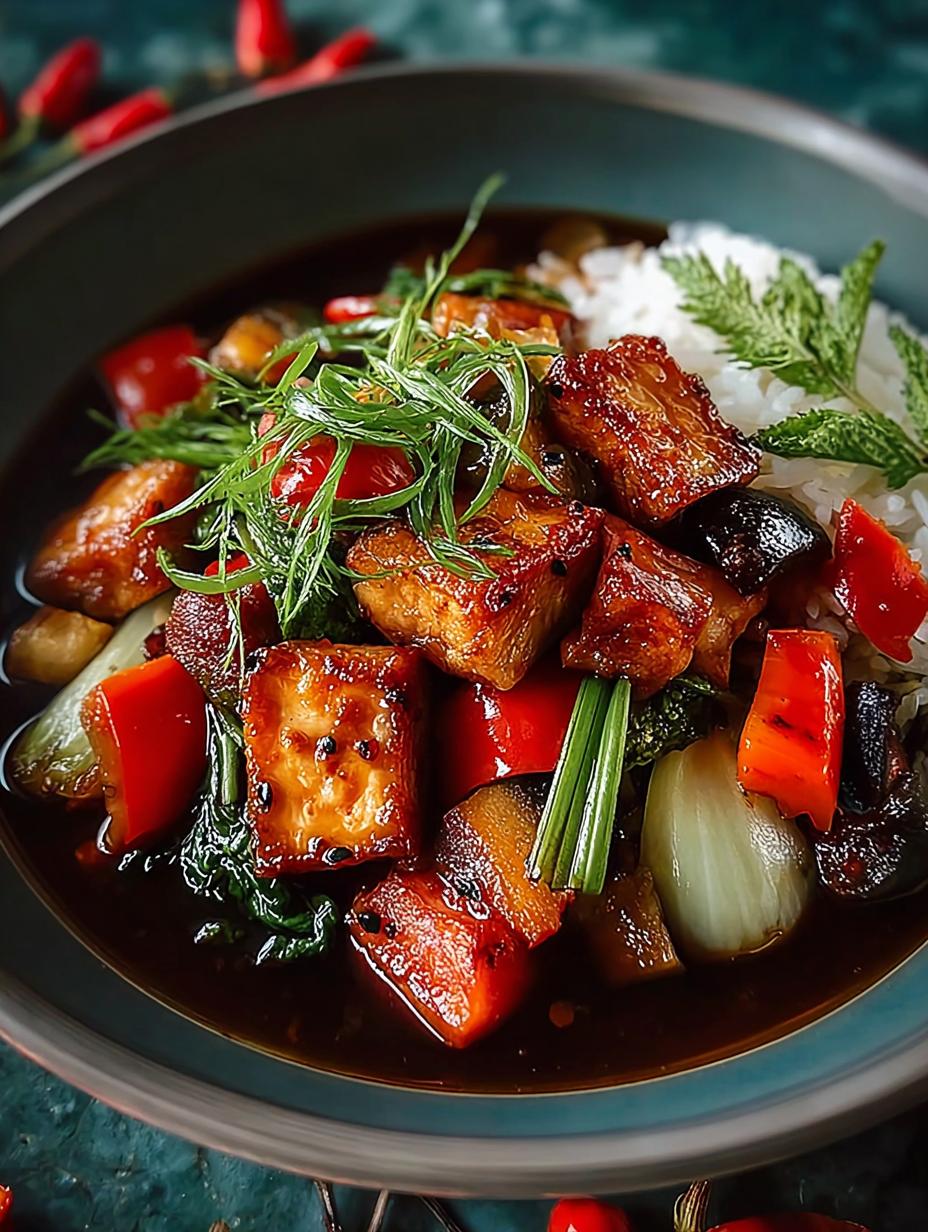
Key Takeaways
- Buddha’s Delight (Jai) is the traditional Chinese New Year vegetarian stew eaten on the first day for spiritual cleansing and prosperity.
- Each of the 18 traditional ingredients (fa cai, lily buds, black moss, lotus seeds, tofu skin) carries symbolic meaning — wealth, longevity, blessings, harmony.
- The dish is naturally vegan, gluten-free adaptable, and umami-rich thanks to dried mushrooms and fermented bean curd.
- Prep takes 30 minutes (mostly soaking dried ingredients overnight); active cooking is just 35-40 minutes.
- Leftovers improve overnight — flavors deepen by day two, making this an ideal meal-prep stew.
Buddha’s Delight, known as Jai (斋, 罗汉斋, “Lo Han Jai”) in Cantonese and Luohan Zhai in Mandarin, is one of the most spiritually meaningful dishes in Chinese cuisine. Eaten by Buddhist monks year-round and by Chinese families on the first day of Lunar New Year, this slow-simmered vegetable stew unites 8 to 18 carefully chosen ingredients — each carrying ancient symbolism for wealth, harmony, and longevity. The result is a deeply savory, umami-packed dish that proves vegetarian cooking can rival any meat-based feast.
🎯 Key Takeaways
- Vegetarian Chinese New Year dish symbolizing good fortune and purity.
- Traditional 10-ingredient version includes fat choy, black mushrooms, lily bulbs.
- Simmer in vegetarian oyster sauce + soy for savory umami depth.
- Served on New Year’s Day to cleanse the palate after rich celebrations.
- Can be made ahead; flavors deepen after 24 hours refrigerated.
Unlike many Western vegetarian stews that rely on heavy cream or cheese for richness, Jai builds depth through dried mushrooms (especially shiitake and wood ear), fermented red bean curd (nam yu), and slow simmering in mushroom broth. The technique mirrors the careful patience used in our slow-cooked beef brisket and best shakshuka — low and slow extracts maximum flavor from humble ingredients.
The Sacred Origins of Jai
Jai’s roots trace back over 1,500 years to Buddhist monasteries in China, where monks practiced strict vegetarianism out of respect for all sentient beings. The dish embodies the Buddhist principle of ahimsa (non-harm) while celebrating abundance through plant ingredients. By the Tang Dynasty (618-907 CE), Jai had spread beyond temples into Chinese households, particularly during Lunar New Year, when families would eat it on the first day to “cleanse” the previous year’s negative energies and welcome prosperity.
Why First-Day Vegetarianism Matters
In Chinese tradition, eating Jai on New Year’s Day serves three purposes: spiritual purification (no killing on the first day brings good karma), digestive reset (after weeks of rich holiday foods), and merit accumulation (compassion toward animals invites blessings for the year ahead). Many families today continue the tradition even if they’re not strictly Buddhist — it’s cultural heritage as much as religious observance.
Regional Variations Across Asia
While Cantonese-style Jai is most internationally known, similar dishes exist throughout Asia. Vietnamese com chay features comparable temple-style vegetarian stews. Korean Buddhist temple cuisine (sachal eumsik) produces parallel dishes. Japanese shojin ryori shares the same monastic vegetarian philosophy. Each tradition adapts the core idea to local ingredients while maintaining the symbolic intent.
Symbolic Ingredients and Their Meanings
Every ingredient in traditional Jai is chosen for symbolism, not just flavor. Understanding what each represents transforms cooking the dish into a meditative practice — you’re not just preparing food, you’re inviting specific blessings into your home for the coming year.
| Ingredient | Chinese Name | Symbolic Meaning | Where to Buy |
|---|---|---|---|
| Black moss / hair vegetable | Fa cai (发菜) | Wealth (sounds like “get rich”) | Asian grocery, dried section |
| Dried oyster (or oyster sauce) | Ho see (蚝豉) | Good business / good things | Asian grocery (or vegan oyster sauce) |
| Dried bean curd sticks | Fu zhu (腐竹) | Blessing of the household | Asian grocery, dried aisle |
| Lily flower buds | Jin zhen (金针) | Golden needles — wealth | Asian grocery, dried section |
| Wood ear mushrooms | Mu er (木耳) | Longevity | Asian grocery, dried mushrooms |
| Shiitake mushrooms | Dong gu (冬菇) | Seizing opportunities | Asian grocery or supermarket |
| Lotus seeds | Lian zi (莲子) | Many sons / fertility | Asian grocery, dried section |
| Ginkgo nuts | Bai guo (白果) | Silver — wealth | Asian grocery, often canned |
| Bamboo shoots | Zhu sun (竹笋) | Steady growth, advancement | Canned in supermarket |
| Glass / mung bean noodles | Fen si (粉丝) | Long life, connections | Asian grocery |
| Red fermented bean curd | Nam yu (南乳) | Color of luck, umami base | Asian grocery, jarred |
| Snow peas | He lan dou (荷兰豆) | Unity, harmony | Supermarket produce |
Essential Ingredients and Substitutions
You don’t need all 18 traditional ingredients — most modern home cooks use 8 to 12. Focus on the umami foundation (dried shiitake, wood ear, fermented bean curd) and add what you can find. Authenticity matters less than intention. The same flexibility we apply to our delicious vegetable lasagna works here.
The Non-Negotiable Trio
Three ingredients form the flavor backbone: dried shiitake mushrooms (deep umami broth base), wood ear mushrooms (signature crunchy texture), and fermented red bean curd (the savory-sweet richness that defines Jai). Without these three, the dish loses its character. Everything else is flexible.
Smart Modern Substitutions
Can’t find black moss (fa cai)? Many cooks now skip it for sustainability reasons (it’s been over-harvested). Substitute extra wood ear or bean thread noodles. No fermented bean curd? Use 2 tablespoons miso paste plus 1 teaspoon soy sauce. No lily buds? Skip them or substitute thin-sliced bamboo shoots. The dish remains delicious.
Step-by-Step Cooking Method
Jai requires patience but no advanced technique. The two-day timeline (overnight soak + day-of cooking) means most of the work is hands-off. Read all steps before starting — having ingredients prepped (Chinese cooks call this mise en place the “wok dance”) makes the active cooking flow smoothly.
Day One: Soaking (10 minutes active)
Place dried ingredients in separate bowls of room-temperature water: shiitake mushrooms, wood ear mushrooms, lily buds, bean curd sticks, glass noodles, lotus seeds. Cover and refrigerate overnight (8-12 hours). Reserve the shiitake soaking liquid — this becomes your flavor-packed cooking broth. Strain it through cheesecloth before using to remove any grit.
Day Two: Cooking (40 minutes)
Heat 2 tablespoons neutral oil in a wok or large pot over medium-high heat. Add minced ginger and garlic; stir-fry 30 seconds until fragrant. Add 2 tablespoons fermented red bean curd (mashed) and stir to coat. Add shiitake mushrooms first (they need the most cooking), followed by wood ear, lily buds, bamboo shoots, and lotus seeds. Stir-fry 2 minutes. Pour in 3 cups reserved mushroom broth, 2 tablespoons soy sauce, 1 tablespoon Shaoxing wine (or dry sherry), and 1 teaspoon sugar. Bring to a simmer.
The Finishing Touches
Cover and simmer 20 minutes. Add bean curd sticks, glass noodles, and ginkgo nuts; simmer 8 more minutes. Stir in snow peas during the last 2 minutes (they should stay bright green and crisp-tender). Taste and adjust — add salt only if needed (the bean curd is salty). Finish with a drizzle of toasted sesame oil and a handful of chopped scallions.
Serving Suggestions and Pairings
Jai is traditionally served as the centerpiece of a New Year’s Day vegetarian meal, but it works year-round. The neutral, savory-sweet profile pairs with steamed jasmine rice (essential), pickled vegetables for brightness, and tea (oolong or pu-erh aids digestion of the rich stew). For special occasions, present it in a large clay pot to keep warm at the table.
| Course | Pairing | Why It Works |
|---|---|---|
| Rice | Steamed jasmine or short-grain | Soaks up the flavorful sauce |
| Pickle | Chinese pickled mustard greens | Acidity cuts through richness |
| Soup | Clear vegetable broth | Cleanses palate between bites |
| Side veg | Stir-fried bok choy with garlic | Bright contrast to stew |
| Tea | Aged pu-erh or roasted oolong | Digestive, complements umami |
| Bread | Steamed mantou (white buns) | Traditional vehicle for sauce |
| Dessert | Sweet red bean soup | Traditional New Year ending |
| Wine | Off-dry Riesling or Gewürztraminer | Sweetness balances umami |
Make-Ahead and Storage
Jai is one of the rare dishes that genuinely improves overnight. The flavors marry, the mushrooms absorb more broth, and the bean curd sticks become silkier. Many Chinese families cook a large pot on New Year’s Eve and eat from it for several days. Refrigerate in an airtight container up to 5 days. Reheat gently in a covered pan with a splash of water — never microwave (it makes the bean curd rubbery).
Freezing Jai
Freeze in single-portion containers up to 3 months. Thaw overnight in the refrigerator before reheating. Texture is best within 6 weeks; after that, the bean curd starts to break down. Add fresh snow peas after reheating — frozen ones turn mushy and gray.
Nutrition and Health Benefits
Beyond its spiritual significance, Jai is genuinely one of the healthiest dishes in Chinese cuisine. It’s naturally low in fat, high in fiber, packed with plant protein, and loaded with the immune-supporting compounds in dried mushrooms (beta-glucans, ergothioneine). One serving provides about 20% of daily fiber needs and 25% of plant-based iron.
| Nutrient | Amount | % Daily Value |
|---|---|---|
| Calories | 245 kcal | 12% |
| Protein | 12 g | 24% |
| Total Fat | 9 g | 12% |
| Carbohydrates | 32 g | 11% |
| Fiber | 7 g | 25% |
| Sodium | 620 mg | 27% |
| Iron | 4.5 mg | 25% |
| Calcium | 180 mg | 14% |
Common Mistakes and How to Avoid Them
Most Jai disasters come from rushing the soaking step, oversalting, or overcooking the delicate vegetables. Patience is the most important ingredient. The same care we use for our slow cooker chicken shawarma applies here — let time do the heavy lifting.
| Problem | Cause | Solution |
|---|---|---|
| Bland flavor | Insufficient bean curd or mushroom broth | Use 2+ tbsp nam yu, save soaking liquid |
| Too salty | Added extra salt to salty bean curd | Taste before salting; dilute with broth |
| Mushy snow peas | Added too early | Add only in final 2 minutes |
| Gritty texture | Mushroom broth not strained | Strain through cheesecloth or coffee filter |
| Bean curd disintegrated | Stirred too aggressively | Fold gently in last 8 minutes |
| Glass noodles clumped | Soaked too long or undrained | Soak 30 min max, drain well |
| Wood ear too chewy | Old/over-dried, undersoaked | Soak 4+ hours, slice thin |
| Watery broth | Too much liquid added | Reduce uncovered last 5 min |
Modern Adaptations and Variations
Contemporary cooks have adapted Jai for modern kitchens and dietary needs while honoring its essence. These variations broaden the dish’s appeal without losing its symbolic and cultural meaning.
Instant Pot Jai
Sauté aromatics on the Sauté setting, add soaked dried ingredients and broth, then pressure cook on Manual for 8 minutes with a 10-minute natural release. Stir in bean curd sticks, noodles, and snow peas using residual heat. Total time drops from 40 minutes to 25.
Gluten-Free Version
Use tamari instead of soy sauce, ensure your fermented bean curd is wheat-free (some brands aren’t), and skip the mock meats (often contain wheat gluten). The dish is otherwise naturally gluten-free.
Modern Mushroom-Forward Jai
Replace traditional dried ingredients with a mix of fresh mushrooms — king oyster, beech, enoki, maitake — alongside the essential dried shiitake. The result is meatier and more accessible to Western palates while maintaining the umami depth.
| Variation | Active Time | Key Difference | Best For |
|---|---|---|---|
| Traditional Jai | 40 min | 18 ingredients, overnight soak | Lunar New Year, special occasions |
| Simplified Jai | 30 min | 8 ingredients, faster soak | Weeknight vegetarian dinner |
| Instant Pot Jai | 25 min | Pressure cook, less liquid | Time-pressed cooks |
| Modern Mushroom Jai | 35 min | Fresh mushrooms, less dried | Western palates, accessible |
| Spicy Sichuan Jai | 40 min | Add doubanjiang, chili oil | Heat lovers |
| Hong Kong Cafe Jai | 45 min | Heavier on bean curd, oyster sauce | Comfort food cravings |
For more vegetarian inspiration, try our vegan tofu scramble breakfast burritos, our cottage cheese wraps, or warm up with creamy pumpkin soup. Pair with strawberry spinach salad for a complete plant-based feast.
The History and Cultural Heritage of Jai
The history of Buddha’s Delight is inseparable from the spread of Buddhism through China during the Han and Tang dynasties. As Buddhist monasteries grew in number and influence, monks needed nourishing meals that respected the religion’s prohibition against killing. Resourceful monastery cooks transformed humble dried vegetables, mushrooms, and fermented bean products into dishes so satisfying that even non-vegetarians sought them out. Jai represents the pinnacle of this tradition — a stew so rich and complex that it doesn’t feel like a sacrifice to eat meatless.
By the Song Dynasty (960-1279 CE), Buddhist vegetarian cuisine had become its own respected culinary tradition with specialized restaurants in major cities. Chinese cookbooks from this era describe dishes remarkably similar to modern Jai. The Cantonese version that most international diners recognize today crystallized during the Ming and Qing dynasties, when Cantonese cooks added their characteristic flair for symbolism and presentation. The dish traveled with Chinese diaspora communities to Southeast Asia, North America, Europe, and Australia, becoming one of the world’s most widely-known Buddhist dishes.
In modern China, Hong Kong, Taiwan, and overseas Chinese communities, Jai remains the centerpiece of Lunar New Year vegetarian feasts. Many restaurants offer special “Jai sets” during the new year season, while families guard their own recipes passed down through generations. The dish has even found its way into upscale modern Chinese restaurants, where chefs reinterpret it with techniques like sous vide for individual ingredients before final assembly. Across all variations, the core identity remains: a celebration of plant abundance, spiritual mindfulness, and culinary craft.
Why Jai Resonates with Modern Eaters
Beyond cultural and religious significance, Jai aligns remarkably well with contemporary food trends. It’s plant-based (vegan), high in fiber and umami, naturally low in saturated fat, and built around mushrooms — currently celebrated as one of the most nutritious and sustainable foods available. The dish hits every box for modern conscious eating without trying to be trendy.
The “slow food” movement has also rediscovered Jai for its emphasis on patience, traditional techniques, and dried ingredients (which require planning rather than impulse cooking). Sustainability advocates appreciate how the dish historically uses preserved and dried foods that minimize waste — a practical wisdom from centuries of monastic cooking. For families looking to incorporate more meatless meals, Jai is a perfect “gateway” stew that satisfies even committed carnivores.
Nutritionists love that Jai delivers complete protein through its combination of bean curd, mushrooms, and lotus seeds, while providing exceptional amounts of immune-supporting compounds (beta-glucans from mushrooms, polyphenols from soy products). One bowl provides as much fiber as three slices of whole-wheat bread and as much iron as a 4-ounce serving of beef. For vegetarians and vegans seeking nutrient-dense traditional dishes, Jai is in a class of its own.
Final Thoughts: Bringing Tradition into Your Kitchen
Cooking Buddha’s Delight is more than preparing a meal — it’s participating in a 1,500-year culinary and spiritual tradition that connects you to generations of monks, families, and chefs who found beauty in simple plant ingredients. The first time you make Jai, you may feel intimidated by the unfamiliar ingredients and the symbolic weight of the dish. By your third or fourth attempt, you’ll develop your own preferences — maybe more shiitake, less bean curd, an extra splash of Shaoxing wine. This personalization is part of the tradition; every family’s Jai is slightly different.
Don’t worry if your first Jai isn’t perfect. Even monks at famous monasteries spent years refining their technique. What matters is the intention behind the cooking — preparing food with mindfulness, gratitude, and care. Whether you’re celebrating Lunar New Year, exploring vegetarian cooking, or simply seeking a deeply nourishing one-pot meal, Buddha’s Delight rewards the cook with flavor, nutrition, and a moment of cultural connection that transcends ordinary weeknight cooking.
Frequently Asked Questions
What does Buddha’s Delight (Jai) symbolize?
Jai symbolizes spiritual purification, compassion (no animal harm), and the welcoming of prosperity. Eaten on the first day of Chinese New Year, it represents starting the year with merit and clean karma. Each ingredient carries its own symbolism — wealth, longevity, fertility, harmony.
Why do Chinese eat Jai on Lunar New Year?
The first day of Lunar New Year is traditionally meatless to honor Buddhist principles, accumulate merit for the year ahead, and “cleanse” before the rich meat-heavy meals of the following days. Many families continue the practice for cultural rather than strictly religious reasons.
Where can I buy fa cai (black moss)?
Fa cai is sold in small packets at most Chinese grocery stores, especially around Lunar New Year. However, due to environmental concerns about over-harvesting, many cooks now skip it. Substitute with extra wood ear mushrooms or bean thread noodles for similar texture without the sustainability issue.
Can I make Jai without fermented bean curd?
You can, but you’ll lose the signature flavor. The best substitute is 2 tablespoons white miso paste mixed with 1 teaspoon soy sauce and a pinch of sugar. The result is different but still delicious. For authentic flavor, fermented red bean curd (nam yu) is worth seeking out.
How long does Jai keep in the fridge?
Refrigerated in an airtight container, Jai keeps 4-5 days and actually improves overnight as flavors marry. Reheat gently on the stovetop with a splash of water or broth — never microwave, which makes the bean curd rubbery and the noodles gummy.
Is Jai gluten-free?
Most ingredients are naturally gluten-free, but check labels: some soy sauces contain wheat (use tamari), some fermented bean curd brands include wheat, and avoid mock meats which often have wheat gluten. With these substitutions, Jai is fully gluten-free.
Can I use fresh mushrooms instead of dried?
You can, but dried shiitake provides much deeper umami than fresh. If using only fresh, supplement with 1 tablespoon dried mushroom powder (grind dried shiitake in a spice grinder) or 1 teaspoon mushroom seasoning to compensate for the lost depth.
What’s the difference between Jai and other Chinese vegetarian dishes?
Jai is specifically a slow-simmered stew of multiple symbolic ingredients in mushroom broth, traditionally tied to Buddhism and Lunar New Year. Other Chinese vegetarian dishes (mapo tofu, mock duck, vegetable stir-fries) lack this combination of slow cooking, multiple ingredients, and ceremonial significance.
Can I freeze Buddha’s Delight?
Yes — freeze in single portions up to 3 months. Thaw overnight in the refrigerator. Texture is best within 6 weeks; after that, bean curd sticks may break down. Add fresh snow peas after reheating since frozen ones turn mushy and gray.
Is Jai truly vegan or vegetarian?
Traditional Jai is fully vegan — no eggs, dairy, or animal products of any kind, in keeping with strict Buddhist vegetarianism. Some modern restaurant versions add oyster sauce (not vegan), so always specify “fully vegetarian” or “vegan” when ordering at restaurants if that matters to you.
Frequently Asked Questions
What is Buddha’s Delight made of?
Traditional Jai includes black mushrooms, bean thread noodles, tofu, lily bulbs, fat choy (black moss), cloud ear fungus, bamboo shoots, bok choy, snow peas, and carrots—all braised in a savory sauce.
Why is Buddha’s Delight eaten on Chinese New Year?
Buddhists eat Jai on New Year’s Day to start the year with a pure vegetarian meal. Each ingredient symbolizes wealth, longevity, or good fortune (e.g., fat choy sounds like ‘prosperity’).
Is Buddha’s Delight vegan?
Traditional Jai is 100% vegan—no meat, eggs, dairy, or fish sauce. Use vegetarian oyster sauce (mushroom-based) and confirm tofu has no animal rennet.
Where can I buy fat choy (black moss)?
Asian grocery stores, especially around Lunar New Year. Online sellers ship year-round. Substitute seaweed or omit—fat choy is endangered, so many cooks skip it ethically.
Can I make Buddha’s Delight ahead of time?
Yes—flavors meld after 24 hours refrigerated. Reheat gently; add fresh leafy greens last minute to preserve color and bite.

Written by Chef Anna
I'm Anna - a Le Cordon Bleu-trained chef, recipe developer, and the voice behind Chef Johns Gourmet. After a decade in professional kitchens, I now spend my mornings testing recipes and my afternoons writing them down so you can make them perfectly in your own kitchen. Every one of the 1,100+ recipes on this site has been personally cooked, tasted, and refined. I write like I'm standing next to you, walking you through every step. Simple recipes. Bold flavors. Made for real kitchens.